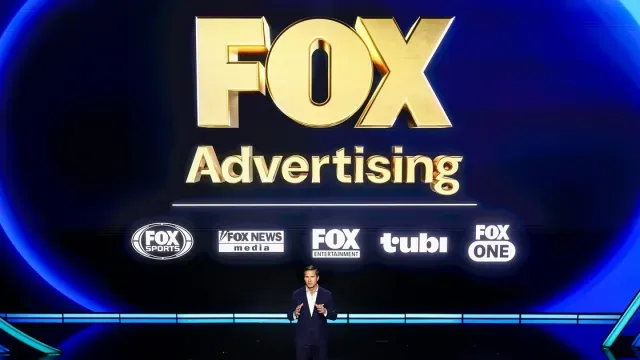
While rivals scramble to slash ad rates and beg for commitments, Fox just wrapped its upfront negotiations a full month early — with "market-leading pricing growth" and a total refusal to offer rollbacks. The message to advertisers is clear: if you want sports, news, and the World Cup, you pay what we ask. And Madison Avenue, reluctantly, is paying.
The meeting was supposed to be tense. Ad buyers had come armed with spreadsheets, projections, and demands for rollbacks — those dreaded reductions in CPMs that have become the industry's new normal. Streaming inventory was flooding the market. Traditional cable was bleeding viewers. The overall upfront market was projected to be down. The buyers held all the cards.
Then Fox played its hand.
On June 18, 2026, Fox Corporation became the first media company of the 2026-27 upfront season to close its negotiations with advertisers. The timing was striking: nearly a month earlier than the previous year. But the details were what sent shockwaves through Madison Avenue. Fox had secured "market-leading pricing growth". It had achieved "high-single digit" volume growth across its portfolio. And it had done it all without offering a single rollback.
In a year when advertisers were pressing for rate reductions across streaming and linear inventory, Fox had simply refused. And the advertisers had blinked.
The Anatomy of a Victory: Why Fox Won
The key to Fox's success was not magic. It was structural — the result of a strategic bet made nearly seven years ago.
In 2019, Fox sold most of its entertainment assets to Disney in a deal valued at more than $71 billion. The company walked away from FX, National Geographic, and a portfolio of cable networks that had become increasingly difficult to monetize. What remained was leaner, meaner, and — crucially — more attractive to advertisers: live sports, live news, and live events.
"Unlike its rivals, Fox has more of what advertisers want and less of what they don't," Variety noted. Disney, NBCUniversal, Paramount, and Warner Bros. Discovery all have sports to sell — but they also have copious amounts of ad inventory tied to cable networks like TNT, E!, MTV, and Freeform, in which marketers have decreasing interest. Fox, by contrast, had pared down its cable assets to the bone. Its schedule is dominated by live programming: NFL, college football, the FIFA World Cup, Fox News, and a narrow strip of entertainment.
Advertisers are in a rush to get money down on big-tent sports telecasts, which draw broad crowds all watching simultaneously. And Fox has more of those than almost anyone else.
The Numbers That Matter
Fox did not disclose specific revenue figures, but the available data paints a picture of a company firing on all cylinders.
Tubi, the free ad-supported streaming platform Fox acquired in 2020, scored double-digit volume growth. In the first nine months of fiscal 2026, Fox had already added 200 new advertising clients at Fox News, on top of 350 new advertisers in fiscal 2025. Executives touted a more than 45% increase in cost per thousand impressions (CPMs) and national pricing at Fox News during their May earnings call. Fox News also delivered double-digit volume growth and mid-single-digit pricing growth.
Fox Sports saw record volume with pricing up mid-single to low-double digits. Fox's entertainment properties saw mid-single-digit pricing growth, with volume flat year-over-year. Overall, eight of the company's ten biggest-spending ad categories added to their commitments. The growth came from entertainment, financial, auto, pharma, dining, retail, technology, and telecom verticals.
The total dollar volume across Fox's portfolio grew in the high-single-digit percentage range. And all of this was achieved in a year when the overall upfront market was projected to be down.
The 'No Rollbacks' Strategy: A Calculated Gamble
The industry context makes Fox's achievement even more striking. In 2024 and 2025, several media companies had offered "rollbacks" — reductions in CPMs — to secure commitments from advertisers facing budget pressures. Streaming inventory had flooded the market, giving buyers leverage. The assumption was that 2026 would be more of the same.
Fox refused to play that game.
The company "fully resisted" demands for rate reductions. It held the line on pricing, even as rivals caved. And the strategy worked. Advertisers, desperate for access to Fox's premium sports and news inventory, signed on anyway.
"We thank them, and our agency partners, for their continued trust," Jeff Collins, president of advertising sales, marketing, and brand partnerships at Fox Corporation, said in a statement. "Together, we will continue to turn audience passion into meaningful performance for brands in the year ahead".
Collins, who took over as Fox's ad sales chief earlier this year after Marianne Gambelli's retirement, had just delivered a masterclass in leverage.
The World Cup Wildcard
The 2026 FIFA World Cup is Fox's ace in the hole. The tournament, which has expanded to 48 teams playing over 39 days, will be broadcast across Fox's networks. Fox will air a record 70 World Cup matches on network television, with 40 in primetime.
The company has not publicly disclosed how ad sales are going for the event, but the sheer scale of the inventory is staggering. Fox's free streaming platform Tubi, its new direct-to-consumer service Fox One, and its linear networks will all carry matches. Advertisers who want to reach the World Cup audience — and the massive live audiences that only sports can deliver — have limited options. Fox is one of them.
The World Cup also represents a test of Fox's streaming strategy. Fox One, launched in August 2025 at $19.99 a month, brings Fox News, Fox Sports, FS1, FS2, Fox Business, and local Fox stations into one direct-to-consumer product. The service will carry all 104 World Cup matches in 4K. If Fox can monetize that inventory effectively, it will have proven that its streaming future is as lucrative as its linear past.
The CTO on Stage: A New Kind of Upfront
Fox's upfront presentation in May was also notable for what it signaled about the company's future. The company put its chief technology officer, Melody Hildebrandt, on stage — a rare maneuver in a format that has long been dominated by executives who manage drama and comedy.
Lachlan Murdoch, Fox's CEO, also delivered public remarks — something no member of his family, which controls Fox, has done in recent memory. The message was clear: Fox is not just a media company. It is a technology company. And it is betting that its ad-tech capabilities, its streaming platforms, and its live programming will keep it ahead of rivals.
The company has also launched AI-driven media planning across its portfolio, positioning itself as a data-driven partner for advertisers. In a market where performance matters as much as reach, Fox is selling both.

The Bottom Line
Fox just closed its upfront negotiations a month early, with market-leading pricing growth, high-single-digit volume growth, and no rollbacks. In a year when the overall market is projected to be down, Fox is up.
The victory is the result of a strategic bet made years ago: sell the entertainment assets, keep the sports and news, and build a streaming business around live programming. The bet is paying off. Advertisers are desperate for live audiences, and Fox has more of them than almost anyone else.
The company's refusal to offer rollbacks — even as rivals caved — sent a message to Madison Avenue: if you want Fox's inventory, you pay Fox's price. And Madison Avenue, reluctantly, is paying.
The upfronts are not what they used to be. The days of lavish presentations and easy commitments are over. But in a fragmented, uncertain market, one thing remains constant: live programming matters. Sports matter. News matters. And Fox, which bet its future on both, has just proven that the bet was the right one.