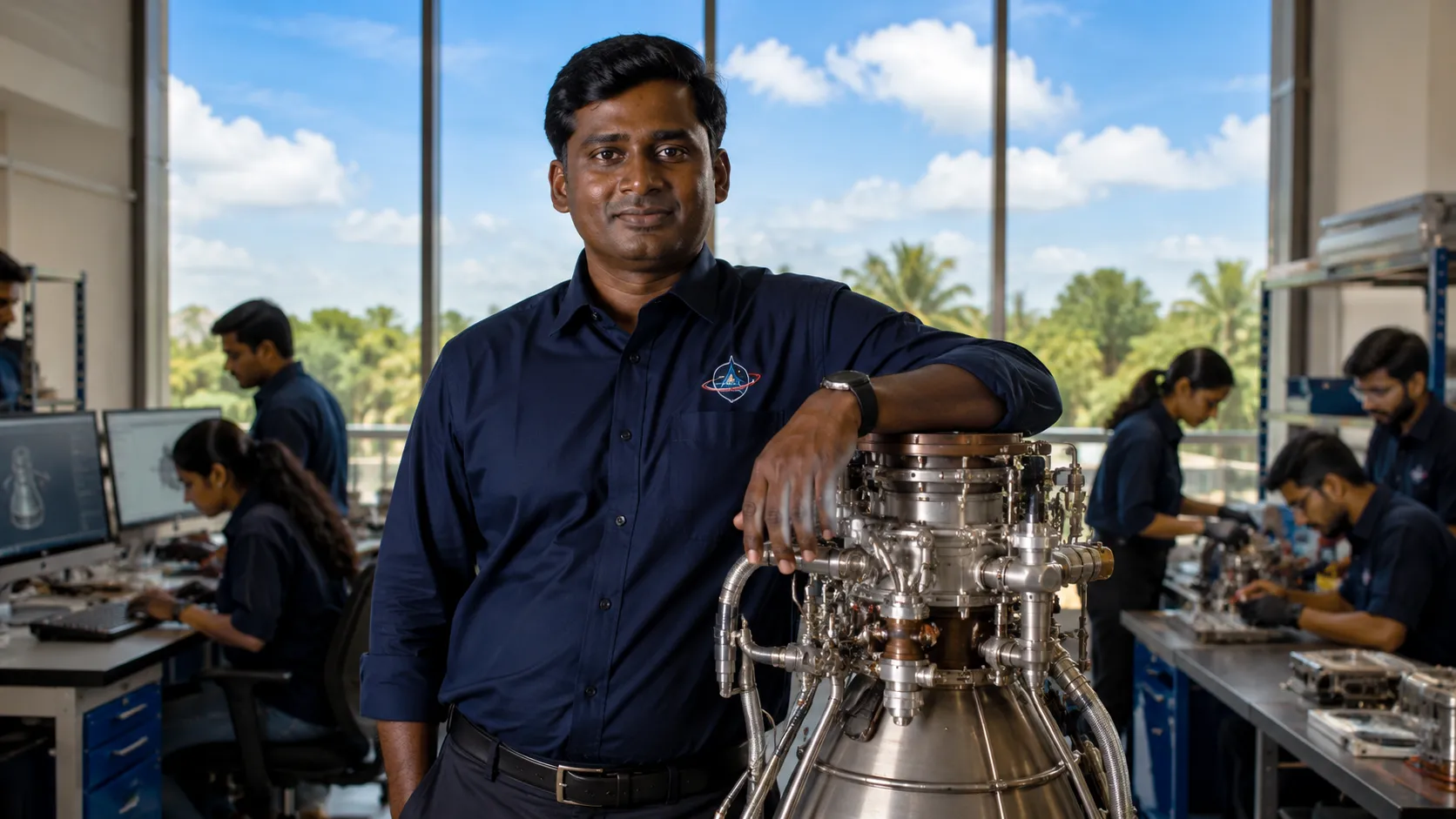
The Tractor Driver's Son Who Built Rockets: How America Rejected Him—Then NASA Called Him Back
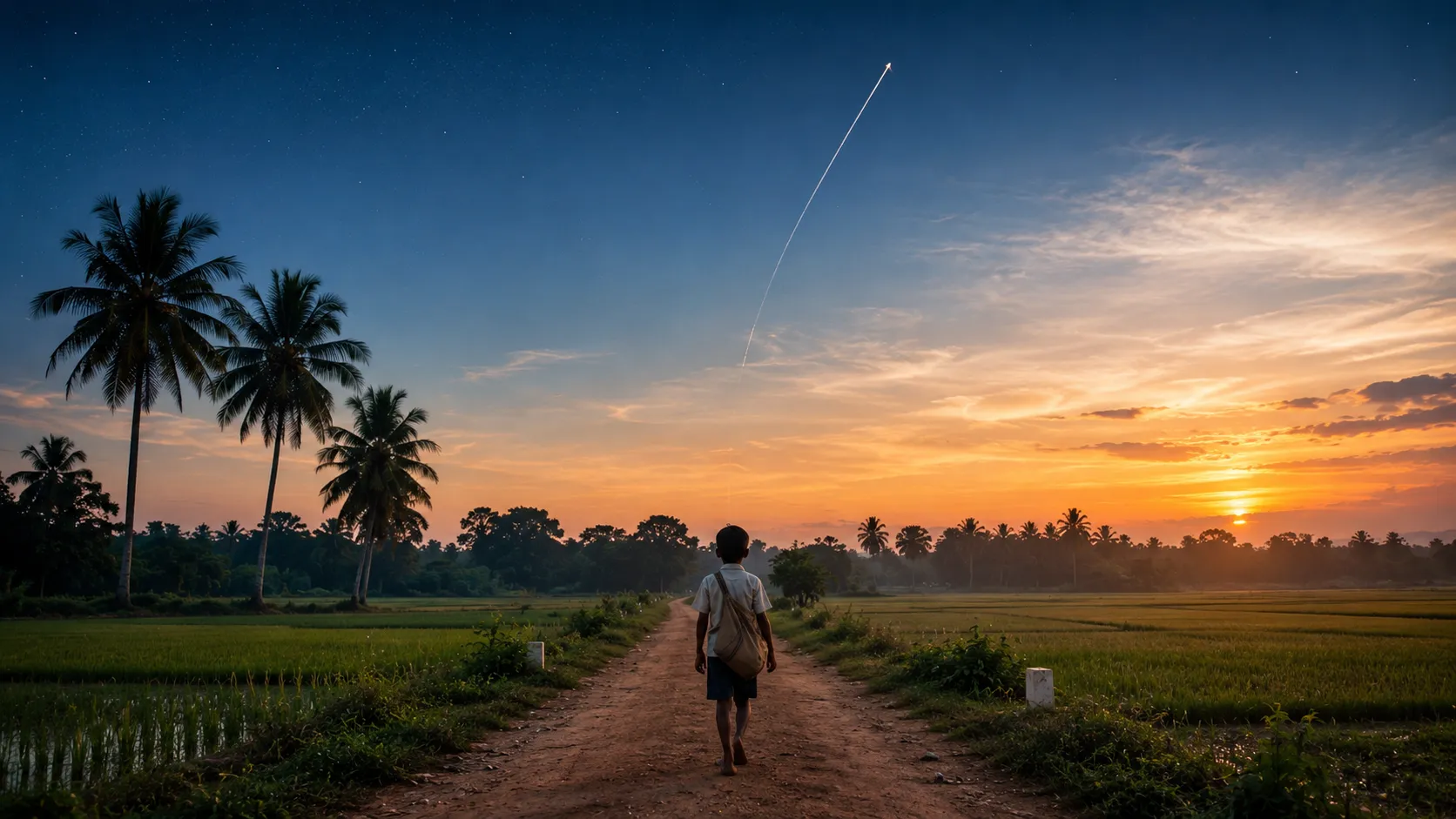
CHENNAI — May 22, 2026 — Anand Megalingam was six years old when he walked barefoot to school for the first time. The school was six kilometers from his home, a modest hut in a small village in Tamil Nadu's interior. His father drove a tractor for a living, earning just enough to feed the family and keep the children in school. The family had no connections, no wealth, and no reason to believe that any of its members would ever leave the village, let alone build rockets.
What Anand had was a mind that seized on problems and refused to let them go. He was the kind of child who disassembled household objects to understand how they worked—radios, clocks, a broken bicycle that he rebuilt with scavenged parts. When he looked up at the night sky over his village, unpolluted by city lights, he did not see stars. He saw questions. How far were they? What were they made of? Could a person from here—from this village, this family, this life—ever reach them?
The answers to those questions would take him across three continents, through a visa rejection by the United States government, into the halls of NASA, and back to India, where he now leads one of the country's most audacious private aerospace companies. Space Zone India, the startup he founded, builds reusable rockets and satellite launch vehicles, competes for contracts in the rapidly expanding global small-satellite launch market, and carries a mission statement that is as unpretentious as its founder: to make space accessible.
The Visa Rejection That Changed Everything
The first time Anand Megalingam tried to go to the United States, the American government said no. He had earned his engineering degree, built a reputation as a brilliant young aerospace researcher, and been invited to collaborate with a leading American university. The invitation was prestigious, the research was cutting-edge, and the visa application should have been straightforward. It was denied.
The rejection was devastating. He had done everything right—excelled in his studies, built a body of research, earned the respect of scientists on the other side of the world—and yet a consular officer, in a decision that took minutes, had blocked his path. He was told, in effect, that a tractor driver's son from Tamil Nadu did not belong in American aerospace.
He did not give up. He continued his research in India. He built his credentials. He reapplied. And eventually, years later, the visa was approved. He arrived in the United States not as a defeated applicant but as a scientist whose work had already attracted international attention. The country that had once rejected him now welcomed him into the research centers where the future of space exploration was being designed.
NASA took notice. His work in aerospace propulsion, materials science, and reusable rocket systems positioned him at the frontier of a field that was being reshaped by the rise of commercial space companies like SpaceX, Rocket Lab, and Blue Origin. He contributed to projects that advanced the understanding of how rockets could be built to fly multiple missions, reducing the cost of access to space and opening the possibility of commercial launch services to a new generation of startups.
He could have stayed. He could have built a career in American aerospace, working on NASA contracts, earning a comfortable salary, and enjoying the prestige that attaches to the scientists who build the machines that leave the Earth. Instead, he chose to return to India—to the country that had produced him, to the village that had shaped him, to the challenges that had not yet been solved.
The Return and the Mission
Space Zone India was founded with a conviction that Megalingam had absorbed during his years abroad: the future of space belonged not to governments but to private companies, and India—with its deep engineering talent, its proven space agency, and its rapidly growing startup ecosystem—was positioned to be a major player in that future.
The company builds reusable rockets designed to carry small satellites into low-Earth orbit. The small-satellite market is one of the fastest-growing segments of the global space economy, driven by demand for Earth observation, communications, and scientific research payloads that can be launched quickly and affordably. Companies like SpaceX and Rocket Lab have demonstrated that there is a viable commercial model for small-satellite launch. Space Zone India aims to bring that model to the Indian market—and eventually to compete globally.
The technology is complex, the capital requirements are enormous, and the competition is intense. India now has over 300 space startups, more than two dozen of which are building launch vehicles or satellite platforms. The government's IN-SPACe regulatory framework has opened ISRO's testing infrastructure and launch ranges to private companies, creating an environment that would have been unimaginable a decade ago. But the market is still young, and the companies that survive will be those that execute on their technical milestones, secure commercial contracts, and manage their capital efficiently.
Megalingam approaches these challenges with the same methodical patience that carried him from a barefoot schoolboy to a NASA researcher. "When you grow up with nothing," he said, "you learn that everything must be built. No one is going to hand it to you." The philosophy applies as much to rocket engines as it does to life. Space Zone India is not the best-funded startup in the Indian space ecosystem. It does not have the highest-profile backers or the most media attention. What it has is a founder who has spent his entire life building things from scratch—his education, his career, his company—and who does not expect the path to be easy.
The Cinema-Style Story
The Indian media has described Megalingam's life as "cinema-like"—the kind of narrative that would feel scripted if it were not true. The barefoot boy who walked six kilometers to school. The visa rejection that could have ended his career. The triumphant return as a NASA-trained scientist. The startup that aims to compete with the world's most advanced space companies.
The cinematic quality of the story is real, but it also risks obscuring the harder truth beneath it. Megalingam's journey was not a montage of dramatic moments. It was years of grinding, repetitive work—studying while classmates slept, saving money that could have been spent on comfort, persisting through rejections that would have broken most people. The visa denial was not a turning point in a movie. It was a door slammed in his face, with no guarantee that it would ever open again. He kept working anyway.
The same applies to Space Zone India. Building rockets is not glamorous. It is an endless cycle of design, testing, failure, redesign, and testing again. The public sees the launch—the fire, the smoke, the machine rising against gravity. They do not see the years of failed tests, the components that cracked under pressure, the funding rounds that almost collapsed, the competitors who seemed to be moving faster. Megalingam sees all of it. He has spent his life looking at problems that seem impossible and refusing to accept that they are.
The Larger Meaning
The Anand Megalingam story is not a story about rockets. It is a story about the relationship between origin and destination—about whether the circumstances of one's birth determine the boundaries of one's life. Megalingam was born in a village to a tractor driver, walked barefoot to school, and was told by the most powerful country on Earth that he did not belong in its aerospace industry. Every structural force in his early life pushed him toward a smaller existence.
He refused every one of those forces. He earned his degrees. He built his research. He waited out the visa rejection. He worked at NASA. And then, having reached the pinnacle of his profession in the country that had once rejected him, he chose to return to the country that had produced him and build something that had never been built there before.
Space Zone India is not yet a household name. Its rockets have not yet reached orbit. The company is still in the early stages of its journey, and the outcome is uncertain. But the founder's story is already complete in the only sense that matters: a boy who walked barefoot to school, who was told he did not belong, who refused to accept the boundaries imposed on him, is now building rockets that will leave the Earth. The visa rejection is a footnote. The rockets are the reply.