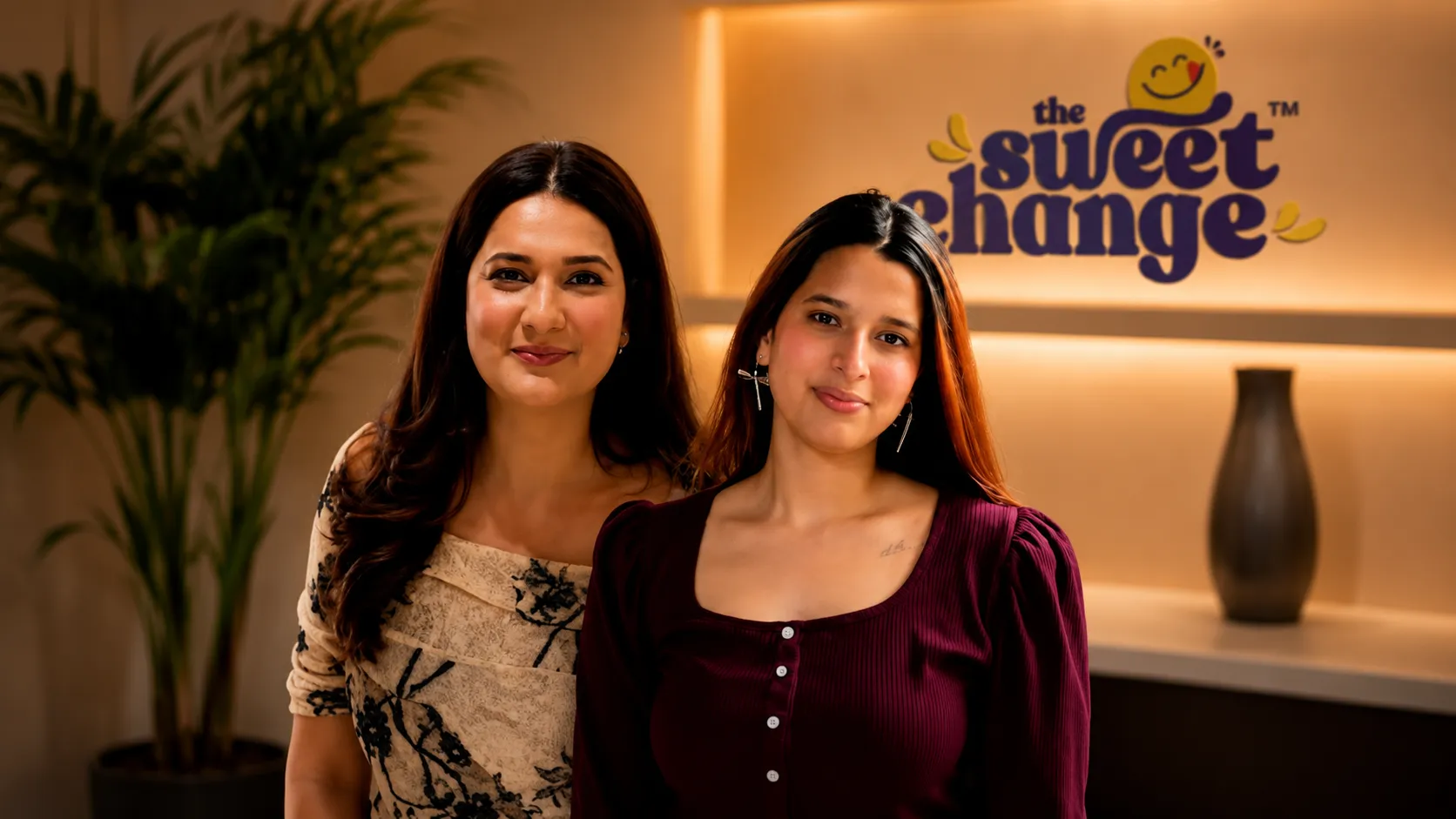
Growing up in India, Manvi Agnihotri noticed something that she later came to understand as a public health crisis hiding in plain sight. In her family — as in millions of Indian families — ageing came with an accepted checklist of ailments. High blood pressure. Diabetes. High cholesterol. Heart disease. Everybody had it. And everybody was more or less okay about it. They did not take care of their eating habits or take the preventive measures that might have kept the checklist shorter.
She chose a different path. She studied food and nutrition, earning a Master's degree from Lady Irwin College with a silver medal. She wrote her thesis at FSSAI. And she built a career as a clinical nutritionist that lasted over a decade and brought her into contact with more than 12,000 patients managing diabetes, PCOS, obesity, and insulin resistance.
Across those 12,000 patients, she gave the same core advice thousands of times: reduce your sugar intake. And across those 12,000 patients, she watched the same pattern play out. The patients wanted to comply. The alternatives were not good enough. Stevia left a bitter aftertaste. Most monk fruit sweeteners on the market were, on inspection, approximately 99 per cent erythritol with 1 per cent monk fruit — a fact hidden in ingredient lists but increasingly visible to consumers who were beginning to read them. And emerging research was raising questions about erythritol's cardiovascular associations that made it an uncomfortable recommendation.
The gap was not a niche. Manvi knew exactly what it looked like, because she had spent a decade observing it in a clinical setting. Diabetics. Pre-diabetics. People trying to lose weight. Label-conscious consumers. Calorie-conscious consumers. An entire mass market of people who needed a better sugar alternative and did not have one.
In 2024, she built it. Together with her sister Sheen Hitaishi, she co-founded The Sweet Change.
What The Sweet Change Is — the Formulation and the Philosophy
The Sweet Change was not designed to be a me-too product in a crowded sweetener category. It was designed to address the specific failures that Manvi had observed in every existing alternative during a decade of clinical practice.
The core innovation is the formulation. The Sweet Change powder is monk fruit, prebiotic guar fibre, and allulose — and nothing else. No erythritol. No artificial ingredients. No fillers. The monk fruit concentration in the powder is 30 per cent, which the brand claims is the highest concentration available in the Indian market. For context, the most popular monk fruit sweeteners on Amazon India, as Manvi has noted publicly, are typically 99 per cent erythritol with minimal actual monk fruit — which means their sweetness comes primarily from erythritol, not from monk fruit, regardless of what the front of the pack implies.
The reason the high monk fruit concentration matters is clinical. Monk fruit derives its sweetness from mogrosides — naturally occurring compounds in the fruit that are 150 to 200 times sweeter than sugar. Because the mogroside is the sweetening agent rather than a fermented or chemically processed sugar alcohol, it produces no glucose spike, carries no calories, and does not affect insulin levels. The antioxidant value of mogrosides is an additional clinical benefit. And because the sweetness comes from a compound that tastes genuinely sweet rather than from a sugar alcohol that carries a cooling sensation or fermented aftertaste, the taste profile is significantly closer to sugar than erythritol-heavy alternatives.
The guar fibre component adds the prebiotic dimension that allows the brand to position itself as India's first gut-friendly sweetener — a claim rooted in the documented prebiotic properties of guar gum, which feeds beneficial gut bacteria. The allulose provides additional sweetness and body that makes the powder perform similarly to sugar in cooking and baking.
The Sweetener Drops — launched in March 2026, several months after the powder — use monk fruit, water, and Vitamin C. No erythritol. A few drops into coffee, tea, or a beverage replaces the sugar without altering the taste in any way that most users can detect.
The Numbers — From Zero to ₹50 Lakh a Month in One Year
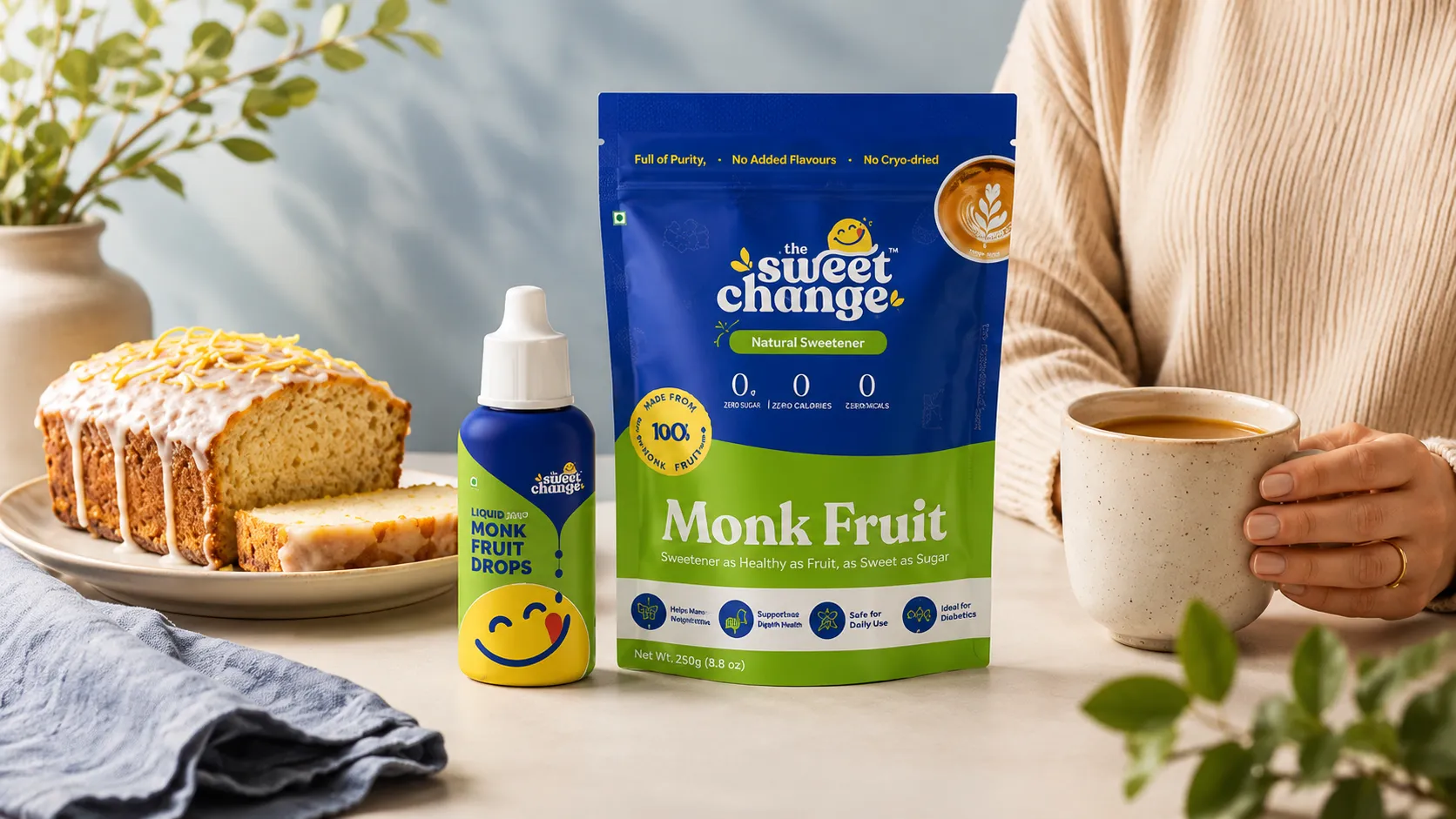
The Sweet Change was launched in March 2025. The first year of operation produced ₹1.69 crore in revenue across more than 15,000 customer orders. Approximately 70 per cent of that revenue came through the brand's own website — a D2C-first distribution model that builds the direct customer relationship that allows the brand to educate, iterate, and retain at a rate that marketplace-dependent brands cannot match.
The brand expanded to Amazon India earlier in 2026. Within three months of that expansion, it broke into the platform's top 10 sweetener brands — a distribution signal that a brand built on an ingredient differentiation story, in a category where Amazon's bestseller lists are typically dominated by mass-market and well-funded incumbents, had found product-market fit.
The most striking number is the growth trajectory following the drops launch in March 2026. Monthly revenue grew from ₹8 lakh to ₹50 lakh in three months — an 84 per cent compounded month-on-month growth rate over the same period. By the time of the YourStory profile published in July 2026, total sales had reached ₹2.6 crore.
Gross margins are 75 per cent — high for a physical product company at this stage, reflecting the premium positioning of the product and the fact that monk fruit extract is an ingredient category where the formula and the concentration are the primary value drivers rather than manufacturing complexity.
The ₹1.7 Crore Round — and Who Backed It
In June 2026, The Sweet Change closed a ₹1.7 crore pre-seed round led by Rebalance, with participation from IAN Angel Fund.
Rebalance is a consumer-focused investor that has backed early-stage D2C brands across food, wellness, and personal care. Its participation in The Sweet Change round reflects a conviction about the size of the opportunity in India's sugar alternatives market — estimated at more than $650 million — and about the specific differentiation that The Sweet Change's formulation provides in a category where consumer sophistication about ingredients is growing faster than brand innovation can keep up.
The fresh capital will be used to strengthen distribution, introduce new products in the natural sweeteners category, and expand the brand's presence across Indian households, cafés, foodservice, and packaged foods — the four channels that Manvi has named as the long-term ambition for the brand.
The Unexpected Audience — and What It Says About the Market
When The Sweet Change launched, the expected audience was clear: diabetics, pre-diabetics, and consumers managing weight or metabolic conditions. The clinical case for the product was strongest there, and the product had been designed with those users in mind.
What the brand discovered in its first year is that a second audience had arrived without being specifically targeted — and that this second audience is arguably more commercially significant than the first.
Young consumers aged 18 to 30, without any metabolic condition, were adopting The Sweet Change as a preventive health measure. They were doing "no sugar" challenges. They were consciously making healthier choices. They were reading ingredient lists and making purchasing decisions based on what they found. And they were applying the same scrutiny to what their families consumed — bringing the awareness that social media and health content had given them back into households where their parents and grandparents had accepted the metabolic disease checklist as inevitable.
Sheen Hitaishi, whose own age group this represents, described it as a responsibility. Her generation carries a real responsibility, not just for themselves but for the next generation, and especially for people who are already suffering. That responsibility is what The Sweet Change is built to serve — a brand that makes the right choice the easy choice, not a medical recommendation.
Manvi's stated ambition is precise: The Sweet Change is building for a future where reducing sugar becomes a default consumer choice rather than a medical recommendation. The 12,000 patients she counselled across a decade were given the recommendation. The scale she is now building toward is the default.
The default. That is the whole vision. And the 84 per cent monthly growth rate suggests that the default might be closer than anyone expected.


