
A Marketing World Once Built Around Bigger Budgets Is Beginning To Reward Different Advantages
For years, marketing frequently followed a relatively familiar assumption: larger budgets often created larger outcomes. Companies frequently invested heavily in television placements, large campaigns and highly polished creative environments because visibility itself frequently appeared tied to spending power. Businesses with stronger resources frequently possessed stronger reach because traditional systems often rewarded scale and repetition. As a result, many founders gradually entered growth environments believing that meaningful marketing success frequently required significant capital before significant results became possible.
Over recent years, however, another transition increasingly appears unfolding beneath broader business ecosystems. Across startup communities, independent brands and creator-led businesses, companies increasingly seem discovering that audience behavior itself frequently operates differently than older systems assumed. Consumers increasingly continue spending time inside environments built around creators, communities and continuous interaction rather than interruption-based advertising. What initially looked like changing platform behavior increasingly resembles a broader transformation involving how attention itself increasingly functions.
That broader shift increasingly gained visibility through discussions surrounding “The Scrappy Marketing Playbook,” where insights gathered from more than 1,000 business owners increasingly highlighted an unexpected pattern. Rather than emphasizing large campaigns and expensive visibility systems, many participants reportedly pointed toward approaches involving community participation, founder-led storytelling, authenticity and direct audience relationships. What initially appeared like budget limitations increasingly started resembling strategic advantages because smaller businesses frequently possessed something larger organizations occasionally struggled to create — proximity.
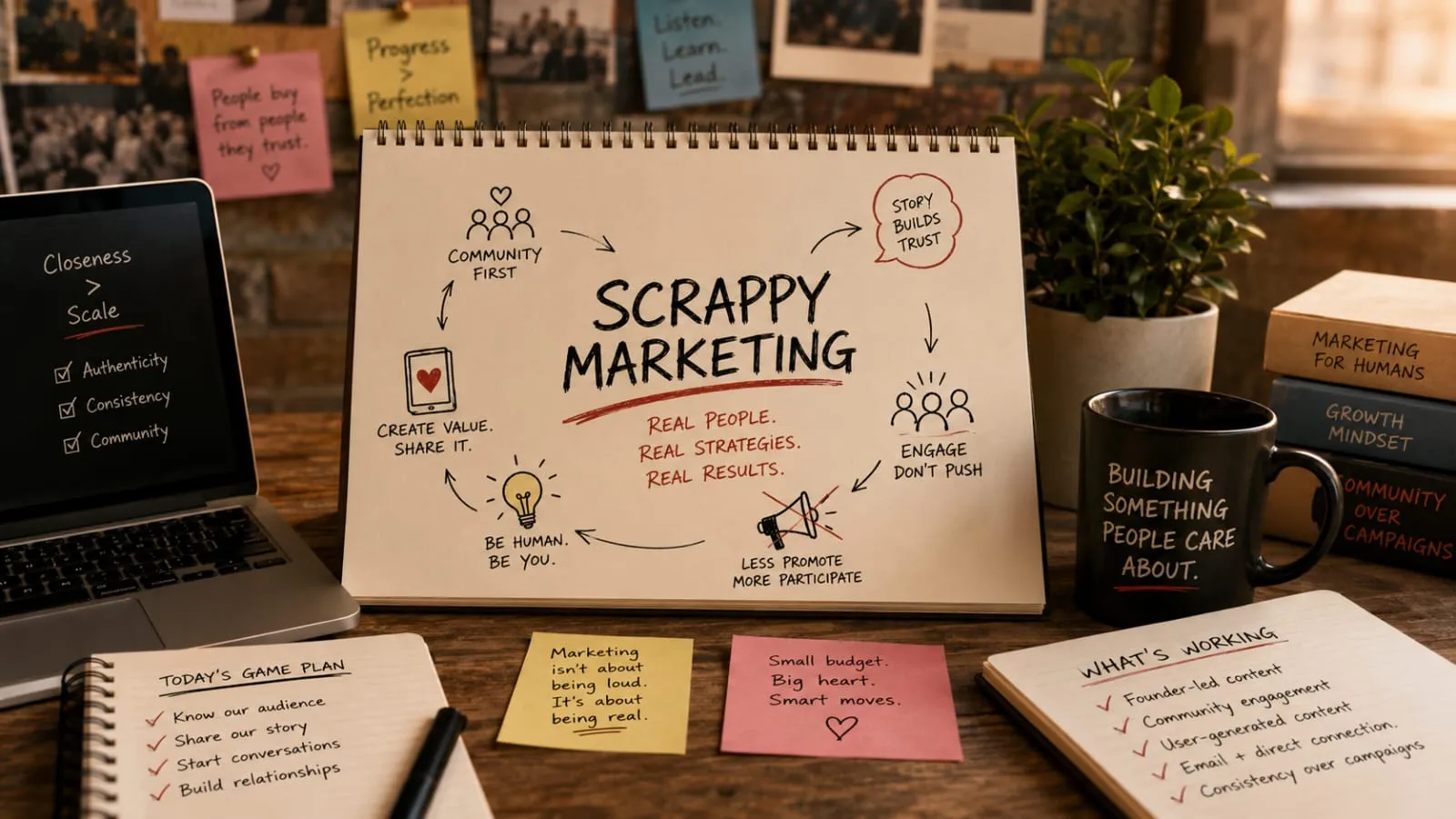
Viewed independently, scrappy marketing may initially appear like another term describing low-budget tactics. Viewed through a broader impact lens, however, it increasingly raises a larger question: what happens when closeness itself becomes a stronger marketing advantage than scale?
Why Smaller Brands Increasingly Appear Winning Different Attention Games
Historically, marketing frequently operated through one-directional structures because companies often controlled communication and audiences primarily consumed information. Businesses frequently created campaigns while consumers largely reacted because media environments themselves remained comparatively centralized. Visibility frequently represented power because attention itself often depended upon access.
Increasingly, however, digital environments increasingly appear functioning differently. Communities increasingly create influence. Founders increasingly become content creators. Customers increasingly participate publicly. Audiences increasingly continue interacting rather than simply receiving. As a result, smaller businesses frequently appear capable of creating highly personal experiences impossible to replicate through institutional systems alone.
This distinction increasingly matters because consumers increasingly seem responding differently to communication itself. People frequently recognize polished messaging quickly because highly produced campaigns increasingly compete inside environments filled with creators, friends and highly informal interactions. Businesses increasingly appear discovering that audiences frequently respond more strongly when communication feels conversational rather than corporate.
The Rise Of Founder-Led Storytelling And Human Brands
Another important dimension emerging beneath these findings increasingly involves founder visibility itself. Historically, companies frequently attempted separating businesses from individuals because institutional authority often appeared stronger than personal identity. Brands frequently prioritized logos and formal positioning because organizational distance frequently signaled credibility.
Increasingly, however, people increasingly trust people before logos. Founder stories increasingly create credibility because audiences frequently respond to visible journeys, real experiences and human context. Businesses increasingly appear learning that customers frequently connect more deeply with individuals explaining why products exist rather than organizations simply promoting products themselves.
This transition increasingly matters because relationships frequently influence decisions more strongly than impressions alone. Consumers increasingly continue supporting businesses where founders increasingly appear visible, accessible and recognizable rather than hidden behind institutional messaging structures.
Participation Increasingly Appears Becoming More Powerful Than Promotion
Part of what makes scrappy marketing particularly significant increasingly involves changing assumptions surrounding growth itself. Historically, companies frequently attempted interrupting audiences because attention often depended upon occupying dedicated advertising spaces. Campaigns frequently focused on creating impressions because visibility itself frequently represented success.
Increasingly, however, audiences frequently appear participating rather than simply watching. Communities increasingly create distribution. Customers increasingly generate content. Conversations increasingly extend beyond campaign environments themselves. Businesses increasingly seem discovering that people frequently share experiences they feel connected to rather than promotions designed purely for visibility.
This broader transition increasingly matters because attention itself increasingly appears functioning differently from earlier systems. Growth increasingly seems emerging through participation rather than interruption because audiences frequently become active contributors rather than passive viewers.
The Bigger Story May Not Be About Marketing Alone
Perhaps that explains why this broader conversation increasingly feels larger than customer acquisition strategies or low-budget growth tactics. Because beneath discussions involving scrappy marketing ultimately exists another reality involving trust itself. Historically, businesses frequently attempted appearing larger because authority often depended upon scale and presentation.

Increasingly, however, audiences increasingly appear rewarding businesses willing to feel smaller, more human and more accessible. The larger impact story therefore may not simply involve 1,000 business owners identifying new tactics. Increasingly, it may involve recognizing that marketing itself increasingly appears changing from broadcasting toward participation.
Because increasingly, people frequently remember brands that talk with them rather than brands that simply talk at them.