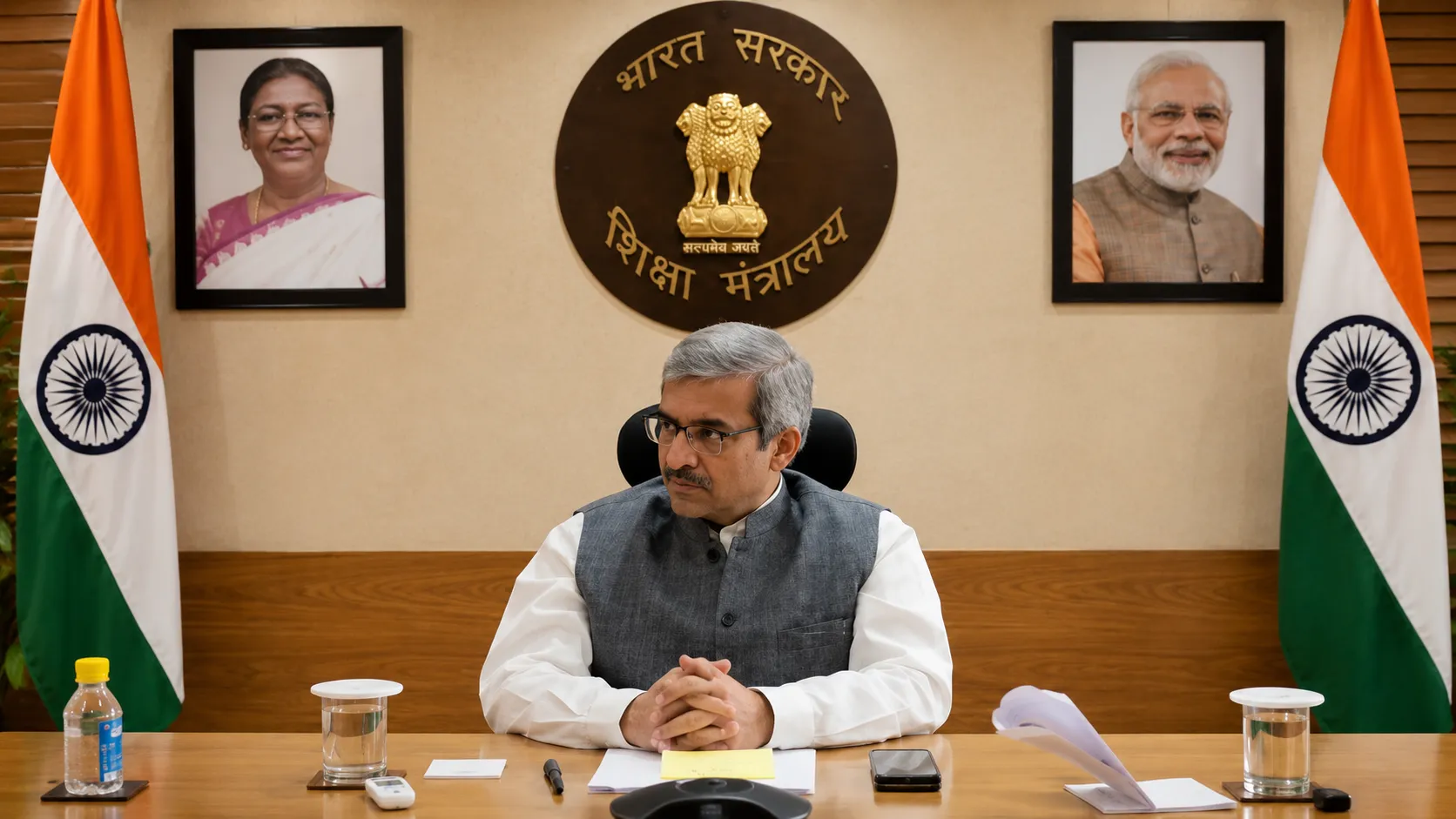
When Prime Minister Narendra Modi announced a new task force under Nandan Nilekani to reform India's beleaguered examination system, most of the ensuing coverage understandably focused on the marquee name: the Infosys co-founder and Aadhaar architect stepping into another high-profile public systems challenge. Largely overshadowed in that coverage, but arguably just as consequential to how this reform effort will actually unfold on the ground, was a quieter, parallel development: senior education bureaucrat Vineet Joshi's reported reassignment away from the Higher Education Department, a move that appears to be part of the same broader administrative recalibration accompanying the exam reform push.
For those unfamiliar with the machinery of Indian bureaucratic administration, it may be tempting to treat a single official's reassignment as a minor administrative footnote compared to the appointment of a high-profile figure like Nilekani to lead the substantive reform effort. That would be a mistake. In India's system of governance, where senior bureaucrats — typically drawn from the Indian Administrative Service and other central civil services — hold enormous influence over how policy directives are actually implemented on the ground, personnel reassignments of this nature often carry as much practical significance as the headline policy announcements they accompany, if not more.
WHY BUREAUCRATIC REASSIGNMENTS MATTER SO MUCH IN INDIAN GOVERNANCE
India's civil service structure operates on a principle where senior bureaucrats typically serve multi-year postings within specific ministries or departments, developing deep institutional knowledge, relationships, and — inevitably — vested perspectives on how a given policy area should be managed. This system has significant advantages, allowing senior officials to build genuine subject-matter expertise over the course of a career, but it also means that when a government decides it wants to pursue a significantly different policy direction in a given area, simply announcing a new task force or policy initiative while leaving the existing bureaucratic leadership entirely unchanged can sometimes result in slower, more contested implementation, as career officials who may have overseen the previous approach navigate the transition to a new direction being driven by an outside figure or a differently constituted reform body.
Reassigning key personnel alongside a major reform announcement, by contrast, is a well-established pattern in Indian governance for signalling that the government intends this particular reform effort to have genuine institutional teeth, rather than remaining a high-profile committee whose recommendations risk being slow-walked or diluted by an unchanged bureaucratic apparatus that may have institutional or personal stakes in the status quo. Whether or not this specific characterisation applies to Joshi's particular case — and it is worth being clear that reassignments of senior officials happen regularly in the ordinary course of India's administrative rotations, for reasons that often have nothing to do with any specific policy reform effort — the timing of this move, arriving alongside the Nilekani task force announcement, has inevitably invited this kind of interpretation among political and policy observers tracking the exam reform story closely.
THE HIGHER EDUCATION DEPARTMENT'S ROLE IN THE EXAM SYSTEM
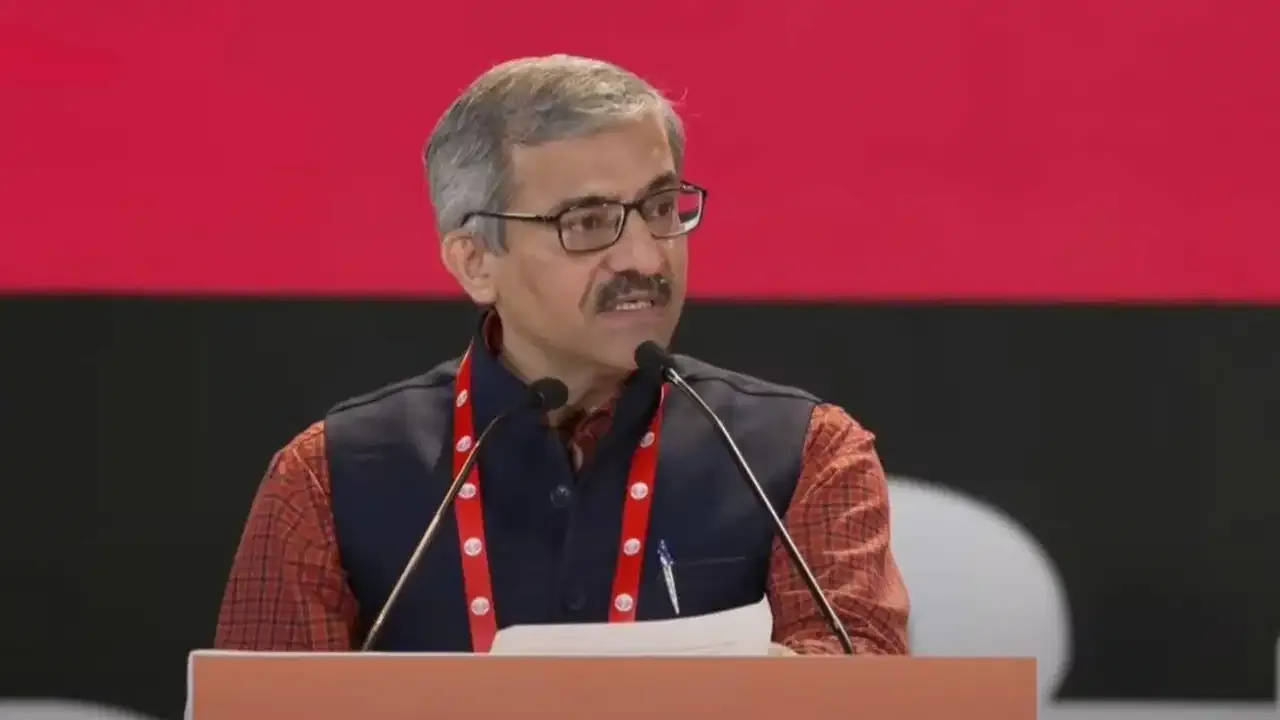
To understand why a reassignment within the Higher Education Department specifically carries relevance to the broader exam reform story, it helps to appreciate how the department's mandate intersects with the National Testing Agency's operations. The Higher Education Department, as part of the broader Ministry of Education, holds oversight responsibility for policy matters affecting India's university and higher education admissions ecosystem, of which the NTA's standardised entrance examinations form a critical gatekeeping function for millions of aspiring students each year seeking admission to medical colleges, engineering institutes, and other premier higher education institutions.
Senior officials within this department, by virtue of their oversight role, would typically have been closely involved in decisions affecting the NTA's operational governance, its relationship with state governments and individual educational institutions, and the broader policy framework within which the agency has operated — including, by extension, whatever governance and security gaps have contributed to the paper-leak controversies that have plagued the agency's operations and ultimately prompted the current reform push. A reassignment of senior leadership within this department, occurring in close proximity to the announcement of an outside-led reform task force, naturally invites scrutiny into whether this reflects a broader leadership recalibration intended to support the incoming reform effort with a fresh administrative team less tied to whatever institutional practices and relationships characterised the department's prior handling of NTA oversight.
READING THE SIGNAL WITHOUT OVERREADING IT
At the same time, careful observers of Indian bureaucratic administration would caution against over-interpreting any single personnel move as a definitive verdict on an individual official's performance or culpability regarding the NTA's past governance failures. India's civil service rotation system means that senior officials are reassigned between departments and postings on a fairly regular cadence as a matter of ordinary administrative practice, for reasons spanning career development, administrative needs across different ministries, and a wide range of considerations that may have little direct connection to any specific policy controversy unfolding at the time of the reassignment.
What can be said with more confidence is that the timing of this particular reassignment — arriving in the same period as the announcement of the Nilekani-led task force — is unlikely to be entirely coincidental from a governance signalling perspective, even if the precise causal relationship between the two developments remains a matter that only officials with direct knowledge of the government's internal deliberations could definitively confirm. Political and policy commentary in the aftermath of the announcement has broadly interpreted the pairing of these two developments as evidence that the government intends this reform push to be accompanied by genuine administrative change, not merely a high-profile committee operating alongside an otherwise unchanged bureaucratic structure.
THE BROADER PATTERN: TECHNOLOGY REFORM PAIRED WITH ADMINISTRATIVE CHANGE
This pairing of a marquee technology or systems-design appointment with a parallel administrative reshuffle is not without precedent in Indian governance more broadly. Major reform efforts across various sectors — from financial inclusion initiatives to digital infrastructure projects — have historically tended to succeed more durably when accompanied by supportive administrative leadership changes that align the bureaucratic apparatus with the incoming reform vision, rather than leaving reform architects to navigate implementation through an entirely unchanged administrative structure that may be more comfortable with established processes than with the kind of disruptive, technology-driven redesign that reformers like Nilekani typically bring to these assignments.
For the NTA reform effort specifically, the practical success of whatever recommendations eventually emerge from the Nilekani-led task force will depend heavily on effective, motivated implementation by the civil servants and agency officials responsible for actually operationalising new security protocols, examination centre governance standards, and any broader structural changes to the agency's operating model. A supportive, aligned administrative leadership team — whether that involves Joshi's successor in the Higher Education Department or other personnel changes that may follow as the reform effort progresses — will likely prove just as important to the initiative's ultimate success as the technical sophistication of the recommendations themselves.
WHAT COMES NEXT
As the Nilekani-led task force begins its substantive work in the coming weeks and months, observers of India's education policy landscape will likely be watching closely for further signals about how the government intends to structure the administrative apparatus supporting this reform effort — including who succeeds Joshi in his new role, and whether additional personnel changes follow as the task force's work progresses and its recommendations begin moving toward actual implementation across the National Testing Agency's operations and the broader higher education admissions ecosystem it oversees.
For now, this quieter administrative story serves as a useful reminder that major public sector reform efforts in India rarely succeed or fail purely on the strength of their headline recommendations or the prestige of the individuals appointed to lead them. They succeed or fail, in large part, on the less visible, harder-to-track question of whether the broader administrative machinery — the career officials, the departmental processes, and the day-to-day implementation apparatus — has been genuinely aligned to support the reform vision, or whether it continues operating according to its own established patterns regardless of what a high-profile task force ultimately recommends.
THE HISTORICAL TRACK RECORD OF PAIRED REFORMS
Looking back at previous major public systems reforms in India offers some useful context for evaluating how this particular pairing of technology leadership and administrative reshuffle might play out. The rollout of Aadhaar itself, the very project that established Nilekani's public sector reform credentials, was accompanied by its own significant administrative innovations — including the creation of an entirely new statutory authority, the Unique Identification Authority of India, specifically empowered to operate with a degree of institutional independence from the traditional ministerial bureaucratic structure that might otherwise have slowed or diluted the project's technical execution.
Similarly, the rollout of India's Goods and Services Tax regime, another major structural reform requiring extensive coordination between central and state-level bureaucracies, was accompanied by the creation of dedicated implementation bodies and the reassignment of key officials specifically chosen for their alignment with the reform's technical and administrative requirements, rather than relying solely on the pre-existing indirect tax administration apparatus to manage the transition unchanged. These precedents suggest that when the Indian government has pursued genuinely transformative public systems reform, structural and personnel changes to the supporting bureaucratic apparatus have typically accompanied, rather than merely followed, the headline reform announcement — a pattern that appears to be repeating itself, at least in its early contours, with the parallel timing of the Nilekani task force and the Joshi reassignment.
Whether this particular combination proves as effective in practice as some of these prior examples will only become clear over the coming months, as the task force's recommendations begin moving from analysis and design toward actual, on-the-ground implementation within an examination system that millions of Indian students and families are counting on to be fixed — and fixed durably, rather than through another round of high-profile announcements that fail to translate into meaningfully improved outcomes in subsequent examination cycles.

WHY STUDENTS AND PARENTS SHOULD PAY ATTENTION TO THIS STORY
For the millions of students and families whose futures are, quite literally, riding on the integrity of India's centralised examination system, stories about bureaucratic reassignments can feel abstract and disconnected from their immediate, practical concerns about whether the next examination cycle will proceed without the kind of paper-leak controversy that has plagued recent years. Yet it is precisely these administrative details — who is running the agencies responsible for exam security, how aligned they are with the reform vision being championed by high-profile figures like Nilekani, and how much genuine institutional authority they have to implement meaningful change — that will ultimately determine whether the promised reforms translate into a tangibly more secure, more trustworthy examination process, or whether they remain, as so many well-intentioned government task forces have before, a set of recommendations that generate positive headlines without producing the durable, on-the-ground change that students and parents are actually hoping for.
In that sense, tracking not just Nilekani's public statements and eventual recommendations, but also the quieter administrative appointments and reassignments happening alongside his task force's work, offers a more complete — if less immediately newsworthy — picture of whether this particular reform effort is genuinely positioned to succeed where previous attempts to address examination integrity concerns have fallen short.
Ultimately, both stories — the marquee appointment and the quiet reassignment — are chapters of the same underlying narrative: a government attempting to demonstrate that it is serious about fixing a system that has repeatedly failed the very students it exists to serve, and doing so not just through new technology and new recommendations, but through the harder, less glamorous work of aligning the people responsible for running that system day to day.
That combination — visible reform leadership paired with invisible administrative realignment — may ultimately prove to be a more reliable predictor of whether India's exam system genuinely changes for the better than any single press conference or task force announcement could be on its own.