Introduction: A Restaurant Unlike Any Other
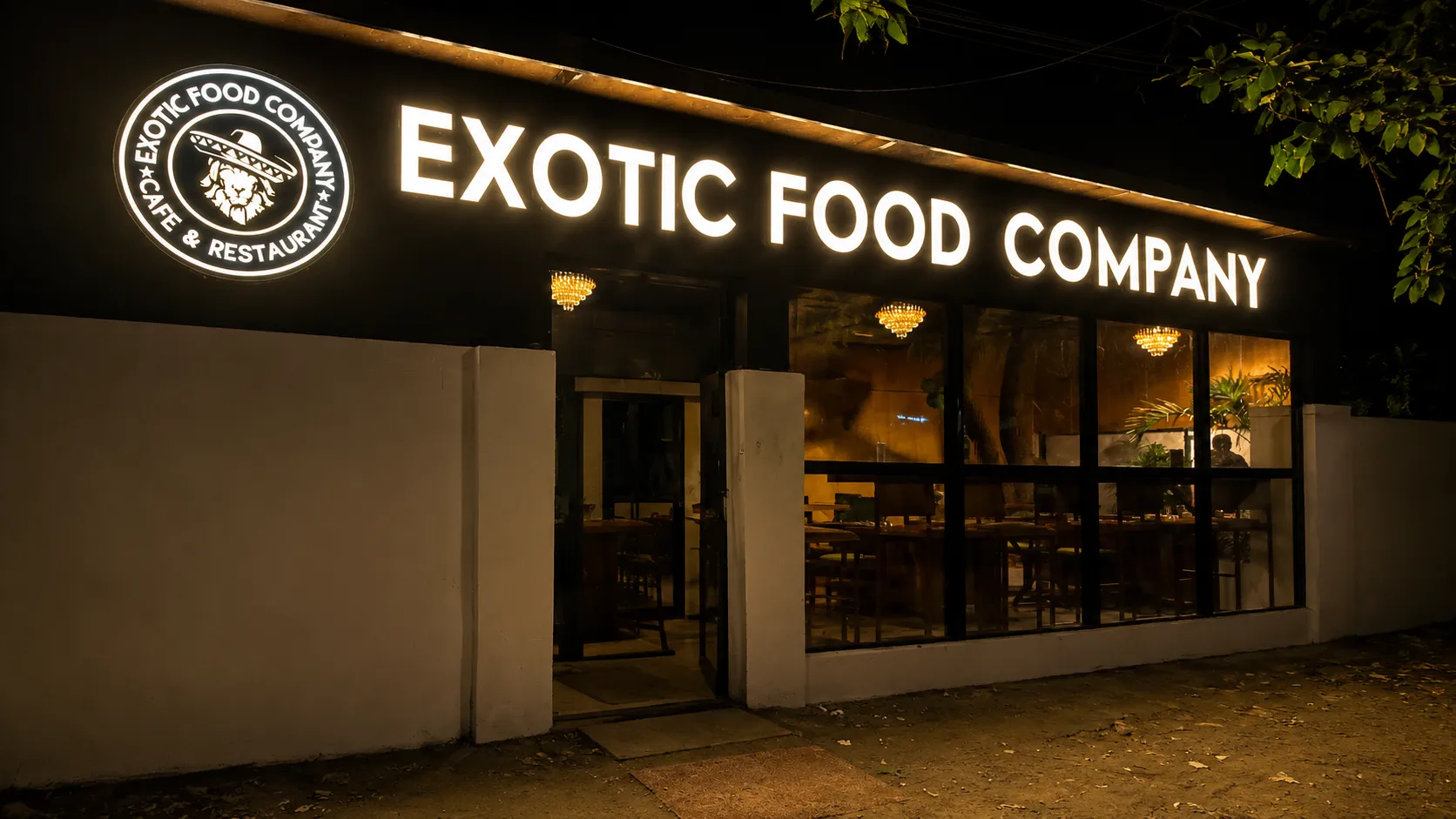
In the crowded and competitive food landscape of Chennai, where biryanis and dosas dominate menus and footfall, one restaurant dared to do something radically different. Exotic Food Company — Cafe & Restaurant, tucked inside an interior lane off Vidyodaya Main Road in T Nagar, offered Chennai's food lovers something the city had never seen before: the ability to walk in, choose a live animal, and have it cooked exclusively to their taste, fresh and customised, served within 60 to 90 minutes.
This was not just a restaurant. It was a concept — a philosophy of food built on freshness, transparency, and the kind of dining experience that most Indian cities have simply never offered. Kadaknath Chicken, Guinea Fowl, Snail, Rabbit BBQ, Turkey Tandoori, Duck curry, Quail roast, Lobster, Crab, Fish — and a rotating selection of other exotic yet fully HALAL-approved meats formed the menu. No beef. No pork. Just rare, premium, and extraordinary food — including the prized Kushi (skewer-grilled preparations) — prepared exclusively for you.
And yet, after nearly two years of operation, the shutters came down.
This is the story of why — and why it matters.
The Concept: What Made EFC Truly Unique
To understand EFC's pause, you first need to understand what they built — because what they built was genuinely extraordinary.
Most restaurants source their meat from wholesale suppliers, often days in advance. Freshness is managed through cold chains, marinades, and quick turnover. EFC broke this model entirely. When a customer arrived at Exotic Food Company, they were not handed a menu in the traditional sense. Instead, they were guided to choose from live animals kept at the restaurant — Kadaknath Chicken, Guinea Fowl, Snail, Rabbit, Turkey, Duck, Quail, Fish, Crab, Lobster, and other exotic meats all approved for consumption under Indian food regulations. Once the animal was chosen, the customer selected their preferred cuisine style and cooking method — from Kongu Nadu and Chettinad traditions to Andhra, Arabian, Mexican, and Chinese preparations. The Kushi (skewer-style grilled meats) was a particular crowd favourite, delivering smoky, charred flavours unique to EFC.
The customer paid for the live weight of the animal. Once the choice was made, the cooking style was decided — BBQ, tandoori, curry, grilled, roasted — and the kitchen took over. The food was prepared from scratch, exclusively for that table, and served fresh within an hour to an hour and a half.
"You did not order from a menu. You chose your meal while it was still alive."
This concept resonated deeply with customers who tried it. Feedback was consistently positive on taste, freshness, and the overall experience. The novelty was real, the food was exceptional, and loyal customers genuinely loved what EFC was doing. No other restaurant in Chennai — or arguably in Tamil Nadu — offered anything remotely close to this model.
Why It Failed: Four Fatal Challenges
CHALLENGE 1 — THE LOCATION PROBLEM
T Nagar is one of Chennai's busiest commercial zones. But the Exotic Food Company was not on the main road. It sat on an interior lane — off the radar of the casual diner, invisible to the walk-in traffic that sustains most restaurants.
In the food business, location is not just important — it is survival. A concept as unique as EFC required discovery. It needed curious people to stumble upon it, to walk in on impulse, to be intrigued by the sight of live animals and a different kind of dining experience. None of that could happen on a quiet interior street. The business ran almost entirely on pre-planned visits, social media promotion, and word of mouth. There was virtually zero organic walk-in traffic.
Every customer had to know about EFC before they arrived. And while that works for established brands, it is an enormous burden for a concept still building its name.
CHALLENGE 2 — THE PRICE POINT REALITY
The live weight pricing model was fair in theory — customers paid for exactly what they received, and the quality was unmatched. But in practice, the final bill was high. Not unreasonably high, but high enough that it placed EFC outside the reach of regular dining frequency for most Chennai families.
A customer who loved the food might visit once a month — or less. Unlike a biryani restaurant where the same family might eat twice a week, EFC was a special occasion restaurant whether it wanted to be or not. The customer base was loyal but thin. Revenue was inconsistent. The restaurant struggled to reach break-even because the number of covers per week was never enough to cover fixed costs.
The math was brutal: great food, great experience, genuinely satisfied customers — but not enough of them, not frequently enough.
CHALLENGE 3 — THE STAFFING CRISIS
Running a live-animal, fully customised kitchen is not something you can staff with general restaurant workers. EFC's kitchen required specialists — people who understood how to handle, prepare, and cook exotic meats to order, across a variety of cooking styles, consistently and without compromise.
Prasanna Viswanathan made the decision to rely heavily on labour sourced from Hindi-speaking states — a common practice in Chennai's food industry. But the attrition rate proved devastating. Workers who were trained on the niche processes — the specific handling of rabbit, turkey, and quail, the live-weight processing, the customised cooking methods — left without notice. Knowledge walked out the door every time a trained staff member quit.
Each exit meant retraining from scratch. Each retraining cycle cost time, money, and quality consistency. Prasanna Viswanathan and his team found themselves spending more time managing staffing than managing the business. For a concept where execution quality is everything, this was unsustainable.
CHALLENGE 4 — PROMOTION WITHOUT FOOTFALL
EFC's customer acquisition was entirely promotion-driven. The restaurant had a social media presence, an Instagram page, and listings on Zomato and Swiggy. But the marketing never broke through to the mainstream. With only around 2,250 Instagram followers at the time of closure, the brand had not reached the critical mass needed to drive consistent traffic to an off-road location.
Every week, Prasanna Viswanathan and his team had to work to bring customers in. There was no passive discovery, no neighbourhood foot traffic, no visibility from the street. The restaurant was in a constant battle to stay top of mind, and without the budget for aggressive marketing, that battle became impossible to win.
In Their Own Words: What the Management Said
When we spoke directly to Prasanna Viswanathan, Owner of Exotic Food Company following the closure, their words were candid, measured, and — perhaps most importantly — forward-looking.
They acknowledged that the two years of operation were a period of continuous loss — the restaurant never achieved break-even (EOQ). But they were clear: the failure was not in the food, not in the concept, and not in the customer response. The failure was structural.
Wrong street. Wrong staffing model. Insufficient walk-in opportunity for a concept that thrives on discovery and impulse.
Importantly, they have not abandoned EFC. Prasanna Viswanathan is currently conducting a feasibility study to identify a new location — one that offers the high footfall and visibility the concept deserves. Their shortlist includes prominent areas along ECR (East Coast Road), the Sengalpattu corridor, or a busy city hub with genuine street-level exposure.
They are also rethinking the staffing model from the ground up — wanting to ensure that from day one of their next launch, they have a stable, trained team capable of delivering the EFC experience consistently, with no knowledge drain.
Lessons for the F&B Industry
The story of Exotic Food Company is not a story of a bad business. It is a story of a brilliant concept, poorly positioned. There are lessons here for every restaurateur, food entrepreneur, and investor in the Indian F&B space:
Concept alone does not guarantee survival. Execution, location, and operational infrastructure must all align.
In India's restaurant market, walk-in traffic remains king. A destination concept requires either a famous name or a heavily trafficked location to draw customers reliably.
Niche food concepts face a natural ceiling on visit frequency. Pricing and volume models must account for this from day one.
Staffing strategy is as important as menu strategy. For specialised kitchens, knowledge retention is a core business risk.
A closed restaurant with 3 to 5 inbound calls per day is not a failed brand — it is a misplaced one.
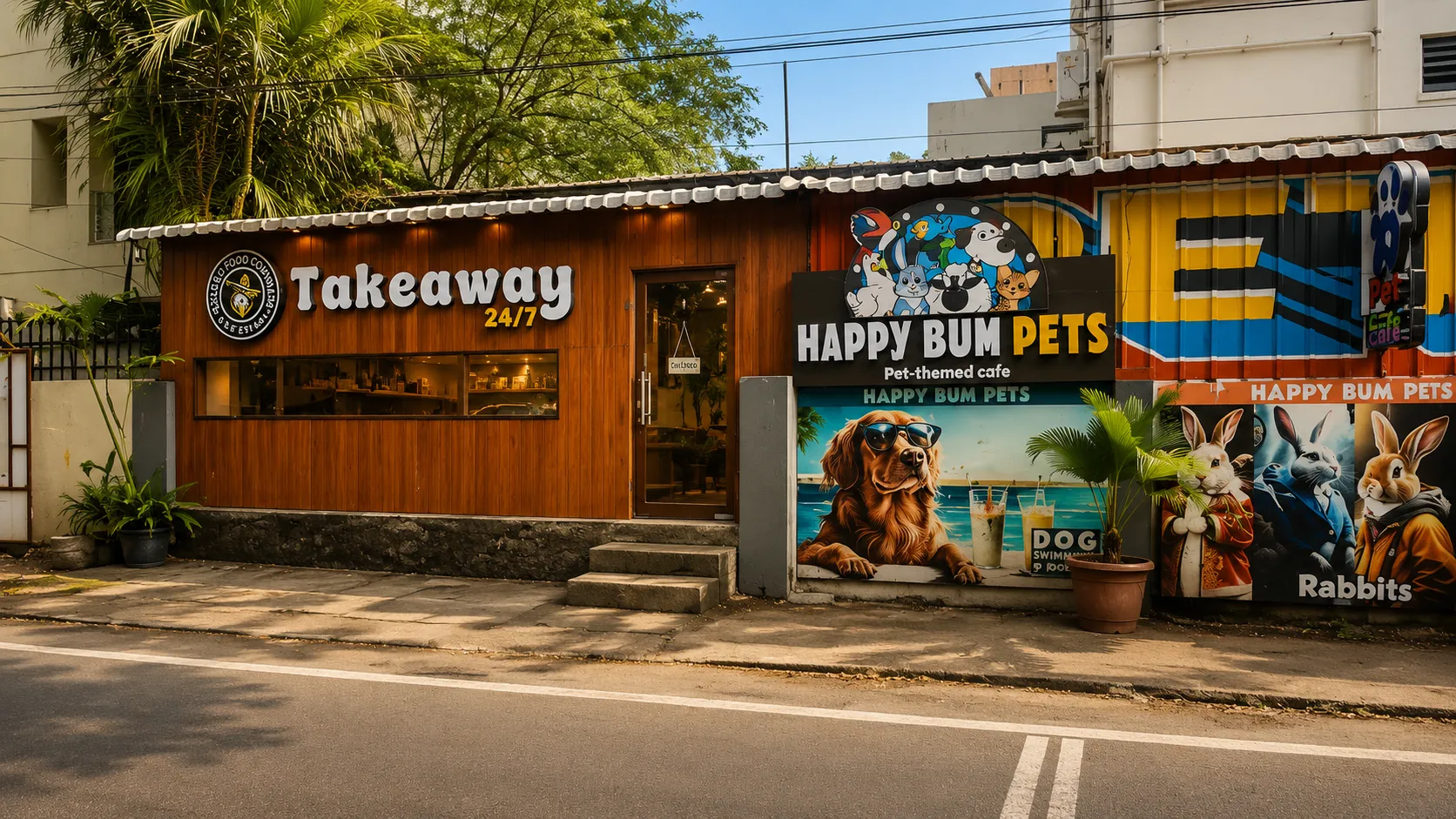
Conclusion: Not the End — A Pause
Exotic Food Company was ahead of its time for the street it chose to occupy. In a city like Chennai — with its growing appetite for premium experiences, its thriving food tourism on ECR, and its increasingly adventurous dining culture — the EFC concept has every right to succeed.
The question was never whether Chennai wanted this kind of restaurant. The question was whether Chennai could find it.
When EFC returns — and based on everything Prasanna Viswanathan has shared, they fully intend to — it will carry with it two years of hard-won lessons, a loyal customer base that is still calling, and a concept that no other restaurant in the city has dared to replicate.
The exotic food revolution in Chennai is not over. It has simply not yet found the right address.