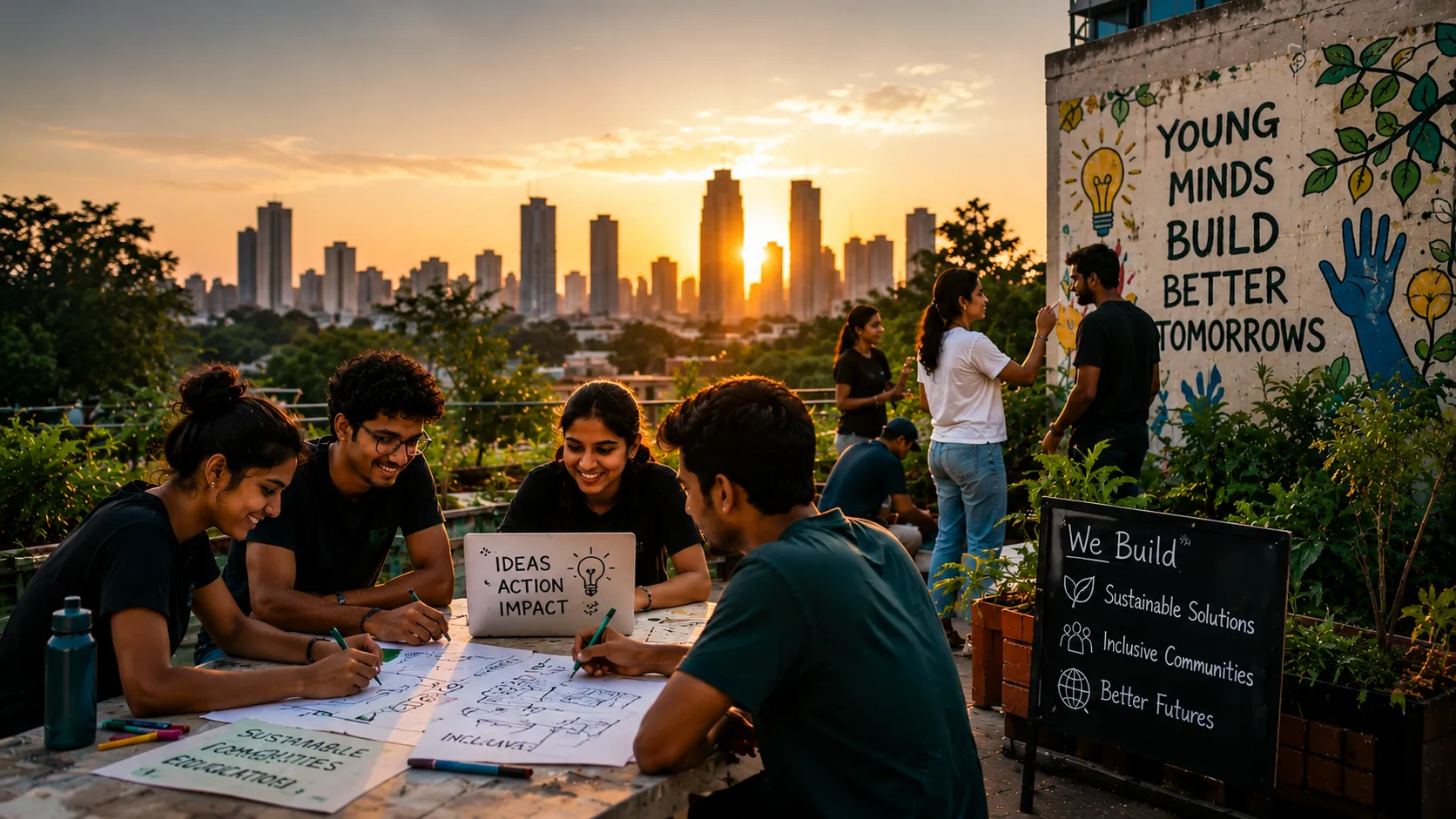
For decades, conversations around social change often followed a familiar structure. Governments, nonprofits, international organizations and large institutions frequently occupied the center of discussions involving societal progress and public impact. Large systems historically possessed the resources, infrastructure and influence required to drive meaningful change at scale. Whether addressing education gaps, healthcare accessibility, environmental concerns or community development, institutions were frequently viewed as the primary engines capable of shaping long-term transformation.
Increasingly, however, a different pattern appears to be emerging. Across multiple parts of the world, younger founders, builders and mission-driven innovators are beginning to influence social impact in ways that look fundamentally different from traditional models. The shift is subtle but significant. Social change today increasingly seems to emerge not only through policy announcements or institutional interventions, but through communities, entrepreneurs and individuals identifying highly specific problems and building solutions around them. What once required large organizational systems increasingly appears possible through smaller teams equipped with technology, networks and direct understanding of the problems they seek to solve.
One reason this transition matters involves proximity itself. Historically, institutions often approached challenges through large frameworks and standardized systems intended to operate across diverse populations. While those approaches frequently created meaningful outcomes, they sometimes struggled to adapt quickly to local realities and rapidly changing needs. Younger builders increasingly seem to approach social challenges differently. Rather than beginning with systems, many begin with experiences. Problems involving access, affordability, mental health, sustainability or education frequently emerge through situations they personally encountered or observed within communities around them.
This pattern has become increasingly visible across India’s growing startup and impact ecosystem. Young founders are creating initiatives involving skilling programs, educational platforms, mental health support systems, sustainability-focused businesses and localized community solutions. In many cases, these ideas emerge not from distant observation but from lived experiences. A student struggling with educational barriers creates learning solutions. Someone experiencing challenges around mental wellness builds support platforms. A founder witnessing environmental concerns creates sustainability initiatives around local communities. The relationship between problem and solution increasingly appears more personal than institutional.
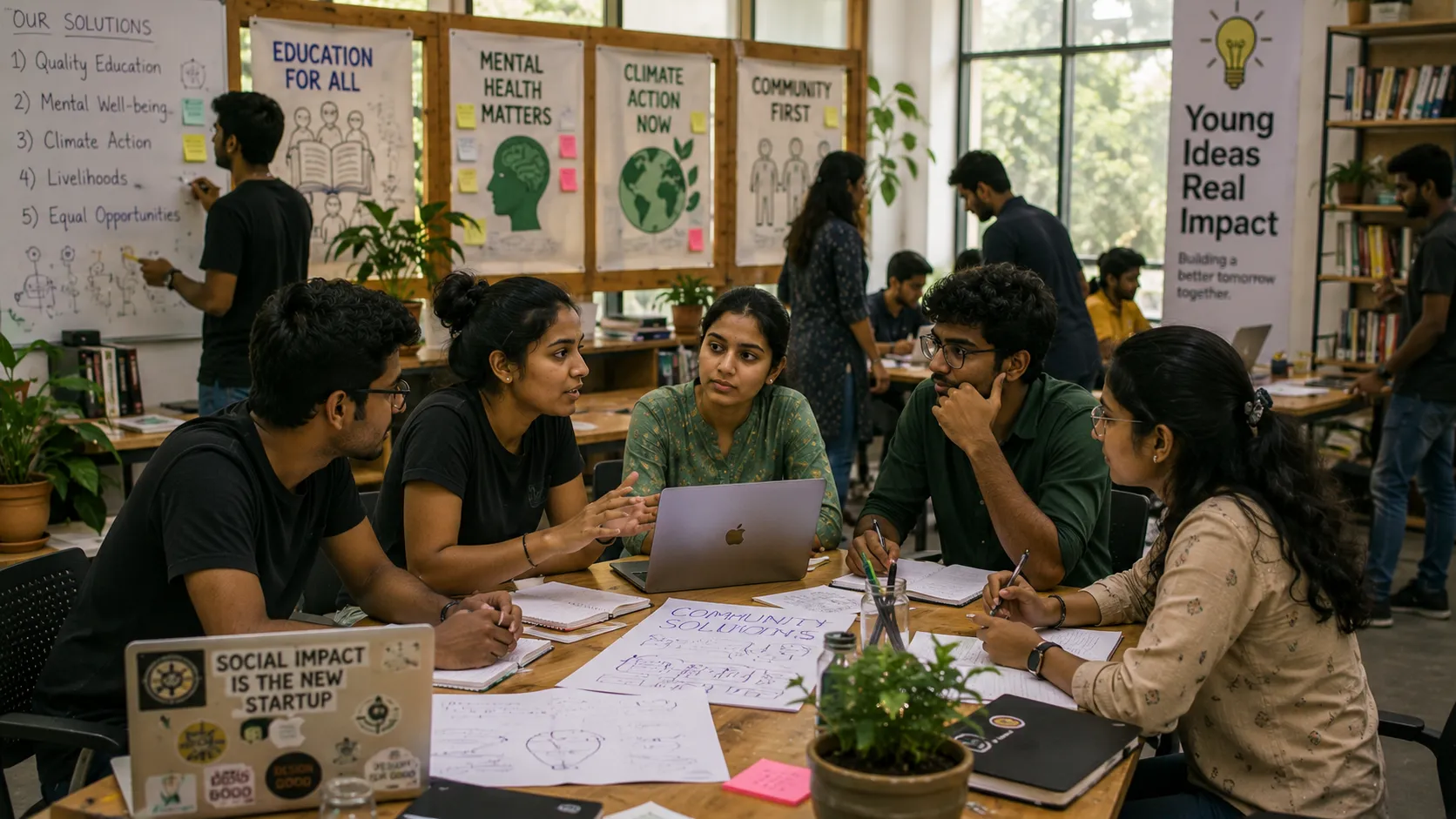
Technology has quietly played an important role in enabling this shift. Previous generations often required significant infrastructure and organizational backing before attempting initiatives involving large communities. Building systems historically depended heavily on access to funding, networks and institutional support structures. Today, digital environments increasingly reduce many of those barriers. Educational resources have become more widely distributed. Communities now organize online. Fundraising increasingly includes grants, accelerators and mission-focused investment ecosystems. Digital platforms provide access to audiences that previously remained difficult to reach.
As a result, younger builders increasingly operate within environments where experimentation becomes possible much earlier. Access itself has changed. The ability to create impact increasingly depends less on formal authority and more on execution, community understanding and technological capability. This shift matters because social transformation often accelerates when participation expands. The more people who feel capable of contributing, the broader the possibilities around innovation become.
Importantly, the rise of younger builders does not necessarily suggest that institutions themselves are becoming less important. Governments, universities, healthcare systems and large organizations continue performing critical roles involving infrastructure, scale and public systems. However, the relationship between institutions and innovation increasingly appears to be evolving. Historically, institutions often designed and implemented solutions independently. Increasingly, they seem more likely to collaborate with startups, community-led initiatives and mission-driven ecosystems.
Examples of this shift continue appearing globally. Educational institutions increasingly partner with startup ecosystems to address learning gaps. Healthcare systems collaborate with digital health innovators and community-led technology solutions. Governments increasingly create accelerator programs and innovation challenges designed around solving public problems through external participation. Rather than functioning as isolated systems, institutions and builders increasingly appear interconnected.
Another significant development involves geography itself. Previous generations of innovation frequently concentrated around major cities and established ecosystems. Today, social impact increasingly emerges from smaller cities, local communities and regions previously operating outside traditional networks. Young founders from nontraditional environments increasingly build initiatives around highly localized issues involving education access, climate resilience and community infrastructure. Digital systems have reduced geographic limitations that once constrained opportunity.
This transition becomes important because local communities often understand challenges differently. Solutions emerging from direct environments frequently possess stronger contextual understanding because they develop closer to everyday realities. As innovation becomes more distributed, social impact itself increasingly appears capable of emerging through multiple smaller interventions rather than one centralized structure.
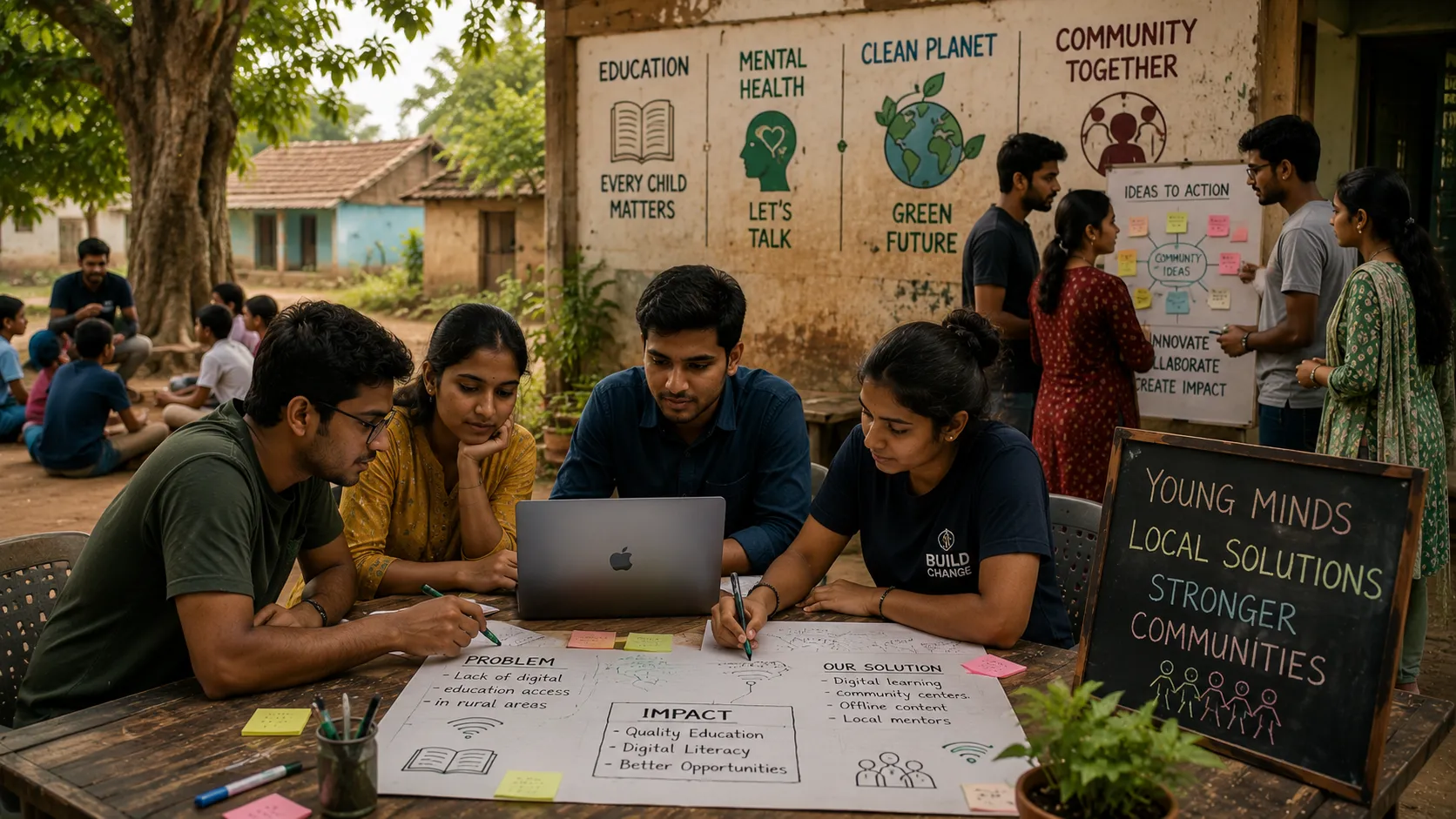
Over the last few years, several developments have strengthened this shift. Across India and globally, younger founders increasingly moved beyond building businesses purely around commercial opportunity and began creating ventures designed around social outcomes. Climate-focused startups created local sustainability initiatives. Youth-led education platforms attempted to bridge learning gaps. Mental health communities expanded access through digital support networks. Civic technology founders developed systems helping citizens navigate public services and social resources more efficiently. Increasingly, impact itself stopped appearing as a separate category and began becoming part of how many younger entrepreneurs approached building.
The COVID-19 period perhaps accelerated this mindset more than many expected. During moments when traditional systems experienced pressure, many grassroots communities, student groups and young volunteers frequently responded rapidly through digital coordination and community-led initiatives. Across cities and smaller towns, individuals organized oxygen support networks, food distribution systems and verified information communities using technology platforms. While institutions continued playing central roles, the crisis also demonstrated something important: meaningful intervention increasingly emerged from decentralized communities capable of moving quickly. The experience reshaped how many younger people viewed their own ability to contribute.
Recent reports and startup trends increasingly suggest that younger founders are also entering sectors that previous generations often considered too difficult or too complex. Areas involving climate resilience, accessibility, public health systems and skilling infrastructure are receiving greater attention because younger builders increasingly view these sectors not only as policy discussions but as opportunities for action. Across India’s startup ecosystem, impact-oriented ventures involving agritech, healthcare accessibility and education continue attracting grants, accelerator support and investor attention. The broader signal increasingly suggests that solving large social problems is no longer viewed solely as institutional work.
This shift also appears connected to changing definitions of success itself. Earlier entrepreneurial narratives frequently emphasized scale, valuations and financial outcomes as primary indicators of achievement. Increasingly, younger generations seem interested in broader measures involving community influence, sustainability and measurable social outcomes. Builders today frequently ask different questions. Instead of only asking how large a company can become, many increasingly ask whether products create access, reduce friction or improve experiences for communities traditionally overlooked.
The larger impact of this movement may not immediately appear through headlines or large policy announcements. Social change frequently develops gradually through smaller interventions repeated consistently over time. A local education initiative reaches a few thousand students. A digital health platform supports underserved communities. A community-led climate project improves neighborhood environments. Individually these efforts may appear limited. Collectively, however, they often create ripple effects capable of influencing larger systems.
This may ultimately explain why younger builders increasingly matter within conversations surrounding social change. Institutions historically shaped impact through scale. Young builders increasingly appear capable of shaping impact through speed, experimentation and proximity to real-world challenges. And increasingly, societies may require both.
Perhaps the most important change involves ownership. Earlier generations frequently viewed social progress as something primarily initiated by institutions. Younger generations increasingly appear willing to participate directly. Rather than waiting for systems to solve problems independently, many increasingly choose to build alternatives themselves. This shift does not automatically eliminate structural challenges, but it changes how people relate to those challenges.
The broader significance of this movement extends beyond entrepreneurship itself. Historically, social transformation frequently followed top-down structures where institutions shaped solutions and communities received them. Increasingly, influence appears more decentralized. Communities organize digitally. Builders identify highly specific challenges. Individuals create interventions around needs they directly understand.
The future of impact may therefore depend not only on scale, but on participation itself. Because the next wave of social change may not begin with institutions alone. It may begin with people willing to build where they stand.