Movies, Gaming, Creators And OTT Are Exploding Together. The Real Problem Is That Audiences Suddenly Have More To Watch Than Hours To Give
For decades, entertainment followed a rhythm that felt surprisingly organized. Movies arrived in theatres on Fridays, television followed scheduled programming and music existed inside formats people consumed at predictable times because audiences generally moved through entertainment using structures industries themselves controlled. Viewers largely adapted around release calendars because content distribution remained concentrated and options frequently stayed limited. Success often depended on reaching audiences first because attention itself lived inside relatively stable systems.
That structure no longer exists.
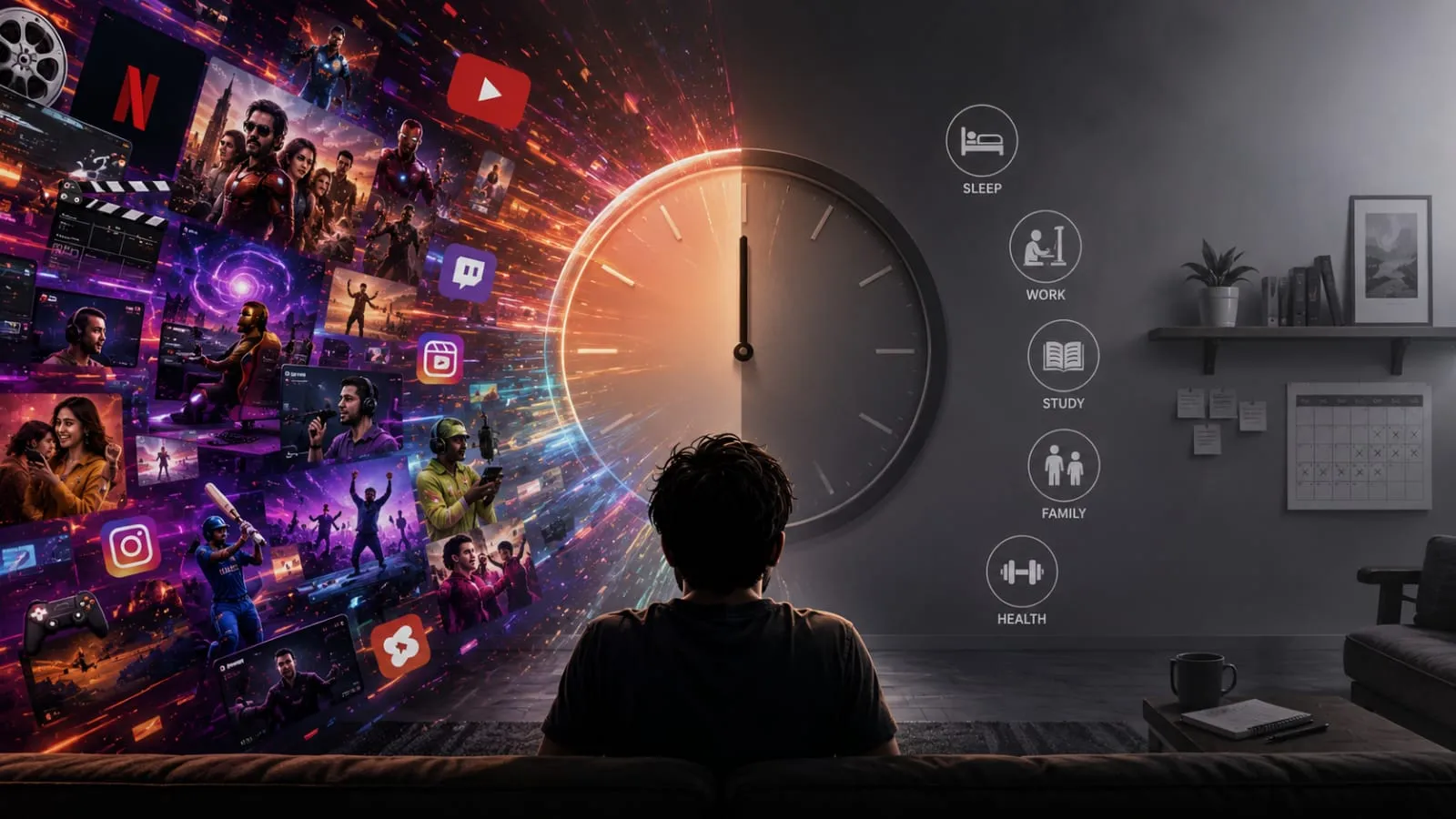
Today entertainment no longer arrives through one screen, one platform or one format because people increasingly move across movies, gaming platforms, creators, podcasts, livestreams and short-form content simultaneously. Streaming platforms release enormous content calendars, YouTube creators upload daily, gaming communities generate endless experiences and social media continuously competes for visibility because modern audiences now operate inside an environment where entertainment never actually stops. What initially looked like a content boom is quietly becoming a much larger battle involving time itself.
Viewed independently, the growth of streaming and creator culture may initially resemble another expansion phase inside entertainment industries. Viewed through a broader impact lens, however, another question quietly begins surfacing underneath: what happens when every platform starts fighting for the same twenty-four hours? Because industries historically competed for audiences.
Now they increasingly compete for availability.And availability may be running out.
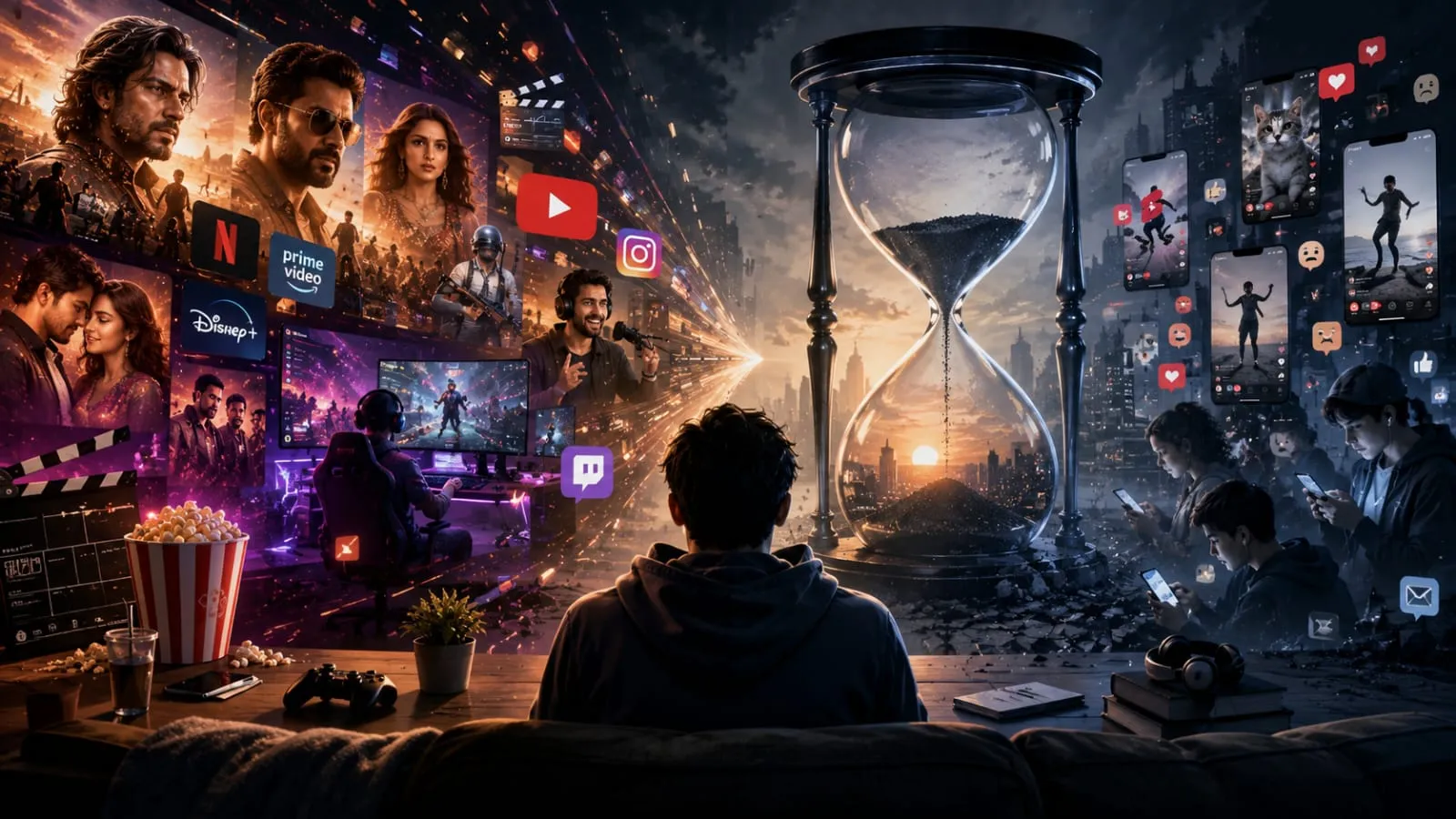
Historically, entertainment categories frequently operated beside one another because films, television and gaming occupied separate spaces with different consumption habits. Watching a film rarely competed directly with gaming communities because experiences themselves happened inside distinct ecosystems. Today those boundaries increasingly appear disappearing because younger audiences move fluidly between multiple formats without separating entertainment categories at all.
A teenager today can spend one evening moving between a Netflix series, BGMI, Instagram reels, a Twitch stream and a creator podcast because digital behavior increasingly operates through switching rather than commitment. That distinction matters because entertainment itself increasingly behaves less like scheduled programming and more like an endless feed. Platforms no longer ask whether audiences are consuming content.
They ask how long they can keep them there.
That shift quietly changes how success itself works. For decades, industries measured victories through opening weekends, ratings and subscriber numbers because those metrics frequently represented audience demand clearly. Increasingly, however, platforms appear competing around watch time, retention and engagement because visibility itself matters less if audiences quickly move elsewhere. Attention today increasingly behaves like currency because every additional minute carries economic value.
Streaming platforms already understand this reality. Massive content announcements no longer simply involve quantity because release calendars increasingly function as retention systems. One show ends and another immediately appears because platforms increasingly recognize that pauses create risk. Earlier entertainment businesses focused on attracting audiences. Modern entertainment ecosystems increasingly focus on preventing exits.
Gaming quietly accelerated this shift further. Earlier generations frequently viewed games as products people purchased occasionally because gaming itself operated through relatively contained experiences. Today gaming increasingly behaves like social infrastructure because audiences spend time inside communities, events and digital environments extending far beyond gameplay itself. Some people no longer simply play games.
They spend time there.
Creators introduced another layer entirely because audiences now increasingly build emotional relationships around individuals rather than platforms. Earlier entertainment industries frequently relied upon institutions because studios, networks and labels controlled visibility. Creator ecosystems increasingly operate through familiarity because people repeatedly return not simply for content but for personalities and communities.
This distinction matters because audiences increasingly no longer choose between entertainment categories. They choose between moments. Watching a film now competes not only against another movie but against gaming sessions, YouTube rabbit holes, creator streams and endless scrolling because every category increasingly enters the same battlefield.
Time.
There is another reality quietly sitting beneath this shift too. Human attention itself remains finite because technological growth expanded content faster than audiences expanded hours. Platforms continue multiplying because production environments increasingly became easier and cheaper. Audiences, however, still wake up with the same twenty-four hours because scale itself cannot manufacture more time.
That may become the most important entertainment story of this decade.
Because for years people believed the next battle involved cinemas versus OTT, streaming versus television or creators versus studios. Increasingly, that framing appears incomplete because the real competition may involve every platform simultaneously entering one giant contest surrounding attention.
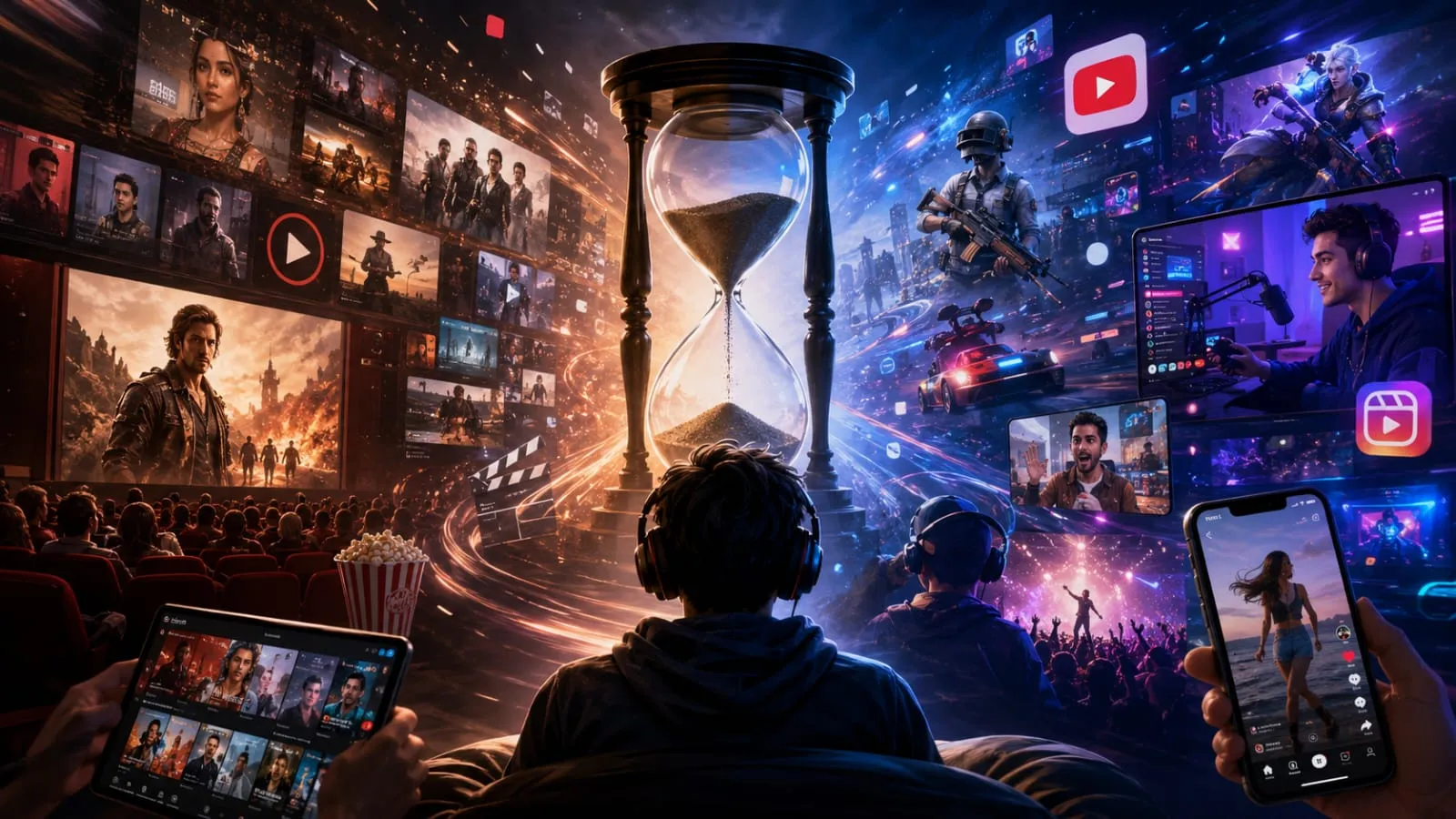
Perhaps that explains why this moment feels larger than another streaming war or content boom. Because beneath discussions involving films and gaming ultimately exists another reality involving behavior itself. Entertainment companies spent years trying to create better content.
Now they increasingly appear trying to create stronger habits.