The Luggage Brand That Asked a Radical Question: What If Women Designed Travel Gear for Women?
BENGALURU — May 22, 2026 — The global luggage industry has spent decades designing products for a single, unspoken default customer: a man. The handles are sized for male hands. The organisational logic assumes a certain kind of packing—suits, shoes, gadgets—that bears little resemblance to how most women actually travel. The colour palette—black, charcoal, dark navy—is the palette of the business-class aisle, designed by industrial engineers who have never tried to find a specific pair of earrings in a carry-on at 35,000 feet.
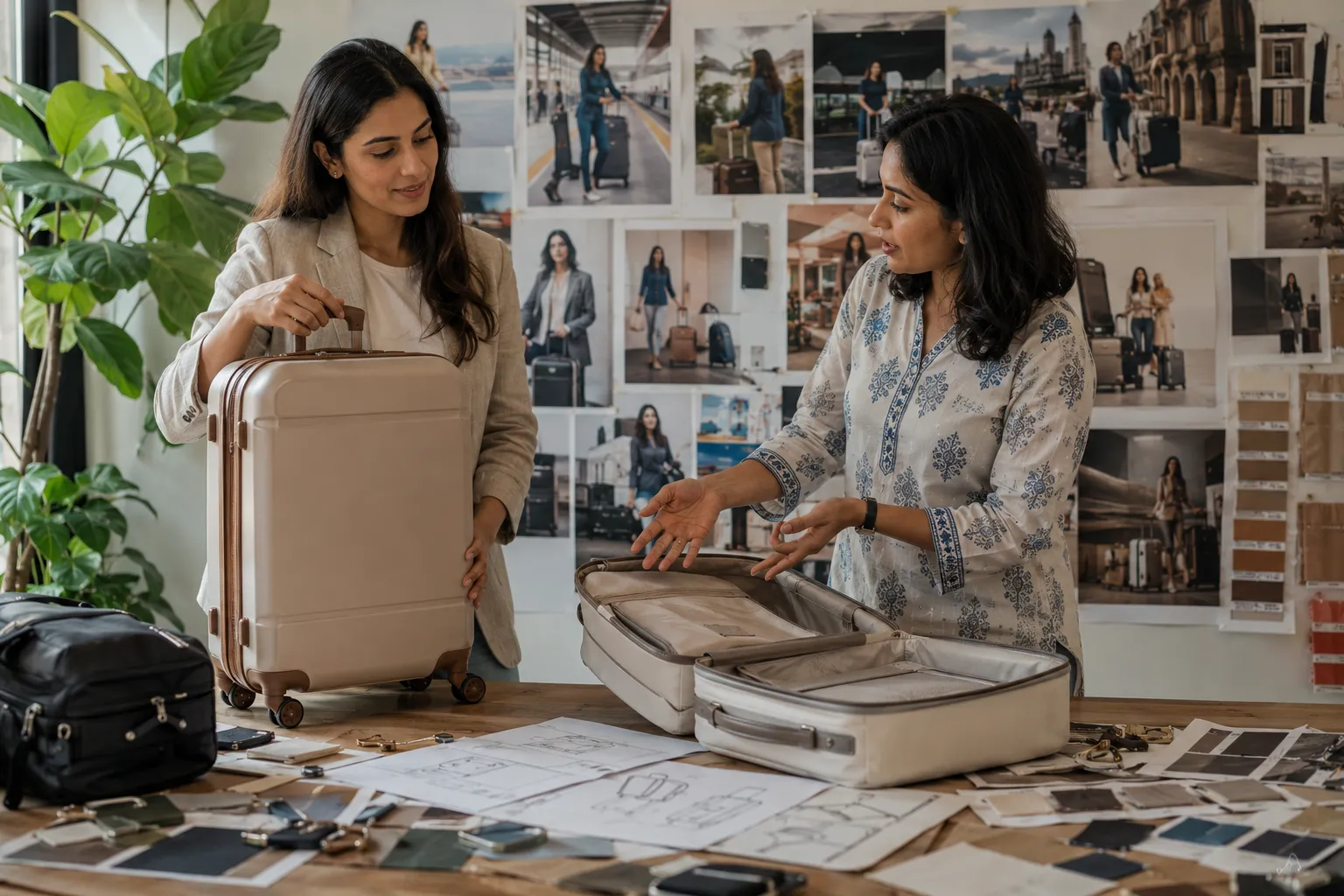
Meenakshi Vyas and Rashika Nayak did not start with a grand theory about gender and industrial design. They started with frustration. Vyas, a former strategy consultant, travelled constantly for work. Nayak, a product designer, watched her struggle with luggage that seemed purpose-built for someone else. The compartments made no sense. The weight distribution was off. The aesthetics were an afterthought. "We looked at the luggage market and realised nobody had ever asked women what they actually wanted," Vyas said.
In 2025, they quit their jobs and launched NORI—a women-first luggage and travel accessories brand designed around how women actually pack and travel. This month, the Bengaluru-based startup closed a $350,000 pre-seed round led by Rebalance, with participation from Paytm founder Vijay Shekhar Sharma and VSS Investment & Management Inc. The company has already served over 4,000 customers and is tracking toward a ₹2 crore annualised revenue run rate.
The Design Gap
The luggage industry has a design gap that is hiding in plain sight. It is not a gap in quality—modern luggage is well-made, durable, and increasingly feature-rich. It is a gap in perspective. The people designing luggage are, overwhelmingly, men. The people testing luggage prototypes are, overwhelmingly, men. The marketing campaigns for luggage feature, overwhelmingly, male business travellers striding through airports with the confident efficiency of people whose carry-ons were designed for them.
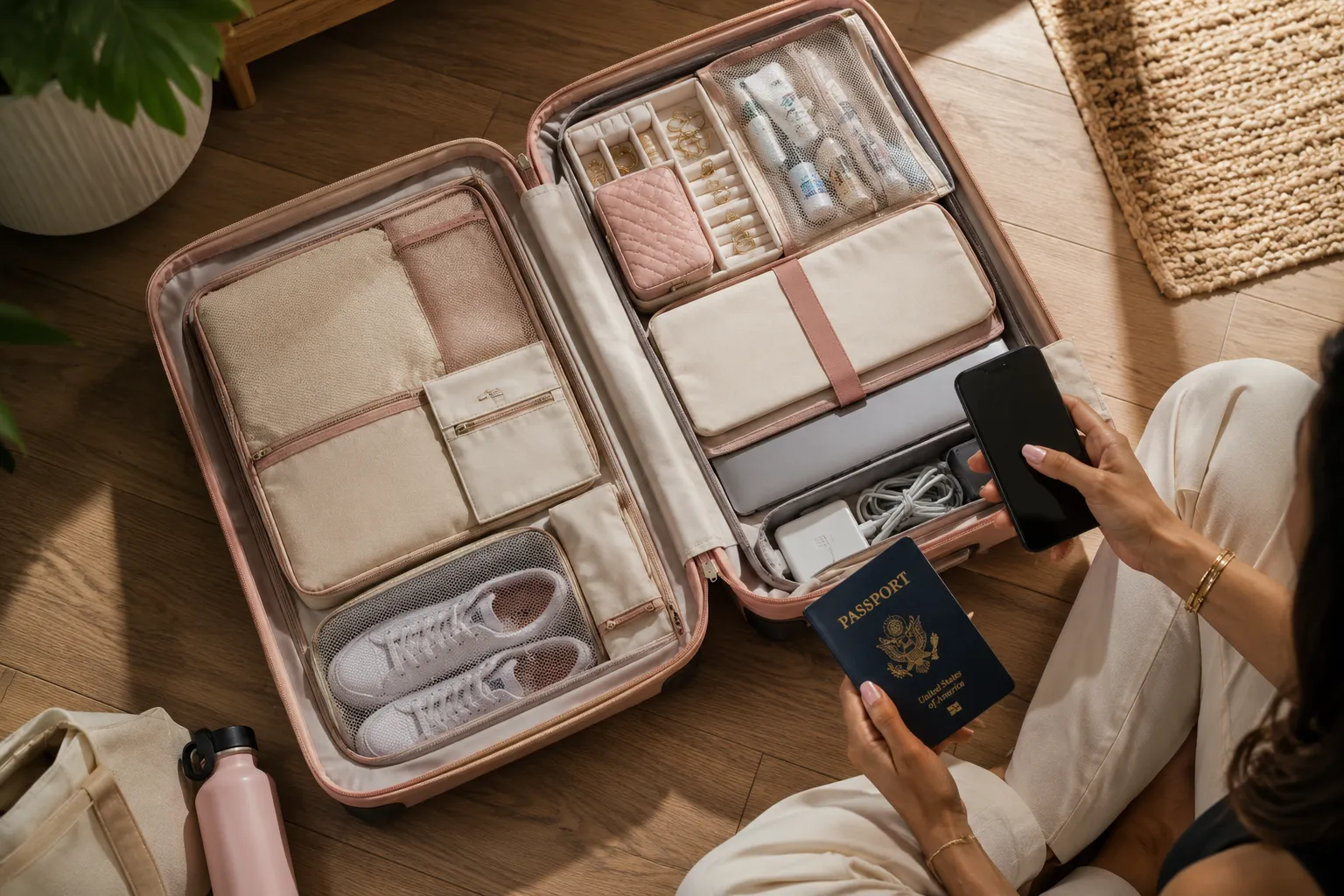
Women travel differently. They carry different items. They organise differently. They face different constraints—from safety concerns that make easy access to certain items essential, to the simple reality that women's clothing, with its wider variety of fabrics, silhouettes, and care requirements, demands a different packing logic than men's. A suit can be folded. A silk dress cannot. A pair of running shoes takes up predictable space. A pair of heels, a pair of flats, and a pair of sandals—not uncommon for a woman on a multi-day trip—creates a three-dimensional packing puzzle that most luggage is not designed to solve.
NORI's product line—luggage, organisers, packing cubes, and bags—is built from scratch around these insights. The compartments are designed for the items women actually carry. The weight distribution accounts for the reality that women, on average, have less upper-body strength than men and need luggage that is easier to lift, pull, and manoeuvre. The aesthetics reject the industry's default assumption that luggage should look like industrial equipment. NORI's products are designed to be beautiful—not as an afterthought, but as a core design principle. The brand has already served over 4,000 customers and is tracking toward a ₹2 crore ARR.
The company has already served over 4,000 customers. The fresh capital will be used to expand product lines and strengthen both online and offline distribution. The founders are targeting a market that is both obvious and overlooked: the hundreds of millions of women who travel, who have been buying luggage designed for someone else, and who have been waiting for a brand that sees them.
The Vijay Shekhar Sharma Connection
The presence of Vijay Shekhar Sharma on NORI's cap table is more than a celebrity angel investment. It is a signal.
Sharma, the founder of Paytm, is one of India's most successful consumer internet entrepreneurs. He built a payments company that serves hundreds of millions of users, and he understands—perhaps better than any other Indian founder—what it takes to build a consumer brand at scale. His investment in NORI, alongside Rebalance and VSS Investment & Management, suggests that he sees in the company something that the legacy luggage industry has missed: a structural opportunity to build a category-defining brand by serving a customer that the incumbents have ignored.
The pre-seed round is small by venture capital standards—$350,000 is a modest sum. But the strategic significance is larger. NORI is not raising money to build a prototype or test a hypothesis. It is raising money to scale a product that already has 4,000 paying customers, a ₹2 crore ARR trajectory, and a thesis that is validated every time a woman opens a NORI suitcase and realises that someone has finally thought about how she packs.
The founders are clear-eyed about the challenges ahead. The luggage market is dominated by established players—VIP, Samsonite, American Tourister—with deep distribution networks, massive advertising budgets, and decades of brand equity. NORI is a startup with a pre-seed round and a website. The asymmetry is extreme. But the history of consumer brands is littered with incumbents who were disrupted not by a better version of their own product, but by a product built for a customer they had never bothered to understand.
What This Signals
The NORI story is not primarily about luggage. It is about the structural bias embedded in industrial design—and about the market opportunity that bias creates.
For decades, the consumer products industry operated on a simple, unexamined assumption: the default customer is male, and the female customer is a variant. Products were designed for men and then "adapted" for women—a process that usually meant shrinking the dimensions, changing the colour to pink, and calling it a day. The assumption was so deeply embedded that it was invisible. The people designing the products did not think of themselves as designing for men. They thought of themselves as designing for "people"—and their definition of "people" happened to look a lot like themselves.
That assumption is collapsing—not all at once, but in categories where women entrepreneurs are building brands from scratch around female consumers, rejecting the industry's default settings and starting from first principles. The same dynamic that built Glossier in beauty, ThirdLove in lingerie, and Elvie in women's health technology is now arriving in categories—luggage, travel accessories, outdoor gear—that have been male-dominated for so long that the bias has become invisible.
NORI is part of that wave. The founders are not asking for permission to enter the luggage industry. They are pointing out that the industry, as currently constituted, has failed to serve half its potential customers. The 4,000 women who have already bought NORI products are the early adopters. The hundreds of millions of women who travel are the market. The $350,000 pre-seed round is the first institutional validation that the thesis is worth betting on. The luggage industry may not have seen this coming. But the women packing their bags did.


