New Delhi, February 2026: The Room Where the Future Was Decided
There are gatherings that are described as historic in the moment but fade from memory within months, their significance dissolving in the acid of subsequent events that outpace them. And then there are gatherings whose significance only grows with time — where the decisions made, the relationships formed, and the signals sent continue to shape the world long after the last delegate has departed.
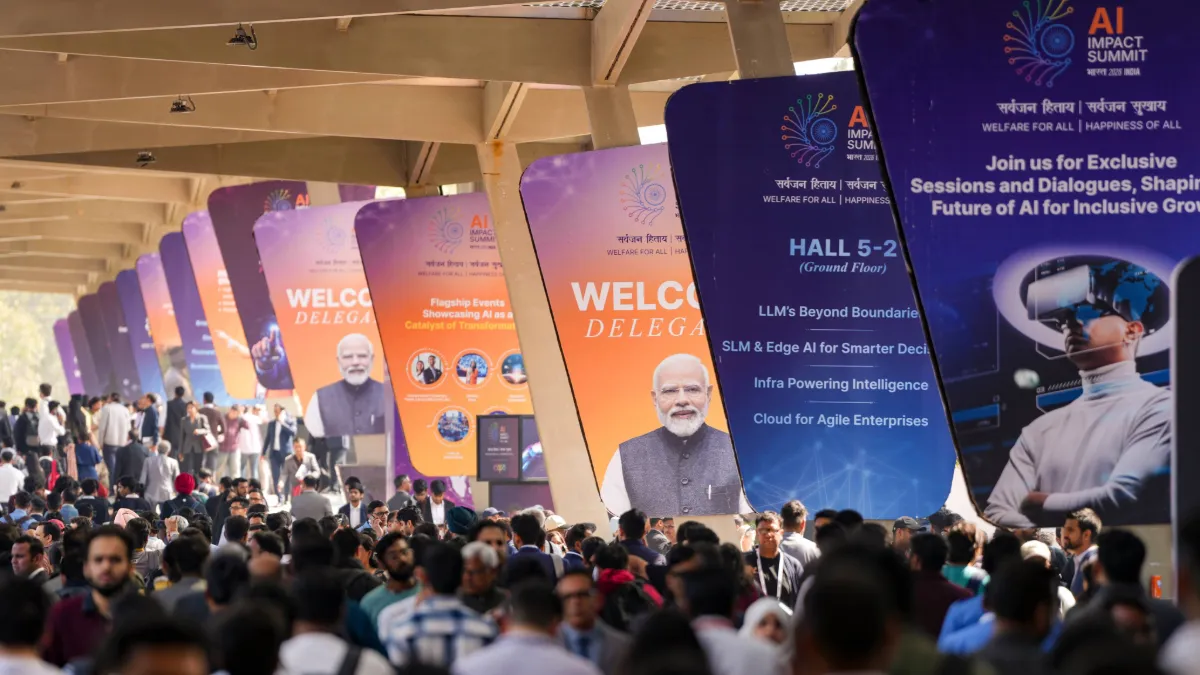
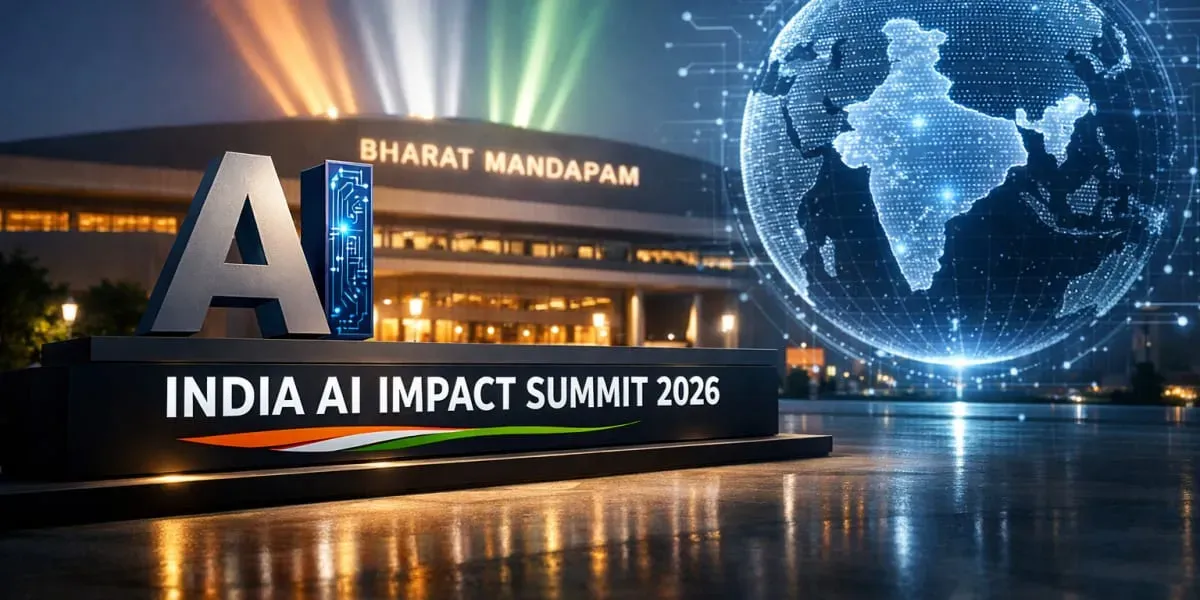
The India AI Impact Summit, held in New Delhi on February 19 and 20, 2026, belongs to the second category. This was the first global AI summit ever hosted in the Global South. That fact alone would have made it notable. What made it historic was what happened within it: a convergence of political will, private capital, and technological ambition that produced over $200 billion in investment commitments and, more significantly, a fundamental reframing of the global AI conversation.
The summit's location was not incidental. By choosing to host the world's premier AI convening in New Delhi rather than San Francisco, London, or Geneva, India made a statement about where AI's future would be built and for whom. The Global South — home to the majority of the world's population, containing the majority of the world's unmet need for the productivity and capability gains that AI can provide — had been largely an afterthought in the global AI conversation. The India AI Impact Summit declared that it would be an afterthought no longer.
The Investment Commitments: $200 Billion and What It Means
The financial commitments announced at or in direct connection with the summit were staggering in their scale and breadth. The Adani Group's commitment to build AI data centers powered entirely by renewable energy — with cascading investments in server manufacturing, sovereign cloud platforms, and electrical systems that together exceed $100 billion — represents the largest single industrial commitment in India's history. That this commitment is specifically tied to renewable energy reflects a sophistication about the environmental implications of AI infrastructure that is often absent from the conversation in more established markets: training large AI models is energy-intensive, and doing so with clean energy is both environmentally responsible and strategically prescient as carbon costs rise globally.
Microsoft's commitment of $50 billion by end of decade to expand AI infrastructure across Global South markets, with India as the primary destination, builds on an existing India relationship that already makes the country one of Microsoft's largest global markets for both consumer and enterprise products. The specificity of the commitment — data centers, AI skill development initiatives, language-focused AI systems — suggests that Microsoft has done the work to understand what India actually needs from this investment, rather than simply announcing a large number.
Blackstone's $600 million equity investment in Neysa, the Indian AI cloud startup, represents private equity's conviction in India's AI infrastructure story. Blackstone, which manages over a trillion dollars in assets and has no incentive to make headline-grabbing commitments that do not reflect genuine analytical conviction, concluded that Neysa's plan to deploy over 20,000 GPUs in Indian data centers represented a compelling investment opportunity. The endorsement of a private equity firm of Blackstone's caliber carries a quality signal that pure venture capital investments do not — it indicates that the company's fundamentals, not merely its narrative, have been scrutinized and found compelling.
The Presence of Global AI's Most Consequential Leaders
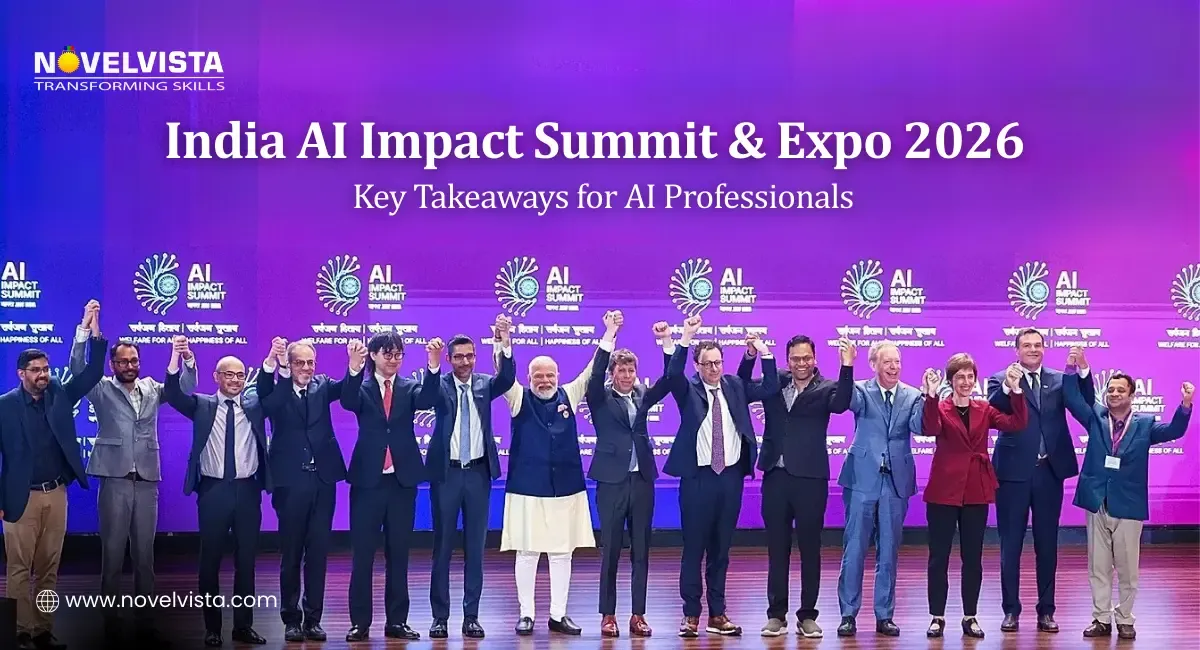
The attendance at the India AI Impact Summit of Sam Altman, CEO of OpenAI; Sundar Pichai, CEO of Google; and Dario Amodei, CEO of Anthropic — three of the most consequential figures in the development of artificial intelligence — was not ceremonial. These are not executives who travel internationally for photo opportunities. They engage when they see a market, a talent pool, a regulatory conversation, or a strategic alignment that demands their personal attention. Their simultaneous presence in New Delhi sent a signal that no press release could have manufactured: the leaders of the AI industry considered India's moment important enough to be present for it.
The conversations that took place at and around the summit between these leaders and India's government, industry, and startup community will have effects that extend far beyond the announced commitments. Investment partnerships negotiated, talent relationships established, regulatory frameworks discussed, research collaborations initiated — these are the invisible outcomes of convening that will quietly shape India's AI trajectory for years. When the CEO of OpenAI sits across from the founders of India's most promising AI startups, the connections formed in that room have a value that no single funding round can capture.
The presence of global AI leaders also established India as a peer in the global AI governance conversation. Questions about AI safety, AI ethics, data governance, and the international coordination of AI development are being decided at a global level — and they are being decided, at present, primarily by institutions and governments in the United States and Europe. India's hosting of the world's first Global South AI summit was a claim to seat at that table. The summit's participants, by attending, implicitly acknowledged that India's perspective on these questions — shaped by its scale, its diversity, and its particular relationship with the technologies that AI will transform — deserves to be heard.
The Deeper Significance: Who Gets to Shape AI's Future?
The most important outcome of the India AI Impact Summit may not be any of the specific investments or partnerships announced. It may be the shift it represents in who is understood to be shaping the future of artificial intelligence.
The global AI narrative has, until recently, been written almost entirely in English and centered almost entirely on the United States. The major AI laboratories, the major venture capital firms backing AI, the major media outlets covering AI, and the major regulatory bodies proposing to govern AI are all, predominantly, American or European. This concentration of influence is not a neutral fact. It means that the AI systems being built reflect American and European assumptions about what intelligence is for, what good looks like, and whose needs are most important to serve.
India, with 1.4 billion people speaking dozens of languages, with millennia of intellectual tradition across philosophy, mathematics, medicine, and the arts, with specific development challenges and specific forms of social organization that differ fundamentally from the Western contexts in which AI is primarily being developed, has a profound stake in the direction of AI that is not adequately represented in the current conversation. The India AI Impact Summit was an assertion of that stake.
For The Impactful Global Indian community — the diaspora entrepreneurs, the NRI investors, the second-generation professionals watching their homeland's ascent — the summit was a moment of pride that transcended the transactional. It was evidence that the Indian approach to technology, characterized by jugaad innovation, mathematical depth, and an orientation toward solving real human problems at massive scale, is being recognized as a global asset. The $200 billion in commitments confirmed it. The presence of global AI's most powerful figures consecrated it. The work of building what was promised now begins.