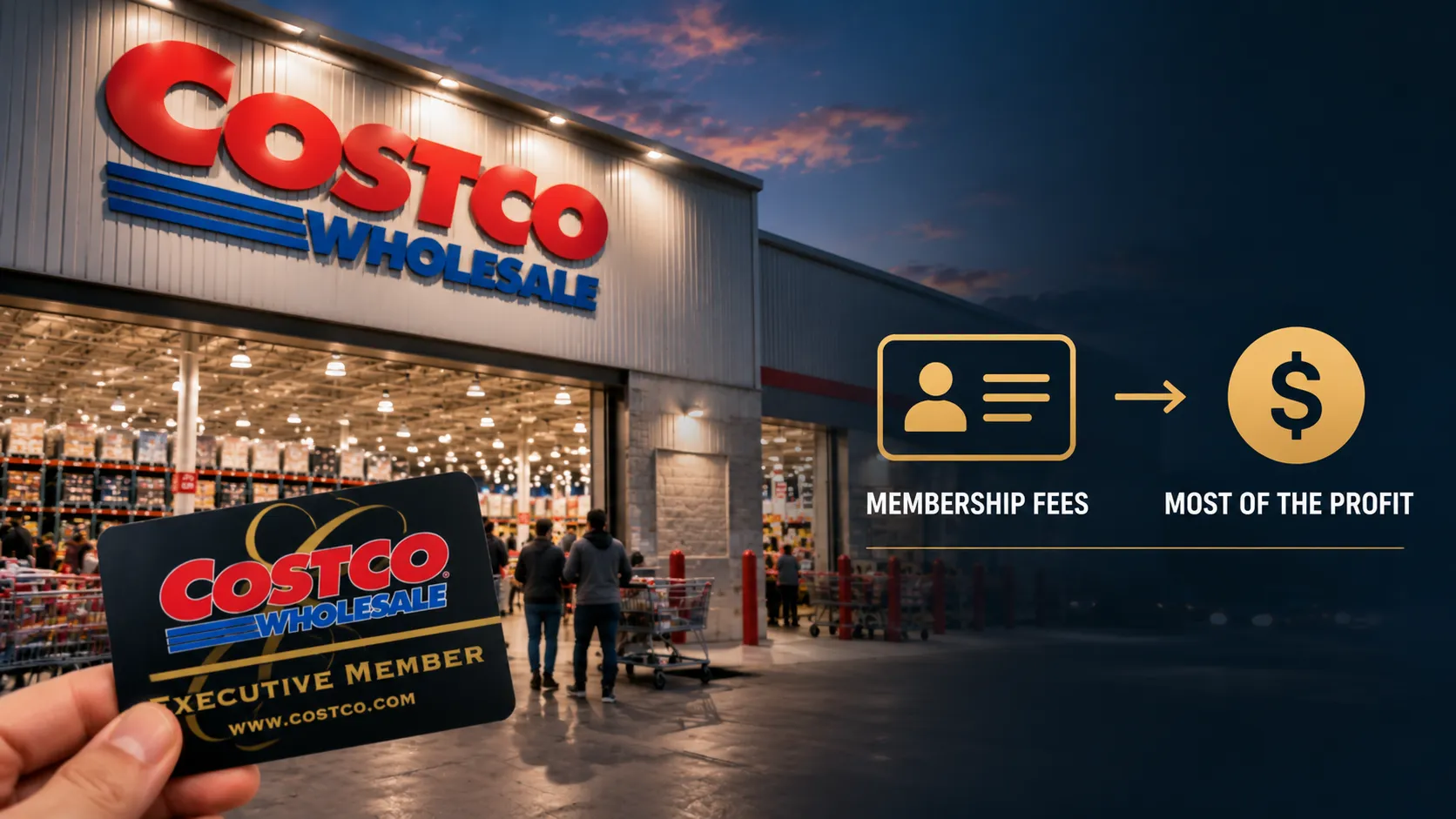
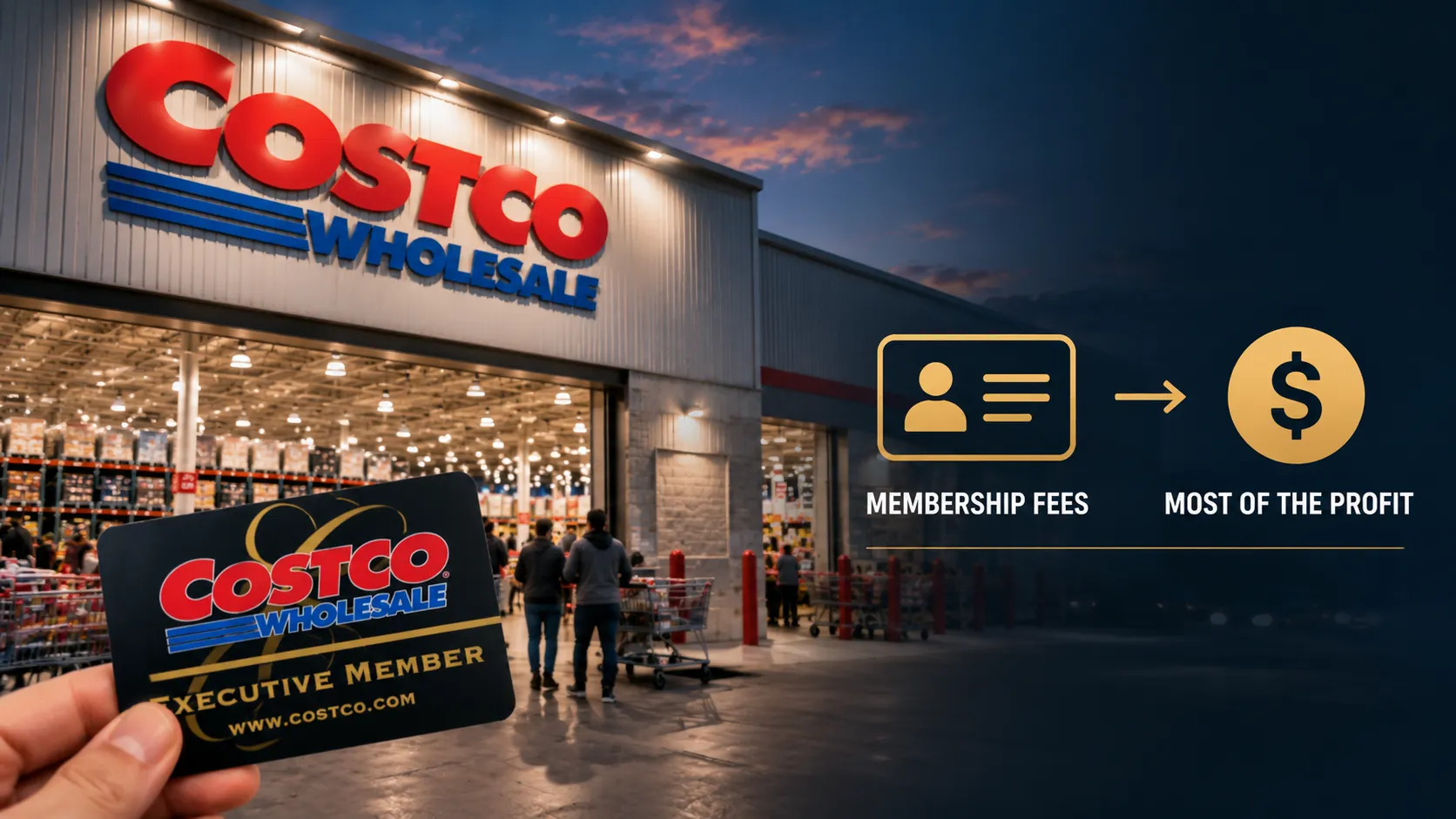
Most Retailers Make Money By Selling Products. Costco Makes Most Of Its Profit From Membership Fees. That Single Difference Has Helped Create One Of The Most Unusual And Successful Business Models In Modern Retail.
Walk into a Costco warehouse on a weekend and the scene can feel almost contradictory.
Customers willingly navigate crowded aisles, push oversized carts through cavernous stores and often purchase products in quantities they never planned to buy. There are few elaborate displays, limited product choices compared to traditional supermarkets and virtually none of the luxury shopping experience many retailers try to create. Yet millions of consumers remain fiercely loyal to the brand. In many households, a Costco membership is treated less like a shopping option and more like a necessity. The loyalty is so strong that renewal rates consistently exceed 90 percent in key markets, a figure most subscription businesses would envy.
At first glance, Costco appears to be a simple warehouse retailer.
The company sells groceries, electronics, household products, furniture, clothing and countless other items at competitive prices. Like any retailer, it generates billions in revenue from merchandise sales. However, looking only at sales figures misses the most important part of the story. Costco's true business model is not built around products. It is built around memberships. The annual fees customers pay to access its stores generate the overwhelming majority of the company's operating profit, fundamentally changing how Costco approaches pricing, customer relationships and long-term growth.
This distinction explains why Costco behaves differently from almost every other major retailer.Most retailers attempt to maximize profit on every item they sell. Costco operates with a different objective. Because membership fees provide a significant portion of profitability, the company can afford to keep product markups exceptionally low. Management has long maintained strict limits on how much prices can be increased, often sacrificing short-term margins to preserve customer trust. The result is a business model where consumers feel they are constantly finding value, reinforcing the very membership system that makes the strategy possible.
What emerges is one of the most powerful examples of alignment between customers and shareholders.
Instead of trying to extract as much profit as possible from every transaction, Costco succeeds by convincing members that renewing their subscriptions is worthwhile. Every operational decision ultimately flows from that objective. The company's famous customer loyalty, strong financial performance and cult-like following can all be traced back to this surprisingly simple idea.
Memberships Changed The Economics Of Retail
The genius of Costco's model lies in how it shifts incentives.
Traditional retailers depend heavily on margins generated from merchandise sales. If costs rise, prices often rise as well. If profitability declines, retailers may seek additional ways to extract revenue from customers. Costco operates under a different framework because membership fees create a predictable stream of recurring income. Customers pay before making a single purchase, providing the company with a stable financial foundation that many retailers can only dream about.
This recurring revenue changes the company's priorities.
Because Costco earns substantial income regardless of what individual customers buy, it can focus on delivering exceptional value rather than maximizing margins on specific products. Members perceive that they are receiving insider pricing, while Costco strengthens the relationship that encourages future renewals. The cycle becomes self-reinforcing. Lower prices increase customer satisfaction, satisfied customers renew memberships and membership revenue allows prices to remain competitive.
Few retail businesses have executed this strategy as effectively.
The model creates a sense of shared interest between the company and its customers. Shoppers believe Costco is working on their behalf because the economics genuinely encourage that behavior. Every time members save money, the likelihood that they renew their memberships increases. Helping customers therefore becomes directly aligned with corporate profitability.The result is a retail experience that feels fundamentally different from many competitors.Customers often view Costco as a trusted partner rather than simply another place to shop.
Scarcity Is Part Of The Strategy
Another reason Costco generates such loyalty is its unusually disciplined approach to product selection.
A typical supermarket may stock tens of thousands of items across countless brands and variations. Costco deliberately offers far fewer options. The company focuses on a curated assortment of products that it believes deliver strong value and broad appeal. This approach reduces complexity while strengthening purchasing power with suppliers.
The limited selection creates several advantages simultaneously.
By concentrating purchases on fewer products, Costco can negotiate better pricing and larger volumes. The savings can then be passed on to customers. At the same time, shoppers experience less decision fatigue because they are choosing from carefully selected options rather than endless alternatives. The company effectively acts as a filter, simplifying the purchasing process for consumers.This strategy also contributes to the treasure-hunt effect that Costco is famous for.
Customers never know exactly what they might discover during a visit. Seasonal products, limited-time offers and unexpected bargains create excitement that traditional retailers often struggle to replicate. Shopping becomes part necessity and part exploration, encouraging members to return frequently.That sense of discovery helps transform routine purchases into experiences.In a retail environment increasingly dominated by convenience, Costco has found a way to make shopping feel engaging again.
The Kirkland Phenomenon
No discussion of Costco's success would be complete without mentioning Kirkland Signature.
Private-label products have existed for decades, but Costco elevated the concept into something much larger. Rather than positioning Kirkland as a budget alternative, the company focused on creating products capable of competing directly with premium brands. The goal was not simply lower prices. The goal was exceptional value.
Consumers responded enthusiastically.Over time, Kirkland developed into one of the most powerful private-label brands in the world. Members often purchase Kirkland products with confidence because they trust Costco's quality standards. This trust extends across categories ranging from groceries and household goods to clothing and health products. The brand has become so successful that many consumers actively seek Kirkland items rather than viewing them as substitutes.
The financial benefits are substantial.
Private-label products typically generate stronger economics while reinforcing customer loyalty. At Costco, however, the value extends beyond margins. Kirkland strengthens the perception that the company consistently prioritizes quality and affordability, reinforcing the trust that underpins the membership model.In many ways, Kirkland has become a symbol of Costco itself.Reliable, efficient and focused on delivering more value than customers expect.
The Cult Following Is A Business Asset
Many companies dream of building loyal customer communities.
Costco has achieved something even more powerful. Its members frequently become advocates. Customers enthusiastically share product recommendations, discuss deals online and encourage friends and family to join. Social media is filled with Costco discoveries, shopping tips and discussions about favorite products. The enthusiasm often resembles the behavior associated with technology brands or sports teams rather than retailers.
This loyalty creates enormous competitive advantages.
Acquiring new customers becomes easier when existing members actively promote the brand. Renewal rates remain high because members perceive ongoing value. Even during economic uncertainty, consumers often view Costco memberships as worthwhile because they believe the savings exceed the annual fee. The relationship becomes surprisingly resilient.
The community effect also strengthens Costco's market position.
Competitors can replicate warehouses, pricing strategies and product assortments. Replicating trust accumulated over decades is far more difficult. Costco's reputation has become one of its most valuable assets, creating barriers that extend beyond operational capabilities.That trust ultimately translates into economic value.The cult following is not merely a cultural phenomenon. It is a strategic advantage.
The Bigger Story
Viewed narrowly, Costco is a successful retailer with a loyal customer base.
Viewed more broadly, it represents a different philosophy of business. Instead of maximizing profit from every transaction, Costco built a system where long-term trust generates recurring revenue. Memberships changed the company's incentives, allowing it to prioritize customer value in ways many competitors cannot easily match. The result is a business model that appears simple on the surface but is remarkably sophisticated underneath.
The lesson extends far beyond retail.
Many companies focus on extracting value from customers. Costco focuses on creating enough value that customers willingly continue paying to participate. That distinction may seem subtle, but it fundamentally changes how the business operates. Every low price, every carefully selected product and every membership renewal reflects the same underlying principle.Costco does not succeed because people love buying bulk groceries.It succeeds because millions of customers believe the company is genuinely on their side.And in modern business, trust may be the most valuable product of all.