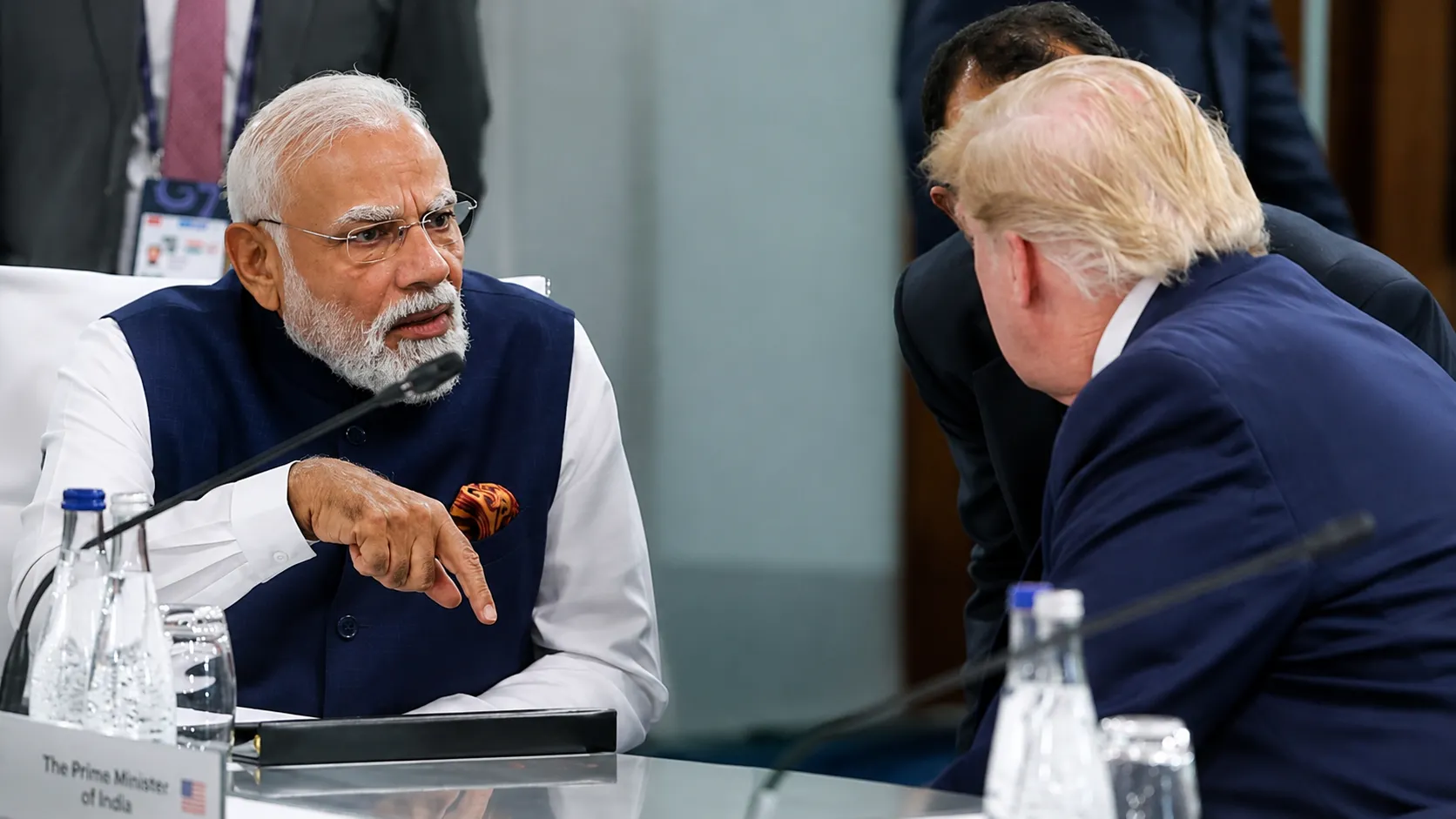
Evian, France / New Delhi, June 17, 2026: Prime Minister Narendra Modi held a bilateral meeting with US President Donald Trump on the sidelines of the G7 Summit in Evian, France, on Wednesday, capping a packed two days of diplomacy that began with Modi pressing world leaders on the safety of civilians and seafarers caught in the Middle East's maritime crisis. The meeting, confirmed for today by Indian government sources, comes as the two sides work to close out a long-pending bilateral trade agreement and steady a relationship strained by tariffs and recent tensions in the Gulf.
A Summit Shadowed by the Strait of Hormuz
The backdrop to this year's G7 outreach session, India's 13th appearance at the summit and Modi's seventh consecutive participation, has been the fallout from a deadly incident off the coast of Oman. Last week, a Palau-flagged oil tanker, the Settebello, was intercepted and struck by the US military over an alleged violation of a blockade, while reportedly carrying oil out of Iran. Three of the vessel's 28 crew members lost their lives; the ship's complement included 24 Indian nationals along with Pakistani, Ukrainian and Russian crew. The strike, and the wider disruption to traffic through the Strait of Hormuz, has put maritime safety squarely on the agenda for India at this year's summit.
What Modi Told World Leaders
Speaking on Tuesday at a high-level G7 session titled "Forging New Partnerships and Rebuilding International Solidarity," with Trump seated beside him, Modi welcomed the progress made toward a peace framework in West Asia while making clear that the human cost of the crisis could not be set aside. Addressing the seafaring community's stake in global trade directly, the Prime Minister told the gathered leaders: "The safety of seafarers... is our responsibility." He went on to underline the need for shipping lanes to stay open and secure, arguing that sea routes connecting nations through global trade had to remain free of fear for the people who keep them running.
The intervention was notable for its setting: it came in the presence of the very leader whose military's strike had killed Indian civilians, and it positioned India as an advocate for civilian protection even as it works to keep its broader relationship with Washington on track.
The Bilateral That Mattered: Modi Meets Trump
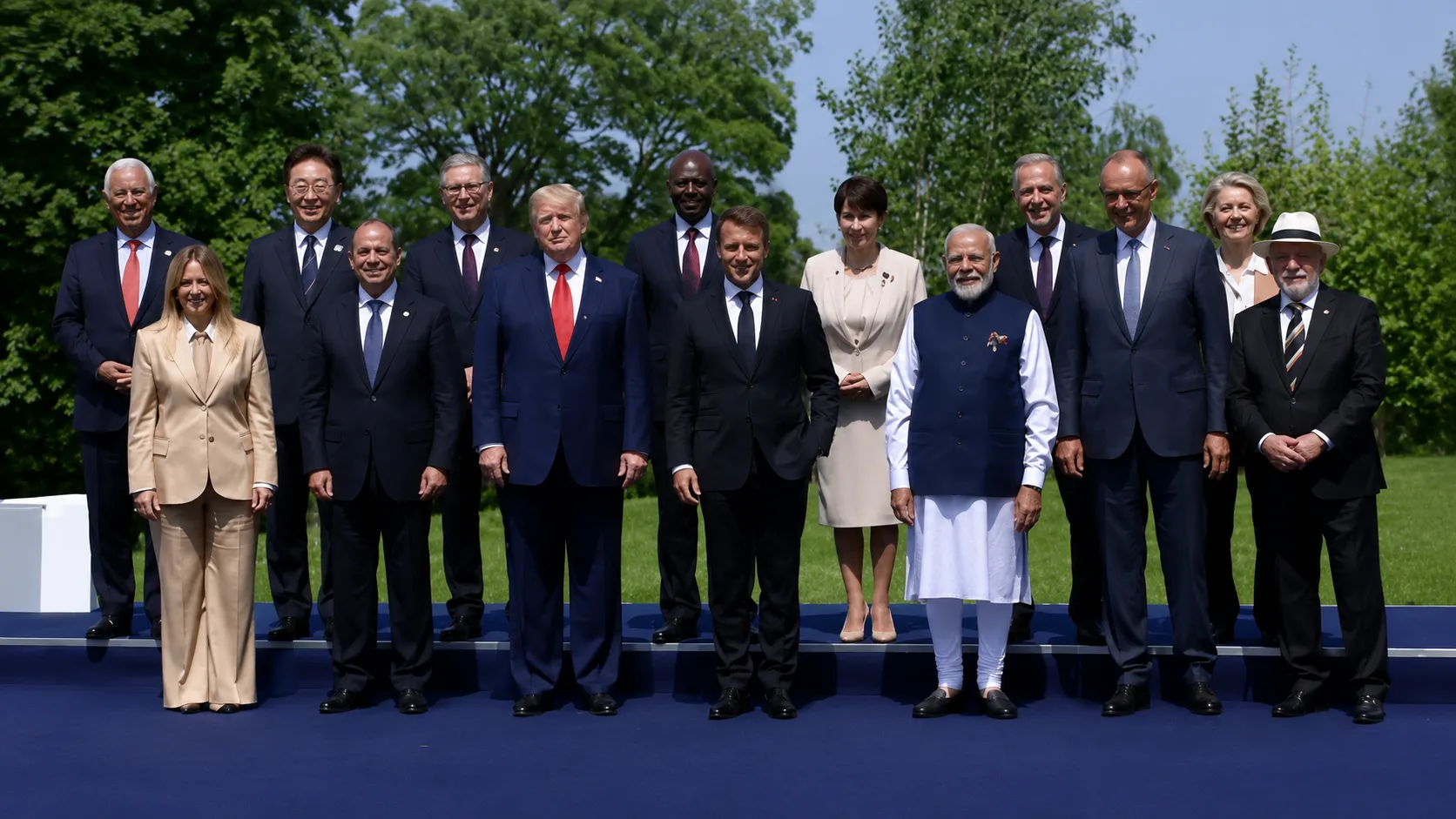
The Modi-Trump dynamic at this year's summit unfolded in two acts. The first came on Tuesday, when the two leaders met face-to-face for the first time in roughly sixteen months, exchanging a warm handshake before taking their seats together for the outreach session. A moment from the sidelines went viral on social media: as world leaders gathered for the traditional group photograph, Modi was seen extending a hand to steady Trump as he stepped onto the photo platform, before Trump made way for French President Emmanuel Macron and his wife.
The substantive bilateral followed today. According to government sources, the discussion was expected to cover the situation in West Asia and the Strait of Hormuz, the prospects for expanded energy imports from the US, and the bilateral trade agreement that negotiators on both sides have been racing to finalise. Officials briefed that talks on the trade deal have reached their final stages, with the agreement expected to be completed within the next few weeks. Speaking to reporters at the G7 venue after the two leaders' lunch meeting, Trump offered a characteristically brief but warm assessment of his Indian counterpart, calling Modi "calm and cool."
The warmth on display marks a notable easing of recent friction. Relations between the two countries had taken a hit after Washington imposed punitive tariffs on Indian goods and Trump repeated claims about his role in de-escalating last year's India-Pakistan military clashes, claims New Delhi has consistently pushed back on. A visit by US Secretary of State Marco Rubio to India last month had begun to thaw the relationship before the Oman tanker strike introduced a fresh point of tension just as the two leaders prepared to meet again.
A Packed Day of Multilateral Diplomacy
The Trump meeting was only one part of a dense schedule. Modi also held a bilateral with German Chancellor Friedrich Merz, his second meeting with the German leader this year, where the two reviewed progress on the India-Germany Strategic Partnership, welcomed the conclusion of India-EU free trade talks earlier in the year, and signed off on a Defence Industrial Cooperation Roadmap alongside a transit visa waiver for Indian nationals passing through Germany. The conversation also touched on the Russia-Ukraine conflict and the broader understanding reached to wind down hostilities in West Asia.
Later in the afternoon, Modi held a trilateral meeting with European Council President António Costa and European Commission President Ursula von der Leyen on the summit's margins, rounding out a day that saw India engage almost the entire breadth of the G7's leadership beyond the formal outreach sessions.
The Bigger Picture
For India, this year's G7 outreach has doubled as a venue to press a case that sits outside the bloc's usual economic and security agenda: that ordinary seafarers and civilians caught in great-power conflict zones deserve explicit protection, not just diplomatic afterthought. Modi's intervention on the Strait of Hormuz, delivered with the US president sitting beside him, suggests New Delhi is willing to raise uncomfortable subjects even while pursuing a friendlier, deal-focused relationship with Washington on trade and energy.
Whether that balancing act holds will become clearer once the details of the now-imminent trade agreement emerge, and once it's seen whether the goodwill from Evian — the handshake, the helping hand on the platform, Trump's "calm and cool" remark — translates into a more durable reset, or simply a pleasant interlude in a relationship still working through real points of friction.