The ₹48,484 Crore Question
On May 5, 2026, the Union Cabinet approved the fifth iteration of the Emergency Credit Line Guarantee Scheme. The target was ambitious: facilitate an additional credit flow of ₹2.55 lakh crore to businesses battered by the West Asia war .
Within just five weeks, the numbers were staggering. As of June 9, 2026, the scheme had issued 1,06,549 guarantees amounting to ₹48,484.26 crore . The vast majority of these—96 per cent by number and 86 per cent by value—went to micro, small and medium enterprises . Public sector banks accounted for 96 per cent of the guarantees issued, accelerating credit delivery to eligible borrowers .
But the sheer velocity of the rollout masks a more complicated question. Is this wave of guaranteed credit saving distressed businesses, or is it simply delaying an inevitable wave of defaults? And are the most vulnerable—women-owned enterprises and those owned by marginalized communities—actually receiving the support they need?
The Anatomy of ECLGS 5.0: Not Your Older Brother's Bailout
ECLGS 5.0 differs from its predecessors in three critical ways.
First, the trigger is geopolitical rather than pandemic-induced. The scheme was designed explicitly to cushion businesses from the fallout of the US-Iran war, which has spiked oil prices, disrupted shipping routes through the Strait of Hormuz, and sent freight costs soaring from an average of $300 per container to over $4,000 in many cases . Export-oriented MSMEs in textiles, engineering goods, and home furnishings have been hit particularly hard, facing both delayed payments from international buyers and skyrocketing input costs .
Second, the government has built in expectations of higher stress. Unlike earlier ECLGS rounds, which saw NPA levels of 3-4 per cent, ECLGS 5.0 is factoring in potential credit losses of 6-8 per cent . The Centre has provisioned nearly ₹18,000 crore under the scheme to absorb these anticipated losses . This is a quiet admission that the borrowers being supported this time are in worse financial health than those who received guarantees during the COVID era.
Third, the scheme includes a dedicated ₹5,000 crore window for the aviation sector, which has been devastated by elevated aviation turbine fuel prices . Outstanding bank credit to the aviation sector stood at ₹52,688 crore as of March 2026, implying the proposed support could amount to nearly 9.5 per cent of total sectoral advances .
The Reach: Who Is Actually Getting the Money?
The headline numbers suggest broad-based coverage. MSMEs have received 96 per cent of guarantees by number and 86 per cent by value . Public sector banks have driven implementation, accounting for 96 per cent of guarantees issued .
But the official data also reveals stark disparities when examined through a gender and social inclusion lens. According to a Rajya Sabha answer from July 2025, women-owned MSMEs from weaker economic sections constitute only 6.5 per cent of the total number of MSMEs registered under Udyam . While the government has run targeted schemes like the National SC-ST Hub, which provides capital subsidy of 25 per cent for technology upgradation to SC/ST women entrepreneurs, the overall footprint remains small . As of July 2025, only 24,482 women SC/ST entrepreneurs had benefited from NSSH since its 2016 launch .
State-wise data shows wide regional variation. In Andhra Pradesh, women-owned micro and small enterprises number approximately 19.01 lakh compared to 14.66 lakh male-owned enterprises—one of the few states where women-owned MSMEs outnumber male-owned ones . In contrast, in Uttar Pradesh, male-owned MSMEs outnumber women-owned ones by roughly 75 lakh to 44 lakh . These disparities are likely to be replicated in ECLGS 5.0 uptake, with women-owned businesses in states with weaker entrepreneurial ecosystems potentially missing out on the credit lifeline.
The Debt Trap: Relief Now, Risk Later
The most persistent criticism of ECLGS 5.0 is structural rather than operational. As Abizer Diwanji, Founder of NeoStrat Advisors, told CNBC TV18: "What you are solving is immediate liquidity, but immediate liquidity when business is slack through debt is not necessarily a good structural idea" .
The concern is compounded by the scheme's moratorium terms. ECLGS 5.0 offers a one-year moratorium on principal repayment, but interest continues to accrue during this period . Industry veterans recall painful lessons from the COVID-era restructuring schemes, where interest piled up on deferred principal, and the total debt burden became unmanageable.
Vikas Singh Chauhan, Director of the Home Textile Exporters' Welfare Association, told the Economic Times: "What happened is that both the interest and the principal kept getting added together, and then interest was charged on that combined amount. It kept piling up, and the total became so large that people got into serious trouble. They did take the moratorium, but it ended up hurting them more than helping" .
Jayanth Mutha, CEO of Himlite Products, echoed this concern: "The devil is in the details. If the government really intends to help, then the interest on the moratorium should be waived off" .
The counter-argument comes from former SBI Chairman Dinesh Khara, who described the scheme as a "timely intervention" that restores confidence in the banking system . The government has also pointed to the track record of previous ECLGS rounds, which SBI Research estimates saved 13.5 lakh MSMEs from slipping into NPA, protecting loans worth ₹1.8 lakh crore and safeguarding nearly 1.5 crore jobs .
The Structural Problem: Debt as a Poor Response to a Demand Shock
Diwanji's broader critique cuts deeper. He argues that using debt to address liquidity stress caused by a demand shock is fundamentally mismatched. Businesses need time to recover—often four to five years—and even if they survive, their ability to service debt after that period remains limited .
His proposed alternative is provocative. Instead of pure debt, he suggests a convertible instrument, something that could function like a subsidy rather than a loan. He also advocates for consolidation of the MSME sector: "Institutions which are likely to fail should be proactively merged into much larger corporates so that they can withstand any future issues" .
This is not a popular position in a country where MSMEs are seen as sacred engines of employment. But Diwanji's point is structural: "For every four or five years, we will see some issue coming through. We need a more long-term solution to scale, which should come through consolidation of the SME businesses" .
The Global Contrast: India's Guarantee Shield vs. The West's Credit Tightening
One of the most striking aspects of the current moment is the divergence between India's credit environment and that of the West.
In the United States, even as the Federal Reserve has lowered interest rates to a target range of 3.50-3.75 per cent, with the Prime Rate at 6.75 per cent, lending discipline has not loosened . The Fed's Senior Loan Officer Opinion Survey found that banks tightened standards on commercial loans to small firms, citing economic uncertainty and a reduced tolerance for risk . The Fed's 2025 Small Business Credit Survey found that only 42 per cent of small business applicants received the full amount of financing they requested .
In the private credit market, demand remains strong despite lower interest rates, as middle-market and smaller companies with weaker credit profiles continue to struggle to secure financing from traditional banks .
India's ECLGS 5.0 stands in stark contrast. By providing 100 per cent government guarantee coverage for MSME loans, the scheme has incentivized lenders to extend credit when they would otherwise be pulling back. The Reserve Bank of India's Financial Stability Report shows that guarantees worth around ₹6.28 lakh crore have been extended under ECLGS and CGFMU combined, with NPA levels under both schemes remaining manageable despite the relatively higher risk profile of borrowers .
The question is sustainability. India is using its fiscal space to backstop credit. The US is letting private markets adjust. Each approach carries different risks. India's model risks creating a culture of evergreening—using new debt to keep non-viable businesses alive. The US model risks letting viable businesses fail due to temporary liquidity crunches.
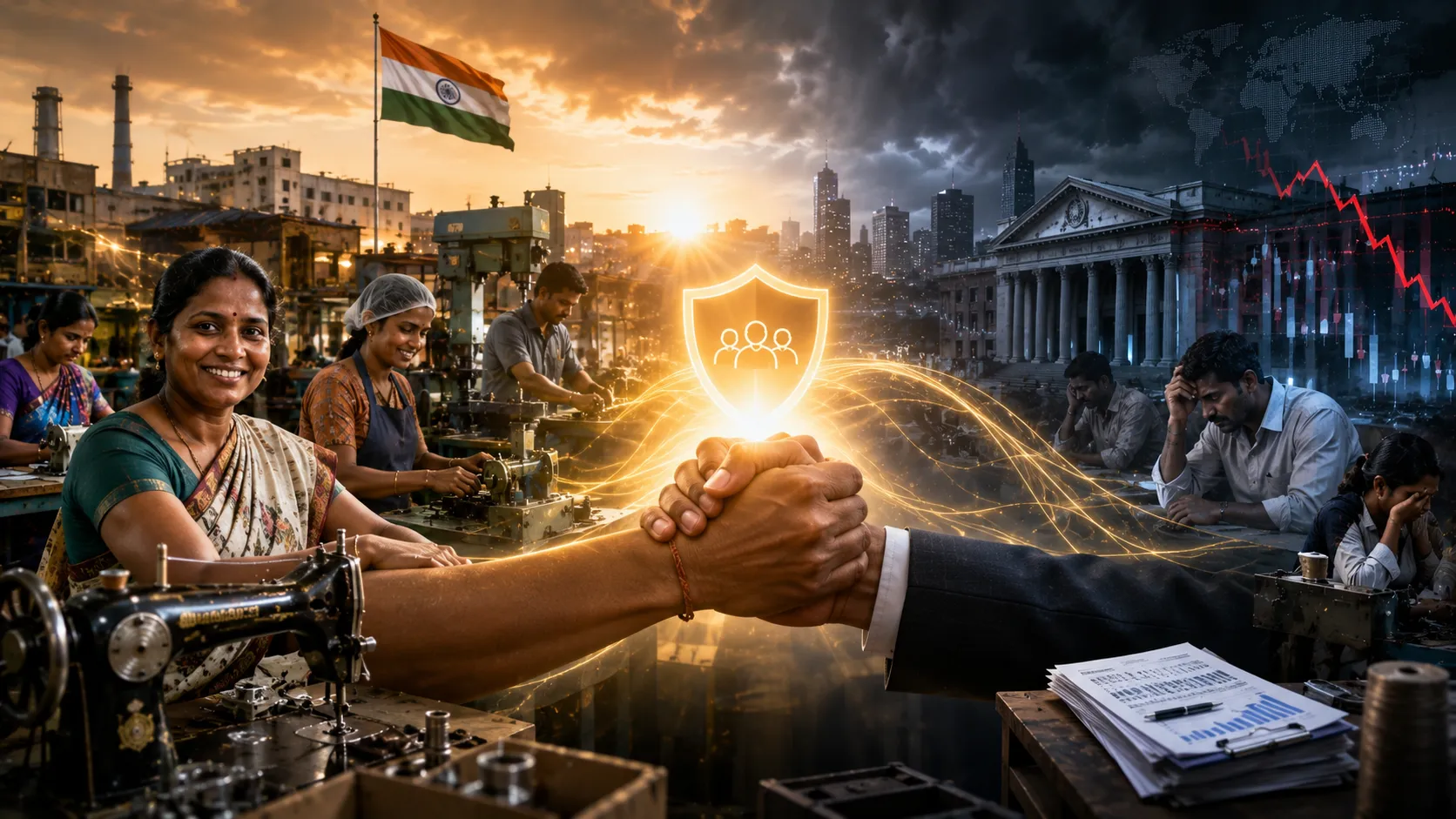
The Outlook: What Comes After the War?
The effectiveness of ECLGS 5.0 ultimately depends on two variables beyond the government's control: the duration of the West Asia conflict and the speed of global economic recovery.
If the war ends quickly and oil prices stabilize, the scheme may serve its intended purpose as a temporary bridge. Businesses that received guaranteed credit will see their revenues recover, their cash flows normalize, and their ability to service debt improve. The 6-8 per cent loss provision will prove adequate, and the scheme will be remembered as a successful counter-cyclical intervention.
If the war drags on, the calculation changes. As Diwanji noted, "Nothing is enough, and you will keep requiring more and more of it as long as the crisis lasts" . The government may need to extend the scheme, expand its coverage, or convert debt into equity. The ₹18,100 crore provisioned for losses may prove insufficient.
The most vulnerable segments—women-owned enterprises, SC/ST-owned businesses, and micro-enterprises in rural areas—will be the first to fall through the cracks if the crisis persists. Their thin capital buffers, limited access to alternative financing, and concentration in the most exposed sectors make them the canaries in the economic coal mine.
As the ECLGS 5.0 rollout continues, with the government considering a second phase of outreach programmes, the fundamental tension remains unresolved . The scheme is providing oxygen to businesses that would otherwise suffocate. But oxygen is not a cure. It is a bridge to a cure. And if the cure does not arrive soon, the debt will not disappear. It will simply be deferred.