The Dog Lover Who Built a ₹300 Crore Pet Care Empire: How Rashi Narang Turned a Passion for Animals Into One of India's Most Unusual Retail Success Stories
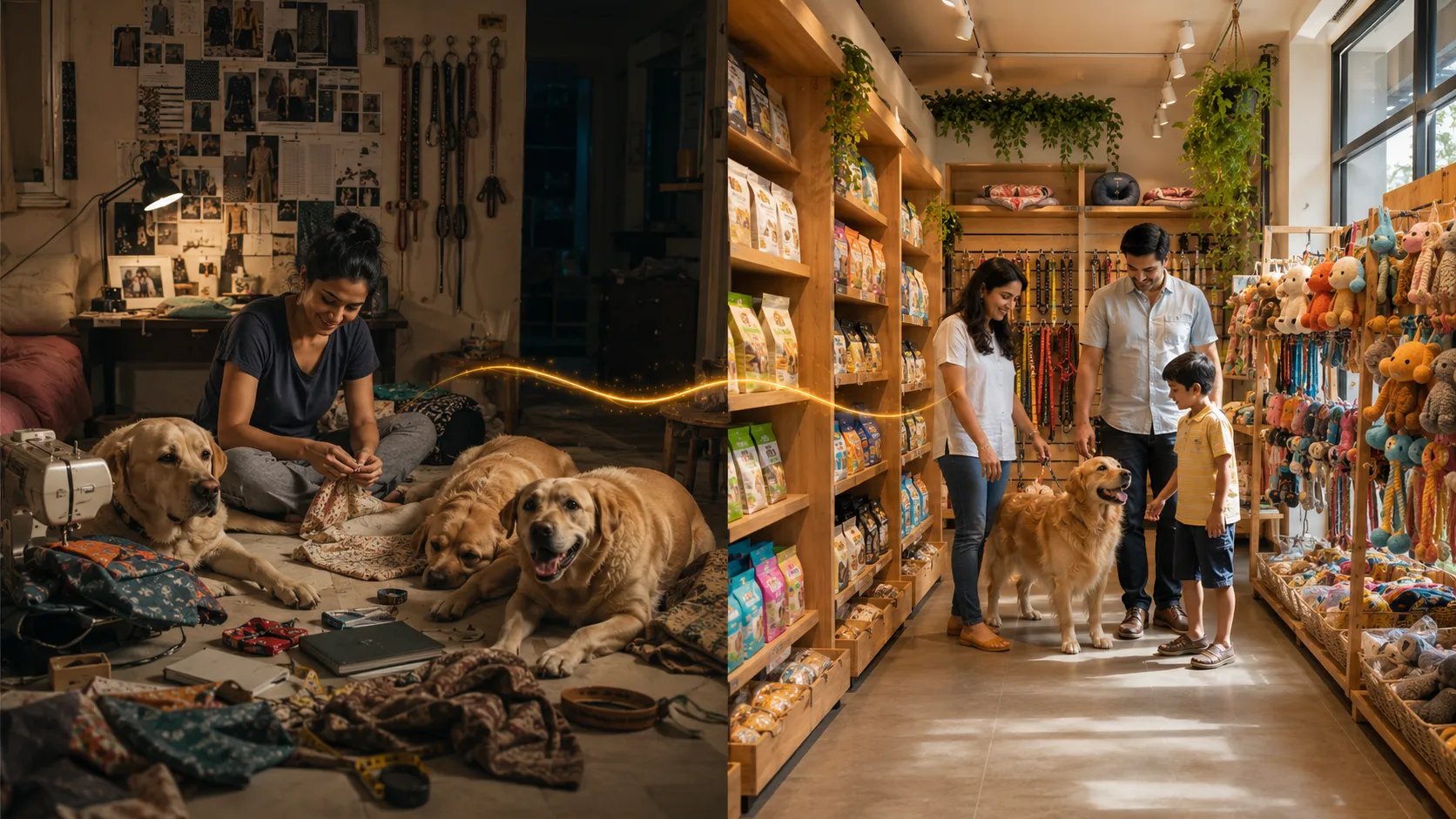
MUMBAI — May 25, 2026 — In 2008, Rashi Narang was a young marketing professional in Mumbai with a problem that no Indian company had solved. She had three dogs—Labradors—and she could not find high-quality food, toys, or accessories for them anywhere in the city. The pet stores that existed were small, poorly stocked, and designed for an earlier era when pets were fed table scraps and slept in the yard. The idea of a dog as a family member—deserving of premium nutrition, comfortable beds, and mental stimulation—was common in the West but almost unheard of in India. Narang, who had grown up with dogs and considered them part of her family, decided that if the market would not provide for her pets, she would provide for them herself.
She started Heads Up For Tails from her home, designing and selling a small range of pet accessories—collars, leashes, beds—to friends and fellow dog lovers. The business was not a startup in the conventional sense. It had no venture backing, no growth targets, and no ambition beyond solving a personal frustration. But somewhere in the first few years, Narang realised that her frustration was shared by millions of Indian pet owners—a demographic that was growing rapidly as urbanisation, rising incomes, and changing family structures transformed the way Indians lived with animals. The market for pet products that had not existed when she started was, by 2015, one of the fastest-growing consumer categories in the country.
Eighteen years later, Heads Up For Tails is India's largest omnichannel pet care brand, with annual revenue approaching ₹300 crore, a network of more than 100 physical stores across the country, a direct-to-consumer website that serves thousands of customers daily, and a product range that spans food, treats, toys, accessories, grooming products, and veterinary services. The company has raised funding from Verlinvest, Sequoia Capital, and a roster of institutional investors, and is now being watched as a potential IPO candidate—one of the few women-led, pet-focused consumer brands in the world that could list on the public markets. And it began, as Narang likes to say, with three Labradors who deserved better.
The Accidental Entrepreneur
Rashi Narang was not supposed to be a businesswoman. She studied commerce at Mumbai's Narsee Monjee College, then earned an MBA from the University of Liverpool, and spent the early years of her career in marketing roles at large corporations—the kind of jobs that provide a steady salary, a clear ladder, and the security of a well-defined professional identity. She liked the work. She did not dream of starting a company. The decision to launch Heads Up For Tails was not a strategic masterstroke. It was a response to a gap in the market that she encountered as a consumer, not as an entrepreneur.
The gap was specific and frustrating. In the mid-2000s, India's pet industry was virtually nonexistent in the organised sense. There were no national pet-food brands beyond the mass-market offerings of Pedigree and Drools. There were no specialty retailers. There were no premium accessories, no comfortable beds, no enrichment toys. The pet owner who wanted the best for their animal had to rely on imports, informal networks, or the kindness of other pet owners who shared tips and sources. Narang, who had been raised in a family that treated dogs as full members of the household, found this unacceptable. Her Labradors were not "just pets." They were family. And family deserved better than whatever was available at the local kirana store.
She began designing products herself—beds, collars, leashes—and sourcing them from small manufacturers. She sold them at dog shows, through word-of-mouth, and eventually through a basic website that she built herself. The early customers were other dog owners in Mumbai—people like her, who had been searching for quality products and had found nothing. They told their friends. The friends told their friends. Within two years, the business had grown beyond her apartment, and she had to rent a small warehouse to store inventory. She was still working a full-time job. She was still not sure whether this was a business or a hobby. She quit the job in 2010, took the leap, and has never looked back.
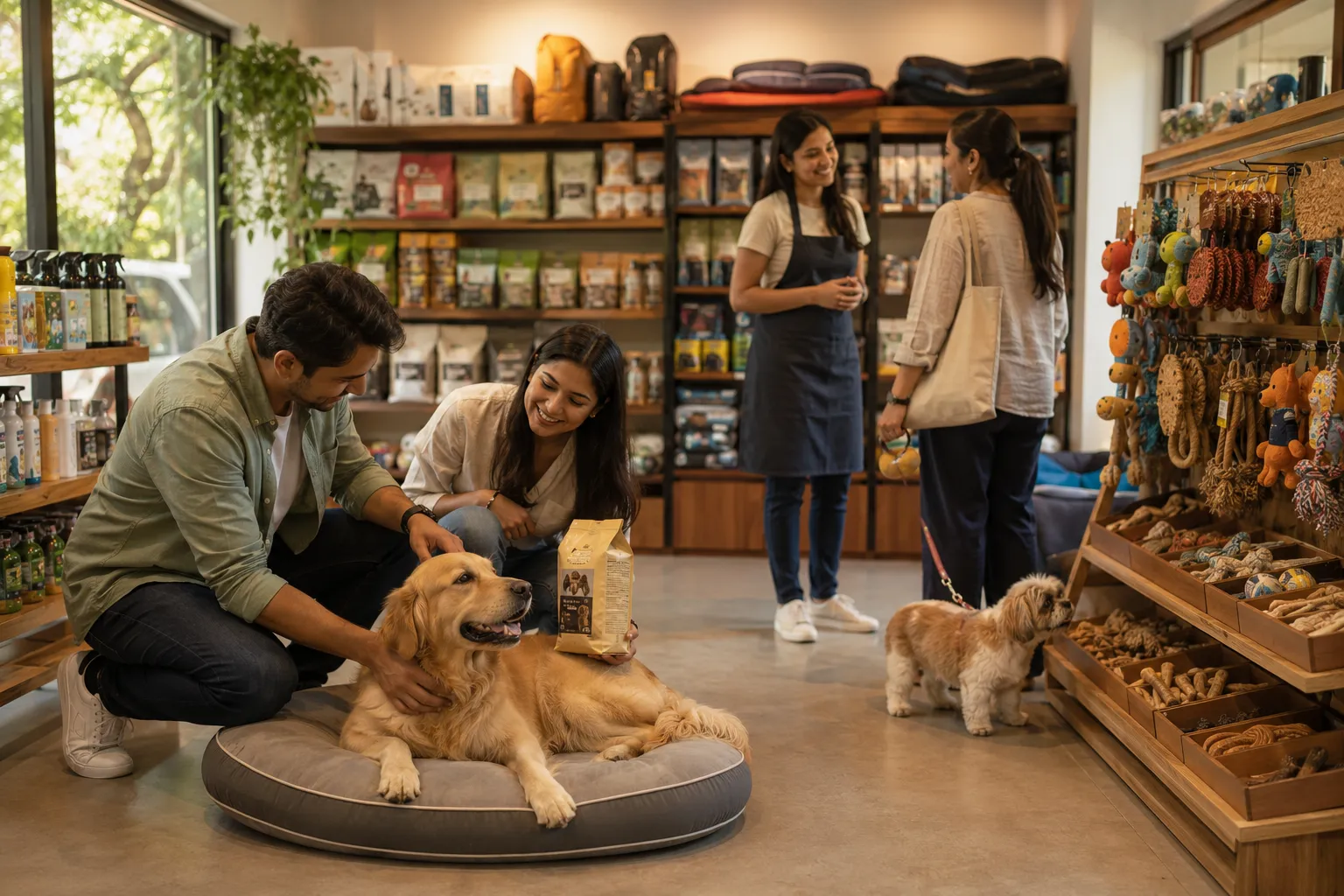
The first physical store opened in Mumbai in 2011—a small, friendly space designed not just to sell products, but to build community. Narang understood, earlier than most, that pet ownership is an emotional experience before it is a commercial one. The customer who walks into a Heads Up For Tails store is not just buying a bag of dog food. They are caring for a creature they love. The store needed to reflect that love—in its warmth, in its staff, in the way it welcomed dogs as well as their humans. The community-building strategy was not a marketing gimmick. It was the foundation of the brand, and it created a loyalty that no amount of advertising could replicate.
The Pet Revolution
Heads Up For Tails did not create the Indian pet revolution. It rode a wave that was already building—a wave driven by the most profound demographic and cultural shifts in modern Indian history.
India's urban population has grown steadily for decades, and with it, the number of nuclear families, single-person households, and childless couples has surged. Pets have filled the emotional space that extended families once occupied. A dog is not a substitute for a child, but for millions of urban Indians, the companionship, the routine, and the unconditional affection that a pet provides are essential to mental and emotional well-being in a fast-changing, often isolating world. The Indian pet population has grown to an estimated 32 million, and the pet care market—including food, accessories, grooming, and veterinary services—is projected to reach $800 million by 2028, growing at a compound annual rate that reflects the deepening bond between Indians and their animals.
The spending patterns have shifted dramatically. A generation ago, pet food was table scraps, and a visit to the veterinarian was an emergency measure reserved for life-threatening illness. Today, urban Indian pet owners spend thousands of rupees a month on premium nutrition, regular health check-ups, grooming, training, and enrichment. They buy birthday cakes for their dogs. They hire pet sitters when they travel. They are willing to spend on products that improve their pets' quality of life—not because they are extravagant, but because they consider their pets family. The market has matured from a commodity business into a lifestyle category, and Heads Up For Tails has positioned itself at the premium end of that category—not the most expensive, but the most trusted, the most community-oriented, and the most clearly aligned with the emotional lives of its customers.
The company's product range reflects that positioning. The food is natural, preservative-free, and formulated with veterinary input. The toys are designed for safety and enrichment. The beds are orthopaedic. The grooming products are gentle and non-toxic. The brand does not compete on price with the mass-market alternatives. It competes on trust—the conviction, earned over eighteen years of consistent quality and community engagement, that Heads Up For Tails products are good for the animals they are sold to.
The Omnichannel Pivot
The most significant strategic decision Narang has made in the past five years is not a product launch or a funding round. It is a channel strategy that has positioned Heads Up For Tails for the next phase of Indian retail.
The company began as a direct-to-consumer brand—first through the website, then through physical stores. But as quick commerce has transformed Indian retail, Narang has been deliberate about expanding the brand's presence on platforms like Blinkit, Zepto, and Swiggy Instamart. The pet owner who runs out of dog food at 9 p.m. does not want to wait for next-day delivery. They want the food now, and the platform that can provide it will earn their loyalty. Heads Up For Tails has been one of the most aggressive pet brands on quick-commerce platforms, and the channel now contributes a significant and growing share of revenue.
The physical stores, meanwhile, serve a different purpose. They are not just points of sale. They are community hubs—places where pet owners gather, where dogs socialise, where the emotional connection between the brand and its customers is reinforced. The stores host adoption drives, training workshops, and veterinary consultations. They function as the physical embodiment of a brand that was built, from the beginning, on the premise that pets are family. The combination of quick-commerce convenience and physical-store community is difficult for competitors to replicate, and it gives Heads Up For Tails a structural advantage in a market that is becoming increasingly crowded.
The company now operates more than 100 stores across India, with plans to expand to 200 in the next three years. The expansion is focused on Tier-1 and Tier-2 cities where the pet-owning population is growing fastest. The stores are company-owned, not franchised—a decision that reflects Narang's insistence on controlling the customer experience. A franchisee might cut corners on store design, staff training, or product quality. A company-owned store will not. The capital expenditure is higher, but the brand equity is protected. The discipline is expensive. It is also the reason the brand has survived for eighteen years in a market that has claimed many competitors.
The investor backing has provided the capital for the expansion. Verlinvest, the Belgian family office that has backed some of the world's largest consumer brands, led a $37 million funding round in 2022, and Sequoia Capital has been an investor since the early years. The venture backing is unusual for a pet brand—most of the world's large pet companies are either privately held or subsidiaries of conglomerates—but it reflects the scale of the opportunity. India's pet care market is where China's was a decade ago, and the company that establishes the dominant brand in India's pet space will have a market that grows with it for decades.
The Woman Who Put Pets on the Boardroom Agenda
The most striking dimension of Narang's journey is not the revenue or the store count. It is the industry she chose—and the reaction she received when she told people what she was building.
For most of her career, Narang has had to explain why pet care matters. She has had to justify, to investors, to potential hires, and even to some family members, why a woman with an MBA from a respected university would devote her life to selling dog beds and chew toys. The condescension was not always explicit, but it was always present—the quiet assumption that pet care was a "soft" business, a lifestyle hobby masquerading as a company, something that a woman might do on the side but not a serious commercial enterprise.
The condescension has faded as the numbers have grown. A company approaching ₹300 crore in revenue, with more than 100 stores and a national customer base, is not a hobby. It is a significant business, and the investors who once dismissed pet care as a niche have been forced to recognise that the niche is larger than they thought—and growing faster. Narang has been deliberate about not responding to the condescension with anger. She has responded with revenue growth, with store expansion, and with the quiet confidence of a founder who knows that her market is real and that her customers are loyal.
The broader context is an Indian startup ecosystem in which women founders are systematically underfunded, underestimated, and excluded from the networks that determine who gets capital and who does not. The proportion of venture capital going to female founders dropped from 11 percent in 2019 to just 2.5 percent in 2025, according to WinPe. The reasons are structural and complex, but one of them is that the industries women tend to build in—consumer brands, care work, community platforms—are dismissed as "small" or "lifestyle" by an overwhelmingly male investment community. Narang's career is a rebuttal to that dismissal. She built a category-defining brand in a market that the male-dominated investment community did not believe existed. The market now believes. The investors who once dismissed her are now competing for allocation in her next round.
Narang has also been deliberate about building a company that reflects her values. Heads Up For Tails has a predominantly female workforce, from its store associates to its senior leadership. The company has implemented policies—flexible hours, remote work, parental leave—that are designed to retain women through the life stages that often force them out of the workforce. The culture is not a diversity initiative. It is a reflection of Narang's conviction that the people who build a pet care brand should understand, at a personal level, what it means to care for another living creature. The understanding is not gendered, but the empathy it requires has been systematically undervalued in the male-dominated world of business. Narang has built a company that values it anyway.
The Road Ahead
Heads Up For Tails is at an inflection point. The company has the brand, the store network, the quick-commerce presence, and the investor backing to dominate a market that is growing faster than almost any consumer category in India. The path to an initial public offering is visible—the company has not announced a timeline, but the infrastructure that a public listing requires is being built: audited financials, a professionalised board, the systems and processes that allow a founder-led company to become a public institution.
The competitive landscape is intensifying. Amazon and Flipkart have expanded their pet care categories. International brands like Mars Petcare, the owner of Pedigree and Royal Canin, are investing heavily in the Indian market. A new generation of D2C pet startups—Supertails, Zigly, PetKonnect—is competing for the same customers with venture-backed growth strategies. The market is becoming crowded, and the company that wins will be the one that has the deepest brand loyalty and the most efficient distribution. Heads Up For Tails has an eighteen-year head start, a community that no competitor can replicate overnight, and a founder who has spent her entire career learning what Indian pet owners want.
The IPO, when it comes, will be a milestone—not just for the company, but for the category. India has never had a publicly listed pet care brand. If Heads Up For Tails lists, it will be a signal that the market is real, that the category is investable, and that the woman who started it from her Mumbai apartment with three Labradors was right all along. The investors who once dismissed her will be invited to participate in the listing. The journalists who once ignored her will write profiles. The competitors who once underestimated her will be forced to acknowledge that she built something they did not see coming.
The three Labradors who started it all are long gone. But the company they inspired is still here—still growing, still building, and still run by the woman who thought they deserved better. The dog beds are orthopaedic now. The food is formulated with veterinary nutritionists. The stores are bright and welcoming and filled with the sound of wagging tails. The market that did not exist eighteen years ago is worth hundreds of crores, and the woman who saw it before anyone else is still at the helm, still designing products, still thinking about what dogs need. The pet revolution is still unfolding. The leader of the pack is not a multinational conglomerate. It is a woman from Mumbai who loved her dogs enough to build an empire for them.


