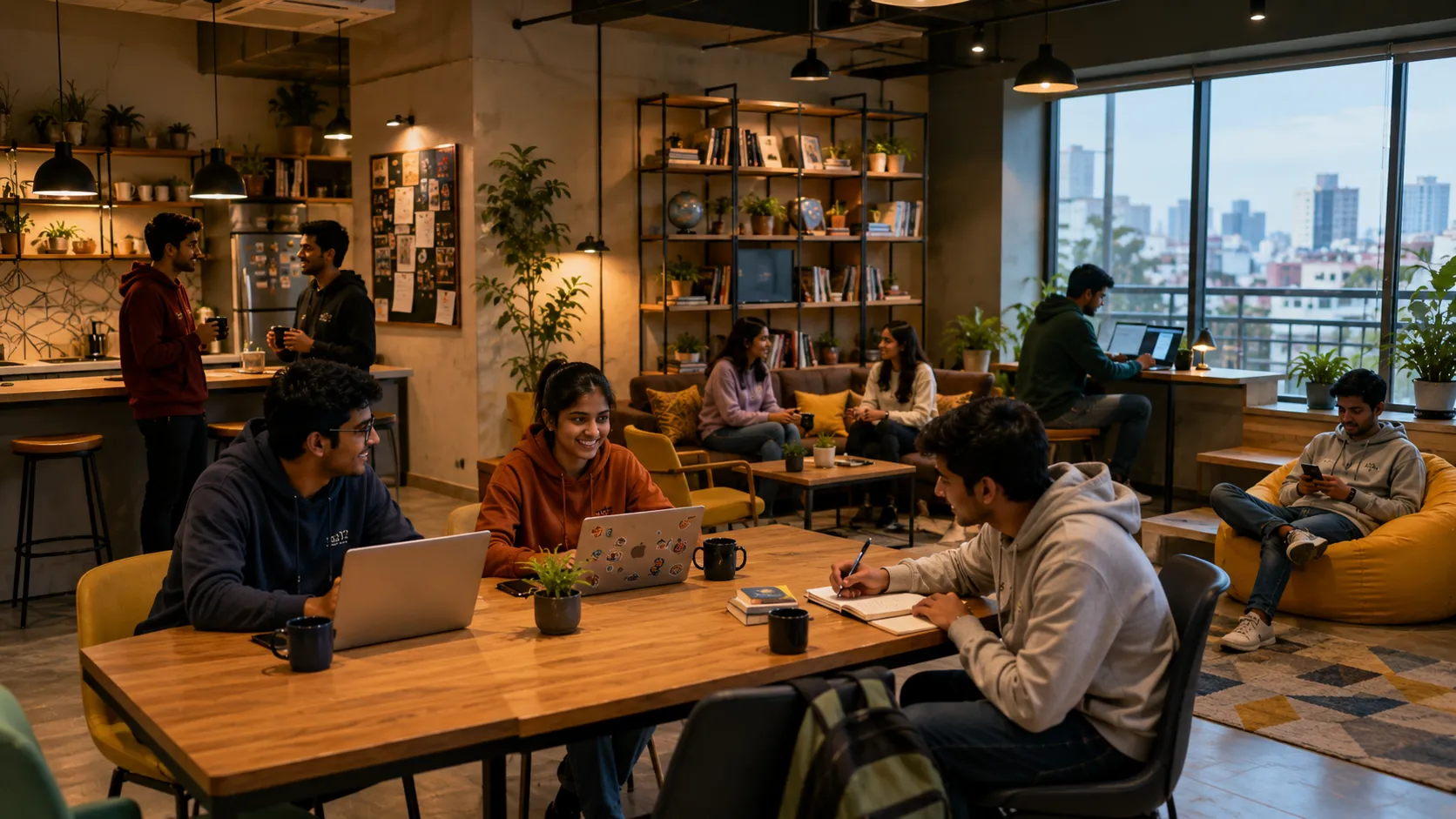
What Once Felt Like A Temporary Stop Between Home And Independence Is Quietly Becoming One Of India’s Most Interesting Lifestyle And Economic Shifts
For years, hostels in India carried a fairly predictable identity. They were places people moved into because circumstances demanded it rather than spaces they actively chose. Students shifted near engineering colleges, coaching hubs and universities because education frequently required relocation. Young professionals entering new cities often looked for affordable accommodations because early careers rarely allowed large rental budgets. Hostels therefore frequently became associated with compromise rather than preference. People stayed there for practical reasons, saved money and eventually moved toward what society traditionally considered the next step: independent apartments and long-term stability.
Something very different appears to be happening beneath that older model today. Across cities such as Bengaluru, Hyderabad, Pune, Delhi, Chennai and Mumbai, a new accommodation economy has been quietly taking shape. Professionally managed student housing brands, co-living spaces and modern hostel operators are expanding rapidly because mobility itself is beginning to reshape housing demand. What initially looked like upgraded accommodation is now evolving into a broader lifestyle category because many young people increasingly seem approaching living spaces differently from earlier generations.
The first major force behind this shift is movement itself. India is witnessing one of its largest youth migration cycles because education and employment opportunities increasingly require relocation at earlier stages of life. Students leave hometowns to prepare for examinations, attend universities or pursue specialized programs. Professionals frequently move cities for jobs, startup opportunities and career growth because economic activity no longer remains concentrated inside only one geography. Mobility itself increasingly feels like part of adulthood rather than an occasional transition.
That movement creates a challenge traditional housing systems were never designed to solve. Rental ecosystems frequently assume permanence because agreements often involve deposits, brokers, documentation and long-term commitments. Older housing structures evolved around families settling into places for years rather than individuals shifting locations every twelve or eighteen months. For many younger people entering unfamiliar cities, these systems frequently create friction because flexibility itself increasingly matters alongside affordability.
This is where the modern hostel economy begins becoming more interesting than a real-estate story. Many new operators no longer position themselves simply as accommodation providers because rooms themselves are rarely the main product anymore. Spaces increasingly include internet infrastructure, meals, housekeeping, gyms, events and managed services because convenience itself has become part of the offering. Accommodation increasingly appears packaged as an experience rather than a physical transaction.
The second force quietly shaping this ecosystem involves time. Young professionals increasingly value reducing everyday complexity because urban life already demands constant adjustment. Navigating brokers, utility bills, cooking arrangements and maintenance responsibilities frequently creates invisible pressure, particularly for people entering cities alone. Managed hostels therefore increasingly appear attractive because they remove smaller logistical burdens people often underestimate. People may initially believe they are paying for rooms, but many are actually paying for reduced friction.
Another layer beneath this transformation involves something cities rarely discuss openly: loneliness. Urban environments frequently create a strange contradiction because people often live among millions while simultaneously feeling disconnected. Students moving away from families and professionals relocating for work frequently experience social isolation because migration occasionally disrupts familiar support systems. Community itself therefore increasingly becomes valuable because belonging frequently matters as much as infrastructure in unfamiliar environments.
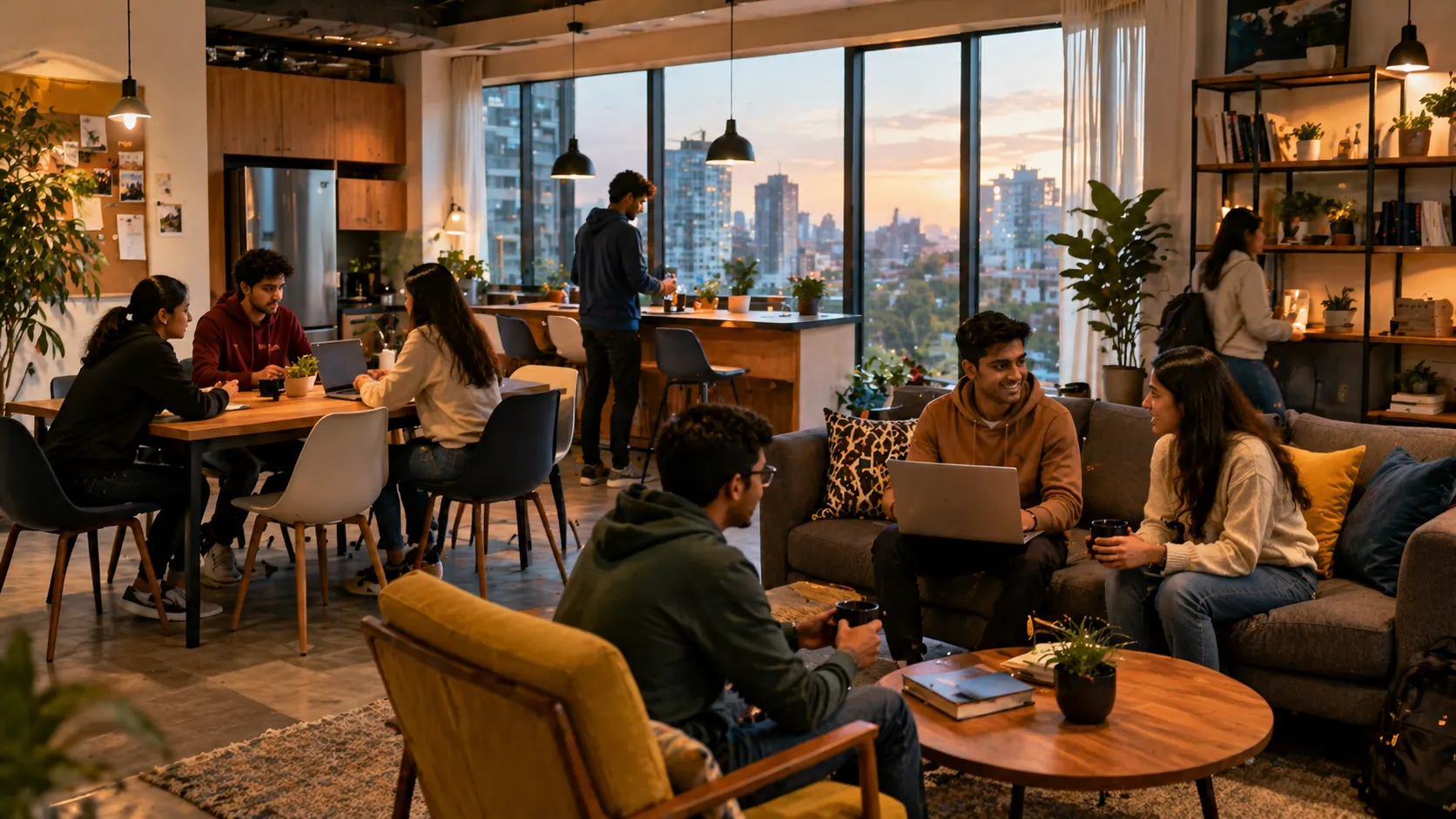
Many accommodation companies appear recognizing this reality. Shared kitchens, gaming zones, events and community gatherings increasingly occupy important positions because operators understand that interactions create retention. Earlier hostels often focused only on occupancy because accommodation itself represented the core requirement. Newer spaces increasingly seem designed around interaction because emotional comfort occasionally becomes as important as physical comfort for people adjusting to new cities.
Economic behavior among younger Indians is also influencing this shift in ways people rarely acknowledge. Previous generations frequently treated home ownership as a milestone connected with adulthood because stability often represented aspiration. Younger professionals increasingly seem approaching housing differently because careers now involve movement, experimentation and changing priorities. Many appear postponing ownership decisions because flexibility occasionally feels more valuable than permanence during earlier professional years.
Technology has quietly accelerated another dimension of this story. Discovery itself increasingly begins online because accommodation searches now frequently happen through platforms, virtual tours and recommendation systems. Students and workers compare spaces using reviews, amenities and community experiences because decision-making itself increasingly resembles consumer behavior rather than traditional housing searches. Housing therefore increasingly behaves like a service category because expectations frequently resemble hospitality rather than real estate.
Investors have also started noticing the category because the hostel economy increasingly appears larger than fragmented rental demand. Student housing and managed accommodation businesses have attracted significant interest because the opportunity now extends beyond beds and buildings. The category sits between real estate, consumer services and hospitality because operators increasingly build around recurring demand rather than one-time transactions. Once industries begin operating through behavior rather than products, investors frequently begin paying closer attention.
Perhaps that explains why this conversation feels larger than hostels themselves. Because beneath discussions involving accommodation ultimately exists another reality involving lifestyle change. Younger Indians increasingly appear redefining ideas surrounding independence, community and stability because life itself no longer follows earlier patterns. Housing therefore may not simply be changing because buildings look different. It may be changing because people increasingly want different things from the places they live.