
Britain's top law officer just became the first government minister to abandon X entirely. After riots in Southampton and Belfast, after Grok generated sexualised images of real women, after Elon Musk addressed a far‑right rally, Richard Hermer made a decision that Downing Street has spent years avoiding: enough. The platform that was supposed to connect government to the people has become a vector for violence. And one department has finally walked away.
The last post from the Attorney General's Office appeared on X at 10:47 AM on June 12, 2026. It was a routine update about access to justice — the kind of bureaucratic announcement that usually disappears into the algorithmic noise within minutes.
Nobody knew it at the time, but it was the final official communication from a UK government department on a platform that had become synonymous with Elon Musk, far‑right activism, and a firehose of disinformation.
Six days later, the news broke. Richard Hermer, the Attorney General for England and Wales and Advocate General for Northern Ireland, had ordered his office to stop posting on X. It was the first time a UK government department had abandoned the platform entirely — and the first time a sitting minister had done so.
The decision was not a negotiation. It was not a consultation. It was a directive.
And it has cracked open a question that Downing Street has spent two years avoiding: at what point does staying on a platform become complicity in its harms?
The Breaking Point: Southampton and Belfast
Hermer's decision was not abstract. It was forged in blood and fire.
Earlier in June, violence erupted in Southampton after the murder of Henry Nowak, a teenager who was handcuffed as he lay dying from a stab wound. His killer — a Sikh man — had called police and falsely claimed to have been the victim of a racist assault. The case was immediately weaponised by far‑right activists on X, who spread misinformation about the circumstances of the killing and called for protests.
Eleven police officers were injured in the ensuing violence.
Six days later, far‑right activists used X again to organise demonstrations in Belfast in response to a stabbing attack for which a 30‑year‑old Sudanese refugee was charged with attempted murder. One Northern Irish MP compared the disorder to a "pogrom" after the homes of minority ethnic communities were targeted for attack. Health workers were stopped on their way to work and questioned about their backgrounds.
In both cases, far‑right agitators — often endorsed by Musk himself — used X to coordinate protests that spilled into violence.
The attorney general, who has been the subject of widespread antisemitism, had seen enough.
The Man Who Walked Away
Hermer is not a firebrand. He is a close ally of Prime Minister Keir Starmer. He does not have a personal X account. He is, by all accounts, a measured and careful legal mind.
But he is also the man responsible for upholding the rule of law in England and Wales. And he had concluded that staying on a platform that facilitated the organisation of racist violence — that amplified far‑right agitators and spread disinformation that spilled into real streets — was incompatible with that duty.
"The attorney general is said to be increasingly concerned about how X in particular is being used by bad actors to attempt to divide communities in the UK," The Observer reported.
His decision, communicated to staff via a directive last week, was simple: the Attorney General's Office would no longer post on X. The only exception would be to correct misinformation on the platform. Officials were told to cease using the site entirely, unless specifically combatting disinformation.
The move is understood to be a personal decision, not a government‑wide directive. Hermer is not pushing other departments to follow suit. But the symbolism is unmistakable: the first crack in Whitehall's relationship with Elon Musk's platform has appeared.

The Musk Problem
To understand why this matters, you have to understand what X has become under Elon Musk.
In September 2025, Musk addressed a far‑right rally in London organised by Tommy Robinson (real name Stephen Yaxley‑Lennon). Speaking via video link to an estimated 110,000 attendees, he told the crowd: "Whether you choose violence or not, violence is coming to you. You either fight back or you die".
He has called for the UK government to be overthrown. He has openly backed far‑right political opponents and demanded Starmer's resignation multiple times. Earlier this year, he threatened to block X in the UK if it did not take action over a mass of sexualised images of women and children produced by its Grok AI tool.
And yet, Downing Street has repeatedly defended the use of X by government departments, arguing that it is necessary to reach the public. The contradiction has become increasingly untenable. As one analysis put it: "Government agencies now see X not as an objective communications platform but as an extender of extremism".
The Grok Factor
The final straw for many was Grok.
In January 2026, X's AI tool began allowing users to generate sexualised images of real women and children — making them appear in bikinis and sexually suggestive poses. The women and equalities committee became the first parliamentary committee to stop posting on the platform.
Individual MPs, particularly women, have increasingly backed away from using X. Grok also wrongly identified two former police officers as being among those attending the scene of the Nowak case, resulting in details about the individuals being widely shared online.
The Centre for Countering Digital Hate estimates that conspiracy theories about the attacks on Starmer's property were viewed nearly 18 million times within a fortnight. The government has since announced plans to ban social media for under‑16s from next year and impose other restrictions on 17‑ and 18‑year‑olds.
But for Hermer, the damage was already done. The platform that was supposed to facilitate democratic discourse had become a vector for disinformation, violence, and hate.
What Comes Next
Hermer's decision raises an uncomfortable question for the rest of government. If the Attorney General's Office — the department responsible for upholding the rule of law — cannot in good conscience remain on X, what does that say about every other department that does?
Ministers plan to amend the Online Safety Act to require social media firms to remove inflammatory content more quickly during riots or other crises, but this will not take effect until mid‑July at the earliest. In the meantime, any official reprimand of X will be left to Ofcom, the media regulator.
But the broader trajectory is clear. The Labour government, which has already moved to ban social media for under‑16s, is prepared to challenge Musk directly. Hermer's decision is not a retreat. It is a signal.
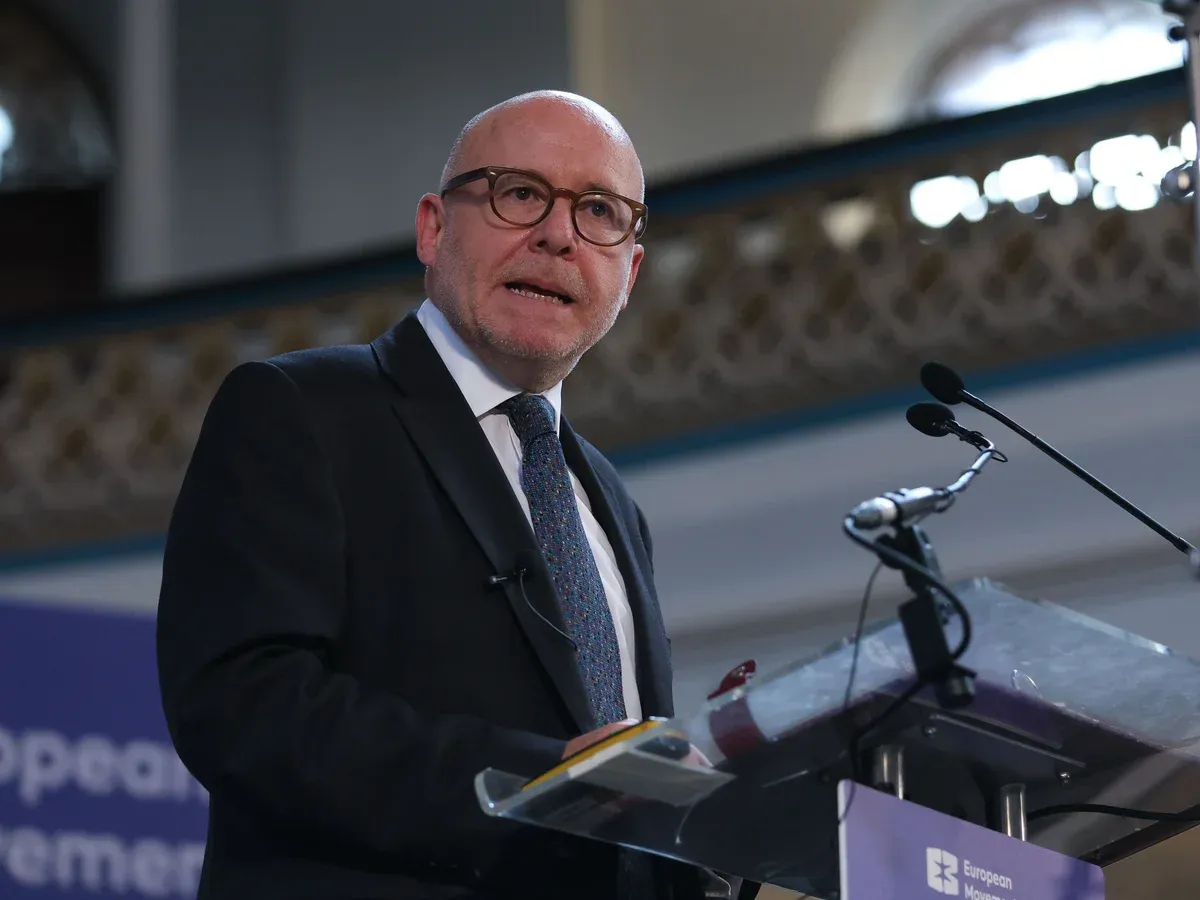
As Hermer said this week in a speech at a European Movement event: "We simply cannot let a very small group of crypto‑funded millionaires of this world get away with using the debate about the ECHR or drawing closer to the EU to sow more division in this country — we cannot allow them to draw lines between our communities".
The Bottom Line
The Attorney General's Office has left X. It is the first UK government department to do so. It will not be the last.
Richard Hermer's decision was not about politics. It was about principle. A department responsible for enforcing the law cannot remain on a platform that facilitates the organisation of racist violence. A minister who has been the subject of antisemitism cannot in good conscience amplify a platform that spreads hate.
Downing Street has spent years defending X as a necessary evil. The argument was always that government needed to be where the people are. But what happens when the platform stops being a place where people gather and starts being a place where violence is organised?
Hermer's answer is clear: you leave.
The last post from the Attorney General's Office on X was a routine update about access to justice. The next chapter will be written somewhere else.