The Computer Scientist Who Lost Two Relatives to Breast Cancer: How Dr. Geetha Manjunath Built an AI That Detects Tumors Without Radiation, Without Pain, and at a Fraction of the Cost—And Has Already Screened 400,000 Women
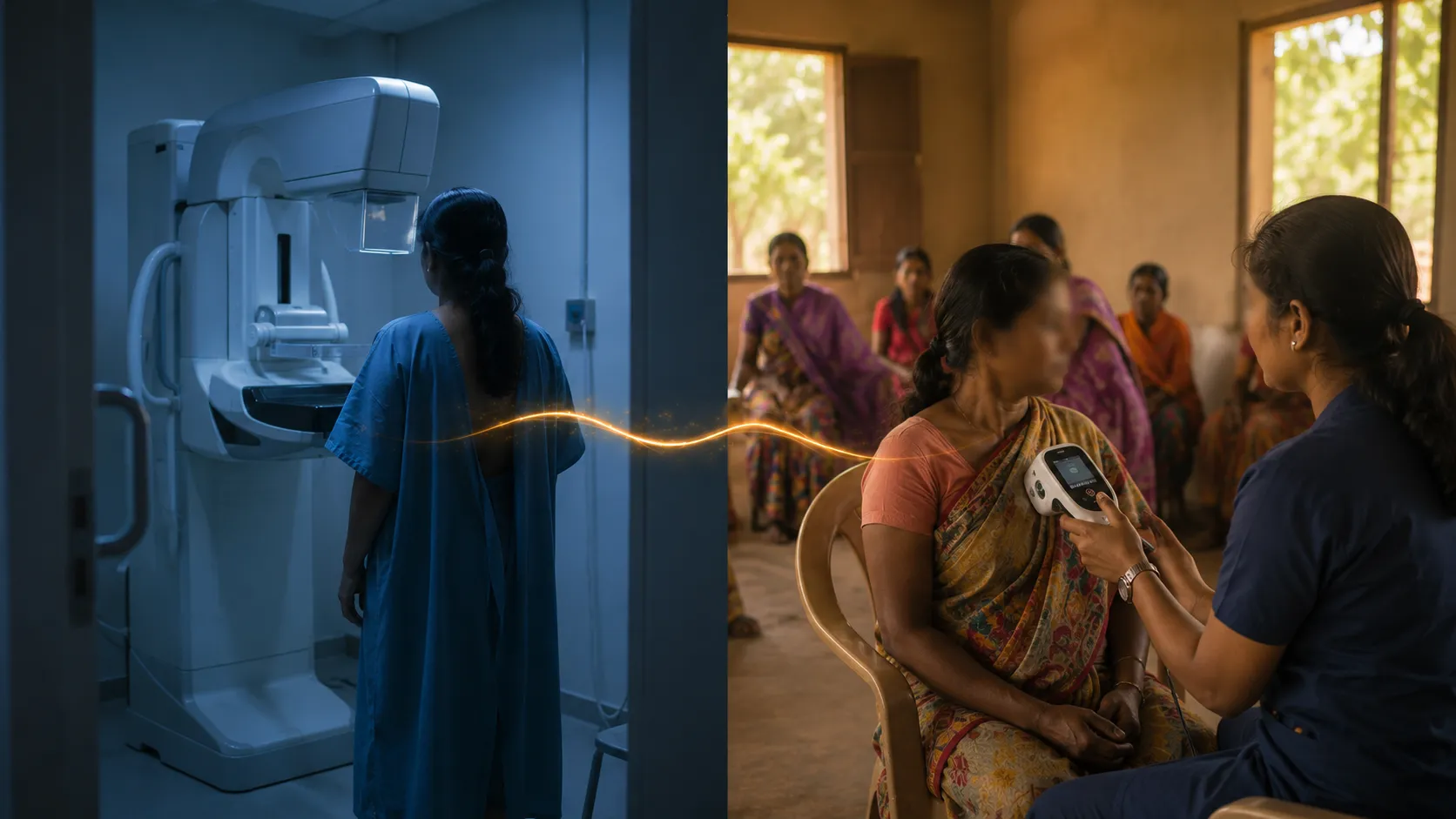
BENGALURU — May 25, 2026 — In 2014, Dr. Geetha Manjunath attended the funeral of a close relative who had died of breast cancer. The cancer had been discovered too late—the result of a healthcare system in which mammography machines were scarce, radiologists were scarcer, and the cultural taboos surrounding breast examination kept millions of women from seeking screening until the disease had already spread beyond the point of treatment. Manjunath, a computer scientist with a PhD in artificial intelligence and more than two decades of experience at Xerox Research and Hewlett-Packard, stood at the funeral and asked herself a question that would alter the trajectory of her life. What if a machine could detect breast cancer earlier than a mammogram, without the radiation, without the pain, without the infrastructure of a hospital radiology department, and at a price that made it accessible to women in the villages where her relatives had lived and died?
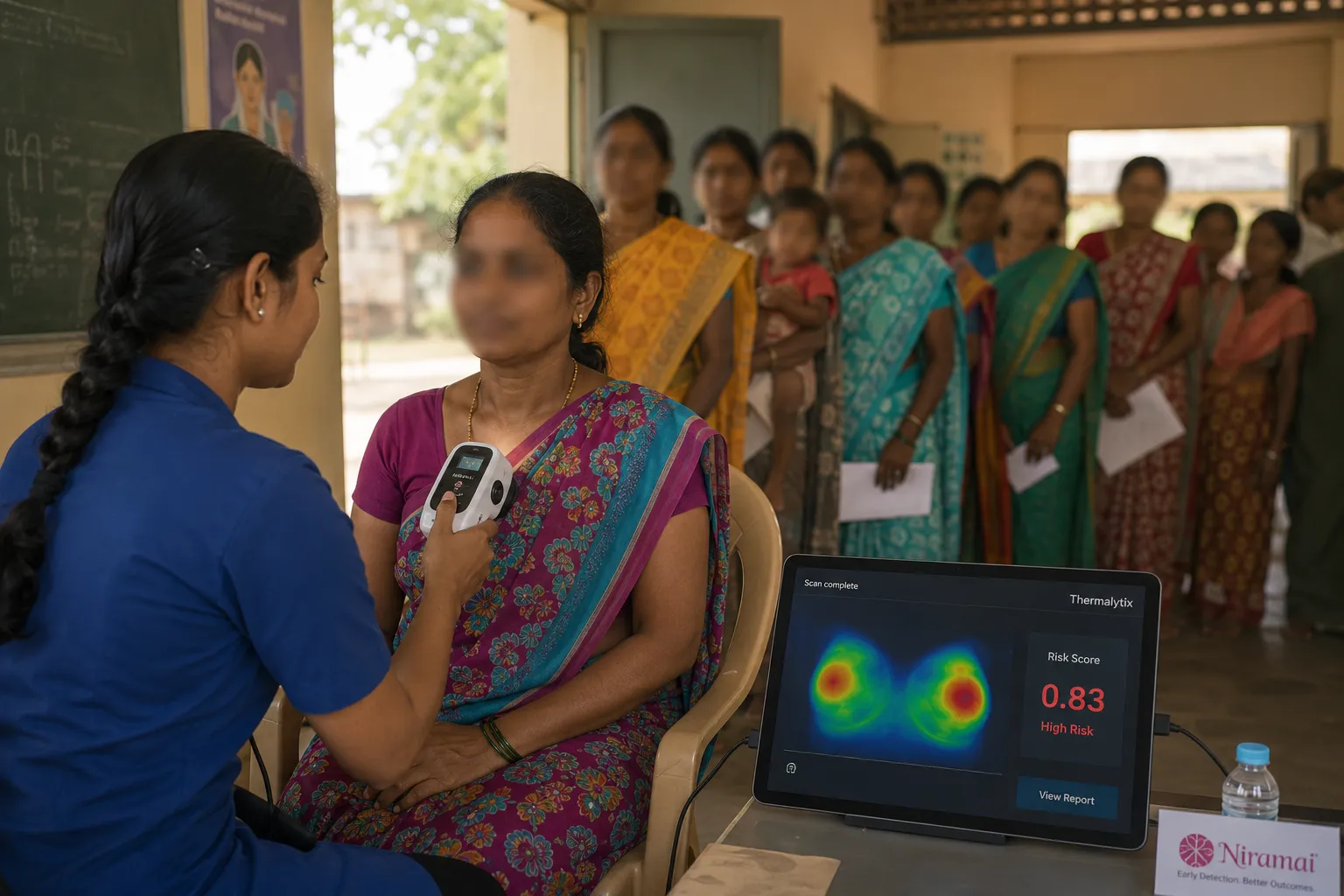
Two years later, a second relative died of the same disease. The question became an imperative. In 2016, Manjunath quit her job, assembled a team of engineers and clinicians, and founded Niramai—an acronym for Non-Invasive Risk Assessment with Machine Intelligence. The company's flagship product, Thermalytix, is a handheld thermal sensing device paired with AI software that analyzes heat patterns on the surface of the breast. Cancerous tumors generate more metabolic heat than healthy tissue, and the pattern of that heat—invisible to the human eye, but detectable by machine learning algorithms trained on tens of thousands of thermal images—can reveal malignancies at a stage when they are too small to be felt by hand or seen on a mammogram. The test requires no radiation, no compression, no contact with the body, and no specialized infrastructure. It can be administered by a trained technician in a primary health center, a community clinic, or a mobile van. The results are available in minutes.
A decade after its founding, Niramai has screened more than 400,000 women across over 250 locations in India. It has detected more than 2,000 cancers that might otherwise have gone undiagnosed until they were untreatable. The company holds 39 patents and has partnerships across 22 countries in Asia, Europe, Africa, and the United States. It has been studied at Harvard Business School as a case study in frugal innovation and global health. And it was built by a woman who left a comfortable, senior research career at the age of 49—an age at which most technology professionals are planning their retirements—because she could not accept that the disease that had killed two women she loved was treatable, curable, and being diagnosed too late.
The PhD Who Chose the Unfinished Problem
Geetha Manjunath was not supposed to be an entrepreneur. She was a scientist—a computer engineer who had earned her PhD in artificial intelligence from the Indian Institute of Science, one of the country's most prestigious research institutions, and spent 25 years in corporate research labs. At Xerox and Hewlett-Packard, she worked on projects that were intellectually stimulating, well-funded, and far removed from the messiness of healthcare delivery in rural India. She published papers. She filed patents. She built a reputation as one of India's leading AI researchers. She was, by any conventional measure, at the peak of her career.
The two deaths changed everything. Manjunath began researching breast cancer screening with the same analytical rigor she had applied to every problem in her career, and what she found infuriated her. India has one of the highest breast cancer mortality rates in the world, not because the disease is more aggressive than in other countries, but because it is diagnosed so late. Fewer than 5 percent of Indian women have ever undergone breast cancer screening. The country has roughly 5,000 mammography machines for a population of 1.4 billion—about one machine for every 280,000 people. The radiologists trained to interpret mammograms are even scarcer. The machines themselves are expensive, require climate-controlled rooms and reliable electricity, and are concentrated in urban hospitals that are inaccessible to the vast majority of Indian women who live in small towns and villages. The result is a system in which breast cancer is typically discovered only when a woman or her doctor can feel a lump—at which point the tumor is already several centimeters in diameter, has likely spread to the lymph nodes, and requires aggressive, expensive, and often futile treatment.
The problem, Manjunath realized, was not the absence of technology. It was the design of the technology. Mammography was invented in the early 20th century, optimized for the healthcare systems of wealthy countries, and never redesigned for the reality of the developing world. The same X-ray technology that worked brilliantly in a Boston hospital was useless in a Bihar village. Building more mammography centers would not solve the problem—it would merely extend a broken model to slightly more people. What was needed was a fundamentally different approach to screening: one that was portable, non-invasive, radiation-free, affordable, and operable by a technician rather than a radiologist. Manjunath, the AI researcher who had spent her career optimizing algorithms, decided to optimize the entire screening paradigm.
The insight that made Thermalytix possible came from a field that had been studied for decades but never operationalized at scale: medical thermography. Cancerous tumors are metabolically active—they grow faster than surrounding tissue, consume more nutrients, and generate more heat. That heat radiates to the surface of the skin, creating temperature patterns that, in theory, could be detected by a sufficiently sensitive infrared camera. The problem had always been that the patterns were subtle, variable, and easily confounded by ambient temperature, clothing, and the natural asymmetry of healthy breasts. Human radiologists could not reliably interpret thermal images. The technology had been tried and abandoned decades earlier.
Manjunath's insight was that a machine learning algorithm—trained on a large dataset of thermal images correlated with confirmed diagnoses from mammography, ultrasound, and biopsy—could detect the patterns that humans could not. The AI could be trained to filter out the noise of ambient conditions, to distinguish malignant heat signatures from benign ones, and to produce a simple, actionable risk score that a clinician could use to determine whether a patient needed further investigation. The algorithm did not need to be perfect. It needed to be good enough to identify women who should be referred for diagnostic follow-up—and it needed to work in the environments where mammography could not.
The early clinical trials exceeded expectations. Thermalytix detected cancers with accuracy that was comparable to mammography in some studies and superior in certain patient populations, particularly women with dense breast tissue—the very patients for whom mammography is least effective. The test was faster than mammography, completely painless, and cost a fraction of the price. The device could be carried in a backpack, operated by a trained community health worker after a few weeks of instruction, and deployed in the kinds of settings where women had never been screened before. The technology that had been abandoned as a failed experiment was, in the hands of a machine learning researcher, reborn as a breakthrough.
The 400,000 Women
The most powerful evidence for Niramai's approach is not a clinical trial or a patent. It is the 400,000 women who have been screened.
The company has deployed its technology across more than 250 locations in India, from corporate wellness camps in Bengaluru and Mumbai to rural outreach programs in the most underserved districts of the country. The screening camps are organized in partnership with hospitals, diagnostic chains, NGOs, and government health agencies. A team arrives with the portable Thermalytix devices, sets up a private screening area, and begins scanning women—often 50 to 100 in a single day, at a cost per scan that is roughly one-tenth the price of a mammogram. The AI analyzes each scan and generates a risk score. Women flagged as high-risk are referred to partner hospitals for follow-up diagnostic testing. The system is designed not to replace mammography, but to triage—to identify the small fraction of women who need further investigation from the vast majority who do not, and to do so in settings where mammography is unavailable, unaffordable, or culturally inaccessible.
The results are striking. More than 2,000 cancers have been detected through the platform—cancers that, in most cases, were too small to be palpable and would not have been discovered until they were advanced. The detection rate is particularly significant because many of the women screened by Niramai had never undergone any form of breast examination before. They lived in communities where the nearest mammography machine was hours away, where the cost of a screening exceeded a month's income, and where the stigma surrounding breast health kept women from seeking care even when symptoms were present. The technology reached them because it was designed to reach them—portable, affordable, administered by female health workers in environments that felt safe and familiar.
The company has also expanded internationally, with distribution partnerships across 22 countries in Asia, Europe, Africa, and the United States. The technology has been piloted in NHS trusts in the United Kingdom through the Accelerating FemTech program, a recognition that the screening gap is not exclusively a developing-world problem. Even in wealthy countries, women with dense breast tissue, women who cannot tolerate the pain of mammography, and women who live in rural or underserved areas face barriers to screening that Thermalytix was designed to address. The global market for breast cancer screening is measured in the billions of dollars, and the company that can deliver a radiation-free, pain-free, portable alternative to mammography will capture a share of that market that no Indian health-tech startup has ever accessed.
The company has raised funding from a mix of venture capital and institutional investors, though Manjunath has been deliberate about not over-raising. The path to profitability in health-tech is long and capital-intensive, and the company has focused on building clinical evidence, regulatory approvals, and distribution partnerships rather than chasing growth for its own sake. The 39 patents that Niramai holds are a moat—a barrier to entry that protects the core technology from competitors—and the clinical data from 400,000 screenings is an asset that deepens with every scan. The algorithm becomes more accurate as the dataset grows. The device becomes more trusted as the deployment footprint expands. The flywheel is not theoretical. It is measurable, and it is turning.
The Woman Who Refused to Wait
The most striking dimension of Manjunath's story is not the technology. It is the timing.
She was 49 years old when she founded Niramai—an age at which most technology professionals are planning their retirements, not launching startups. She had spent 25 years in corporate research labs, building a career that was comfortable, respected, and entirely secure. She could have stayed at Xerox or HP, worked on interesting problems, collected her pension, and retired with the quiet satisfaction of a life well-executed. The two deaths she witnessed did not give her that option. "After losing my relatives, I could not go back to business as usual," she told an interviewer. "I knew I had the skills to build something that could save lives. At that point, staying in my job felt like a moral failure."
The decision to leave was not easy. She was not a young founder with nothing to lose. She had a family, a mortgage, and the kind of financial obligations that make mid-career entrepreneurship terrifying. The first few years of Niramai were a struggle—raising capital from investors who were skeptical that a thermal-imaging AI could compete with mammography, convincing hospital partners to trust a technology that had been tried and abandoned decades earlier, navigating the regulatory labyrinth of medical device certification across multiple countries. There were moments, she later acknowledged, when she wondered whether she had made a catastrophic mistake.
She persisted. The clinical data accumulated. The patents were granted. The screening camps expanded. The 400,000th woman was scanned, the 2,000th cancer was detected, and the technology that had been dismissed as a failed experiment was written up as a case study at Harvard Business School. The computer scientist who had left her job at 49 to build a cancer-screening startup was no longer a curiosity. She was a pioneer—one of the few women in the world to have built a deep-tech health company that had reached meaningful scale, and one of the even fewer to have done so in a category—medical devices, AI diagnostics, cancer screening—where the barriers to entry are formidable and the failure rate is high.
The broader context is an Indian health-tech ecosystem that is only beginning to recognize the scale of the opportunity in women's health. The femtech sector—technologies designed specifically for women's health needs, from reproductive care to cancer screening to menopause management—is projected to grow to $50 billion globally by 2030. India, with its massive population, its growing healthcare expenditure, and its deep pool of AI and engineering talent, should be a leader in the category. It is not. The funding that flows to women's health startups in India is a fraction of what flows to general health-tech, and the women founders who build in this space face a double barrier: the structural bias against female founders in the venture-capital ecosystem, and the structural neglect of women's health as an investment category. Manjunath has navigated both barriers with the same methodical persistence she applied to the thermal-imaging problem. She did not wait for the ecosystem to become more inclusive. She built a company that the ecosystem could not ignore.
The Road Ahead
Niramai is at an inflection point. The company has proven that its technology works—the clinical evidence, the 400,000 screenings, the 2,000 cancers detected, the 39 patents, and the 22-country footprint are a body of proof that few Indian health-tech startups can match. The next phase is scale. The company is exploring a larger clinical trial, possibly in the United States, where FDA clearance would open the world's largest healthcare market. It is expanding its partnerships with government health agencies in India, where the public-health potential of a low-cost, portable, radiation-free screening tool is enormous. It is building out its AI platform to address other cancers—oral, cervical, thyroid—that share the same fundamental challenge: early detection saves lives, but the infrastructure for early detection does not reach most of the people who need it.
The path to a public listing is visible, though Manjunath has been deliberately vague about the timeline. The company is not yet profitable—few health-tech companies at this stage are—but the unit economics of the screening model are attractive, and the addressable market is measured in the billions of women worldwide who should be screened for breast cancer annually but are not. The company that can capture even a fraction of that market, with a technology that is protected by patents and validated by clinical evidence, will be a very large business. The investors who backed Niramai early—and the ones who are circling now, as the clinical data and the international expansion make the opportunity impossible to dismiss—are betting on exactly that outcome.
The two relatives whose deaths launched this company are still dead. The grief that drove Manjunath to leave her job at 49 is still there, transmuted over the years into something less sharp but no less powerful. The 400,000 women who have been screened are the living answer to that grief. The 2,000 women whose cancers were detected early—who received treatment, who survived, who are still alive to raise their children and grow old with their partners—are the reason the company exists. The woman who was told, by the structure of the healthcare system and the design of the technology and the quiet, persistent assumption that innovation flows from wealthy countries to poor ones, that her relatives' deaths were inevitable, refused to accept the premise. She built a machine that sees what the human eye cannot, and she deployed it in the places where the human eye was all that was available. The machine is not a cure. But it is a chance—and for the women who were scanned, the 400,000 and counting, the chance is enough.


