The Cambridge Lawyer Who Found Her Calling in a Bengaluru Garage: How Sahar Mansoor Built a Zero-Waste Empire, Saved 68 Million Units of Plastic, and Proved That Sustainability Can Scale
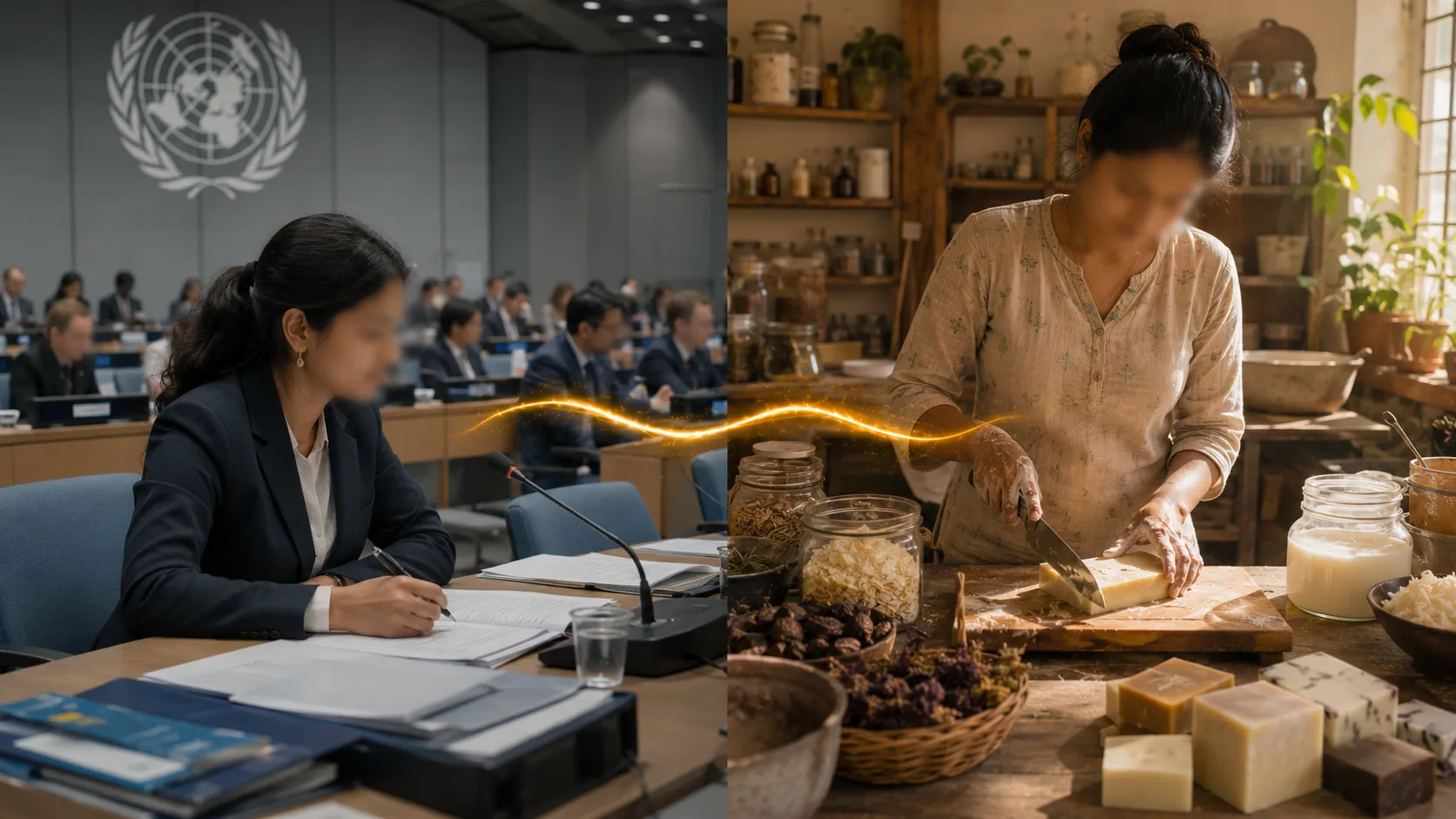
BENGALURU — May 25, 2026 — In 2015, Sahar Mansoor was 24 years old and had a resume that most people twice her age would envy. She had graduated from the University of Cambridge with a degree in environmental law and environmental economics. She had worked at the United Nations and the World Health Organization in Geneva, contributing to policies that shaped global environmental governance. She was on a trajectory that led to corner offices, diplomatic receptions, and the quiet, respectable influence of a career in international policy. She was also deeply, persistently unhappy.
The work was important, but it was abstract. She spent her days writing reports, attending meetings, and shaping frameworks that might, over years or decades, influence how governments approached environmental problems. She never saw the impact of her work. She never met the people it was supposed to help. She never held anything in her hands that had not been mediated by a screen, a document, or a conference room. "I wanted to do something that had a more tangible impact," she told The Better India. "I was working on policies, but I wanted to see and feel the change on the ground."
She returned to Bengaluru in 2015 and joined the SELCO Foundation, focusing on decentralized solar energy solutions for underserved communities. It was during this time that she began shadowing waste-picker communities across the city—an experience that would alter the trajectory of her life. "I was horrified by what I saw," she recalled. "Waste pickers were sorting through broken glass, soiled sanitary pads, and syringes with their bare hands. Some had lost their thumbs to cuts from sharp objects. These were people with no gloves, no protection, and no support. Meanwhile, we were going about our personal hygiene routines, tossing waste without a second thought."
The contradiction was unbearable. The woman who had written environmental policy for the United Nations was now face-to-face with the human cost of the consumption she had spent her career studying from a distance. She could not unsee it. She could not return to the conference rooms. She could only act. In 2016, at 24, she began making zero-waste personal care products in her mother's garage—handmade soaps, moisturizers, and balms, formulated from traditional ingredients that her grandmother had used before plastic existed. She called the company Bare Necessities. She had no business background, no funding, and no plan. "I was young, optimistic, and perhaps a little naive," she said. "But in many ways, that worked in my favour."
The Cambridge Lawyer Who Chose the Garage
Sahar Mansoor was not supposed to be a soap-maker. She was the daughter of a middle-class Bengaluru family, raised with the expectation that she would study hard, earn her degrees, and build a career that made her parents proud. She did exactly that. Cambridge. The United Nations. The World Health Organization. The resume was impeccable. The trajectory was clear.
But something had been bothering her since childhood—a quiet, persistent discomfort with waste that she could never fully explain. "I was always that child who wanted to recycle, reuse, and reduce," she laughed. She was the kid who saved wrapping paper, who refused plastic bags, who looked at the trash her family generated and wondered where it all went. The instinct was not political. It was personal—a visceral aversion to the thought that something she used for a few moments would spend centuries in a landfill.
When she returned to Bengaluru and began shadowing waste-picker communities, that childhood instinct crystallized into something harder and more urgent. The waste pickers she met were the invisible infrastructure of India's recycling economy—the people who sorted through the country's garbage with their bare hands, recovering what could be reused and absorbing the physical and social cost of everyone else's consumption. They were paid a pittance. They were treated as untouchable. They bore the scars of their work on their bodies, and they were thanked by no one.
Mansoor could not fix the entire system. But she could start by reducing her own contribution to it. She began by looking at her bathroom—the shampoo bottles, the lotion tubes, the toothpaste tubes, the deodorant sticks. Every product was packaged in plastic that would outlive her. Every product contained chemicals she could not pronounce. She asked her grandmother what people used before all of this existed. "I asked her what she used before shampoo came in a bottle, and she told me about traditional ingredients like shikakai, neem, and coconut oil. That's where the idea began."
The first products were made in her mother's garage—cold-process soaps, whipped body butters, shampoo bars. She learned through trial and error, through online courses, and through the patient, accumulated wisdom of the women in her family who had been making these products for generations without ever thinking of them as a business. She began selling at pop-ups and flea markets across Bengaluru, carrying her products in a cloth bag and telling anyone who would listen about the connection between their bathroom shelves and the waste pickers she had met.
The response was immediate. Bengaluru, a city with a deep environmental consciousness and a growing community of young professionals seeking sustainable alternatives, embraced the brand. The pop-ups turned into regular customers. The regular customers told their friends. The garage became too small. In 2019, Mansoor officially registered Bare Necessities as a private limited company and dedicated herself to it full-time. The accidental entrepreneur had found her calling, and the calling had found its market.
The Product Philosophy That Broke Every FMCG Rule
The most radical thing about Bare Necessities is not what it sells. It is how it sells it—and the assumptions about consumer behaviour that Mansoor has rejected from the beginning.
The global fast-moving consumer goods industry is built on a single, unexamined premise: that consumers want convenience above all else. The shampoo comes in a plastic bottle because plastic is cheap, lightweight, and waterproof. The moisturizer comes in a plastic jar because plastic can be molded into any shape. The deodorant comes in a plastic tube because plastic doesn't break when you drop it. The packaging is designed for the moment of purchase—bright, eye-catching, disposable—not for the centuries the material will spend in a landfill. The consumer who buys the product is not responsible for the waste it creates. The waste is someone else's problem.
Mansoor rejected every premise of that model. Bare Necessities products contain no plastic packaging, ever. The shampoo bars are wrapped in paper. The moisturizers come in glass jars or compostable containers. The lip balms are packaged in biodegradable paperboard tubes. The multi-surface cleaners are sold as concentrated powders—the customer adds water at home, reducing packaging weight and carbon emissions by more than 90 percent. The entire product line is designed for a world in which packaging is not an afterthought but a fundamental design constraint. The product is not just what is inside the package. The package itself is the product—or rather, the absence of it.
The products themselves are formulated from natural, non-toxic ingredients sourced from across India: lavender from Kashmir, coconut oil from Kerala, cacao butter from Auroville, moringa from Tamil Nadu. Mansoor has personally visited more than 100 suppliers, building relationships with farmers and cooperatives that share her commitment to ethical, low-waste practices. Every supplier must adhere to a code of conduct that prohibits child labour and mandates environmentally responsible production. The supply chain is not just a source of raw materials. It is an extension of the brand's values, and Mansoor has been as deliberate about building it as she has been about formulating the products themselves.
The formulations are handmade using the cold-process saponification method—a technique that preserves the natural glycerine content of the oils and requires no external heat, reducing the energy footprint of production. The soaps are coloured with natural clays—green clay, pink clay, charcoal—rather than synthetic dyes. The fragrances come from essential oils, not synthetic perfumes. The entire product line is designed to be biodegradable, so that when a customer washes with a Bare Necessities shampoo bar, the water that runs down the drain does not carry microplastics or synthetic chemicals into the ecosystem. The product is not just better for the customer. It is better for every living thing downstream.
The brand has been recognized with certifications that reflect the rigour of its commitments. It became India's first B Corp-certified FMCG company—a designation that requires meeting the highest standards of social and environmental performance, transparency, and accountability. It has secured certifications from PETA (cruelty-free), ISO (9001, 14001, 45001), and Cosmetic GMP (Good Manufacturing Practices). The certifications are not marketing. They are the external validation of a philosophy that Mansoor has been pursuing since she first set foot in the waste-picker communities of Bengaluru.
The Impact That Outgrew the Garage
The numbers that Bare Necessities has accumulated over nearly a decade are, by the standards of venture-backed startups, modest. The company has raised roughly $174,000 in total funding—a figure that is equivalent to what some Indian startups spend on a single month's digital advertising. It generates annual revenue of approximately $945,000, or roughly ₹8 crore—a fraction of what the larger D2C personal care brands report. It employs approximately 15 people, a team small enough to fit around a single conference table.
And yet, the environmental impact of this small, bootstrapped, deliberately unscaled company is extraordinary. Since its founding in 2016, Bare Necessities has sold more than 241,805 products. It has saved more than 68.8 million units of single-use plastic from entering the environment. It has diverted more than 155,816 kilograms of waste from landfills and water bodies. These numbers are not projections. They are measurements, tracked in alignment with the United Nations Sustainable Development Goals, and they represent a form of corporate accountability that is almost unheard of in the consumer goods industry.
The contrast between the financial metrics and the environmental metrics is deliberate. Mansoor has been explicit, from the beginning, that Bare Necessities is not optimized for growth. It is optimized for impact. The company does not discount to acquire customers. It does not spend on advertising the way venture-backed D2C brands do. It does not chase the kind of top-line revenue growth that venture capitalists expect. It grows at a pace that is sustainable—not in the environmental sense, though it is that, but in the operational sense: the company earns enough to pay its employees, invest in product development, and generate a modest return, without the burn rate that has become a cautionary tale across the D2C landscape.
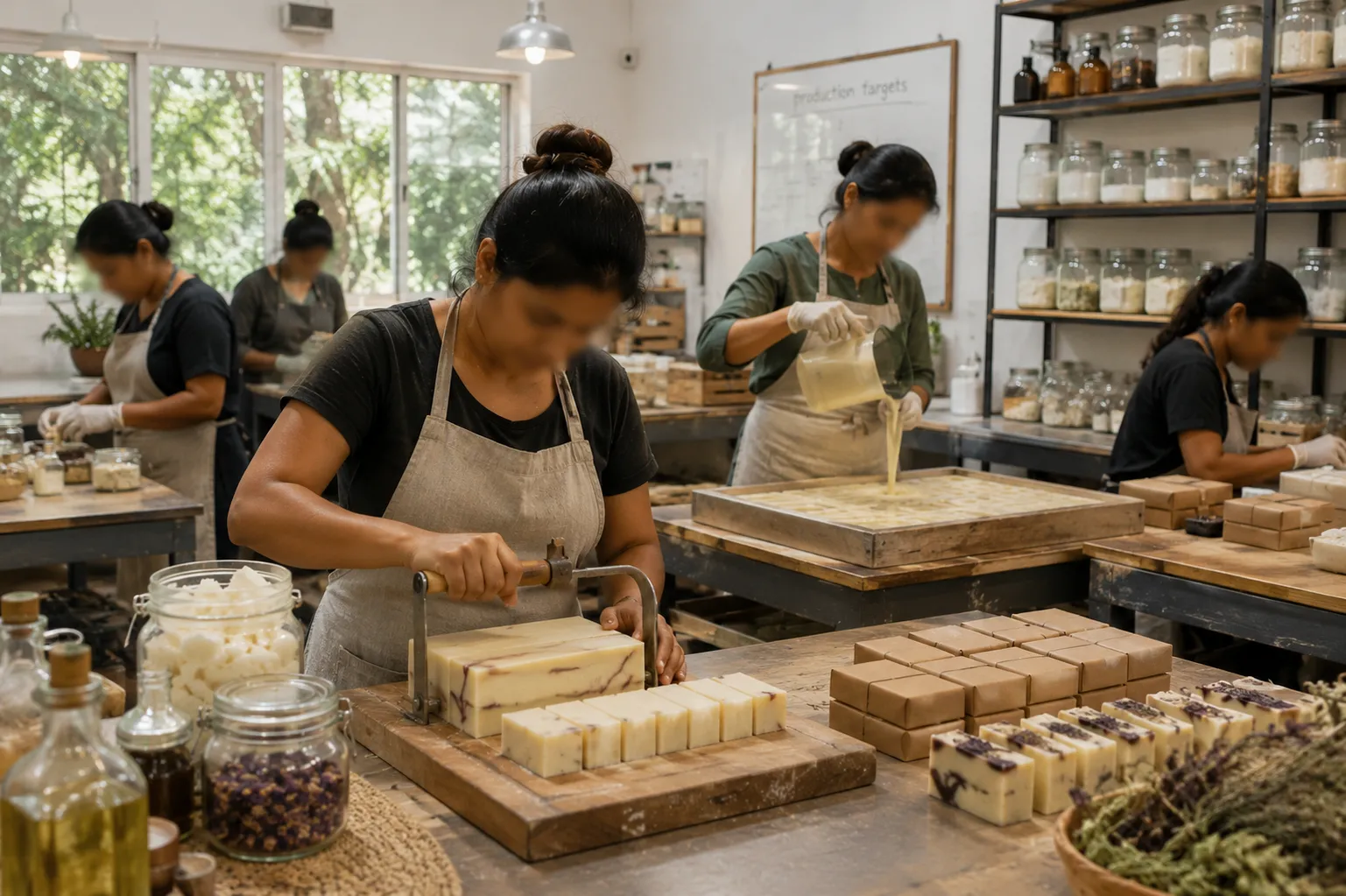
The production and warehouse team is 100 percent women-run—a statistic that is virtually unheard of in Indian manufacturing. Most of the women who work at Bare Necessities had never held formal jobs before they joined the company. Some had spent years out of the workforce, caring for children or elderly parents, and had been told, implicitly or explicitly, that their working lives were over. Mansoor hired them, trained them, and built a workplace that accommodates their lives rather than demanding that their lives accommodate the workplace. The women now earn their own incomes, manage their own bank accounts, and support their children's education. "More than that," said one employee, "it gave me community. The women here are amazing. Everyone's so grounded and compassionate. It helped me see that I am not alone in my struggles."
The company also runs workshops on savings and financial discipline for its women's team, teaching the skills that formal employment assumes but rarely provides. The women who make the soaps and wrap the shampoo bars are not just workers. They are participants in an economy that has historically excluded them, and the company that employs them has made their inclusion a central part of its mission. The triple bottom line—people, planet, profit—is not a marketing slogan. It is the operating system of the business, and it shapes every decision from supplier selection to packaging design to hiring policy.
The Accidental Entrepreneur Who Never Planned to Build a Business
The most striking dimension of Mansoor's journey is not the environmental impact. It is the fact that she never intended to become an entrepreneur at all.
She did not study business. She did not dream of founding a company. She did not spend her twenties networking at startup events or pitching to venture capitalists. She was an environmental lawyer who wanted to reduce her own waste footprint, and when she could not find products that allowed her to do so, she made them herself. The company that grew from that impulse—from a garage, from a grandmother's wisdom, from a conviction that consumption could be kind—was never part of the plan. Mansoor calls herself an "accidental entrepreneur," and the description is accurate. But it is also incomplete. The accident was not that she became an entrepreneur. The accident was that the market she entered turned out to be enormous—and that the values she refused to compromise turned out to be the foundation of a competitive advantage that no amount of venture capital could replicate.
The beauty and personal care industry in India is one of the fastest-growing consumer markets in the world, projected to exceed $30 billion by 2030. Within that market, the sustainable and natural segment—products that are plastic-free, chemical-free, and ethically sourced—is growing faster than the overall category, driven by the same consumer shift that has transformed food, fashion, and home goods. The consumer who reads ingredient labels, who worries about microplastics, and who wants to align her purchases with her values is no longer a fringe. She is the mainstream, and the companies that built their brands around her before the shift was obvious—Bare Necessities, The Switch Fix, The Woman's Company—have a loyalty that the legacy FMCG giants cannot easily replicate.
The distribution has expanded steadily. Bare Necessities now sells directly to consumers through its website and through platforms like Amazon and Flipkart. It also serves business customers—hotels, corporates, and retailers who want to offer sustainable personal care products to their own customers. The brand has not yet entered quick commerce, the channel that has transformed the Indian D2C landscape over the past three years, but the infrastructure is being built. The company is growing at a pace that is deliberate, sustainable, and entirely in keeping with the philosophy that has guided it from the beginning. The garage is a memory. The company is now a nationally recognized brand. But the values that were born in that garage—kindness to the planet, kindness to the people who make the products, and kindness to the customer who deserves better than plastic and chemicals—have not changed.
The broader context is an Indian consumer market that is in the early stages of a structural transformation. The same forces that reshaped food, fashion, and home goods—transparency, sustainability, the rejection of unnecessary chemicals and plastics—are now arriving in personal care. The companies that recognized this shift earliest, and that built their brands around it with genuine commitment rather than marketing opportunism, will capture a disproportionate share of the market it creates. Mansoor's Cambridge degree, her UN experience, and her environmental expertise gave her an unusual foundation for building such a brand. But the brand itself was built on something simpler: the conviction that the products people use every day should not harm the planet, should not harm the people who make them, and should not come wrapped in materials that will outlast every living thing that touched them. The shampoo bar is not just a shampoo bar. It is a declaration. And the market, slowly but unmistakably, is listening.
What This Signals
The Sahar Mansoor story is not primarily about soap. It is about the structural transformation of the Indian consumer goods industry—and about the founder who saw the transformation coming before the industry's giants did.
For decades, the personal care industry was built on a model that externalized its costs. The plastic packaging, the synthetic chemicals, the carbon emissions, and the social exploitation were invisible to the consumer, who saw only the bright, cheerful product on the supermarket shelf. The model worked because the costs were borne by people—waste pickers, factory workers, communities downstream of chemical plants—who had no voice in the system. The model is now breaking. The same consumers who have rejected plastic bags, chemical-laden food, and fast fashion are now looking at their bathroom shelves and asking the same questions: what is in this, where did it come from, and who paid the price for it?
Bare Necessities answers those questions with every product it sells. The shampoo bar that replaced 68 million units of plastic, the soap that was made by a woman who had never held a formal job before, the moisturizer that was formulated from ingredients sourced from farmers who are paid fairly and treated with dignity—each of these is a rebuttal to the model that dominated the industry for a century. The company is small, by the standards of the giants it competes against. But the values it represents are not small. They are the leading edge of a transformation that is only beginning, and the woman who started it from her mother's garage—without a business plan, without funding, without any intention of becoming an entrepreneur—is now one of the most credible voices in Indian sustainability.
Sahar Mansoor is no longer the 24-year-old in the UN conference room, writing policy reports that would never reach the people they were written for. She is the founder of India's first B Corp-certified FMCG company, the architect of a supply chain that has diverted 155,000 kilograms of waste from landfills, and the employer of a team of women who found dignity, community, and financial independence in a workplace that was built for them. The jar of trash she has kept since 2015—all the waste she has generated in nearly a decade, fitting into a single 500-gram container—is still there, a quiet, physical argument for the life she chose. The Cambridge lawyer who found her calling in a Bengaluru garage has been building something that the global policy machine could never have produced: a business that proves, with every shampoo bar and every jar of moisturizer, that consumption does not have to be destructive. It can be kind. And kindness, it turns out, can scale.


