The BITS Pilani Engineer Who Dared to Sell Lingerie Online When No One Would Even Say the Word: How Richa Kar Built India's First Intimate-Wear Brand, Fought Off a Decade of Stigma, and Changed How Millions of Women Shop
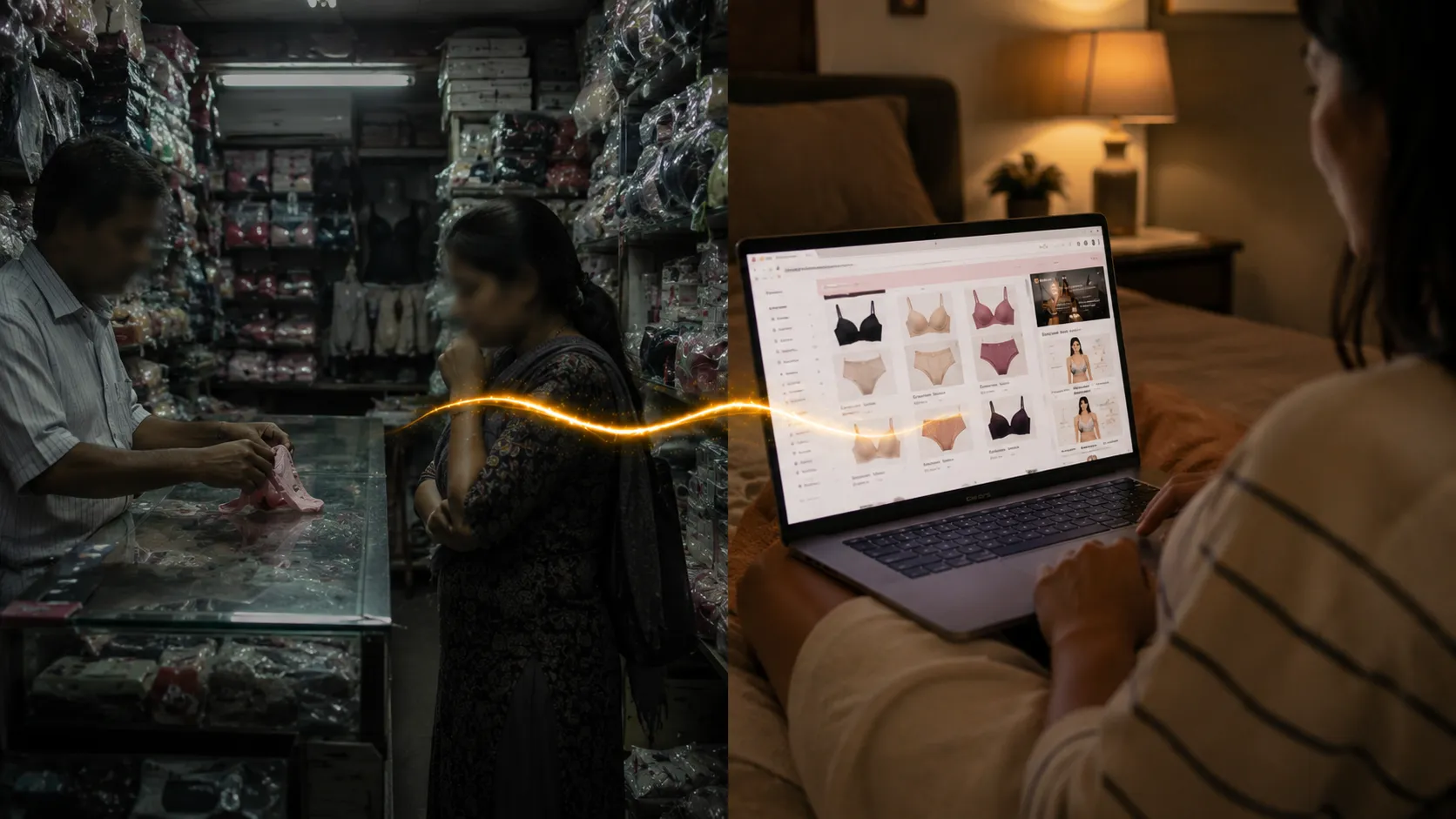
BENGALURU — May 25, 2026 — In 2010, Richa Kar was 28 years old, a graduate of BITS Pilani and the Narsee Monjee Institute of Management Studies, with a solid corporate career at SAP and Spencer's Retail. She had been researching the Indian lingerie market for months—not because she intended to start a business, but because she had noticed something that seemed too obvious to be true. Indian women, regardless of income, education, or geography, were almost universally underserved when it came to intimate wear. The neighbourhood lingerie stores were cramped, poorly lit, and staffed by men who made the shopping experience so uncomfortable that most women rushed through it, buying whatever was handed to them without ever trying anything on. The premium options were available only in high-end department stores in a handful of cities. The vast majority of Indian women—hundreds of millions of them—were buying ill-fitting, uncomfortable, and often unhygienic intimate wear because they had no dignified alternative.
Kar had no background in fashion, no experience in retail beyond her corporate roles, and no connections in the textile industry. What she had was a conviction—quiet, stubborn, and entirely unproven—that Indian women deserved better, and that the internet could provide what physical retail could not: privacy, choice, and the freedom to browse without a stranger watching. In 2011, she launched Zivame—the name means "radiant me" in Sanskrit—from a small office in Bengaluru, with a few thousand dollars of her own savings and a belief that was either visionary or absurd, depending on whom you asked. The website sold bras, panties, shapewear, and sleepwear, and it was the first of its kind in India: an online-only, women-focused intimate-wear brand that treated lingerie not as a shameful secret, but as a legitimate product category that deserved the same design, technology, and customer experience as any other consumer good.
The response was immediate and overwhelming. Women who had spent their entire lives dreading the lingerie shopping experience flocked to the platform. They browsed in privacy. They read educational content about sizing, fit, and fabric. They ordered products that arrived in discreet packaging, and they returned what did not fit without ever having to explain themselves to a stranger. The company grew fast—too fast, perhaps—raising over $70 million from investors including Kalaari Capital, Unilazer Ventures, and Zodius Capital. At its peak, Zivame was valued at over $200 million and operated more than 40 physical stores across India, having evolved from an online-only retailer to an omnichannel brand. Kar became the face of a revolution that the Indian startup ecosystem had not seen coming: a woman-led company selling a product that most venture capitalists were too embarrassed to discuss in partner meetings, to a customer base that the market had spent decades ignoring.
The journey was not smooth. The company faced intense competition, a bruising price war with larger e-commerce platforms, and the same profitability challenges that have bedevilled every Indian D2C brand. Kar stepped back from day-to-day operations in 2021 after a decade at the helm, and the company has since undergone multiple strategic pivots under new leadership. But the arc of her story—from a corporate employee with an idea to the founder who broke India's most stubborn retail taboo—remains one of the most remarkable and underappreciated chapters in the history of Indian consumer internet. She built something that did not exist, for a customer that had been invisible, in a category that the market had treated as shameful. The shame was never hers. It belonged to the industry that had failed its customers for generations, and she dismantled it one bra at a time.
The BITS Engineer Who Refused to Look Away
Richa Kar was not supposed to be an entrepreneur. She was an engineer, a graduate of BITS Pilani—one of India's most prestigious technology institutions—followed by an MBA from NMIMS in Mumbai. She worked at SAP, the German enterprise software giant, and then at Spencer's Retail, one of India's oldest department store chains. Her career was solid, secure, and on a trajectory that would have led to senior management roles at large, established companies. She had never imagined herself as a founder.
The idea for Zivame was born not from a flash of entrepreneurial genius, but from a research project. Kar was working on a market analysis of the Indian retail sector when she began looking at the lingerie category. What she found appalled her. India was one of the fastest-growing markets for intimate wear in the world, driven by rising incomes, urbanisation, and a generation of women who were increasingly conscious of what they wore beneath their clothes. And yet, the retail infrastructure for serving this demand was almost medieval. The neighbourhood lingerie stores that served most of the country were uniformly terrible: men staffing the counters, no fitting rooms, no privacy, and a product selection that was driven entirely by what the distributor had available rather than what the customer might want. The woman who walked into such a store was not treated as a customer. She was treated as a supplicant, expected to buy quickly and leave without making a fuss.
The premium segment was little better, in its own way. International brands like Victoria's Secret and La Senza were available in a handful of high-end malls in the largest cities, but the experience was designed for Western consumers and Western bodies. The sales staff at these stores were often men as well, and the environment—while more polished—was still intimidating for the average Indian woman who had grown up in a culture where lingerie was not discussed, not displayed, and certainly not celebrated. The entire category was trapped in a paradox: it was one of the most intimate, personal purchases a woman could make, and yet the retail experience treated it as something shameful, hurried, and transactional.
Kar's insight was that the internet could break this paradox. A website could offer what no physical store could: anonymity, education, and unlimited choice. A woman shopping for a bra on Zivame did not have to face a salesman. She did not have to rush her decision. She could read about sizing—a subject so poorly understood that studies estimate more than 70 percent of Indian women wear the wrong bra size, often with serious health consequences. She could browse dozens of styles, compare prices, and order multiple sizes to try on in the privacy of her own home. The product arrived in discreet packaging. The returns were handled without judgment. The entire experience was designed around a single, revolutionary idea: that a woman buying lingerie deserved to be treated with dignity. The idea should not have been revolutionary. In India in 2011, it was.
The early days were a scramble. Kar had no experience in e-commerce, no background in the textile industry, and no network in the fashion world. She had to learn everything from scratch—how to build a website, how to manage inventory, how to negotiate with suppliers who were sceptical of an online-only lingerie retailer run by a woman who had never worked in their industry. The stigma that surrounded the product category extended to the founder. Investors were uncomfortable with the business. Potential hires were uncomfortable with the product. Even friends and family members questioned whether Kar really wanted to be known as "the lingerie lady." She persisted. The customers, it turned out, were not uncomfortable at all. They were relieved. They had been waiting for something like Zivame, and when it arrived, they embraced it with a fervour that surprised everyone—including Kar herself.
The Fit Revolution
The single most important contribution Zivame made to the Indian consumer landscape was not a product. It was an education. Before Zivame, the subject of bra sizing in India was shrouded in mystery and misinformation. Generations of women had been fitted by salesmen who used nothing more than a glance and a guess. The consequences were not merely aesthetic. An ill-fitting bra can cause back pain, shoulder pain, skin irritation, and long-term posture problems. It can make exercise uncomfortable, which discourages physical activity. It can make professional clothing fit poorly, which affects confidence in the workplace. The humble bra, it turned out, was a public health issue hiding in plain sight.
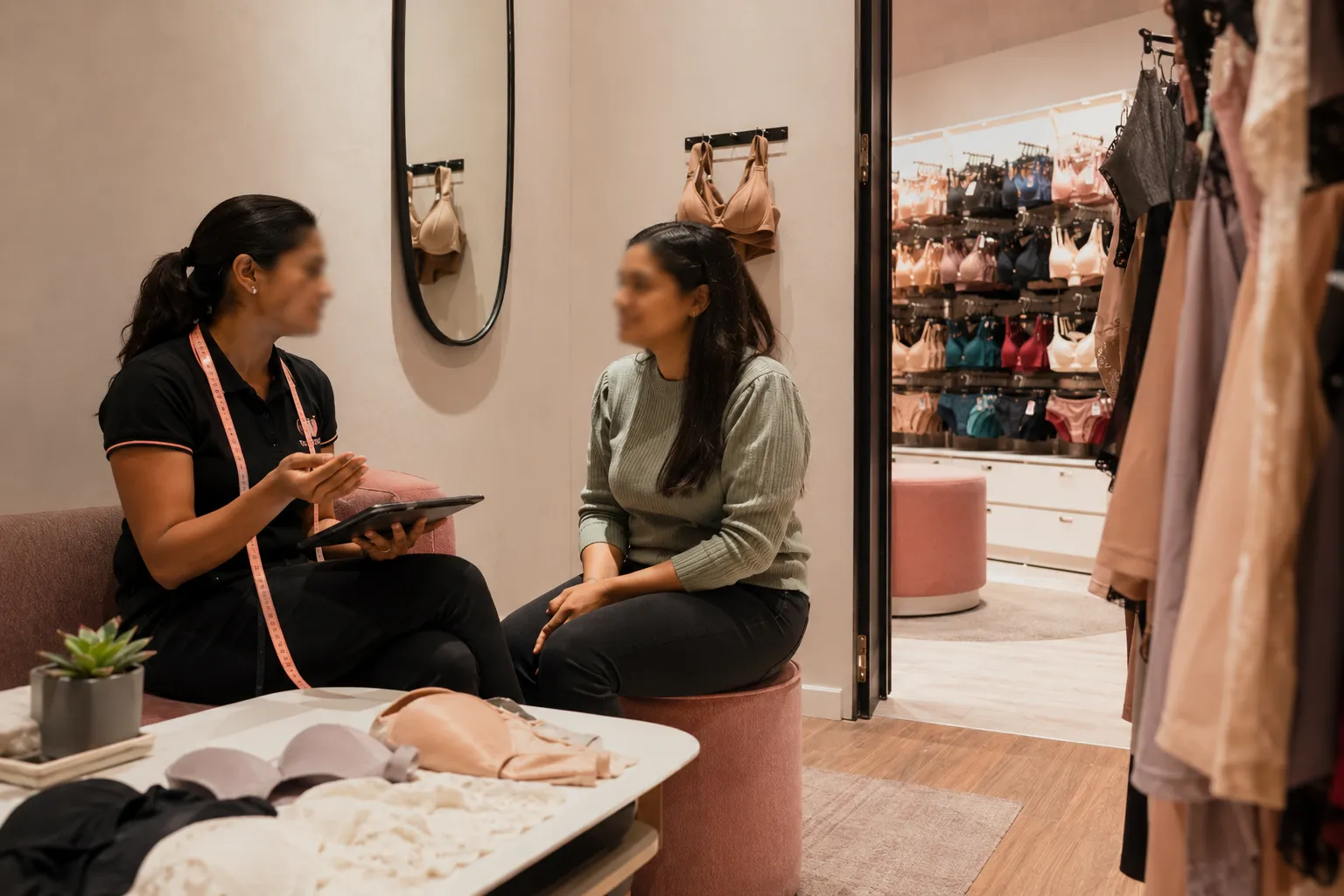
Zivame invested heavily in educational content—fitting guides, measurement tutorials, videos explaining how a bra should feel when it fits correctly. The company developed a "Fit Code" algorithm that helped customers identify their correct size based on a few simple measurements. It offered virtual consultations with fit experts who could guide a customer through the process over a video call. The content was not marketing. It was a corrective—an attempt to undo generations of misinformation and to give women the knowledge they needed to make informed decisions about their own bodies. The impact was measurable. The company reported that the average Indian woman who came to Zivame for the first time was wearing a bra that was at least one band size too large and at least one cup size too small—the classic "sister sizing" error that the traditional retail industry had been perpetuating for decades.
The product range was designed with the same attention to detail. Zivame launched its own private-label brands, developed specifically for Indian body types and Indian climate conditions. The fabrics were breathable, moisture-wicking, and designed to withstand the heat and humidity of an Indian summer. The sizing was inclusive, spanning a range that was broader than what most physical stores carried. The styles were designed to balance comfort, support, and aesthetics—not the hypersexualised aesthetic of Western lingerie brands, but a more understated, elegant sensibility that resonated with the Indian consumer. The brand messaging was inclusive, body-positive, and unapologetically female-centric. The woman who shopped on Zivame was not being sold a fantasy. She was being offered a solution.
The company also expanded into adjacent categories—activewear, sleepwear, shapewear, and menstrual products—building a comprehensive platform for the intimate needs that Indian women had been underserved on for generations. The expansion was not opportunistic. It was a logical extension of the brand's core insight: that the retail industry had failed women in every category that touched their bodies in any way that was considered private, and that the internet could fix that failure in every one of those categories simultaneously. The platform that began with bras had become, over a decade, the largest women-focused intimate-wear ecosystem in the country.
The Venture Capitalists Who Couldn't Say "Bra"
The most surreal dimension of Kar's journey was not the customers or the products. It was the investors. For the better part of a decade, Kar sat in pitch meetings with venture capitalists—the overwhelmingly male partnership groups that control the flow of capital in the Indian startup ecosystem—and watched them struggle to say the word "bra." They stumbled. They euphemised. They looked at their notes. They asked questions about "the category" and "the segment" without ever naming the product that Zivame actually sold. The discomfort was not malicious. It was worse: it was childish. Grown men, managing hundreds of millions of dollars in capital, could not bring themselves to have a professional conversation about a product that half the human population wears every single day.
The discomfort extended beyond vocabulary. The same investors who eagerly funded food-delivery apps, ride-hailing platforms, and quick-commerce startups—businesses that were unproven and deeply loss-making—were sceptical of Zivame's market opportunity. The lingerie market in India was estimated at over $3 billion, growing at double-digit rates, and almost entirely unorganised. The company that could capture even a fraction of that market with a trusted, nationwide brand would be worth billions. And yet, the venture capitalists hesitated. The category, they told Kar, was "niche." The word, coming from men who had funded three different grocery-delivery startups in a single year, was almost comical. But the impact was real. Zivame raised money—over $70 million across multiple rounds from Kalaari Capital, Unilazer Ventures, and Zodius Capital, among others—but the process was harder than it should have been, and the valuations were lower than they would have been for a male-founded company in a category that investors found more comfortable.
The broader context is an Indian venture-capital ecosystem in which women founders are systematically underfunded, underestimated, and excluded from the networks that determine who gets capital and who does not. The barriers are particularly acute for women founders building products for women—the so-called "femtech" and "sheconomy" categories that the male-dominated investment community has historically dismissed as small, niche, or uninvestable. Kar navigated these barriers with the same directness she brought to every other challenge in her career. She did not wait for investors to become comfortable with her product. She built a company that made the discomfort irrelevant. The customers came. The revenue grew. The brand became synonymous with the category. The venture capitalists who once stumbled over the word "bra" were eventually forced to acknowledge that the market they had dismissed was real, large, and growing. The discomfort was theirs to manage. Kar had a business to build.
The competitive landscape intensified as the market grew. Amazon and Flipkart expanded their lingerie categories, leveraging their massive customer bases and logistics infrastructure to compete on price and selection. A new generation of D2C intimate-wear brands—Clovia, PrettySecrets, Nykd by Nykaa—competed for overlapping customer segments. International brands like H&M and Uniqlo entered the Indian market with their own lingerie lines. The company that had pioneered online intimate-wear retail in India was no longer the only player in the market. It faced the classic innovator's dilemma: the market it had created was now being pursued by competitors with deeper pockets, broader product ranges, and more aggressive pricing strategies.
Zivame's response was to go omnichannel. The company opened physical stores—more than 40 at its peak—in malls and high streets across India, designed to provide the same dignified, educational, female-centric experience that customers had found online. The stores were a bet that the Indian consumer, even as she increasingly shopped online, still wanted the option to touch fabrics, try on sizes, and consult with fit experts in person. The bet was expensive—physical retail carries fixed costs that the asset-light e-commerce model avoids—and it was not immediately successful. The company faced the same profitability challenges that have bedevilled every Indian D2C brand that has expanded into offline retail. The stores were a strategic necessity, but they were also a financial burden, and the company spent several years navigating the transition from an online-first startup to a sustainable omnichannel business.
Kar stepped back from day-to-day operations in 2021, after a decade at the helm. The departure was amicable, by all accounts, and she remains a shareholder and a founding figure in the company's history. The brand she built continues to operate under new leadership, navigating the same competitive and financial pressures that define the Indian D2C landscape. The company is not the dominant player it once was, and the market it pioneered is now crowded with competitors who owe their existence, in part, to the door that Kar kicked open. But the arc of her story—from a corporate employee with an idea to the founder who broke India's most stubborn retail taboo—remains one of the most consequential chapters in the history of Indian consumer internet. The woman who was asked, in every investor meeting, why she wanted to be known as "the lingerie lady" built a company that answered the question for her. She wanted to be known as the person who gave Indian women something they had never had: a dignified way to buy a product they had always needed. The rest was noise.
What This Signals
The Richa Kar story is not primarily about lingerie. It is about the structural neglect of the female consumer in the Indian retail industry—and about what happens when a woman refuses to accept that neglect as normal.
For generations, the Indian retail industry treated women's intimate needs as an afterthought—a category that was too embarrassing to discuss, too small to invest in, and too complicated to solve. The women who endured the cramped stores, the leering salesmen, and the ill-fitting products did not complain, because complaining about lingerie was not something that respectable women did. The silence was the industry's shield. As long as no one talked about the problem, no one had to fix it.
Kar broke the silence. She built a company around the conviction that the problem was not too small, too embarrassing, or too complicated. It was simply too uncomfortable for the men who controlled the retail industry to take seriously. The company she built—the website that offered privacy, the content that offered education, the stores that offered dignity—was not just a business. It was a corrective. It demonstrated that the market for women's intimate wear was not niche. It was enormous, underserved, and waiting for someone to take it seriously. The venture capitalists who once stumbled over the word "bra" now invest in femtech startups as a matter of course. The e-commerce platforms that once ignored the category now compete aggressively for it. The stigma that surrounded lingerie shopping has not disappeared, but it has eroded—and the erosion began with a website that treated the subject with the seriousness it deserved.
Richa Kar is no longer at the helm of the company she founded. The brand she built has been through pivots, restructurings, and the same brutal competitive pressures that define the Indian D2C landscape. But the door she kicked open remains open. The millions of Indian women who now buy intimate wear online—who browse in privacy, who read sizing guides, who expect to be treated with dignity—are her legacy. The market she created is now a permanent part of the Indian retail landscape. The stigma she fought has not been fully dismantled, but it has been permanently weakened. The woman who was told, in every conceivable way, that her product was too embarrassing to build a business around built the business anyway. The embarrassment was never hers. It belonged to an industry that could not bring itself to say the word "bra" while taking half the population's money for everything else. She named the product. She built the platform. She changed the market. The rest is just history.


