The Billionaire's Son Who Bet $45 Million of His Own Money on a Social Network Nobody Believed In—and Won
BENGALURU — May 22, 2026 — Kavin Bharti Mittal was born into one of India's great industrial families. His father, Sunil Mittal, founded Bharti Airtel, the telecommunications giant that connects over 500 million people across South Asia and Africa. He grew up in the rarefied world of legacy and expectation, where children of business dynasties are expected to join the family firm, learn the ropes, and eventually take over. The path was laid out for him. It was smooth, prestigious, and utterly predictable.
Kavin took one look at it and walked the other way.
In 2012, at the age of 24, he returned to India from his studies in the United Kingdom with an idea that almost no one took seriously. He wanted to build a social network. Not a clone of Facebook or Twitter, which were already dominant, but a discovery platform built around interests—a place where people could join communities based on what they loved, not who they knew. He called it Hike. He started it with a small team, raised modest venture funding, and set out to compete with some of the largest technology companies on Earth.
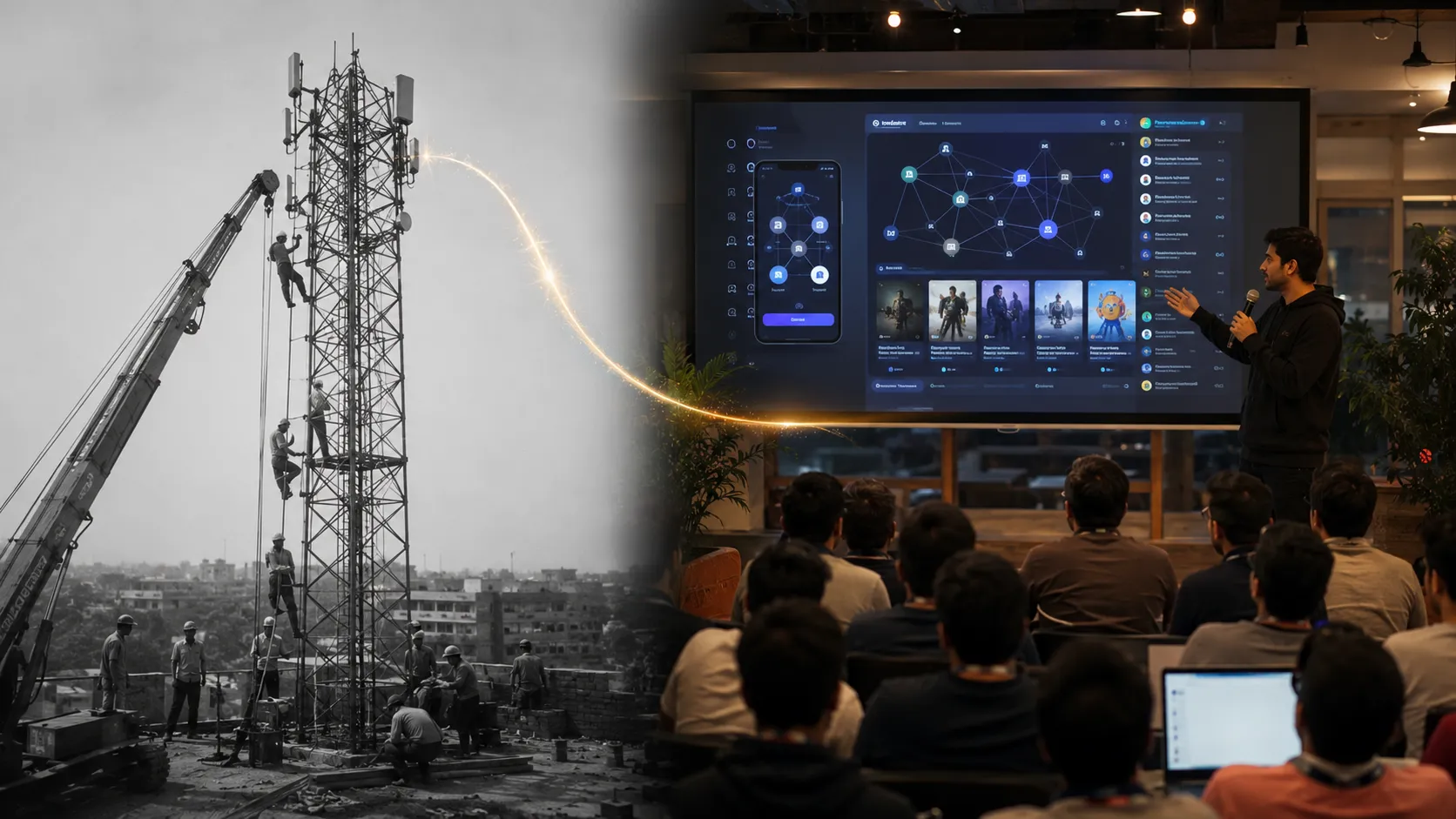
It did not work. Hike's first iteration, a messaging app, struggled to differentiate itself in a market dominated by WhatsApp. But Kavin did not retreat to the safety of the family business. He kept building, kept iterating, kept betting on the idea that social media was due for a fundamental reinvention. In 2023, he launched the second version of Hike—a blockchain-powered, tokenized social network built on the idea that users, not corporations, should own their digital identities and communities. And in a move that shocked the Indian startup ecosystem, he personally invested $45 million of his own money to fund the company's growth, making it one of the largest single-founder investments in Indian technology history.
The Weight of a Surname
Being the son of Sunil Mittal is not a simple inheritance. It comes with advantages that most founders can only dream of—access to capital, a network of relationships that spans the global business elite, and a surname that opens doors. But it also comes with a burden that most founders never have to carry: the assumption that anything you build was handed to you, that your success is derivative, that you are playing the game on easy mode.
Kavin understood this burden from an early age. He was a bright student, earning his undergraduate degree from Imperial College London and a master's from the University of Bath. He interned at Google and McKinsey, building the kind of resume that would have made him a credible entrepreneur even without the family name. But the name was always there, and he knew that whatever he built would be measured against it.
His response was to bet on himself in the most literal sense possible. When Hike needed capital to fund its second act, Kavin wrote the check personally. The $45 million investment was not a family office transaction. It was his own money, earned from his early investments and his stake in previous ventures, deployed into a company that most rational investors would have considered extremely high-risk. The message was unambiguous: he believed in Hike enough to put his own net worth on the line.
The move earned him a different kind of respect from the startup ecosystem—not the automatic deference that attaches to a famous surname, but the hard-won credibility of a founder who has real skin in the game. "It's one thing to raise money from venture capitalists," one Bengaluru-based investor said. "It's another thing entirely to write a $45 million check from your own account. That's not nepotism. That's conviction."
The Second Act: Blockchain and the Ownership Revolution
The first version of Hike was a messaging app that tried to compete with WhatsApp. It attracted users, raised funding, and achieved a valuation of over $1 billion—making it one of India's earliest unicorns. But the market was brutal. WhatsApp, backed by Facebook's resources and installed base, was nearly impossible to dislodge. Hike's messaging product never achieved the scale required to become a sustainable business.
Rather than pivoting to something safer, Kavin made a decision that was either visionary or reckless, depending on whom you asked. He shut down the messaging app and rebuilt Hike from scratch—this time as a blockchain-based social network where users would own their identities, their data, and their communities through cryptographic tokens. It was a bet on Web3 before Web3 had proven itself, in a market where blockchain adoption was still in its infancy.
The new Hike is built on the idea that social media's fundamental problem is ownership. The platforms that dominate the internet—Facebook, Instagram, TikTok—own the user data, control the algorithms, and extract the economic value. Users generate the content but capture none of the upside. Hike's blockchain architecture inverts that model: users own their profiles, communities operate as decentralized autonomous organizations, and the value created by the network accrues to the participants rather than the platform owner.
It is an ambitious vision, and it is still unproven at scale. But it has attracted a passionate community of early adopters, particularly in India's crypto-native and developer communities. And it has positioned Hike as one of the most technically interesting social media experiments in the world—a company that is trying to answer the question of whether a social network can function without a centralized owner extracting rent from its users.

What This Story Actually Says
The Kavin Bharti Mittal story is not about nepotism. It is about what happens when someone born into privilege chooses to risk that privilege on something unproven.
He could have joined Bharti Airtel. He would have been welcomed. He would have risen through the ranks, eventually taking a senior leadership role in one of India's largest and most respected companies. He would have been wealthy, respected, and secure. He chose instead to build a social network in a market dominated by Facebook, to shut it down when it failed, and to rebuild it on a technology architecture that most people still do not understand.
The $45 million personal investment is the most vivid expression of that choice. He did not need to write that check. He could have raised venture capital, diluted his stake, and preserved his personal wealth. Instead, he bet on himself—and in doing so, he demonstrated that he was willing to lose his own money, not just other people's, on the conviction that he was building something that mattered.
The Bharti name opened doors. But the $45 million closed the gap between privilege and proof. Kavin Bharti Mittal is not successful because of his father. He is successful because, when given every reason to take the safe path, he chose the hard one—and backed it with his own capital. The heir who refused the empire is building his own.