The Signal Is 20,000 Kilometres Away. And Anyone Can Jam It.
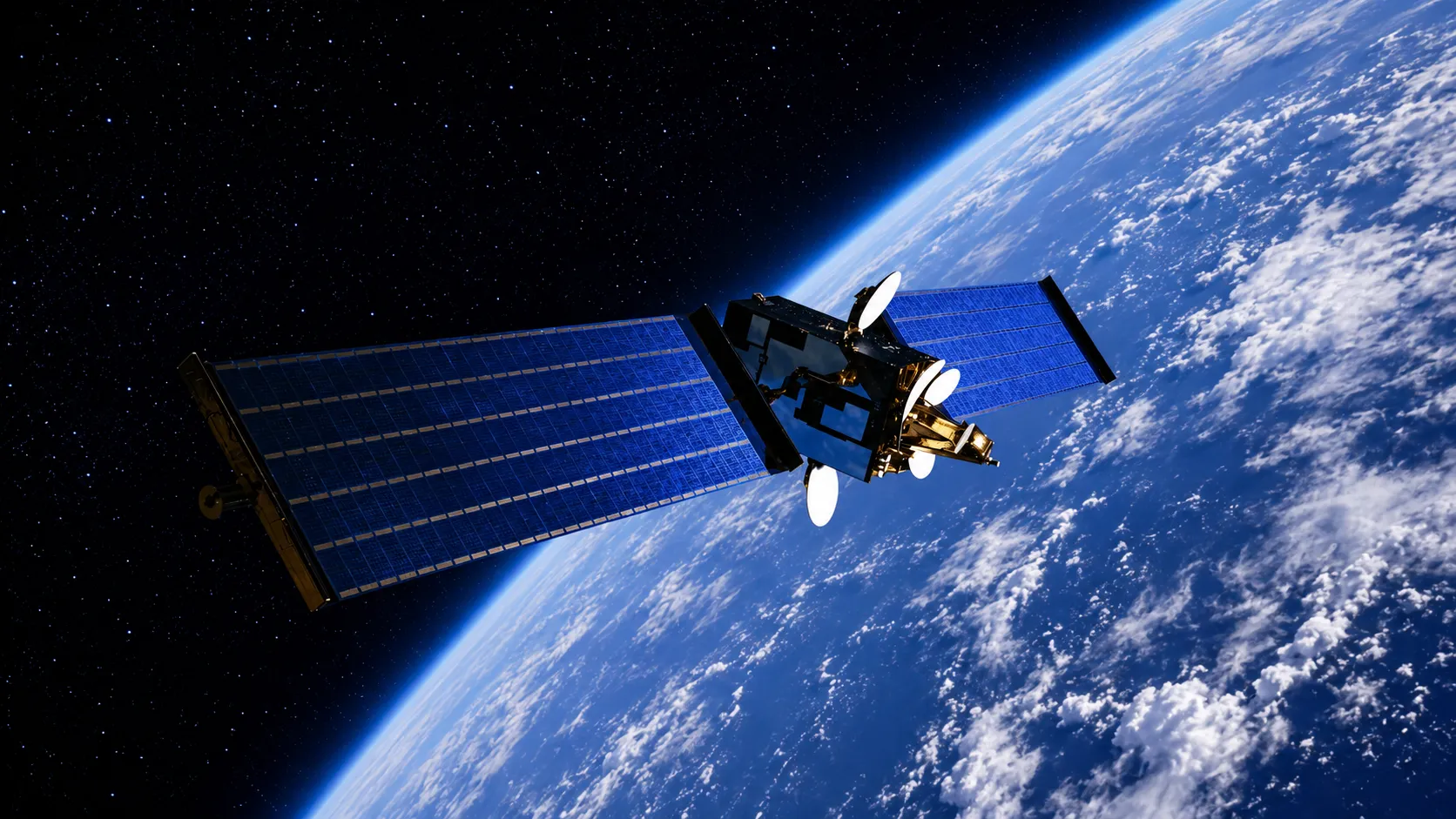
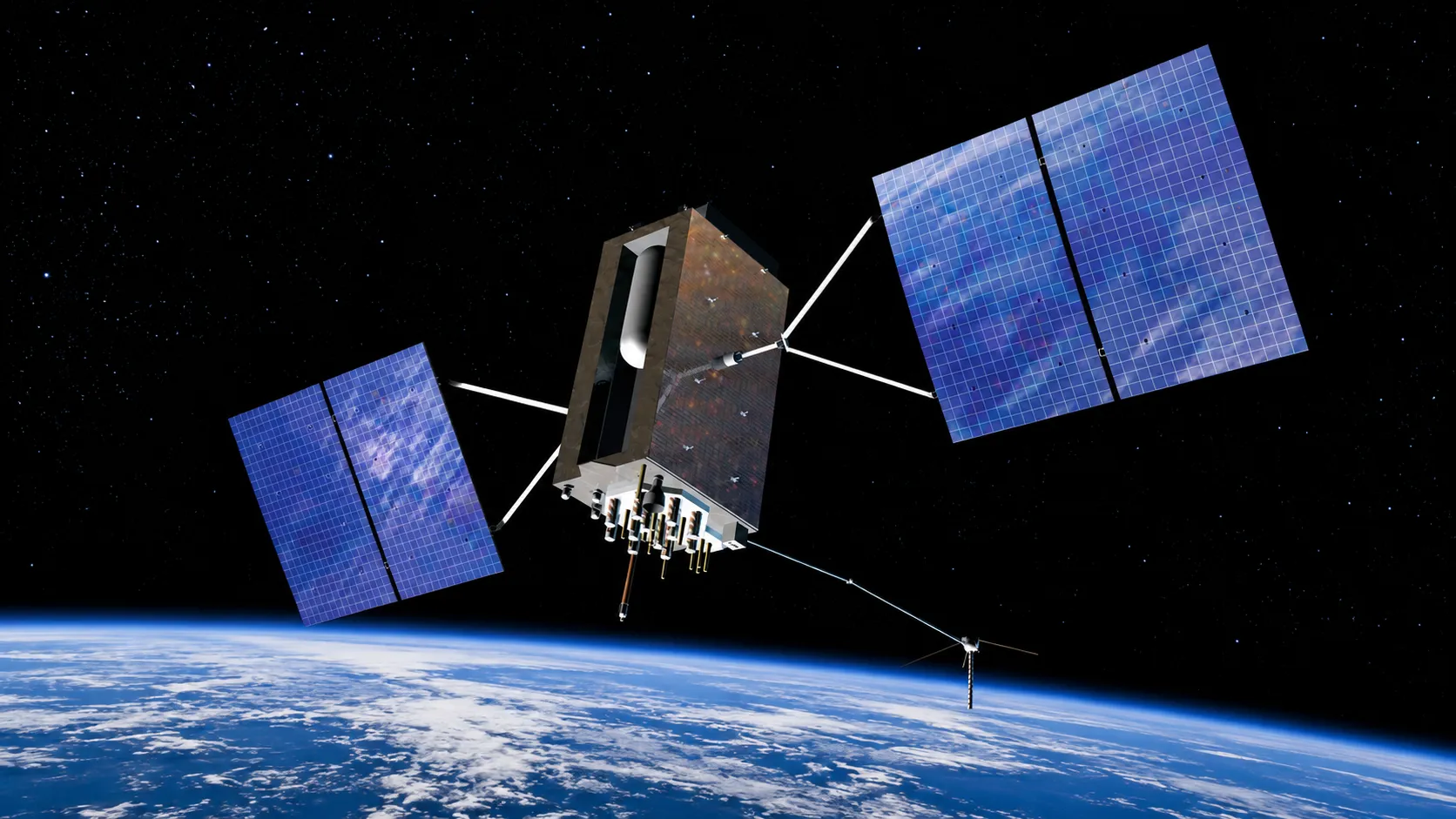
Global Positioning System satellites orbit approximately 20,200 kilometres above the Earth. By the time their signals travel that distance and reach a receiver — in your phone, in a commercial aircraft, in a cargo ship crossing the Strait of Hormuz — they have weakened to roughly the strength of a 20-watt light bulb visible from that altitude. Cheap radio equipment, available online for under a hundred dollars, can generate a stronger signal and overpower them entirely.
This is not a new vulnerability. Engineers and military strategists have known for decades that GPS — the system that the modern world has quietly built its entire navigation, logistics, aviation, shipping, drone, and autonomous vehicle infrastructure on top of — is fragile in a way that is difficult to overstate. The satellites are robust. The signals they send are not.
For most of the system's civilian history, this fragility was theoretical. A problem for defence planners, not for airline passengers or container ship captains. The conflict in Ukraine changed that calculation in 2022, when GPS-guided drones entered warfare at scale and adversaries began jamming and spoofing navigation signals as a matter of military routine. The Iran conflict in 2026 made it undeniable for civilian operators. More than 1,100 vessels reported GPS interference within a 24-hour period in the Strait of Hormuz. In June 2025, electronic interference was thought to be a factor in the collision of two oil tankers, the Adalynn and the Front Eagle, off the coast of the UAE. Commercial flights crossing the Middle East began rerouting to avoid navigation-disrupted zones.
The venture capital community has drawn the obvious conclusion. In 2025 and 2026, the race to build GPS alternatives — or more precisely, to build navigation systems that work reliably when GPS does not — has become one of the most actively funded infrastructure bets in the deep-tech ecosystem.
The Problem With GPS — and Why Autonomy Makes It Urgent
The global navigation satellite system — GPS in the United States, Galileo in Europe, GLONASS in Russia, BeiDou in China — has become so embedded in modern infrastructure that most people have no mental model for what the world looks like without it. But the inventory of what depends on GPS signals is instructive.
Commercial aviation uses GPS for approach guidance, instrument landing, and en-route navigation. Maritime shipping uses it for collision avoidance, port entry, and cargo routing. Autonomous vehicles — drones, robotics, self-driving cars — use GPS as their primary positioning input. Energy grids, financial transaction systems, and telecommunications networks synchronise their timing using GPS. Emergency services dispatch is GPS-coordinated. Precision agriculture, surveying, construction, and logistics all depend on it.
All of this rests on a signal that, as Faragher puts it, "can be overpowered by a jammer that costs about the same as a cheap smartphone."
The autonomous vehicle revolution has sharpened this vulnerability into an urgent engineering problem. A GPS-dependent robot or drone does not merely suffer a degraded experience when GPS fails — it loses its primary sense of where it is in the world. An autonomous warehouse robot that cannot locate itself within a few centimetres stops functioning. An autonomous drone that receives spoofed position data may fly directly into a building. In a military context, the consequences are even starker: in 2011, Iranian forces reportedly spoofed GPS signals to trick a US RQ-170 Sentinel reconnaissance drone into landing safely in Iranian territory, allowing them to capture the aircraft intact.
As autonomous systems scale into every sector — logistics, agriculture, construction, mining, defence, space — the assumption that GPS will always be available becomes not just technically wrong but commercially catastrophic. The market's response is to fund the companies building what comes next.
The Startups Building the Alternative
The approaches to GPS-independent or GPS-resilient navigation divide into several distinct technical paradigms, and each is attracting serious capital.
Inertial Navigation — Advanced Navigation, ANELLO Photonics
Inertial navigation systems (INS) calculate position by measuring acceleration and rotation from a known starting point, using the physics of motion rather than external signals. The technology has existed for decades — submarine navigation and space launch vehicles have relied on it since the Cold War. The historical limitation has been drift: inertial systems accumulate small errors over time that compound into significant position uncertainty over long distances.
The breakthrough being commercialised now is the combination of high-precision inertial sensors with AI-driven sensor fusion — using machine learning to integrate data from multiple sensors (inertial, optical, acoustic, barometric, LiDAR) in real time, correcting for drift and maintaining navigation accuracy even when GPS is unavailable or compromised.
Advanced Navigation, headquartered in Sydney, Australia, has become one of the most watched companies in this space. On March 18, 2026, it raised $110 million in a Series C led by Airtree Ventures, with participation from Quadrant Private Equity and Australia's National Reconstruction Fund Corporation — and backed by existing investors including KKR, In-Q-Tel (the CIA's venture arm), and former Australian Prime Minister Malcolm Turnbull. The round brought total funding to over $200 million.
CEO and co-founder Chris Shaw framed the investment thesis in terms that go well beyond technology:
The company's software fusion engine, AdNav Intelligence, combines data from multiple sensors in real time to maintain navigation accuracy when GPS is unavailable. It has deployed more than 100,000 systems across multiple countries. Its customer list is a map of the industries most exposed to GPS vulnerability: Anduril, NOAA, South Korean satellite manufacturer Hanwha Systems, mining giant BHP, German defence prime Rheinmetall, and lunar company Intuitive Machines. It demonstrated 7.5 metres of drift over 65 kilometres in satellite-denied conditions in a US Army exercise — a level of accuracy that makes GPS-independent navigation operationally viable for the first time.
ANELLO Photonics is pursuing a different technical approach to the same problem. Its Silicon Photonics Optical Gyroscope — the SiPhOG — uses light rather than mechanical components to measure rotation, producing an inertial sensor that is smaller, more reliable, and more precise than conventional gyroscopes. In May 2026, the company raised an additional $25 million in an oversubscribed Series B-2 round, with investors including Lockheed Martin Ventures, Catapult Ventures, and MESH.
The Lockheed Martin Ventures participation is its own signal. When the world's largest defence contractor is writing cheques into a navigation startup's funding round, the strategic validation goes considerably beyond typical venture capital interest.
Wireless Network Navigation — ZaiNar
ZaiNar approaches the GPS problem from a completely different direction. Rather than measuring physical motion to infer position, ZaiNar turns existing wireless networks — 5G, WiFi, private cellular — into spatial sensing systems.
The company's breakthrough is synchronisation: ZaiNar has achieved clock synchronisation thousands of times more precise than conventional network time protocols, allowing it to compute location from the timing of radio signals already moving through wireless networks. The result is precise indoor positioning without any additional hardware infrastructure — and outdoor positioning that can serve as a GPS complement or backup using signals that are orders of magnitude stronger than satellite signals and therefore far more resistant to jamming.
After nine years of operating in stealth mode, ZaiNar emerged in February 2026 with more than $100 million in funding, a valuation exceeding $1 billion, and backing from prominent investor Steve Jurvetson. The timing is precise: the indoor positioning and navigation market is projected to grow from $15.4 billion in 2025 to $39.6 billion by 2033.
High-Precision GNSS Enhancement — Swift Navigation, Point One Navigation
A third category of companies is not replacing GPS but hardening it — using multi-constellation GNSS receivers, error correction, and sensor fusion to make GPS-derived positions more accurate and more resilient to interference. Swift Navigation, backed by $50 million raised in July 2025, focuses on precise positioning for advanced automotive systems. Point One Navigation raised $35 million in a Series C in November 2025, applying similar techniques to robotics and industrial autonomy.
These companies are not trying to operate without satellites. They are building systems that use GPS as one input among many — so that when the satellite signal degrades, the system can maintain accuracy from other sources rather than failing entirely.
The Military and Government Dimension
The defence and government interest in GPS alternatives is not new, but it has intensified sharply in 2025 and 2026 in ways that are accelerating private capital deployment.
In September 2025, a coalition of 14 aviation and maritime industry groups — including Airlines for America, the Air Line Pilots Association, the National Business Aviation Association, and the US Chamber of Commerce — sent a formal letter to the US Department of Transportation and the Department of Defense warning about the growing threat of GPS interference and calling for faster action to address it.
The US FY26 appropriations bill included $15 million for resilient GPS space systems and $15 million for a demonstration of commercial positioning, navigation, and timing services — a signal that Congress is beginning to fund the alternatives rather than just the satellites.
In-Q-Tel's participation in Advanced Navigation's Series C, and Lockheed Martin Ventures' participation in ANELLO's round, represent the intelligence and defence establishment's direct investment in the private sector solutions they intend to eventually procure. This is the infrastructure cycle that underpins many of the largest deep-tech outcomes: government validates the requirement, defence primes invest early, and the companies that receive that validation can then access much larger commercial markets once the technology is proven.
Dana Goward, president of the Resilient Navigation and Timing Foundation, has argued that what is needed is "a quantum capability leap" rather than marginal improvements to existing GPS infrastructure. Advanced Navigation is already developing quantum sensing technology as part of its next-generation product stack — a direction that, if realised at commercial scale, would represent a generational shift in navigation capability rather than an incremental improvement.
The Stakes — and the Window
GPS-related economic activity represents roughly $1.4 trillion annually in the United States alone. The infrastructure sectors most exposed to GPS vulnerability — aviation, shipping, autonomous vehicles, precision agriculture, energy grid timing — collectively dwarf that figure. The cost of a GPS failure is not the cost of not knowing where you are. It is the cost of a tanker collision, a grounded flight network, a warehouse full of robots that stop working, and an autonomous drone fleet that becomes unpredictable.
The companies building GPS alternatives are not solving a niche problem for edge cases. They are building resilience infrastructure for the physical economy that the world's richest countries have spent the last three decades making dependent on a signal that anyone with $100 and a radio transmitter can disrupt.
The investment thesis is simple and uncomfortable: the more autonomous systems proliferate — in logistics, in agriculture, in defence, in construction — the more catastrophic a GPS failure or GPS spoofing event becomes. Every autonomous vehicle added to the world is another node of vulnerability. Every drone delivery expanded to a new geography is another potential weapon for spoofing. Every data centre that synchronises its timestamps via GPS is another system that fails if the signal is compromised.
ZaiNar's unicorn valuation, Advanced Navigation's $110 million round, ANELLO's oversubscribed Series B-2, Point One's Series C — these are the market's way of pricing in a risk that governments have known about for decades and that the private sector is only now fully reckoning with. The companies that build the navigation layer for a post-GPS world — or more accurately, a GPS-plus-resilience world — will be embedded in the physical infrastructure of the autonomous economy in the same way that GPS itself became embedded in the infrastructure of the internet economy.
The race is not to replace GPS. GPS will not go away. The race is to make sure that when GPS goes wrong — which it will, increasingly often, in an increasingly contested world — the systems we depend on do not go with it.