
For Decades, Investors Treated Women’s Sports As A Niche Category. The Market Is Beginning To Prove They Were Looking At It The Wrong Way.
For much of modern sports history, women's sports existed in a strange position within the business world.
The athletes were elite, the competitions were compelling and audiences often demonstrated strong engagement when events received meaningful coverage. Yet despite these strengths, investment levels remained relatively modest compared to men's leagues. Broadcasters devoted fewer resources, sponsors allocated smaller budgets and media attention frequently arrived only during major international tournaments. Many executives viewed women's sports as an important social initiative but not necessarily as a major commercial opportunity.
That perception is changing rapidly.
Over the past several years, women's sports have emerged as one of the fastest-growing segments in the global sports industry. Television audiences have reached record levels, sponsorship revenues have expanded dramatically and franchise valuations have climbed at a pace that would have seemed unlikely only a decade ago. Investors ranging from private-equity firms to celebrities, billionaires and institutional funds are increasingly entering the sector because they believe a significant market inefficiency is finally being corrected.
The most important shift is not that women's sports are becoming popular.
The most important shift is that businesses are beginning to understand how valuable that popularity can become when supported with serious investment.
For Years, The Market Underinvested In Women's Sports
One reason the current growth appears so dramatic is that the industry spent decades operating below its potential.
Many women's leagues received only a fraction of the marketing, media exposure and infrastructure support available to men's competitions. This created a self-reinforcing cycle. Lower visibility led to smaller audiences, which justified lower investment, which further limited growth opportunities. Businesses often interpreted these outcomes as evidence of limited demand when, in reality, many consumers simply lacked consistent access to the product.
Recent developments have challenged those assumptions.
As broadcasters increased coverage and digital platforms expanded distribution, audience numbers frequently exceeded expectations. Major tournaments attracted significant viewership. Individual athletes built enormous social-media followings. Sponsors discovered highly engaged fan communities that were often underserved by traditional sports marketing. The growth demonstrated that demand had existed for years but had not always been supported by the infrastructure necessary to unlock it.
This realization has changed investor behavior.
Many now view women's sports not as a mature market with limited upside but as an underdeveloped category with significant room for expansion.
Media Rights Are Becoming A Major Growth Engine
One of the clearest indicators of change can be seen in media-rights negotiations.
Historically, broadcasting agreements involving women's sports were often relatively modest compared to those associated with major men's leagues. As audience data improves and viewership continues growing, media companies are reassessing the value of these rights. Broadcasters increasingly recognize that live sports remain one of the most powerful forms of content in an era dominated by streaming and on-demand entertainment.
Women's sports fit particularly well within this environment.
Live events generate real-time engagement that is difficult to replicate elsewhere. Fans watch together, discuss outcomes online and create moments that attract sponsors seeking large audiences. As streaming platforms, television networks and digital media companies compete for content capable of retaining subscribers and viewers, women's sports are becoming increasingly attractive assets.
The implications extend far beyond broadcasting revenue.
Higher media-rights values increase league revenues, improve financial stability and create additional resources for marketing, player development and expansion. Each successful rights deal therefore strengthens the broader ecosystem, creating conditions that support future growth.
Sponsors Are Discovering A Different Type Of Audience
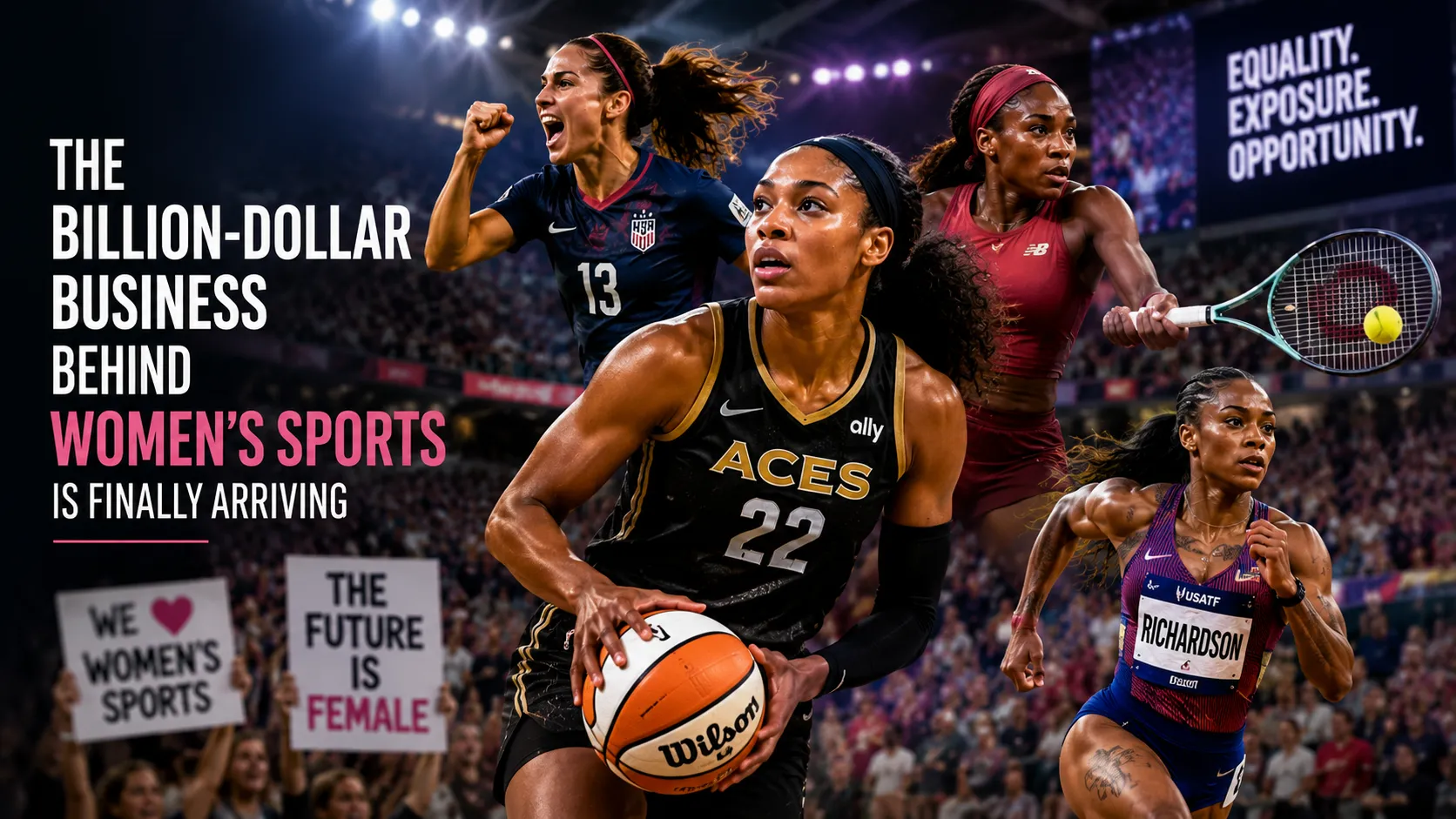
Corporate sponsorship is another area undergoing rapid transformation.
Brands increasingly recognize that women's sports audiences often differ from traditional sports demographics in meaningful ways. Fans frequently demonstrate strong loyalty, high engagement levels and a willingness to support companies investing in leagues and athletes they care about. For sponsors seeking authentic connections with consumers, these characteristics can be extremely valuable.
The commercial opportunities continue expanding.
Companies no longer view sponsorship solely as logo placement on uniforms or signage. Modern partnerships often include digital content, athlete collaborations, social-media campaigns and community initiatives. Women's sports provide platforms through which brands can tell stories around performance, inclusion, leadership and empowerment while still achieving commercial objectives.
This combination has attracted an increasingly diverse range of sponsors.
Consumer brands, financial institutions, technology companies and luxury businesses are all allocating greater resources to women's sports because they see opportunities to reach audiences that have historically received less attention from major advertisers.
Franchise Values Are Rising Faster Than Many Expected
Perhaps the strongest evidence of investor confidence can be found in franchise valuations.
Across multiple leagues, team values have increased significantly as ownership groups compete for access to what they believe will be a high-growth sector. Investors are applying a logic similar to that used in earlier stages of men's professional sports. If audience growth continues, sponsorship revenues expand and media-rights agreements increase in value, today's prices could appear modest in retrospect.
This perspective explains the growing number of high-profile investors entering the space.
Celebrities, business leaders and institutional investors increasingly view women's sports franchises as long-term assets capable of generating both financial returns and cultural influence. Ownership provides access to an industry that many believe remains in the early stages of commercial development despite growing rapidly.
The momentum has created a powerful feedback loop.
As valuations rise, additional capital enters the market. More capital supports infrastructure, marketing and talent development. Improved products attract larger audiences, which further strengthens valuations.
Athletes Are Becoming Brands In Their Own Right
One of the most important drivers of growth is the increasing visibility of individual athletes.
Modern sports economics are heavily influenced by personality-driven media. Fans follow athletes across social platforms, consume behind-the-scenes content and develop connections that extend beyond competition itself. Women's sports are benefiting from this trend because many athletes have become influential public figures capable of attracting audiences, sponsors and media attention independently.
This evolution creates new revenue opportunities.
Athletes generate value through endorsements, partnerships, content creation and personal branding initiatives. Their visibility strengthens league profiles while expanding commercial opportunities across the ecosystem. As more athletes build substantial audiences, the economic potential of women's sports increases correspondingly.
The relationship benefits everyone involved.
Leagues gain visibility, sponsors gain influential partners and athletes gain greater financial opportunities. Together, these dynamics help accelerate the professionalization and commercialization of the industry.
The Bigger Story Is About Market Correction
The rapid rise of women's sports is often described as a breakthrough.
In many ways, it may be more accurate to describe it as a correction. For years, the market underestimated demand, underinvested in infrastructure and overlooked commercial opportunities that are now becoming increasingly obvious. As coverage expands and audiences continue growing, businesses are recognizing value that had previously been hidden by limited exposure and outdated assumptions.
That recognition is driving significant capital into the sector.
Investors are not entering women's sports primarily because of charity or social responsibility. They are entering because they increasingly believe strong businesses can be built around these leagues, athletes and audiences. The commercial case is becoming harder to ignore with each new sponsorship agreement, media-rights deal and franchise sale.The result is one of the most interesting growth stories in global sports.Women's sports are no longer asking whether they belong in the business conversation.They are increasingly becoming one of the most compelling opportunities within it.