
Uwe Boll's Armie Hammer-starring vigilante thriller "Citizen Vigilante" has been effectively banned in Germany — the director's home country — for inciting violence against migrants. The ratings board refused to give it a classification, blocking its commercial release. Boll insists he is "not a Nazi." The film opens in the U.S. today anyway. In the streaming era, a ban isn't a death sentence. It's a marketing plan.
The German ratings board, the FSK, was presented with Uwe Boll's latest film and made a decision that has now become the movie's most valuable marketing asset. It refused to give Citizen Vigilante any age rating at all. Not a 16. Not an 18. Nothing.
Under German law, without a classification, the film cannot be shown in cinemas, sold on DVD, or made available through any commercial channel in the country. It is, for all practical purposes, banned.
Boll's response was immediate and characteristic. He hired a lawyer to complain about the decision, but the appeal was lost in a six-to-two vote. He told the Daily Telegraph that he believes the decision was "deliberate censorship". And when asked the obvious question — the one that the film's premise practically invites — he laughed before answering: "I am not a Nazi!"
But the denial, the outrage, and the controversy have already achieved what no marketing budget could: Citizen Vigilante is now the most talked-about film of the week. And it hasn't even been seen by most of its audience.
The Film That Germany Didn't Want
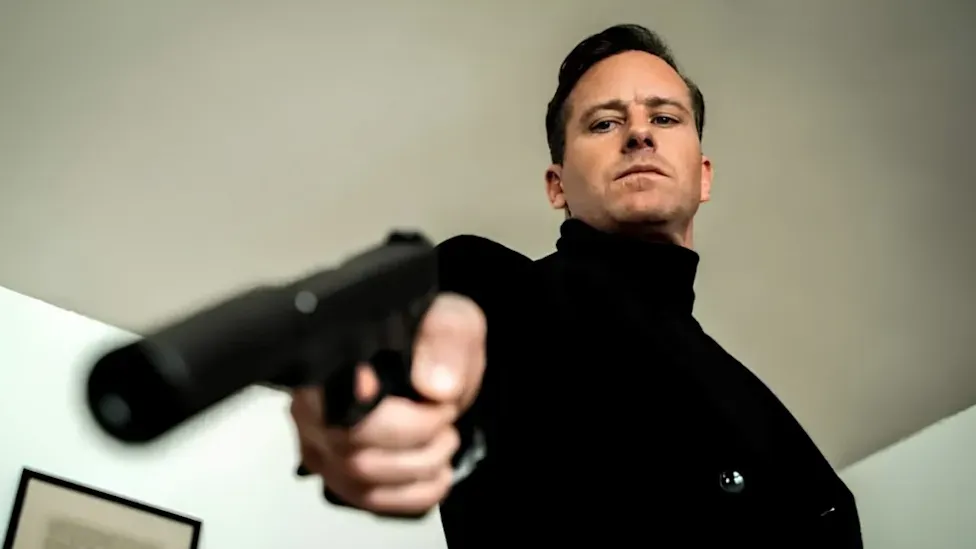
Citizen Vigilante is described as a modern-day riff on Death Wish. It stars Armie Hammer as Sanders, an ordinary man enraged by the breakdown of law and order who decides to deliver vigilante justice to criminals and the corrupt officials who protect them. His targets are mostly, but not exclusively, migrants.
The film opens with a mother being stabbed to death by migrant criminals in front of her son. Boll has said the film was inspired by a notorious 2016 case in Hamburg, where a group of teenagers gang-raped a 14-year-old girl and left her for dead — only for the perpetrators to walk free with suspended sentences.
"If you look at what happened in Hamburg, where the rapists walked free without any penalty, the coverage in the media was like 'Oh, the poor perpetrators,'" Boll told the Telegraph. "It's as if we're living in a completely insane and absurd political environment, especially in Europe, where people have completely lost track."
The film is being released in the U.S. on Friday by Quiver. In Germany, it will not be released at all.
The Casting That Was Always Going to Be Controversial
Boll cast Armie Hammer in the lead role. Hammer, who faced a series of sexual abuse allegations in 2021 — including accusations of sexual and emotional abuse, and expressed interests in cannibalism — has spent most of the last five years in obscurity. He was dropped by his agents and recast or re-shot in a bunch of forthcoming films.
Boll's explanation for the casting was blunt: "because he's a great actor, and also because he was canceled and wanted to work". He continued: "He wasn't charged with anything, there was no lawsuit. He was just a guy who was famous and fucking around".
Boll has his eye on other actors who have fallen from grace. "Take Kevin Spacey, for instance. One of the best actors working today. I'd love to cast him in a strong male lead in one of my pictures, but by doing so, I can guarantee that the film would not get an American distributor," Boll said.
The casting of Hammer, combined with the film's premise, made controversy inevitable. Boll knew it. He counted on it.
The Director Who Courts Controversy
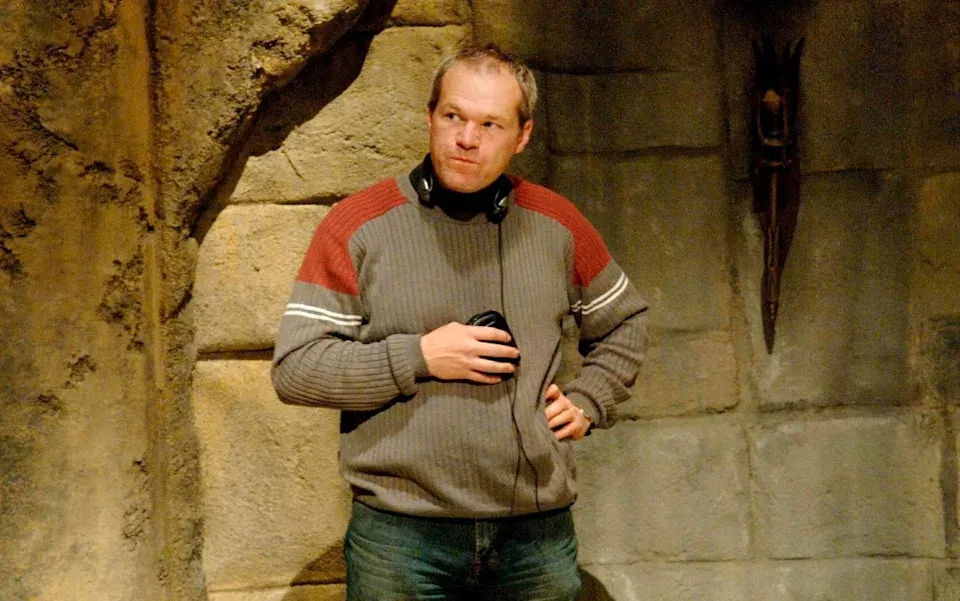
Uwe Boll has built a career on provocation. He is best known for his atrocious movies based on video game licenses, but in recent years, he has made "the inevitable move to far-right grifting," as one critic put it.
Boll has always "tiresomely courted controversy like an attention-seeking toddler pushing a vase off a table," the same review noted. His films have never been critically acclaimed. His reputation has never been one of artistic integrity. But he has always understood one thing: controversy sells.
The German ban has given Citizen Vigilante something that no amount of advertising could buy: a narrative. The film is not just a violent thriller. It is a censored film. It is a film that the German government, in Boll's telling, doesn't want you to see. It is a film that is being suppressed because it tells an uncomfortable truth about migration and crime.
Boll has framed the ban as political. He told the Telegraph: "There is a huge difference between so-called 'hate speech' and stabbing people in the neck. But facts don't matter anymore". He complained that "if you question anything — such as the hundreds of billions being pumped into Ukraine — then you're either a friend of Putin or a Nazi or both".
He has positioned himself as a victim of cancel culture, a filmmaker silenced by a politically correct establishment. It is a narrative that resonates with a certain audience. And it is a narrative that will sell tickets.
The Strategy: Banned as a Badge of Honor
The German ban is, in Boll's hands, a marketing strategy. He is not trying to overturn the decision through legal channels. He is using it to promote the film.
"You can only watch it if you bring in a Blu-ray from Austria or Switzerland," Boll told the Telegraph. The implication is clear: the German establishment doesn't want you to see this film, but if you really want to, you can find a way.
The ban also gives the film a kind of cultural cachet that it would otherwise lack. Citizen Vigilante is not a prestige picture. It is not an awards contender. It is a violent thriller starring a disgraced actor, directed by a filmmaker whose critical reputation is in the gutter. But now it is also a banned film. And in the age of streaming, a ban is not a death sentence. It is a recommendation.
The Irony: The Streaming Era's Censorship Paradox
The irony of the German ban is that it may actually help the film reach a wider audience. In the pre-streaming era, a ban in Germany would have been a serious commercial blow. Today, it is almost irrelevant.
The film is being released in the U.S. on Friday. It will be available on digital platforms. It will be reviewed, discussed, and shared across social media. The German ban will be mentioned in every review, every news article, every social media post. It will be part of the film's promotional material.
And for Boll, that is the point. He has never needed critical acclaim. He has never needed box office success. He has always needed attention. And the German ban has given him more attention than any positive review ever could.
The Bottom Line
Citizen Vigilante has been banned in Germany for inciting violence against migrants. The film's director, Uwe Boll, insists he is "not a Nazi." The film's star, Armie Hammer, is a disgraced actor making his comeback. The film itself is a violent vigilante thriller that plays on fears about migration and crime.
The ban is not a setback for Boll. It is a marketing campaign. He has framed the decision as censorship, positioned himself as a victim of a politically correct establishment, and turned the controversy into a selling point. The film opens in the U.S. on Friday. In Germany, it will not be released at all. But in the age of streaming, a ban is not a death sentence. It is a badge of honor. And Boll knows exactly how to wear it.