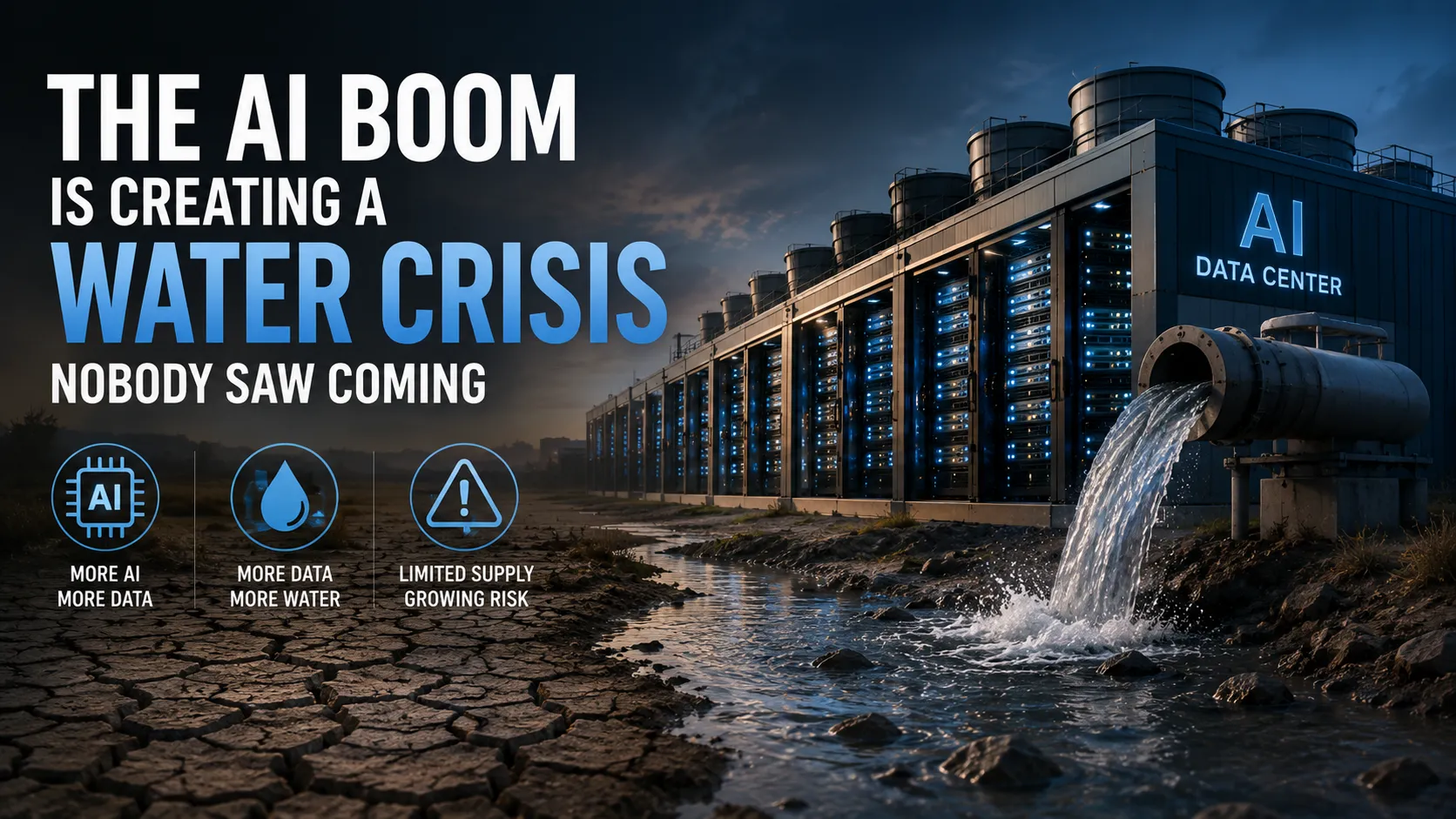
Artificial Intelligence Is Often Described As A Battle For Chips, Talent And Computing Power. A Growing Number Of Experts Believe The Next Major Constraint May Be Something Far More Basic: Water.
For the past two years, the artificial-intelligence race has been framed largely as a competition for technological dominance.
Governments have announced ambitious AI strategies, technology companies have committed hundreds of billions of dollars toward infrastructure and investors have poured unprecedented amounts of capital into startups promising to shape the future. The conversation has largely revolved around GPUs, data centers, cloud platforms and increasingly powerful AI models. Success appeared to depend on access to computing power, engineering talent and financial resources. Few people considered that one of the most important resources in the AI economy might be something as fundamental as water.
That assumption is beginning to change.
A growing body of research suggests that the rapid expansion of AI infrastructure could place significant pressure on water supplies in regions already struggling with drought and climate stress. Data centers require enormous cooling systems to prevent servers from overheating, and many of those systems depend heavily on water consumption. According to recent analyses, nearly two-thirds of planned AI data-center developments in the United States are located in areas already experiencing varying levels of water scarcity. As companies race to build the infrastructure required to power artificial intelligence, questions are emerging about whether the industry's greatest challenge may ultimately involve natural resources rather than technology itself.
The issue highlights a side of the AI revolution that receives far less attention than funding announcements or product launches.
Every AI-generated image, chatbot response and machine-learning calculation depends on physical infrastructure operating somewhere in the real world. Those facilities consume electricity, occupy land and require cooling systems capable of managing enormous amounts of heat. The digital economy often feels weightless because users interact with software interfaces. In reality, it relies on extensive physical systems with environmental consequences that become more significant as scale increases.
This growing tension has created a new debate.
Can the world continue expanding AI infrastructure at its current pace while simultaneously addressing sustainability goals, climate challenges and resource constraints? Increasingly, policymakers, environmental researchers and technology leaders are realizing that the answer may not be as straightforward as many initially assumed.
Every AI Query Has A Physical Cost
Artificial intelligence is often discussed in abstract terms.
People talk about algorithms, neural networks and machine learning as though they exist entirely within the digital realm. Yet every AI system ultimately depends on physical machines operating inside data centers. These facilities contain thousands of servers working continuously to process requests, train models and store information. The more sophisticated AI becomes, the greater the computational demands required to support it.
Those computational demands generate enormous amounts of heat.
Servers running advanced AI workloads consume significantly more power than traditional computing applications. As temperatures rise, cooling systems become essential to prevent equipment failures and maintain operational efficiency. Water is frequently used because it remains one of the most effective methods of dissipating heat at large scale. The result is that many data centers consume millions of gallons of water annually, particularly during periods of peak demand.
The relationship between AI and water therefore becomes increasingly important as adoption grows.
Every new data center adds pressure to local infrastructure. Every expansion project increases resource requirements. While individual facilities may appear manageable in isolation, the cumulative effect becomes far more significant when hundreds of large-scale projects are being developed simultaneously across multiple regions.
That is why environmental experts are paying closer attention.
The issue is no longer about isolated facilities. It is about the long-term sustainability of an entire technological ecosystem.
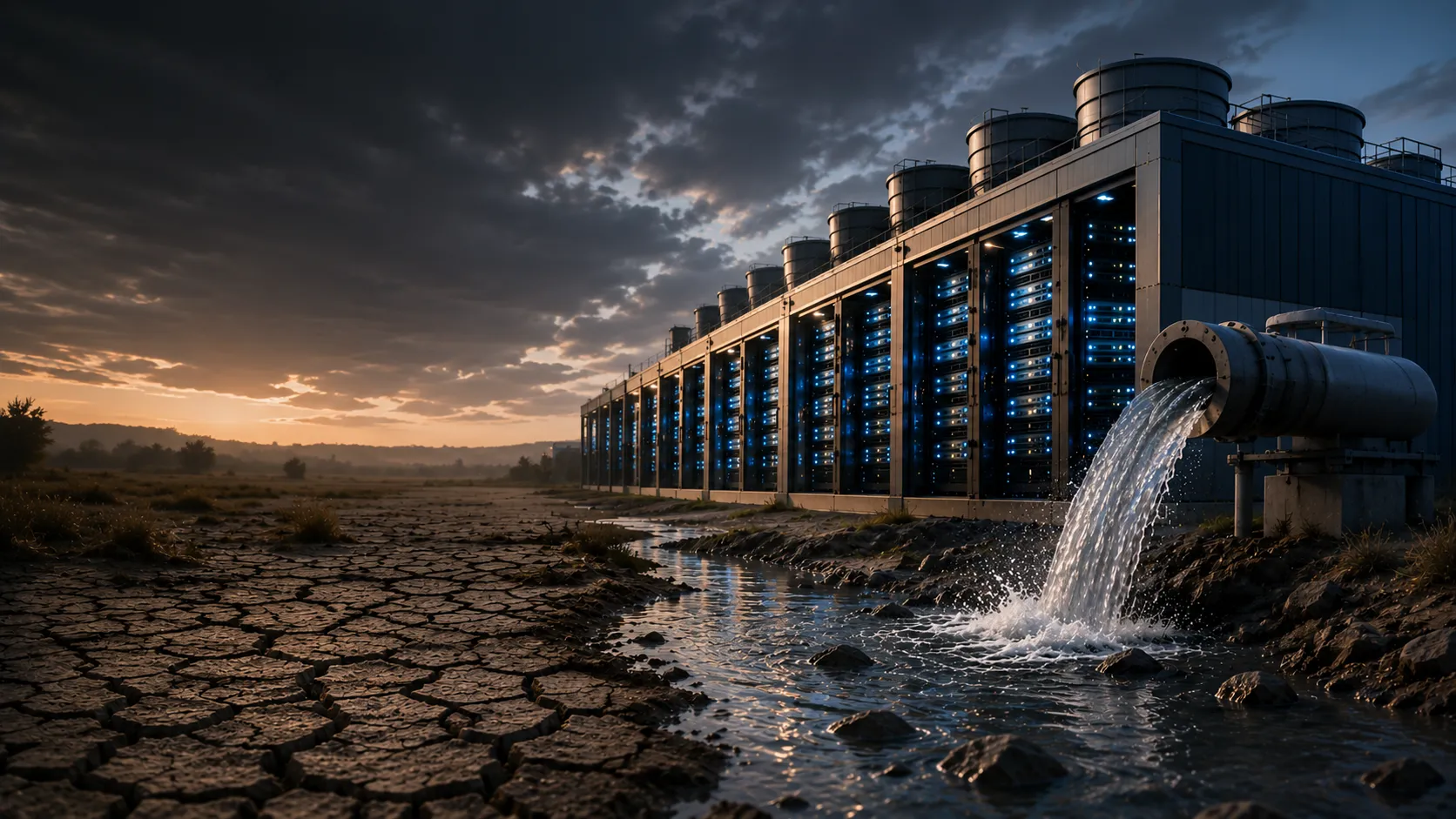
Why So Many Data Centers Are Being Built In Dry Regions
One of the most surprising aspects of the emerging debate is where many AI facilities are being constructed.
A significant percentage of planned developments are located in areas already experiencing water stress, including regions of the American Southwest and other drought-prone locations. At first glance, this appears counterintuitive. Why would companies place water-intensive infrastructure in areas where water availability is already a concern?
The answer lies in economics and existing infrastructure.
Many drought-affected regions also offer advantages that data-center operators find attractive. Land may be relatively affordable, renewable-energy resources are often abundant and existing technology ecosystems provide access to talent and connectivity. These factors make certain locations economically appealing despite environmental challenges. Companies therefore face trade-offs between operational efficiency and resource sustainability.
The problem is that climate conditions are becoming less predictable.
Regions that historically supported large-scale infrastructure may face increasing pressure from prolonged droughts, population growth and changing weather patterns. As water becomes more valuable, competition between industrial users, agricultural interests and residential communities is likely to intensify. What appears economically rational today may become far more complicated in the future.
This is why some analysts believe water could emerge as a defining issue for the next phase of AI development.
The technology sector may soon discover that access to natural resources is just as important as access to semiconductors.
The AI Industry's Sustainability Challenge
Technology companies are increasingly aware of the issue.
Major cloud providers and AI infrastructure operators have announced initiatives aimed at improving water efficiency, reducing consumption and investing in sustainable cooling technologies. Some organizations are exploring alternative cooling systems that rely less heavily on water, while others are investing in water-replenishment projects designed to offset usage. The industry recognizes that environmental concerns could become a significant reputational and operational challenge if left unaddressed.
Yet solving the problem is not simple.
Demand for AI infrastructure continues growing at extraordinary speed. Every new model requires more computing power, larger facilities and additional resources. Improvements in efficiency help, but they may not fully offset the scale of expansion currently underway. The challenge resembles earlier debates surrounding energy consumption in technology. Efficiency gains matter, but overall demand can still increase faster than improvements reduce consumption.
This creates a difficult balancing act.
Technology companies want to accelerate AI development because commercial opportunities are enormous. At the same time, they must demonstrate that growth can occur responsibly. Stakeholders ranging from investors and regulators to local communities increasingly expect evidence that sustainability considerations are being taken seriously.
The conversation is therefore shifting from whether AI should expand to how that expansion should occur.
Water Is Becoming A Policy Issue
As awareness grows, governments are becoming more involved.
Policymakers increasingly recognize that AI infrastructure decisions carry implications extending beyond economic development. Data centers create jobs, attract investment and strengthen digital capabilities. They also consume resources that may already be under pressure. Balancing these competing priorities is becoming an increasingly complex policy challenge.
Some communities have already begun raising concerns.
Residents in water-stressed regions question whether large-scale industrial facilities should receive access to resources that local populations depend upon. Environmental organizations are calling for greater transparency regarding water usage and long-term sustainability planning. Regulators are examining how permitting processes should account for resource constraints in an era of rapidly expanding digital infrastructure.
These debates are likely to intensify.
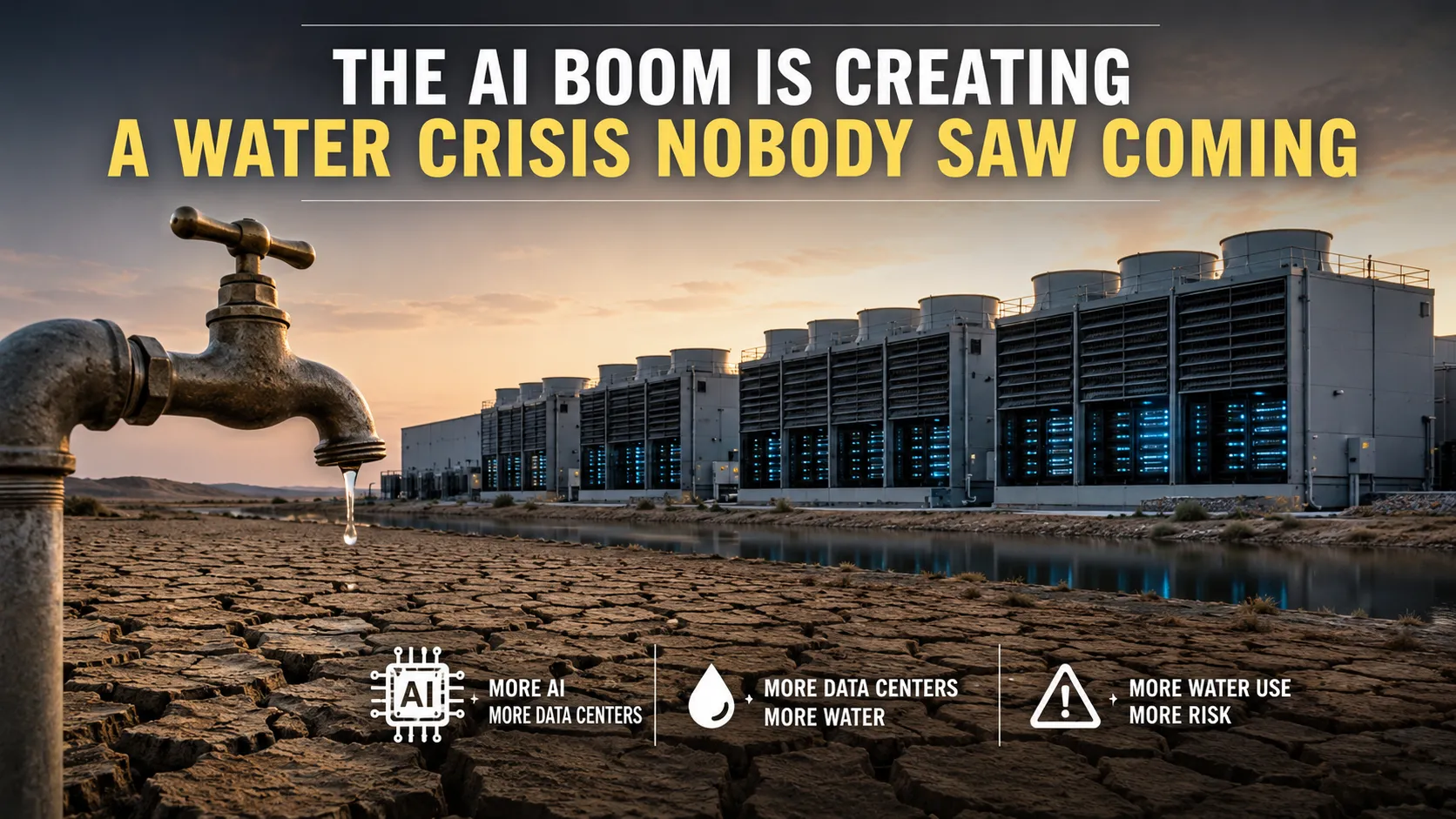
As artificial intelligence becomes more important to economic competitiveness, governments will face increasing pressure to support infrastructure development. At the same time, climate-related challenges are making resource management more politically sensitive. Water is emerging as a point where technology policy and environmental policy increasingly intersect.
The outcome could influence where and how future AI infrastructure is built.
Viewed narrowly, the water debate is an infrastructure issue.
Viewed more broadly, it represents a reminder that every technological revolution ultimately depends on physical resources. Artificial intelligence may feel like a digital phenomenon, but its growth requires electricity, land, minerals and increasingly, water. The industry's future will therefore be shaped not only by software breakthroughs but also by how effectively it manages the real-world systems supporting those breakthroughs.
The emergence of water as a concern reflects a broader maturation of the AI conversation.
The first phase focused on what artificial intelligence could do. The second phase focused on how quickly it could scale. The next phase may focus on whether that scale can be achieved sustainably. Investors, policymakers and technology leaders are beginning to recognize that infrastructure constraints may become just as important as technological capabilities.