The Day India Discovered the Golden Arches
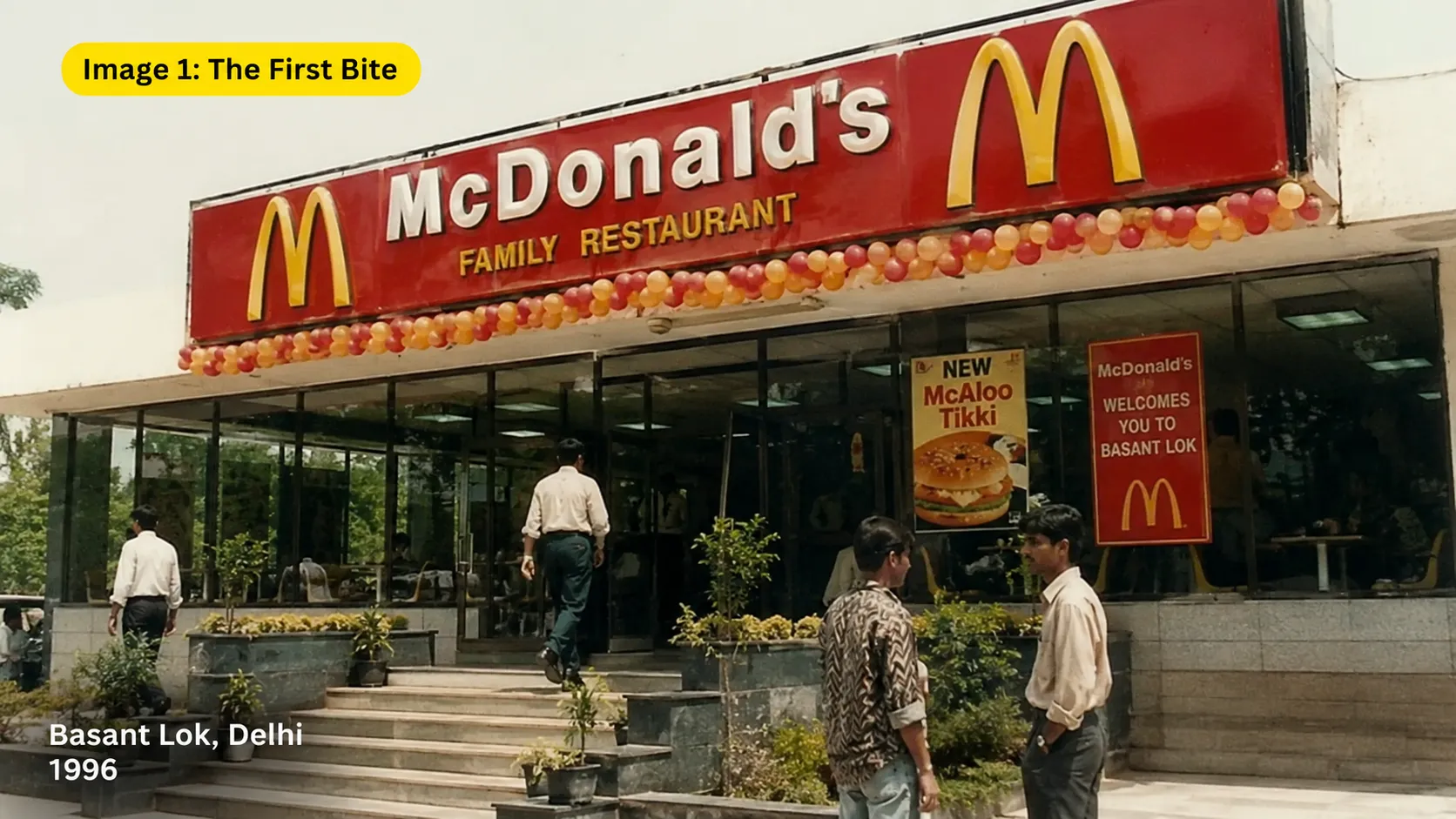
Picture this. It's 1996. A family walks into a brightly lit restaurant in Delhi's Basant Lok. The smell of fries fills the air. A child's eyes widen at the sight of a clown named Ronald. The father orders a "Maharaja Mac" – a burger made with mutton, not beef. The mother tries the McAloo Tikki – a potato patty that tastes strangely familiar. The family leaves with full stomachs and a strange new feeling: they want to come back.
That feeling, my friends, is called addiction. And thirty years later, India is hooked.
The Numbers That Will Blow Your Mind
Let's start with the scale of India's fast food obsession.
$30.37 billion – that's the size of India's QSR market in 2026
9.25% – the annual growth rate, one of the fastest in the world
$47.3 billion – where it's headed by 2031
2,818 stores – the combined KFC and Pizza Hut empire after the Devyani-Sapphire merger
1,300+ KFC restaurants – currently operating across India
McDonald's is adding 60 new restaurants this year alone
But here's the kicker: India's per capita QSR penetration is still far below global averages. McDonald's has only 48 restaurants per million people in India, compared to global averages. KFC has 85. The addiction hasn't even peaked yet.
Chapter 1: The Secret Sauce – How KFC Won India's Heart (and Stomach)
KFC's journey in India is a masterclass in adaptation. When the Colonel's recipe first arrived, it faced an existential challenge: how do you sell fried chicken to a country where a significant portion of the population doesn't eat meat?
The answer? Localize or die.
KFC's India strategy is built on three pillars:
Pillar 1: The Vegetarian Pivot. You read that right. A fried chicken chain – selling vegetarian food. KFC India now offers a range of vegetarian options, from burgers to wraps, catering to India's massive vegetarian population.
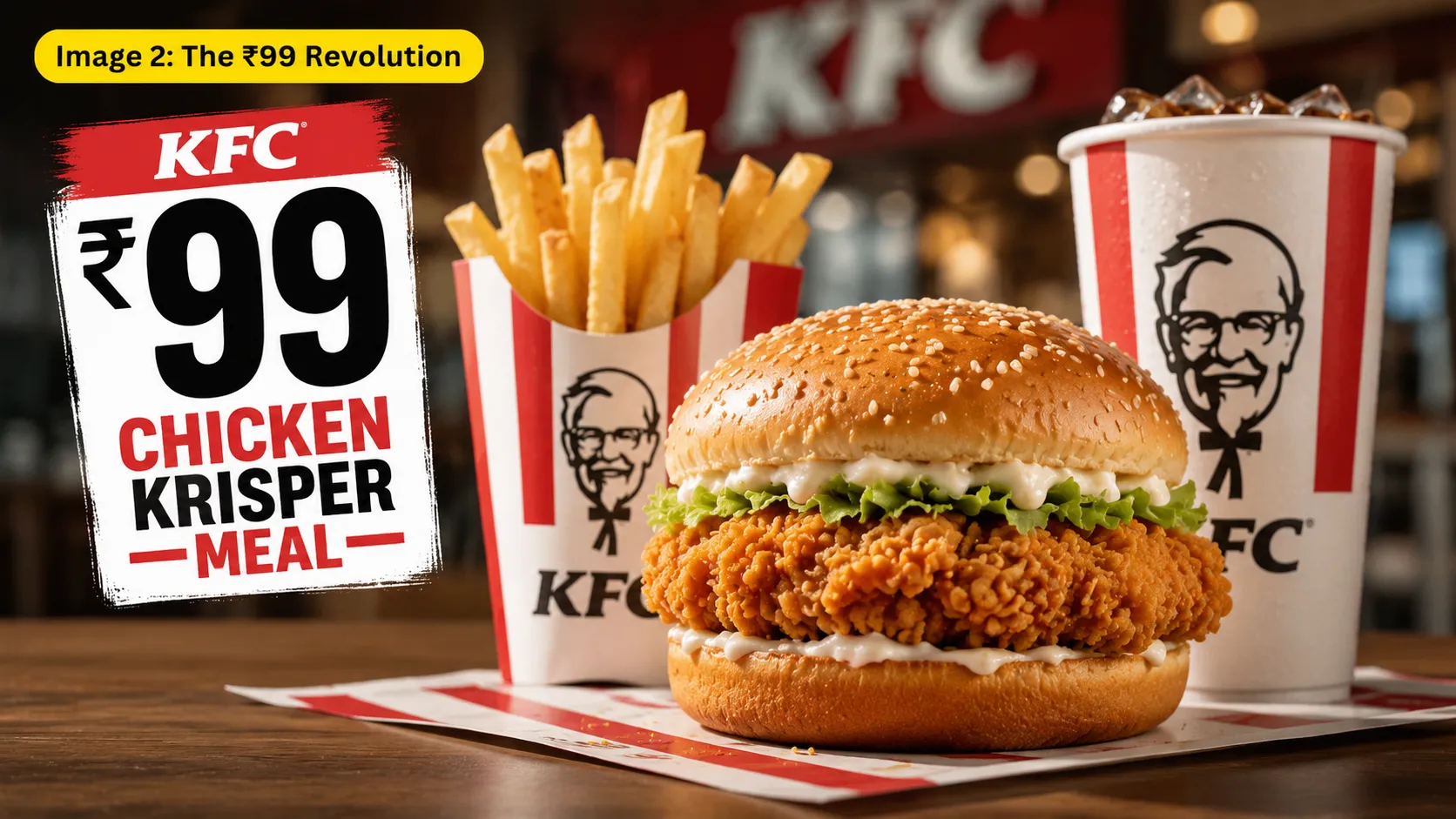
Pillar 2: The ₹99 Revolution. In 2023, KFC introduced the ₹99 Chicken Krisper Meal – a burger, fries, and a drink for less than the price of a movie ticket. The strategy was simple: get customers through the door, even if it means thinner margins. Sapphire Foods CEO Sanjay Purohit called it a "permanent value layer" – not a promotion, but a fundamental repositioning of the brand. Today, this value strategy has been rolled out across most KFC restaurants in India.
Pillar 3: The Flavor Innovation Machine. KFC India is constantly innovating. In January 2026, they launched the Dunked range – chicken coated in Fiery Texas BBQ sauce, available at all 1,300+ outlets. The strategy is brilliant: leverage existing supply chains and high-performing SKUs while driving incremental sales through new flavors. Pricing starts at ₹89, keeping it within mass-market reach.
The result? KFC India contributed ₹585.5 crore in revenue in Q4 FY26 alone – a 14.6% year-on-year growth. Same-store sales growth hit +4.9%, its highest in 14 quarters.
Chapter 2: The Golden Arches Strategy – McDonald's India's 30-Year Conquest
McDonald's India story is equally remarkable. The company that once served beef burgers in the US had to completely reinvent itself for India.
The Localization Masterstroke. Today, 70% of McDonald's India revenue comes from meatless products. The McSpicy with "100% paneer passion" is a massive hit. The Maharaja Mac – made with mutton instead of beef – became an icon. McDonald's didn't just enter India; it became Indian.
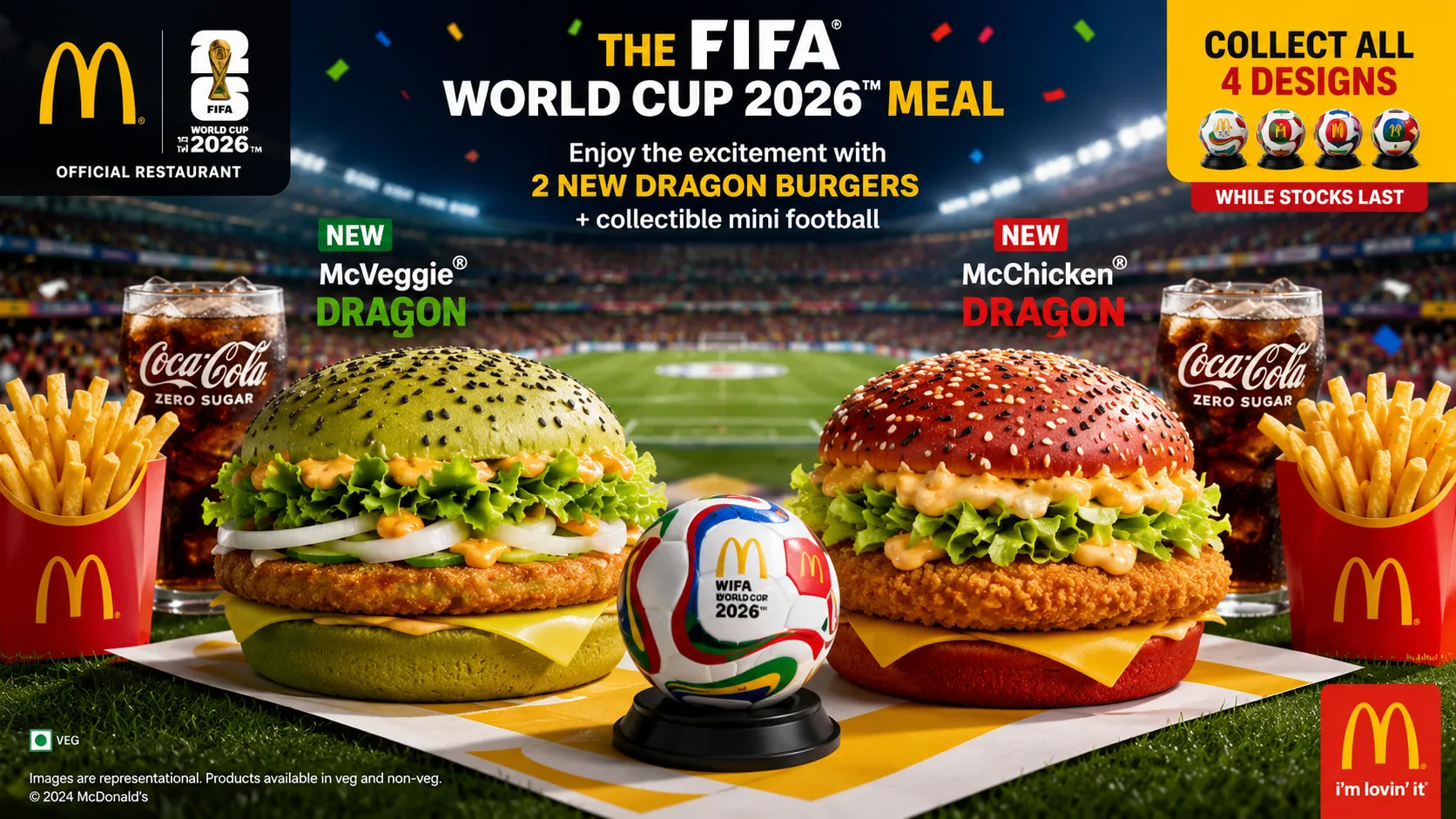
The FIFA World Cup 2026 Campaign. McDonald's India North & East leveraged its position as the Official Restaurant Partner of the FIFA World Cup to drive consumer engagement. The campaign introduced the McVeggie Dragon and McChicken Dragon – both featuring a Chinese-style sauce profile – alongside collectible mini footballs. Priced between ₹209-259, the FIFA Meal range is a textbook example of sports marketing meeting fast food.
The 30-Year Milestone. In June 2026, McDonald's India (West & South) launched the 'Let's Family at McD' campaign, reflecting on its 30-year presence in the market. The campaign was promoted through digital channels and in-store touchpoints – a digital-first marketing strategy that acknowledges how consumer behavior has evolved.
The Expansion Bet. Westlife Foodworld, which operates McDonald's in West and South India, plans to add over 60 restaurants this year as part of its Vision 2027 targets. The company is targeting mid- to high-single-digit same-store sales growth for the next year. The focus remains on everyday value, pricing, customer experience, and menu relevance.
The Digital Push. McDonald's is investing heavily in digital ordering, with Digital Kiosks and Table Service being rolled out across new outlets. The reintroduction of the Sipper Meals via app-only offers reflects a broader strategy to drive digital transactions and increase engagement.
Chapter 3: The Mega-Merger – How KFC and Pizza Hut Became a ₹934 Million Empire
If you think KFC and McDonald's are just competing against each other, think again. The real story is the consolidation happening behind the scenes.
In January 2026, Devyani International and Sapphire Foods announced a $934 million merger. The deal created the largest franchise operator for both KFC and Pizza Hut in India. The combined entity operates over 2,800 restaurants and is expected to cross $1 billion in annual turnover.
Analysts estimate the combined entity could generate cost synergies of around ₹260-350 crore through improved sourcing and supply chain efficiencies. The focus will be on accelerating KFC's expansion while turning around the struggling Pizza Hut brand.
Why does this matter? Because consolidation means scale. Scale means better bargaining power with suppliers. Better bargaining power means lower costs. Lower costs mean – you guessed it – even cheaper ₹99 meals. The addiction is about to get cheaper.
Chapter 4: The Psychology of Addiction – Why We Can't Stop
So why are Indians so hooked on KFC and McDonald's? The answer lies in a combination of psychology, economics, and pure marketing genius.
The Pester Power. Studies show that children's preferences often override parental concerns. Parents know McDonald's isn't the healthiest option, but they yield to "pester power" – the relentless pleading of children who've seen the ads, collected the toys, and fallen in love with the taste. Birthday parties at KFC happen despite parents knowing better.
The Value Trap. At ₹99, a KFC meal is cheaper than many home-cooked alternatives. When inflation is high and discretionary spending is squeezed, ₹99 feels like a steal. The QSR industry has turned value meals into a "new consumer recruitment" strategy.
The Social Experience. Dining out isn't just about food – it's about experience. McDonald's FIFA campaign, KFC's new sauce-forward formats, the collectible toys – these aren't just meals. They're events.
The Cognitive Dissonance. Despite India recording 77 million diabetics and widespread awareness about obesity, the fast food industry grows at 15% annually. There's a fundamental disconnect between health knowledge and actual consumer behavior.
Chapter 5: The Dark Side – Health, Hygiene, and the ₹99 Trap
But let's be real. This addiction comes at a cost.
The Health Crisis. Most junk foods contain very high levels of trans fats, salts, and sugar – leading to severe ill health and diseases like obesity. With 135 million Indians already affected by obesity, the fast food boom is a public health time bomb.
The Hygiene Scandals. In June 2026, the Food Safety and Standards Authority of India (FSSAI) sent notices to Nestle India, KFC India, and Flipkart over allegations of hygiene lapses. Social media complaints about contamination have put the industry under scrutiny.
The Margin Squeeze. The ₹99 value meal might be great for customers, but it's brutal for profitability. Macquarie warns that while value offerings could improve footfalls, they may also weigh on profitability if sustained for longer periods. Forward EPS estimates for FY28 and FY29 have been reduced by 3-7%.
Chapter 6: The Future – What's Next for India's Fast Food Obsession?
So where is this all heading?
More Stores. McDonald's is hiring 5,000 people and doubling stores in North and East India. KFC continues its aggressive expansion.
More Value. The ₹99 meal isn't going anywhere. It's become the industry's new growth engine.
More Innovation. From FIFA-themed meals to Fiery Texas BBQ sauce, the innovation machine keeps churning.
More Consolidation. The Devyani-Sapphire merger is just the beginning. The combined entity is expected to emerge as one of the largest QSR players globally.
The Final Verdict
In 1996, when McDonald's opened its first outlet in India, a reporter asked a senior executive: "Do you really think Indians will eat fast food?"
The executive smiled and said: "Just wait."
Thirty years later, we have our answer. India's fast food addiction isn't just real – it's growing. From ₹99 meals to $30 billion markets, from 1,300 KFC outlets to 60 new McDonald's this year alone, the numbers tell a story of an obsession that shows no signs of slowing down.
The irony? In a country that invented the world's most sophisticated cuisine, we've fallen in love with a burger and fried chicken. The dosa, the biryani, the thali – they're all still there. But now, they share space with the Golden Arches and the Colonel.
The ₹99 addiction is here to stay. And the billion-dollar business behind it is just getting started.