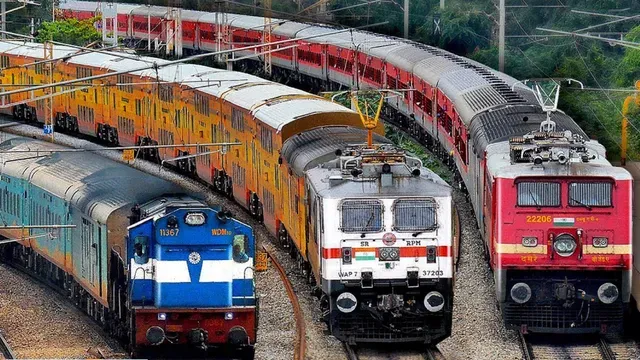
Somewhere between the sprawling factory floors of India's large industrial conglomerates and the single-room workshops that dot the country's small-town industrial estates lies the vast, economically vital, and chronically under-served universe of India's micro, small and medium enterprises. These businesses collectively account for a substantial share of the country's manufacturing output, exports, and non-agricultural employment, yet a new joint report from industry body FICCI and consulting firm KPMG argues that one of the most basic pieces of economic infrastructure — freight rail access — remains stubbornly out of reach for the vast majority of them, at a considerable cost to both the MSME sector itself and to Indian Railways' own revenue potential.
The report's central finding is striking in its specificity: improving rail freight access for MSMEs, the authors argue, could unlock as much as ₹8,700 crore in additional annual freight revenue for Indian Railways, a figure that represents not a speculative, blue-sky projection but a calculated estimate of demand that currently exists but goes unrealised because of structural barriers preventing smaller businesses from accessing rail freight services in the way that large industrial shippers routinely do.
WHY MSMES HAVE HISTORICALLY AVOIDED RAIL FREIGHT
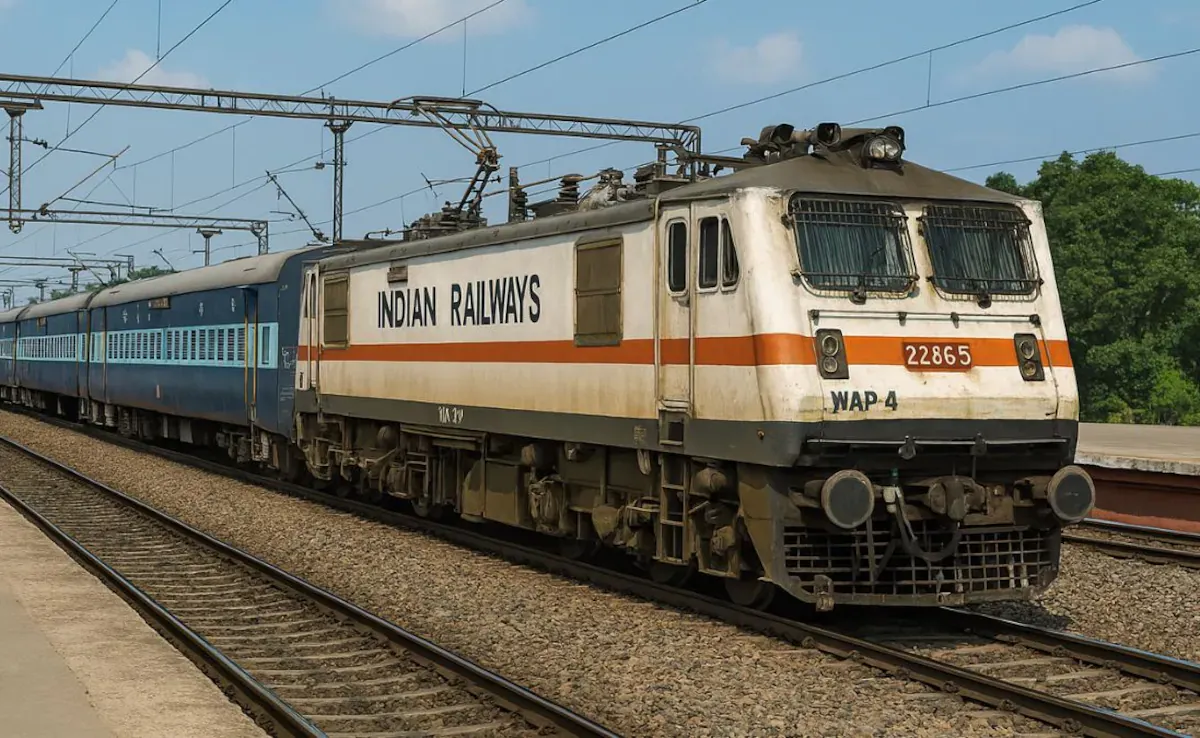
To understand the scale of the opportunity the report identifies, it is worth understanding why rail freight has, for decades, remained largely the preserve of large industrial shippers — bulk commodity movers in sectors like coal, steel, cement, and agricultural grain — while India's smaller manufacturing and trading enterprises have overwhelmingly relied on road transport, despite rail's well-established cost and environmental advantages for long-distance freight movement, particularly for bulk or semi-bulk cargo.
The barriers, as the report details, are largely structural rather than reflecting any fundamental unsuitability of rail for MSME cargo needs. Indian Railways' freight infrastructure and booking processes have historically been optimised around large-volume, full-rake bookings — entire trainloads of a single commodity moving between two points — a model that works efficiently for large industrial shippers with the volume and logistics sophistication to fill an entire freight train, but which is poorly suited to the needs of smaller businesses that typically need to move smaller, more frequent, and more varied cargo volumes between a wider range of origin and destination points than large industrial freight corridors typically serve.
This mismatch between rail's traditional bulk-freight operating model and MSMEs' smaller, more fragmented shipping needs has meant that even when rail transport would offer meaningful cost savings compared to road freight over long distances, the practical friction of accessing rail booking systems, navigating the documentation and logistics coordination required, and dealing with last-mile connectivity between rail terminals and individual business premises has historically made road transport — despite its higher per-kilometre cost for long hauls — the more practical and accessible choice for smaller shippers.
THE COST OF THIS GAP
The economic cost of this structural gap, according to the report's analysis, flows in both directions. For MSMEs themselves, continued reliance on road transport for long-distance freight movement means absorbing meaningfully higher logistics costs than would be the case if rail access were more readily available, a burden that falls particularly heavily on smaller businesses operating on thin margins, where logistics costs can represent a disproportionately large share of overall operating expenses compared to larger enterprises that benefit from economies of scale in their own logistics operations.
For Indian Railways, the flip side of this same structural gap represents a significant missed revenue opportunity. The report's ₹8,700 crore estimate reflects freight demand that industry surveys and shipment pattern analysis suggest currently exists among the MSME sector, but which is not being captured by Indian Railways' freight business simply because the existing booking processes, minimum volume requirements, and terminal infrastructure are not configured to accommodate the smaller, more fragmented shipment patterns characteristic of MSME cargo needs.
WHAT THE REPORT RECOMMENDS
The FICCI-KPMG analysis outlines several specific recommendations aimed at closing this gap, centred around making rail freight genuinely accessible to smaller shippers rather than requiring them to either aggregate their cargo to meet large-shipment minimums or continue defaulting to road transport by default. Simplifying rail freight booking processes, potentially through digital platforms that allow smaller shippers to book partial wagon loads or participate in freight aggregation services that combine multiple smaller shippers' cargo into full-rake movements, features prominently among the report's suggested interventions.
Improving last-mile connectivity between rail freight terminals and MSME industrial clusters is another key recommendation, recognising that even when long-haul rail transport is available and cost-competitive, the "first mile and last mile" road transport required to move cargo between a business's premises and the nearest rail terminal can itself become a significant cost and logistics coordination burden if this connectivity is not well developed, particularly for MSME clusters located in smaller towns and industrial estates that may not have historically been prioritised for rail freight terminal development.
The report also points to the potential value of dedicated freight aggregation and logistics support services specifically designed for MSME shippers — potentially delivered through public-private partnerships or dedicated logistics intermediaries — that could handle the complexity of aggregating smaller shipments, coordinating rail bookings, and managing last-mile connectivity on behalf of MSME businesses that may lack the in-house logistics expertise or scale to navigate these processes independently, in the way that large industrial shippers typically can through their own dedicated logistics teams.
THE BROADER POLICY CONTEXT
This report arrives at a moment when Indian Railways has been actively pursuing freight business diversification and growth as a strategic priority, recognising that freight revenue, historically cross-subsidising passenger operations, represents an area where the railway network's cost and environmental advantages over road transport for long-distance bulk and semi-bulk cargo movement remain under-exploited relative to the network's theoretical capacity and reach across the country.
The MSME sector, meanwhile, has been a consistent focus of government policy attention, given its outsized contribution to employment generation relative to its share of overall economic output, and the sector's continued struggles with access to affordable credit, technology adoption, and — as this report specifically highlights — logistics infrastructure that has historically been designed around the needs of larger industrial shippers rather than the more fragmented, smaller-scale shipping patterns characteristic of MSME businesses.
Government schemes aimed at supporting MSME competitiveness have historically focused heavily on credit access and formalisation incentives, and this report's focus on freight logistics infrastructure represents a somewhat less commonly discussed, but potentially equally significant, lever for improving MSME competitiveness — particularly for manufacturing MSMEs that compete, whether in domestic or export markets, against businesses in other countries that may benefit from more efficient, cost-competitive freight logistics infrastructure.
WHAT SUCCESS WOULD LOOK LIKE
If the recommendations outlined in this report were to be substantially implemented, the resulting impact would likely manifest across several dimensions simultaneously. Indian Railways would capture meaningful incremental freight revenue from a previously under-served shipper segment, strengthening its overall freight business economics at a time when the organisation has been pursuing broader freight revenue growth and diversification as a strategic priority. MSME businesses, in turn, would benefit from reduced logistics costs for long-distance freight movement, potentially improving their competitiveness in both domestic and export markets where transportation costs represent a meaningful share of overall landed product costs.
There would also likely be broader macroeconomic and environmental co-benefits, given rail transport's substantially lower carbon emissions per tonne-kilometre compared to road freight for long-distance cargo movement — a consideration that aligns with India's broader climate and sustainability commitments, even though the report's primary economic case rests on the direct cost and revenue benefits to MSMEs and Indian Railways respectively, rather than environmental considerations.
THE IMPLEMENTATION CHALLENGE
As with many well-researched policy recommendations, the gap between identifying an opportunity and successfully implementing the operational and infrastructure changes required to capture it should not be understated. Simplifying rail freight booking processes, developing last-mile connectivity infrastructure, and building effective freight aggregation services for MSME shippers all require sustained investment, cross-agency coordination between Indian Railways, state governments, and private logistics sector participants, and a level of sustained policy attention that competes with numerous other infrastructure and economic development priorities across India's vast policy agenda.
Whether this particular report succeeds in catalysing the kind of sustained policy and infrastructure investment required to meaningfully close the ₹8,700 crore opportunity gap it identifies will likely depend on how effectively industry bodies like FICCI, working alongside Indian Railways and relevant government ministries, are able to translate this analytical case into concrete, funded implementation programmes — a translation that, in Indian infrastructure policy more broadly, has historically proven to be the more difficult half of the equation compared to the initial identification of the opportunity itself.
LESSONS FROM SIMILAR GLOBAL EXPERIENCES
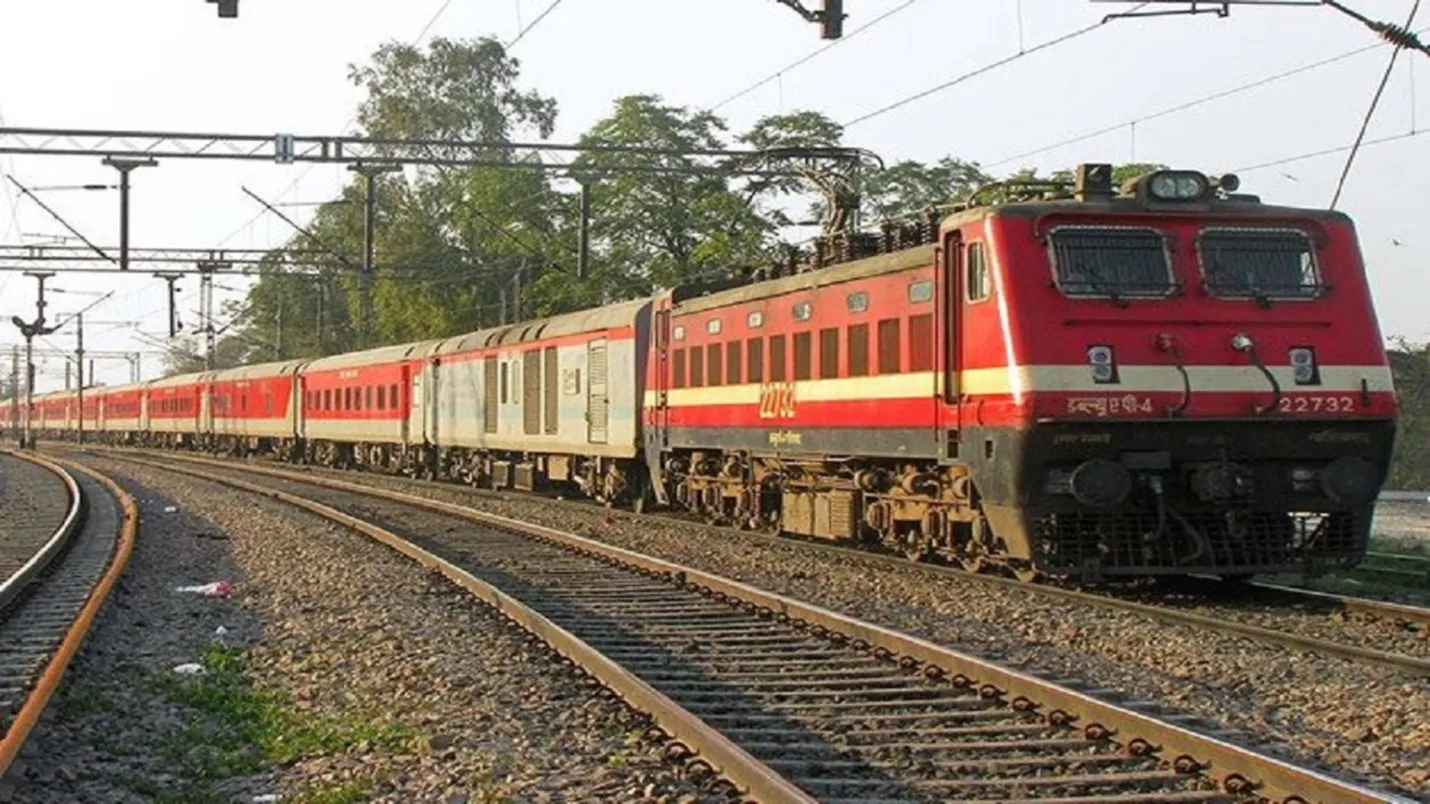
India is not the first economy to grapple with the challenge of making freight rail more accessible to smaller shippers historically excluded from a bulk-freight-optimised rail network. Several other major economies have, over the years, developed intermodal freight solutions and less-than-full-rake booking systems specifically designed to serve smaller shippers who cannot independently fill an entire freight train but whose aggregated demand, when combined with other similarly-sized shippers moving cargo along similar routes, can nonetheless justify efficient rail-based transport solutions.
These international examples typically combine several elements that align closely with the FICCI-KPMG report's recommendations: digital freight-booking platforms that allow smaller shippers to reserve partial capacity rather than requiring full-train commitments, freight aggregation intermediaries — sometimes operated by the railway itself, sometimes by third-party logistics companies — that combine multiple smaller shippers' cargo into efficient full-train movements, and dedicated investment in last-mile connectivity infrastructure connecting rail terminals to industrial clusters and business districts where smaller manufacturing and trading enterprises are concentrated.
Adapting these international models to India's specific context — with its vast geographic scale, enormous diversity of MSME cluster locations across both established industrial hubs and more dispersed smaller towns, and the particular operational and financial constraints facing Indian Railways as it balances freight revenue growth ambitions against its continued role in subsidising passenger operations — will require careful, India-specific design rather than simple replication of approaches developed in different economic and geographic contexts. Nonetheless, the report's broader thesis — that a very large, currently underserved freight demand pool exists among India's MSME sector, and that unlocking it represents a genuine win-win opportunity for both Indian Railways' revenue growth and MSME competitiveness — offers a compelling starting point for the more detailed implementation planning that would need to follow if policymakers choose to act on its findings.
WHAT MSME OWNERS SHOULD WATCH FOR
For MSME owners and industry associations following this report's release, the practical question is what, if anything, changes in the near term. Reports of this nature, produced jointly by an industry body and a major consulting firm, typically serve as an opening bid in a longer policy conversation rather than an immediate operational announcement, meaning that any actual changes to rail freight booking systems, terminal infrastructure, or aggregation services are likely to unfold gradually, potentially through pilot programmes in specific industrial clusters before any broader national rollout, assuming Indian Railways and relevant government stakeholders choose to prioritise these recommendations amid competing infrastructure investment demands.
MSME industry associations, for their part, are likely to use this report as an advocacy tool in ongoing engagement with Indian Railways and the Ministry of Commerce and Industry, pressing for concrete pilot programmes or policy commitments that could begin translating the report's analytical findings into tangible, on-the-ground improvements in rail freight accessibility for the small business community whose logistics costs and competitiveness challenges this report has now placed, with unusually specific quantification, squarely on the national policy agenda.
For now, the ₹8,700 crore figure stands as a marker — a reminder of how much economic value can remain locked away not because of any lack of underlying demand, but simply because the infrastructure and processes needed to connect that demand to the right mode of transport have not yet caught up with the scale and diversity of India's small business economy. For a sector that has long been described as the backbone of the Indian economy, closing that gap may prove to be one of the more quietly consequential infrastructure stories of the coming years.