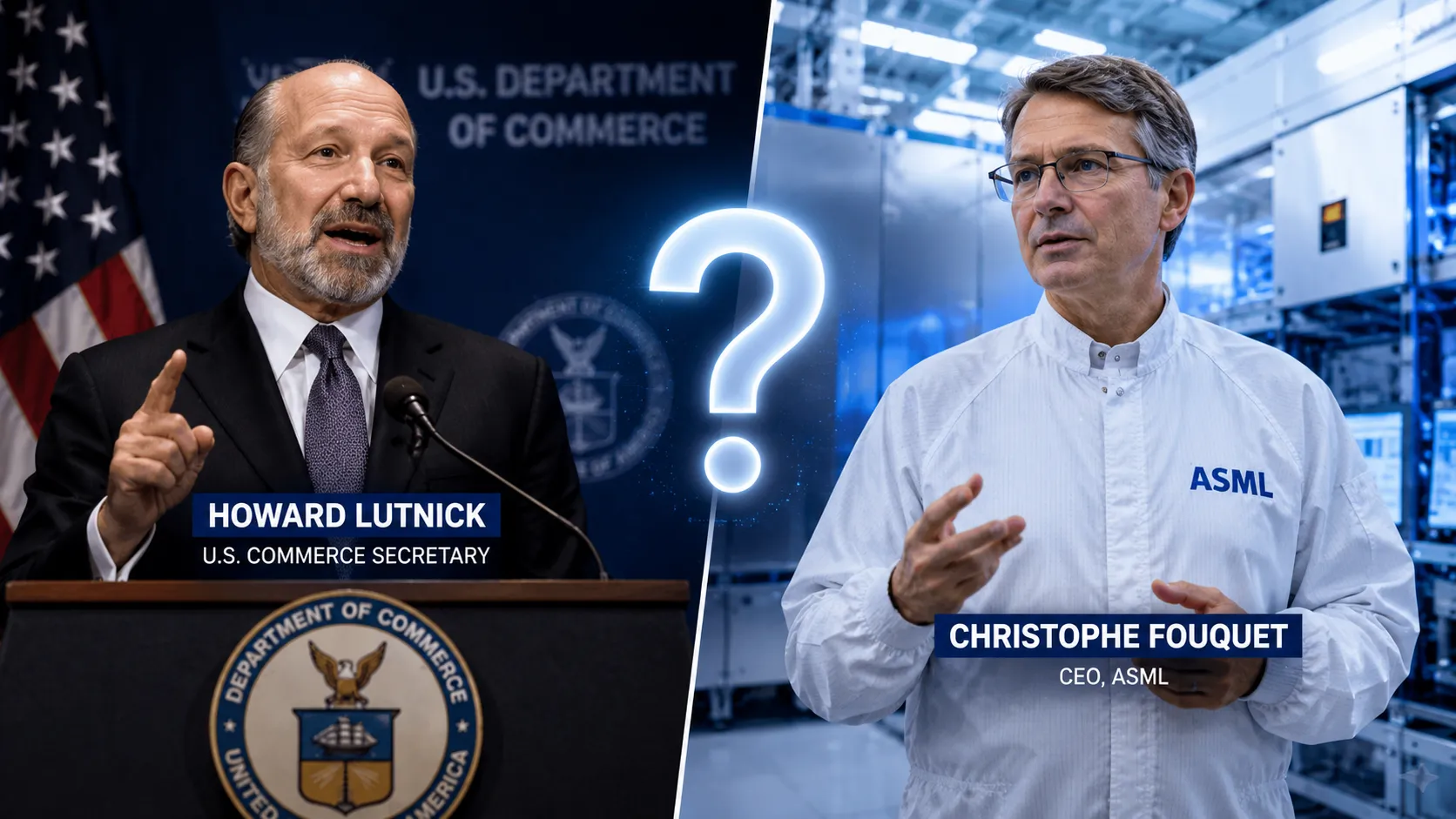
US Commerce Secretary Howard Lutnick has accused the Dutch chip giant of shipping its most advanced EUV lithography machine to China — a violation that would represent the most consequential breach of the Western export-control regime since the chip war began. ASML flatly denies it. The US refuses to show its evidence. And a $700 billion company is now forced to prove a negative.
The accusation landed like a depth charge in the semiconductor world. In a series of recent meetings, US Commerce Secretary Howard Lutnick told senior executives at ASML Holding NV — Europe's most valuable company, with a market capitalization hovering around $700 billion — that Washington believes one of its top-of-the-line extreme ultraviolet (EUV) lithography machines may have made its way into China.
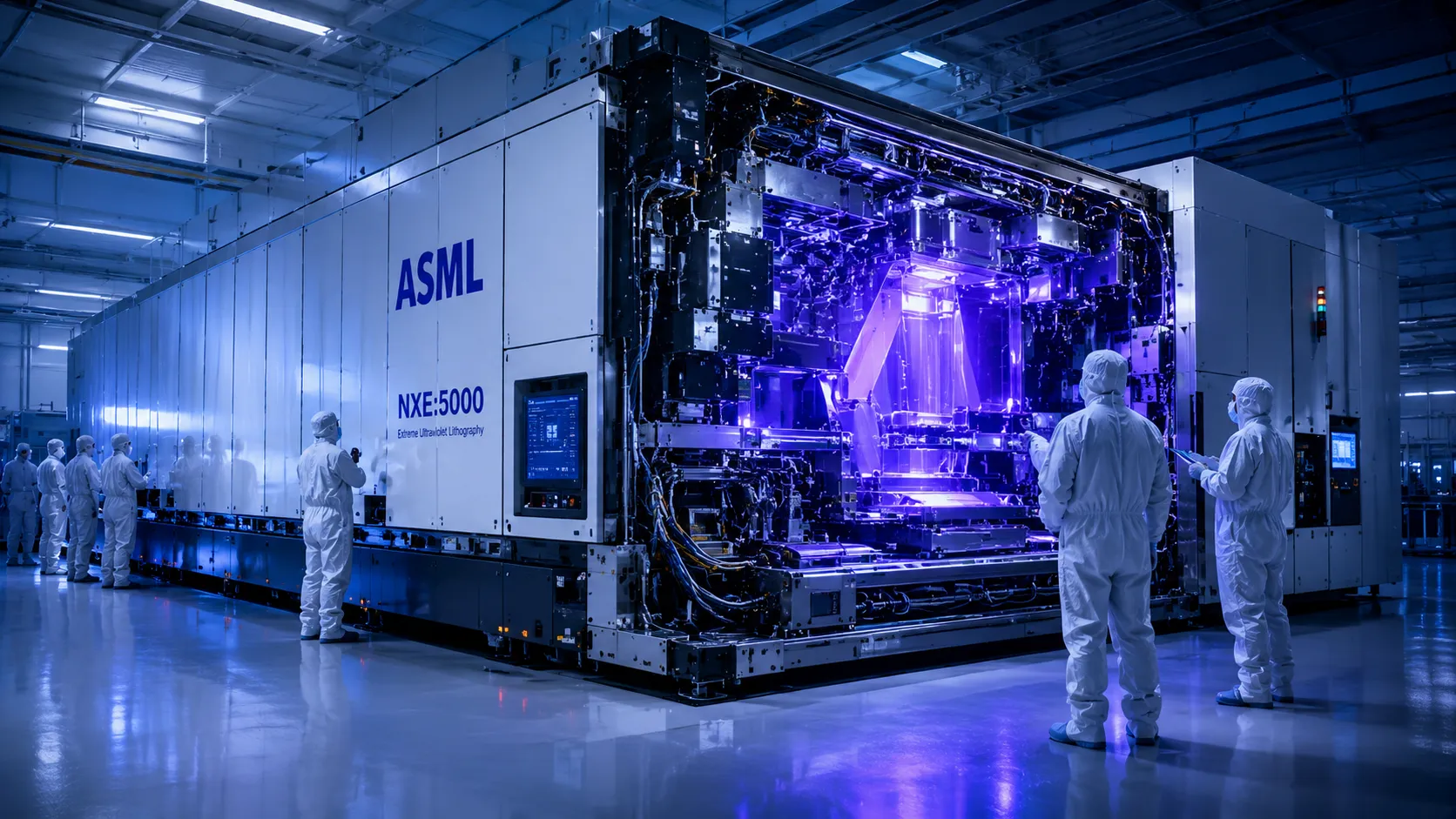
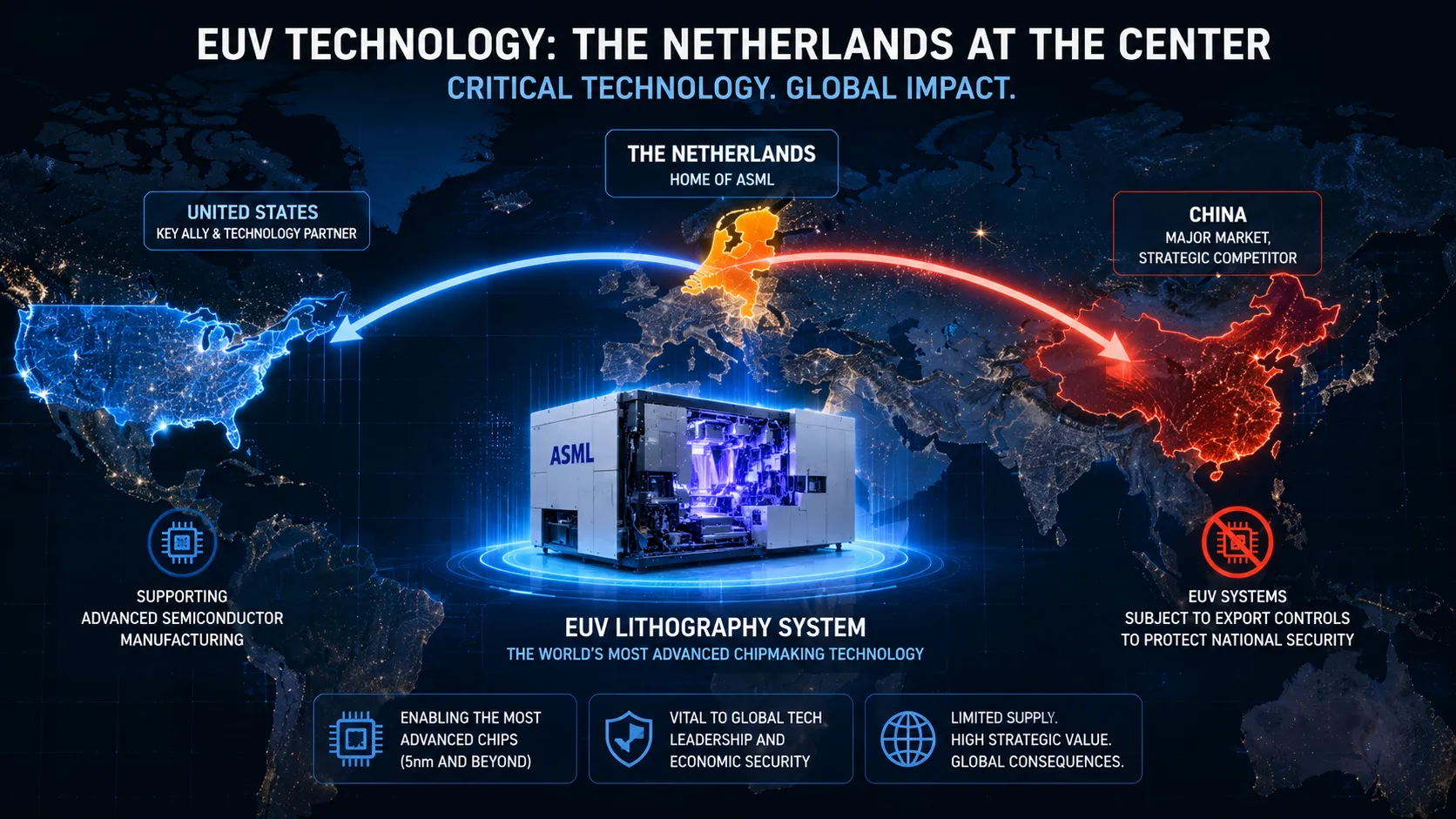
If true, it would be the most consequential breach of the export-control regime the US has built over the past several years to keep advanced AI capability out of Beijing's military and industrial base. EUV systems are the only machines on Earth capable of printing the microscopic circuit patterns that define the most advanced semiconductors. They have been off-limits to China since around 2019. Every cutting-edge processor made by TSMC — the foundry behind Nvidia's and Apple's chips — depends on ASML tools that took the company roughly two decades and untold billions to develop.
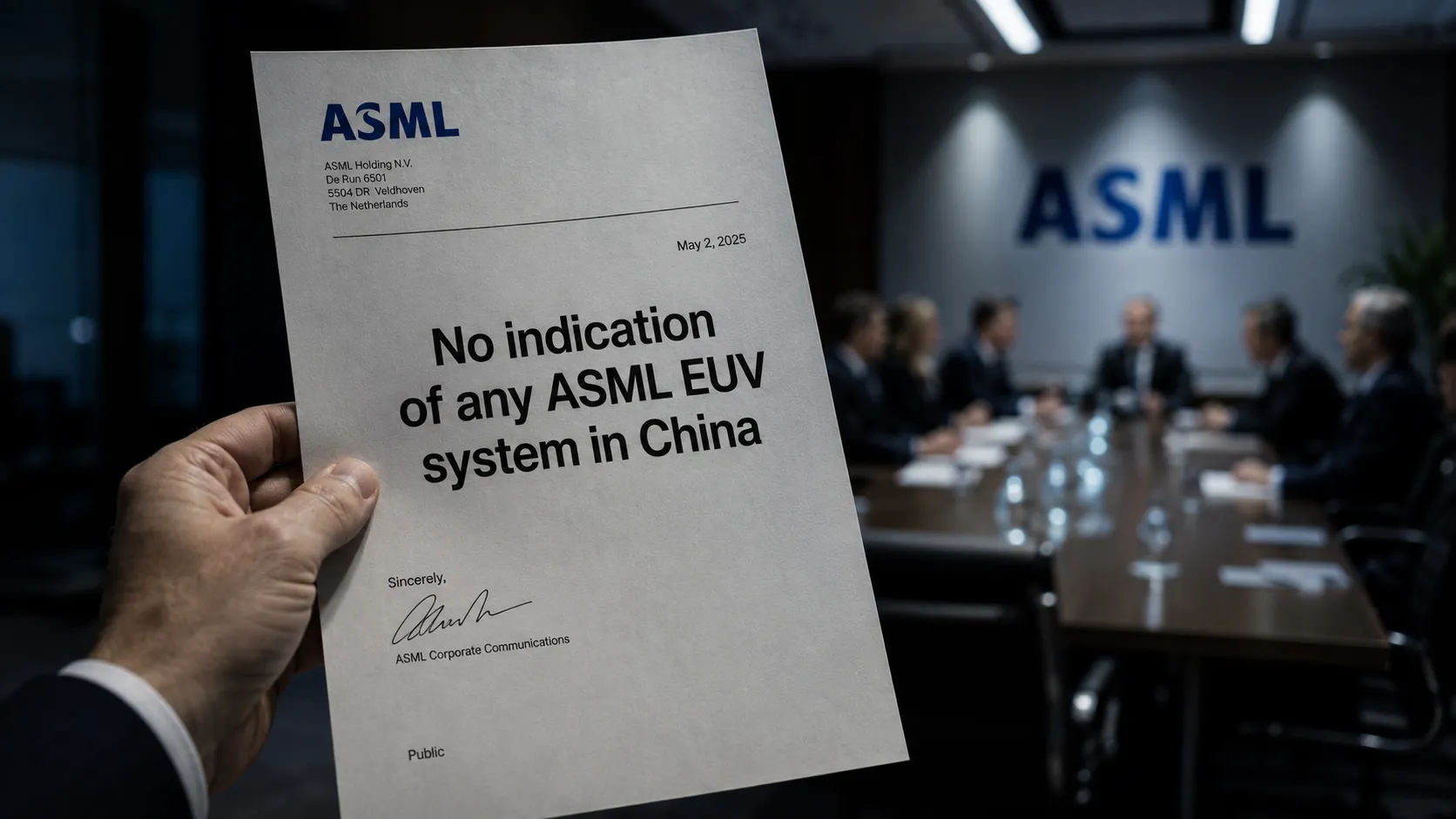
ASML's response was unusually direct. "ASML has never shipped an EUV machine to China, nor have we shipped to China any component, module or equipment specially designed to be used in an EUV machine," the company said in a statement. The company has circulated a document in Washington titled "No indication of any ASML EUV system in China". And it has privately entered crisis mode, drafting a detailed rebuttal that points to a simple, damning fact: the US has repeatedly declined to show any evidence.
The Accusation: "Not Acting in Good Faith"
According to Bloomberg, Lutnick's team believes it has evidence that ASML shipped EUV-related components and transport equipment to China. Multiple senior administration officials, speaking on condition of anonymity, said they have evidence indicating ASML is "not acting in good faith".
But they have refused to show it. The officials declined multiple requests from Bloomberg for proof of the shipments, citing the "sensitivity of the information and sources". They also declined to say whether they have seen evidence of an actual EUV system in China. The Commerce Department did not respond to multiple queries, including whether the agency has any evidence indicating that an EUV machine exists in China.
The accusation has put ASML in an impossible position: trying to prove a negative. "It is unclear what exactly the Trump administration seeks from ASML, which is now trying to prove a negative, nor what type of information from the equipment maker could put the China EUV issue to bed," Bloomberg reported.
The Denial: "We Track Every Machine"
ASML CEO Christophe Fouquet, in an interview with TechCrunch six weeks before the story broke, explained in detail why the accusation is nearly impossible. He said ASML tracks every machine it has ever shipped — they are either in active use with monitored customers or have been dismantled and returned to the company.
The company built an internal firewall years ago: employees who can access EUV technology, documentation, and training are walled off from those who can't. ASML's China-based staff sit on the wrong side of that wall by design.
The physical logistics make smuggling virtually impossible. EUV machines are roughly the size of a school bus, weigh about 180 tonnes, are built in limited quantities, and require constant upkeep from ASML employees. They are manufactured in small numbers and cannot be moved, transported, or reassembled without ASML's direct involvement. The company also maintains automatic detection of "any interruption, abnormal behaviour or connection loss" in its EUV product portfolio.
The company has documented that of the 314 EUV machines currently in operation globally and 26 that have been retired, not a single one is located in mainland China.
The Commercial Logic: Why ASML Would Never Risk It
There is also a simpler, more compelling argument: commercial suicide.
ASML's export licence is its lifeline. Even as China shrinks from about a third of its revenue toward a fifth, it remains the company's single biggest market. Torching that licence to arm one Chinese customer would be close to corporate suicide.
ASML does sell older-generation deep ultraviolet (DUV) tools to China — equipment it first shipped years ago. The company expects roughly 20% of its 2026 revenue from already-permitted sales to China. But EUV has never been on the table. The company has "never been allowed to ship them to China because of curbs imposed during the first Trump administration".
"These are very difficult things to smuggle," said Ben Barringer, head of technology research at investment manager Quilter Cheviot. ASML, he noted, is accustomed to diplomatic tangles because of the importance of its equipment for leading-edge chips — a situation that means the company "can't favor one country over another".
The Geopolitical Squeeze
The clash lands as Washington leans harder on its allies. A proposed US law would force the Netherlands and Japan to mirror American export rules or face unilateral enforcement. President Trump is reportedly pushing the Dutch hard.
The pressure is doubly awkward because ASML's future is increasingly American. It has just signed up to help build Elon Musk's $55 billion "Terafab" chip plant in Texas, even as Washington turns up the enforcement heat. For ASML, the message is that compliance may no longer be enough.
The episode follows years of friction over Chinese efforts to obtain ASML's technology, including a 2018 US court ruling that a competitor set up by former staff had stolen company secrets. Persistent concerns from senior levels of the Trump administration add to pressure on the company, which has previously fielded allegations by American officials that its business activities undermine US national security and tech policies.
Should ASML remain unable to allay Washington's concerns, the situation could also add strain to already rocky relations between the US and the European Union. A representative of the Dutch Foreign Ministry said that the Netherlands takes seriously the responsibility that comes with its "unique role in the semiconductor industry" and enforces restrictions on EUV tools and other relevant exports "very strictly".
The Market Reaction
ASML shares fell following the report, sliding as much as 2.6% in morning trade before paring losses to fall 0.7%. The stock, which makes up close to 8% of the Europe-wide Stoxx 600 index, is up around 80% so far this year.
But the implications extend far beyond ASML. "This matters beyond ASML itself because the global equity rally has been heavily dependent on the chip complex," said Tickmill market strategist Patrick Munnelly. "Any renewed US-China technology restriction risk would cut directly against the AI-led optimism supporting markets".
The Bottom Line
This is a standoff over an absence: one machine that may or may not be where it should not be, with the entire Western effort to keep advanced chipmaking out of China riding on the answer.
The US has made a serious allegation. It has offered no public evidence. It has refused to show what it claims to have. And ASML — a $700 billion company, the most important firm in the global AI buildout that isn't named Nvidia — is now forced to prove a negative, on Washington's timeline, with its China business in the balance.
ASML's position is clear: it has never shipped an EUV machine to China, never shipped EUV components to China, tracks every machine it has ever made, and the US has repeatedly declined to substantiate its claim. The commercial logic cuts against the accusation — why would ASML risk its export licence, its China business, and its reputation to arm a single customer?
Until the US produces what it says it has, this remains a clash over belief, not evidence. And in the high-stakes world of semiconductor geopolitics, that may be enough to reshape the global chip war.