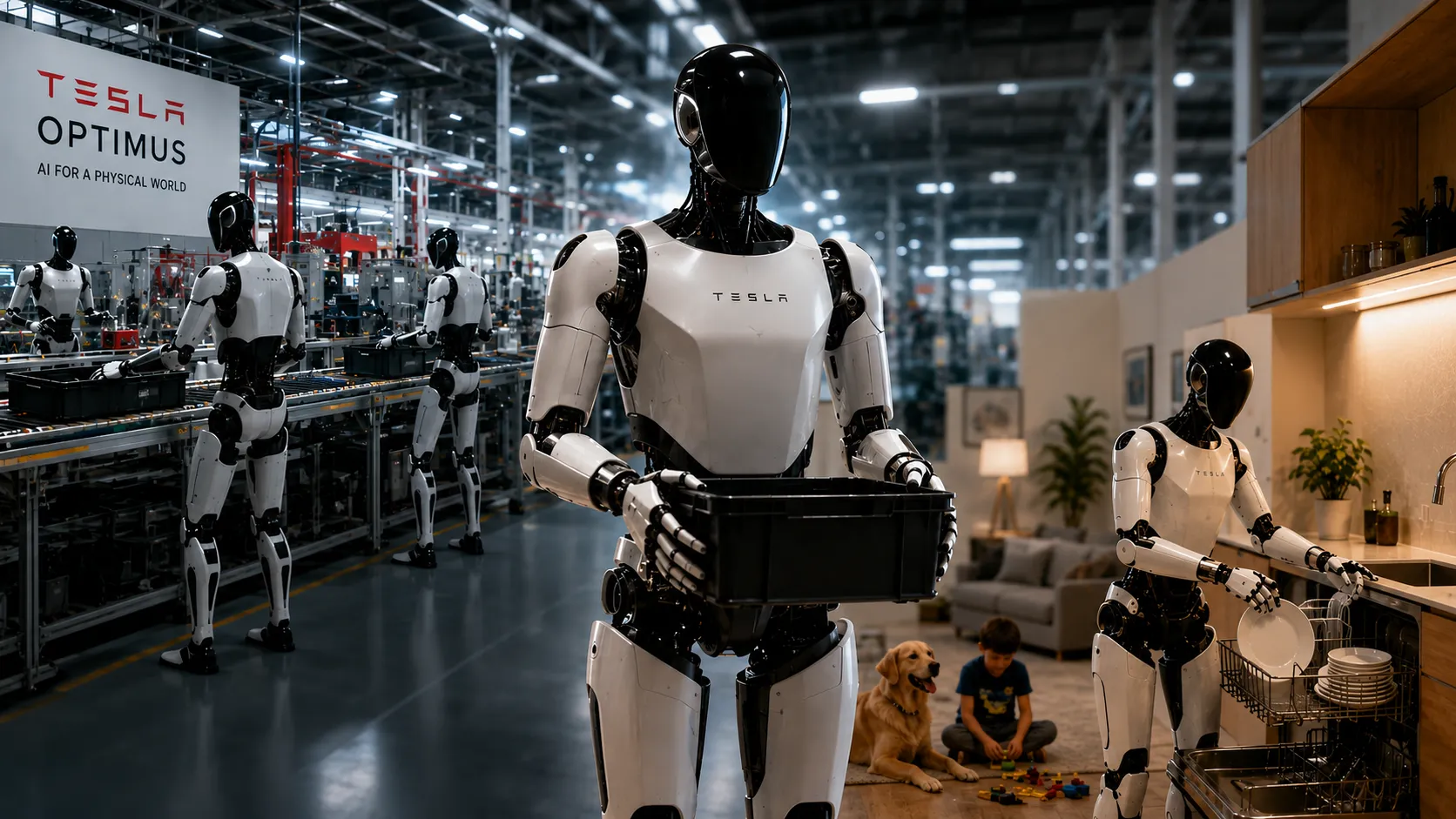
For generations, the concept of an autonomous bipedal assistant washing dishes, managing stockrooms, or running domestic errands belonged firmly inside science fiction media. However, Tesla is moving aggressively to make this mechanical workforce an affordable household line item.
The company's Optimus humanoid helper has evolved far beyond early theatrical prototypes into an incredibly complex machine driven by proprietary neural networks. Tesla has made its primary disruption objective clear: dropping the retail consumer price to under $20,000, while optimizing global scale to bring individual manufacturing costs closer to $10,000.
Yet, before the public can buy an Optimus to handle daily laundry, Tesla is deploying its resources to automate industrial environments first. The path from a closed-loop factory asset to a mainstream consumer appliance follows an exact, high-stakes timeline.
Building the Brain and the Brawn: The Hardware Evolution
To understand how Tesla expects to drop the pricing of an advanced humanoid robot below that of a standard electric car, one must analyze its shared internal architecture. Tesla relies heavily on internal vertical integration. The very same visual intelligence framework that drives Tesla’s Full Self-Driving automotive computer is being retooled to handle the balance, environmental mapping, and spatial mechanics of Optimus.
The robot stands at roughly 5 feet 8 inches tall and weighs approximately 125 pounds. Rather than incorporating heavy, cost-prohibitive LiDAR instruments, it relies entirely on a vision-based configuration consisting of integrated cameras and real-time neural processing networks.
The Evolution of the Mechanics
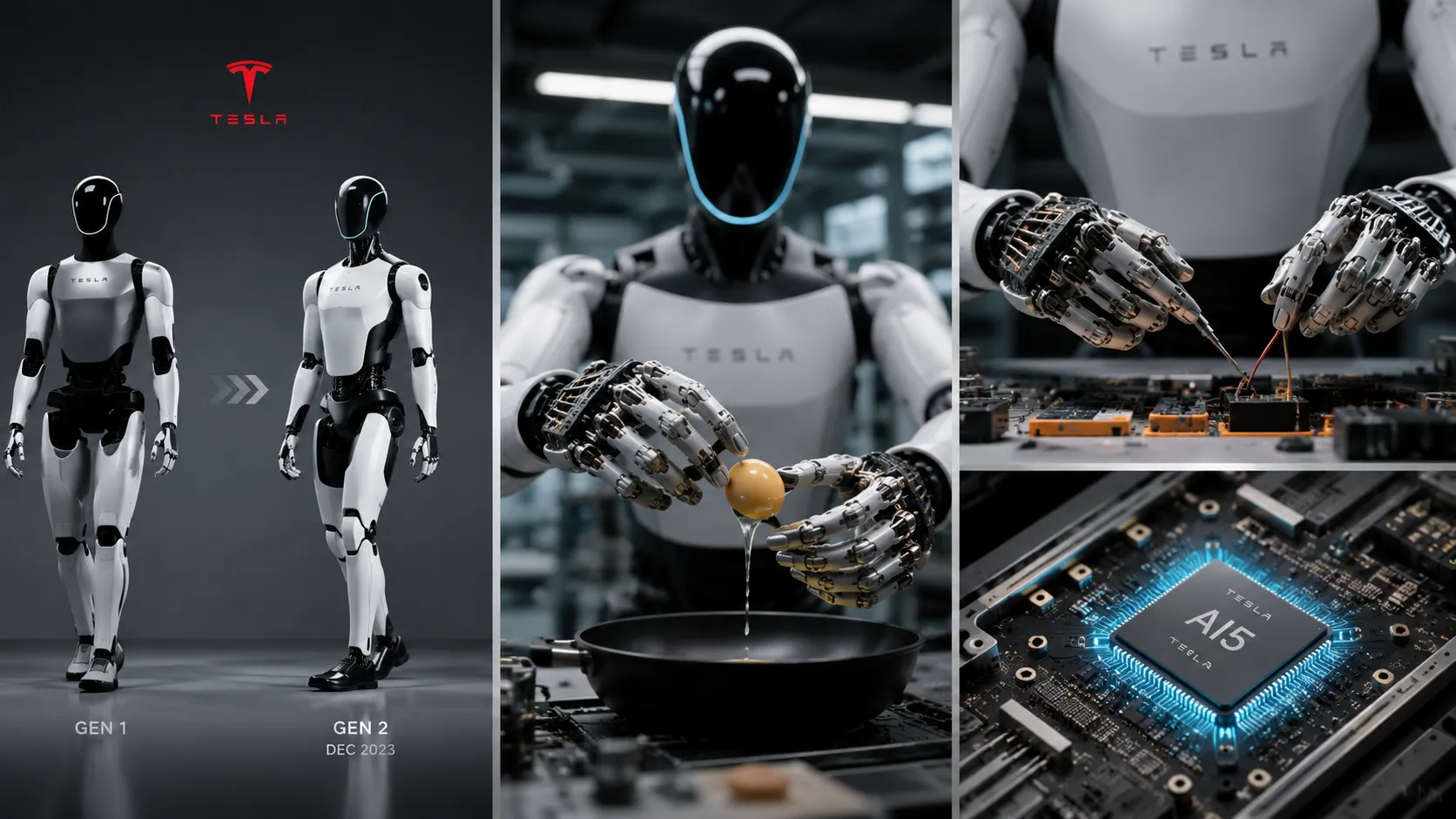
Gen 2 Body (December 2023): The debut of the second-generation body marked a massive milestone for the platform, shedding roughly 22 pounds from its previous iteration to achieve a leaner silhouette. This lighter framework drastically improved structural balance and overall fluidity of movement. Tesla famously put this precise motor control on display by showing the machine delicately poaching an egg without damaging the shell.
Gen 3 Hands (2024–2026): The most critical physical breakthrough lies in the development of the hands. Moving past basic design limitations, the newest hand units feature an incredible 22 degrees of freedom (DoF) driven by a network of 50 internal actuators packed into the forearms. This biomimetic, tendon-driven configuration mimics true human dexterity closely enough to handle intricate tasks like sorting small battery cell hardware, connecting tiny electrical wires, and using standard manual tools.
The AI5 Hardware Edge: Tesla’s newly developed AI5 silicon architecture is scheduled to be installed directly into the core of the humanoid robot. By housing this computing powerhouse locally, the machine maintains self-contained edge intelligence. This ensures that the robot can efficiently execute physical chores and safely map its way through erratic spaces entirely offline, unaffected by a complete loss of cellular or network connectivity.
The Factory First Strategy: Automating Internal Logistics
Despite massive curiosity from everyday homeowners, personal consumer sales are held behind a multi-year roadmap. Tesla is intentionally focusing its initial capacity entirely on industrial, manufacturing, and warehouse deployments.
Automating an explicit, structured setting—like an automobile production line—presents a much simpler software baseline than dropping a robot into a chaotic residential environment filled with unpredictable children, pets, and scattered household items.
Currently, early trial batches of Optimus are hard at work inside major Tesla Gigafactories. These deployment units are tackling repetitive, physically demanding, and monotonous roles:
Organizing and performing quality inspection on lithium-ion battery cells.
Transitioning and securing heavy parts along automotive assembly pathways.
Moving raw logistics materials across warehouse floors.
First-generation assembly lines dedicated to building the robot have been installed at the Fremont facility in California. This space acts as an operational testing ground before replication across the company's global footprint. The initial commercial phase involves serving external logistics firms and warehouse clients first, allowing the artificial intelligence to gather real-world data before opening the platform to general public orders.
Technical Hurdles: What the Engineering Teams Are Up Against
While financial analysts and technology fans remain focused on aggressive pricing figures and quick development updates, seasoned engineering experts urge patience regarding mass assembly constraints.
Scaling a machine made out of thousands of hyper-custom components introduces an extraordinary supply chain bottleneck. A complex production layout scales only as fast as its most complex, delayed component, meaning precise market rollouts are highly vulnerable to manufacturing friction.
Software training is only half the battle. Creating organic, human-like physical movement requires massive torque density—the pure mechanical force an actuator can exert relative to its overall weight. To get past this, Tesla had to build its own proprietary rotary and linear motion systems from scratch, because off-the-shelf industrial parts cannot survive the constant structural vibrations of continuous bipedal walking.
The Reality of a Humanoid in the Domestic Sphere
Where does this massive automation push leave society when the public consumer gates finally swing open at the close of 2027?
The ultimate vision outlines an era where general-purpose humanoid robots could comfortably outnumber the human population. The strategy treats the platform not as an elite tech luxury, but as a universal household appliance designed to become just as standard as a modern refrigerator or smartphone.
When retail distribution begins, initial rollouts are expected to run through managed waitlists and structured lease programs to guarantee full safety compliance. However, the long-term programming goes well beyond basic physical work. Tesla intends for the residential version of Optimus to step directly into massive, real-world societal needs:
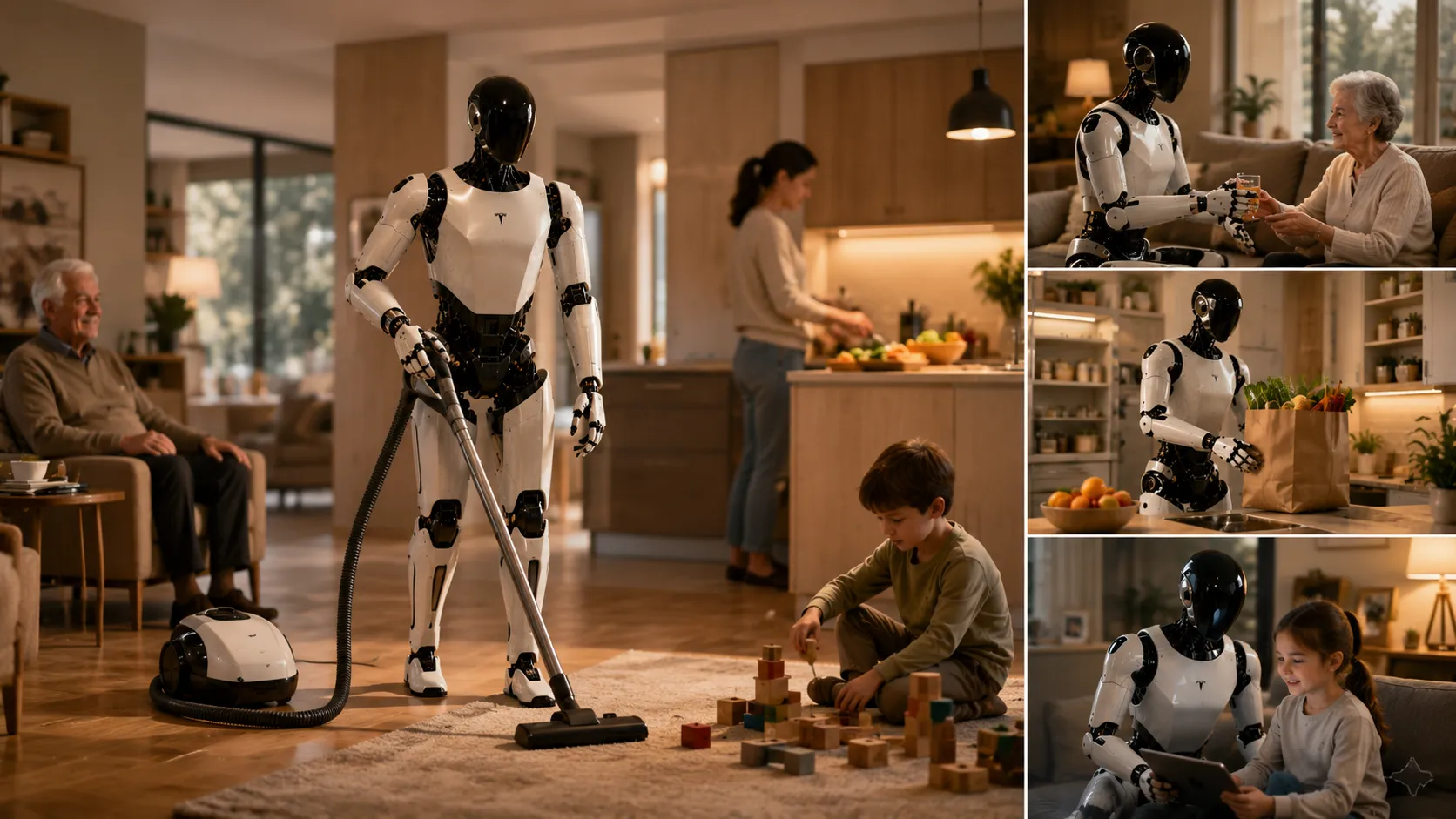
Supplying constant physical assistance and round-the-clock mobility support for aging family members.
Managing complete home maintenance, food preparation, and systematic grocery organization.
Operating as an interactive, conversational companion utilizing built-in deep learning language engines like Grok.
If Tesla successfully navigates the intense physical engineering and scaling challenges to hit its target launch windows, it will mark an unprecedented shift in human labor. By removing physical effort from human biological limits at an accessible price point, Optimus is positioned to completely change humanity's daily relationship with technology forever.