The 18-Year-Old Who Walked Into a Mumbai Slum and Never Left: How Shaheen Mistri Built India's Largest Educational Equity Movement—and Changed How Millions of Children Learn
MUMBAI — May 25, 2026 — In 1989, Shaheen Mistri was 18 years old, the daughter of a prominent banker, educated at elite international schools, and on a trajectory that led to universities abroad and a life of comfortable, cosmopolitan privilege. She was home in Mumbai for the summer, and she was bored. She decided, on a whim, to volunteer at a school for underprivileged children in the city's slums. The decision was not ideological. She was not an activist. She was a teenager who wanted something to do.
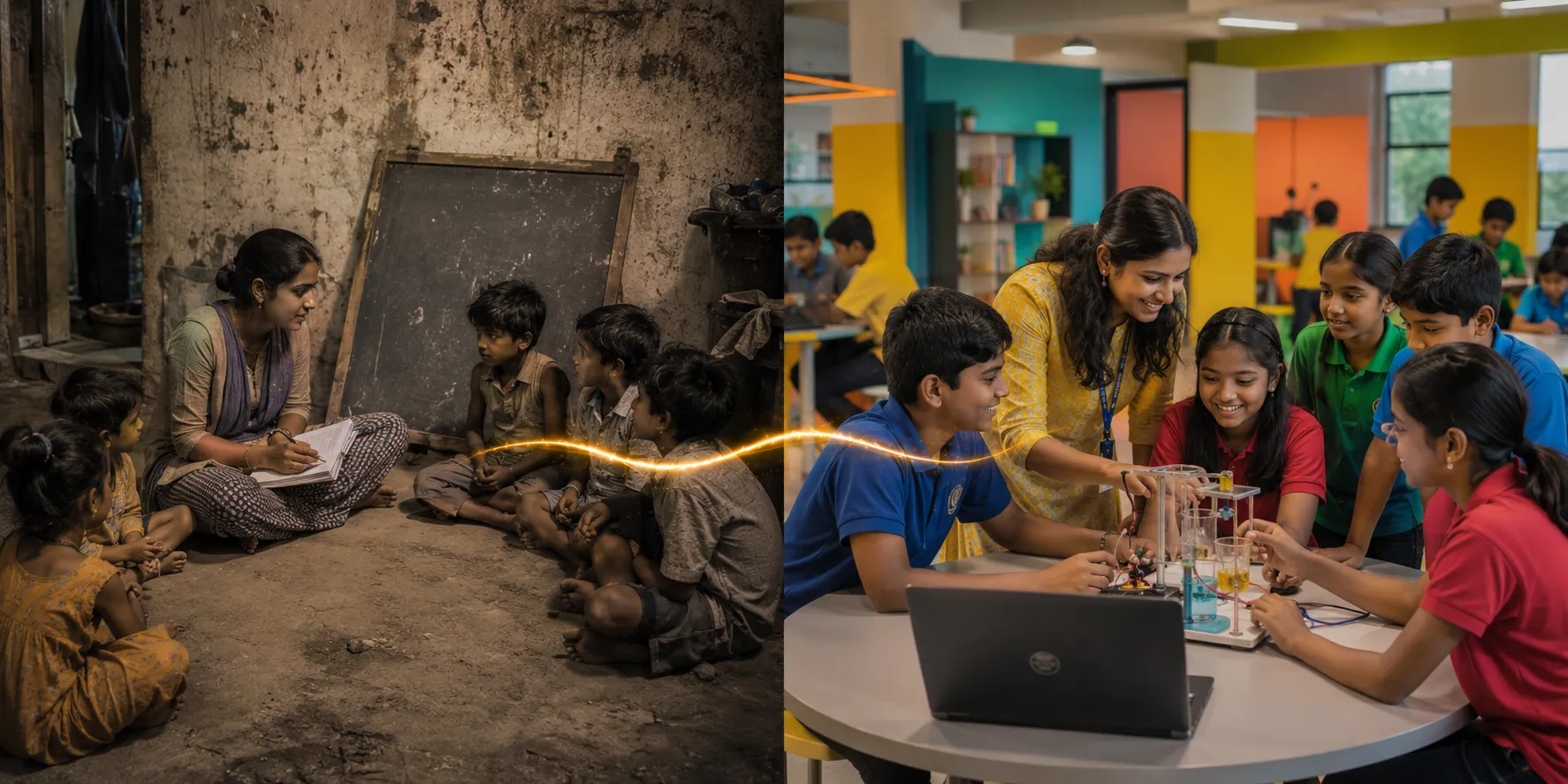
What she found at that school broke something open in her that has never closed. The children were bright, curious, and desperate to learn. The school had almost nothing—no trained teachers, no books beyond tattered textbooks, no electricity, no toilets. The children sat on a dirt floor and learned by rote, reciting lessons they did not understand, in a language—English—that no one had ever taught them. The gap between what these children deserved and what they were receiving was not a gap. It was a chasm. And Mistri, the banker's daughter who had never experienced anything like this in her life, decided that she could not unsee it.
She walked into the slum and she never really left. That summer, she and a few friends began teaching a small group of children in a borrowed room, using whatever materials they could scrounge together. They called it the Akanksha Foundation. "Akanksha" means "aspiration" or "desire" in Sanskrit. The name was deliberate, and it contained the seed of everything that would follow: a conviction that the children of India's slums had the same capacity to dream, to learn, and to achieve as any child anywhere, and that the only thing standing between them and that future was an education system that had failed them entirely.
Thirty-seven years later, the Akanksha Foundation runs 26 schools and educational centres across Mumbai and Pune, serving more than 10,000 children annually. In 2008, Mistri founded Teach For India, a nationwide fellowship programme modelled on Teach For America that recruits India's most promising young graduates and places them in under-resourced government and low-income private schools for two years of intensive teaching. Since its founding, Teach For India has placed more than 4,000 Fellows in classrooms across seven cities, reaching over 380,000 children. The programme's alumni—now numbering in the thousands—have gone on to found schools, launch education startups, join government, and build the ecosystem of educational reform that is slowly, incrementally, rewiring the way India teaches its children.
Mistri herself has stepped back from day-to-day leadership, but her influence on Indian education is immeasurable. She is one of the most recognised education reformers in the world, a recipient of the Ashoka Fellowship, the Global Leader for Tomorrow award from the World Economic Forum, and the Jamnalal Bajaj Award. She has advised governments, inspired a generation of young Indians to choose education as a career, and demonstrated, over nearly four decades, that the chasm she saw as an 18-year-old is not a fact of nature. It is a failure of systems—and systems can be changed.
The First Summer
The details of that first summer in 1989 have been told so many times that they have acquired the texture of myth, but Mistri insists they were ordinary. She was an ordinary teenager—restless, uncertain, full of the vague, directionless energy of adolescence. Her father was a senior executive at ANZ Grindlays Bank, and the family moved in circles of considerable privilege. She attended a series of international schools, including the Cathedral and John Connon School in Mumbai and schools in the United States, and she was expected, like most children of her background, to go abroad for university and build a career in finance, law, or business.
The volunteer posting was almost accidental. A friend mentioned that a local NGO was looking for summer volunteers to teach children in the slums. Mistri had nothing else to do. She showed up at a small, overcrowded school in a Mumbai slum community and was assigned a group of children who were, by any measure, among the most disadvantaged in the country. Their parents were domestic workers, day labourers, and street vendors. Many of them were the first generation in their families to attend school at all. The school itself was barely a school—a single room with a tin roof, a dirt floor, and a teacher who had never been trained in pedagogy and who had been hired only because no one else was available.
What happened next is something that Mistri has described, over the years, as a kind of awakening. The children were eager to learn in a way she had never encountered in her own privileged education. They absorbed everything she gave them—English words, math concepts, stories, games—with a hunger that was almost physical. They were not less intelligent than the children she had grown up with. They were not less curious, less creative, or less capable. They were simply less taught. The education system that was supposed to serve them was, in fact, failing them completely—offering custodial care rather than learning, and treating their poverty as an excuse for low expectations rather than a reason for higher investment.
The first summer turned into a permanent commitment. Mistri enrolled at St. Xavier's College in Mumbai rather than going abroad, so she could continue working with the children she had come to love. She and a handful of friends began running a small after-school programme in a borrowed room, tutoring children in English, math, and life skills. They called it Akanksha. The name was aspirational, but the model was practical: small classes, dedicated teachers, a curriculum designed to build confidence and critical thinking, and an environment in which children were treated as individuals with potential rather than as statistics in a poverty report. The children who attended Akanksha began to perform better in school. They began to believe that they could succeed. And Mistri, who had started as a bored teenager looking for something to do, found that she had stumbled into the work that would define her life.
From After-School Program to National Movement
The Akanksha Foundation grew slowly, organically, and with the kind of deliberate, patient care that characterises every organisation Mistri has ever built. For the first several years, it operated as a network of after-school centres in Mumbai's slum communities—small, neighbourhood-based programmes that provided supplemental education to children who were enrolled in government or low-income private schools but were receiving almost nothing of value from them. The centres were staffed by paid teachers and volunteers, many of them college students like Mistri herself, who believed that every child deserved an education that prepared them for more than a life of poverty.
The model worked, but it was limited. The after-school programme could supplement a child's education. It could not replace the broken schools that were the root cause of the problem. The children who attended Akanksha centres still spent most of their days in classrooms where the teachers were absent, the curriculum was irrelevant, and the expectations were abysmal. The supplementary model was a bandage on a wound that required surgery. Mistri knew it. The question was what to do about it.
The answer came in 2007, when Akanksha opened its first full-time school—a partnership with the Mumbai Municipal Corporation that allowed the foundation to take over the management of an existing government school and run it according to its own philosophy. The school was not a private, fee-charging institution for the elite. It was a free, public school for the children of the slums, operated by a non-profit organisation, with the same per-child funding that every government school received, and with dramatically better outcomes. The Akanksha schools—there are now 26 of them across Mumbai and Pune—became a demonstration that the problem with Indian education was not resources. It was design. The government was spending money on schools. It was just spending it badly—on infrastructure that was never maintained, on teachers who were never trained, on a system that was designed to produce compliance rather than learning. The Akanksha schools proved that the same amount of money, deployed differently, could produce different results.
The schools were not perfect. They faced the same challenges that every school in India faces: teacher shortages, political interference, and the deep, structural inequities that follow children from the slum into the classroom. But they were better than the alternative, and they demonstrated something that had been doubted for generations: that children from the most disadvantaged backgrounds could learn at the same levels as children from privileged ones, provided they were given the same quality of instruction. The achievement gap, Mistri argued, was not an ability gap. It was an opportunity gap—and it could be closed.
The schools were not enough. Mistri knew that the model she had built, while effective, could not be scaled to the millions of children who needed it. The Akanksha Foundation could run 26 schools. It could not run 26,000. The only way to reach the scale of the problem was to build a pipeline of teachers who would go into the government system and change it from within. The idea was not new. Teach For America, launched in 1990 by Wendy Kopp, had demonstrated that a national teaching fellowship could attract top graduates, place them in under-resourced schools, and build a leadership pipeline for educational reform. Mistri believed the model could work in India. In 2008, she launched Teach For India with a first cohort of 80 Fellows placed in schools across Mumbai and Pune. The programme was immediately oversubscribed, attracting thousands of applications from young Indians who wanted to teach but had never been given a pathway to do so with dignity and support. The fellowship grew quickly—to Delhi, to Chennai, to Bengaluru, to Hyderabad, to Ahmedabad, to Kolkata—and became one of the most competitive graduate recruitment programmes in the country, with an acceptance rate lower than most Ivy League universities.
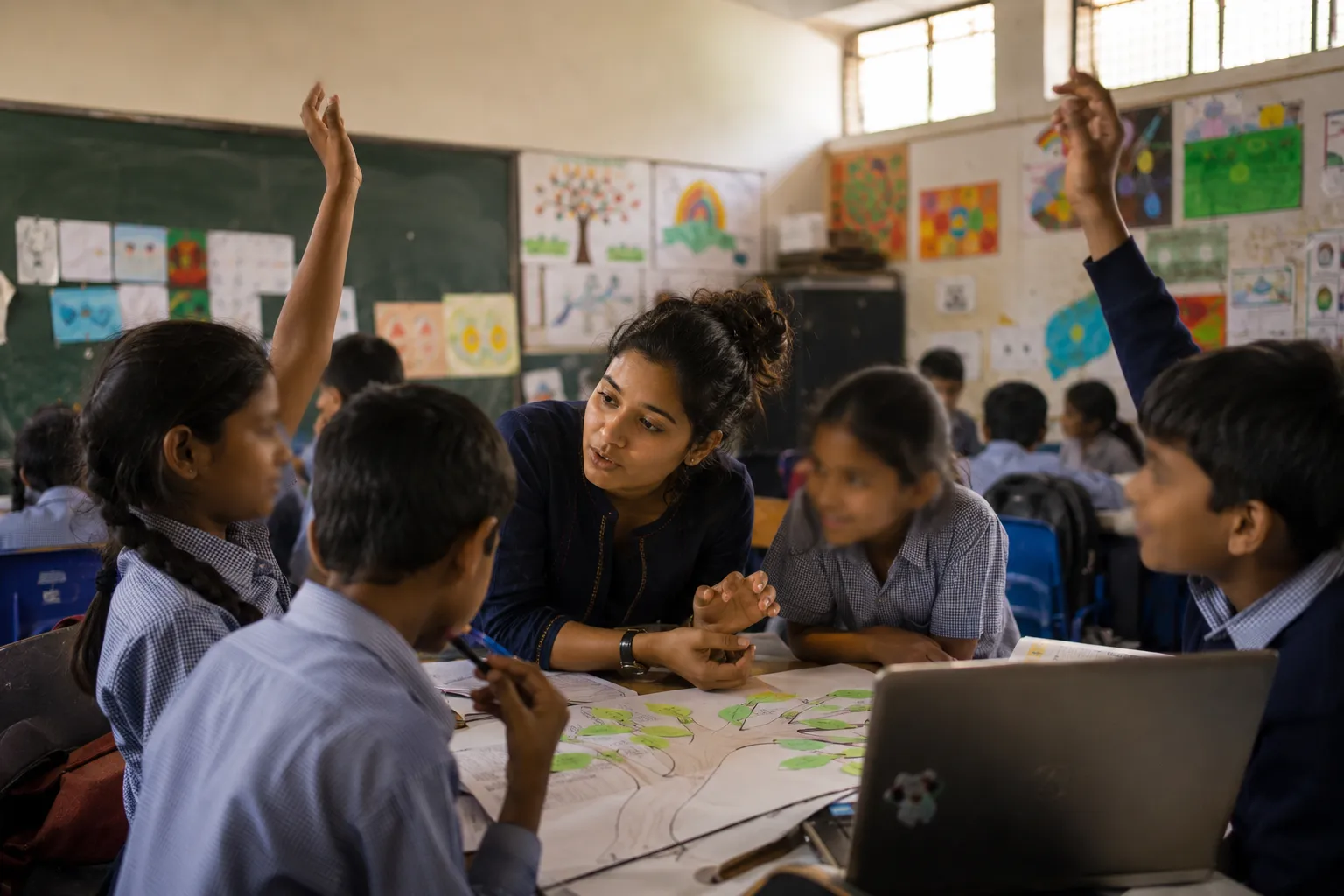
The Fellows were not trained teachers. They were engineers, lawyers, commerce graduates, and liberal-arts majors who had been selected for their leadership potential and their commitment to educational equity. They were given five weeks of intensive training and then placed in classrooms where they were responsible, from day one, for the education of 40 to 60 children. The model was brutal. It was also transformative—for the children, who experienced for the first time what it meant to have a teacher who believed in them and held them to high expectations, and for the Fellows, who emerged from the programme with a visceral understanding of the inequality that defined Indian education and a commitment to doing something about it. The alumni of Teach For India now number in the thousands. They have founded more than 200 education startups and nonprofits, joined the government in roles ranging from policy advisors to district education officers, and become principals, teachers, and administrators in schools across the country. They are the distributed, decentralised, slowly accumulating infrastructure of educational reform, and they are Mistri's most enduring legacy.
The Movement-Builder
The most remarkable dimension of Mistri's career is not the organisations she has built. It is the movement she has catalysed. Teach For India is not, in the strict sense, a service-delivery organisation. It is a leadership-development organisation disguised as a teaching programme. The Fellows who pass through its classrooms are not expected to remain teachers for the rest of their careers. They are expected to become the leaders who will transform Indian education from every possible angle—as principals, as policymakers, as entrepreneurs, as advocates, and as citizens who understand, at a visceral level, what is at stake.
The alumni have done exactly that. They have founded organisations like the India Literacy Project, the Educational Initiatives, and the Central Square Foundation. They have joined the Ministry of Education, the NITI Aayog, and state-level education departments. They have launched startups that are reimagining teacher training, curriculum design, and education technology. They have become principals of government schools and heads of nonprofit organisations. They are the connective tissue of a movement that is larger than any single organisation, and they share a common language, a common experience, and a common conviction that was forged in the classrooms where they were thrown, with five weeks of training, and told to teach.
Mistri has been deliberate about building the movement rather than building herself. She is not a celebrity CEO. She does not give provocative interviews or post viral LinkedIn threads. She works. She mentors. She builds institutions and then steps back, letting the people she has trained and inspired take the lead. The leadership transition at Teach For India, when it came, was smooth and intentional—a reflection of the culture she had built over nearly two decades. The organisation continues to thrive under new leadership, and Mistri's role has evolved from operational to advisory. She is no longer running the day-to-day. She is building the ecosystem that will produce the next generation of leaders, and the generation after that.
The broader context is an Indian education system that is, by almost any measure, one of the largest and most unequal in the world. India has more than 250 million school-age children, more than 1.5 million schools, and more than 9 million teachers. The system is vast, underfunded, and plagued by a learning crisis that has been documented in every major assessment: the majority of Indian children who complete primary school cannot read at grade level, cannot do basic arithmetic, and cannot write a simple sentence in any language. The problem is not access—enrolment rates are now above 95 percent—but learning. The children are in school. They are just not being taught.
The learning crisis has resisted every previous attempt at reform. Government programmes have come and gone, announced with fanfare and abandoned without fanfare when the next government took office. The infrastructure of Indian education—the teacher-training institutions, the curriculum frameworks, the examination systems—was designed for an era when the goal was universal enrolment, not universal learning. The institutions that need to change are the ones that are most resistant to change, and the people who need to lead the change are the ones who have the least power within the system.
Mistri's insight was that the only way to change a system this large and this entrenched was to build an army of leaders who understood it from the inside. The Teach For India Fellows who spend two years in a government school classroom are not just teaching children. They are learning, at a granular level, how the system works and why it fails. They emerge from the fellowship with a knowledge that no policy brief can provide and a motivation that no salary can buy. They are the antibodies that the system needs, and Mistri has spent her career producing them.
She has also been deliberate about building institutions that model what is possible. The Akanksha schools are not just schools. They are laboratories—places where new approaches to curriculum, teacher training, and school leadership can be tested, refined, and demonstrated. The lessons from Akanksha have influenced the design of Teach For India, the development of national curriculum frameworks, and the thinking of education reformers across the country. The demonstration effect—showing that something works, and showing how it works—is more powerful than advocacy. Mistri understood this from the beginning.
What This Signals
The Shaheen Mistri story is not primarily about an NGO. It is about the structural failure of the Indian education system—and about what happens when someone who has experienced that failure decides to fix it, not with charity, but with institutions.
For decades, the Indian education debate was defined by a false binary: either you believed in government schools, and you defended them against all criticism, or you believed in private schools, and you advocated for vouchers and market-based solutions. The binary was a trap. The government schools were failing, and the private schools that served the poor were, in most cases, no better—cheaper, more accessible, but just as ineffective at producing learning. The binary obscured the real question: what does it take to build a school that actually works for the children it serves? Mistri refused to choose sides. She built schools that worked—in partnership with the government, using government funding, serving government-school children—and she built a pipeline of leaders who would go on to build more of them.
The Akanksha schools and the Teach For India fellowship are not the solution to India's education crisis. They are too small, by orders of magnitude, to reach the millions of children who need them. But they are a demonstration that the crisis is not insoluble. The problem is not the children, the parents, or the communities. The problem is the system—and systems can be changed. The 18-year-old who walked into a Mumbai slum in 1989 and never left has spent her life proving that. The schools she built, the Fellows she trained, and the movement she catalysed are the evidence. The chasm she saw as a teenager is still there, but it is narrower than it was—and the people she has inspired are still building bridges across it.
Shaheen Mistri is no longer the 18-year-old with a borrowed room and a handful of children. She is one of the most consequential education reformers of her generation, the architect of a movement that has reshaped the conversation about educational equity in India, and a quiet, persistent example of what happens when privilege is deployed not as a shield, but as a lever. The children she taught in that first summer are now in their forties, with children of their own. Some of them went to college. Some of them became teachers. Some of them, in the quiet, unglamorous way that impact accumulates across generations, are living lives that would have been impossible without the intervention of an 18-year-old who refused to look away. The work is not complete. It will not be complete in her lifetime. But the movement she built will outlast her, and the children who benefit from it will never know her name.


