For decades, India’s economic story frequently carried a familiar pattern. During colonial rule, trade initially arrived as commerce before eventually transforming into influence, control and long-term dependency because economic power frequently extended far beyond products themselves. History repeatedly showed that markets rarely involve only buying and selling. They also influence institutions, incentives and who ultimately controls value creation. Over time, India’s colonial experience became one of the strongest reminders that economic relationships occasionally reshape much larger systems beneath them.
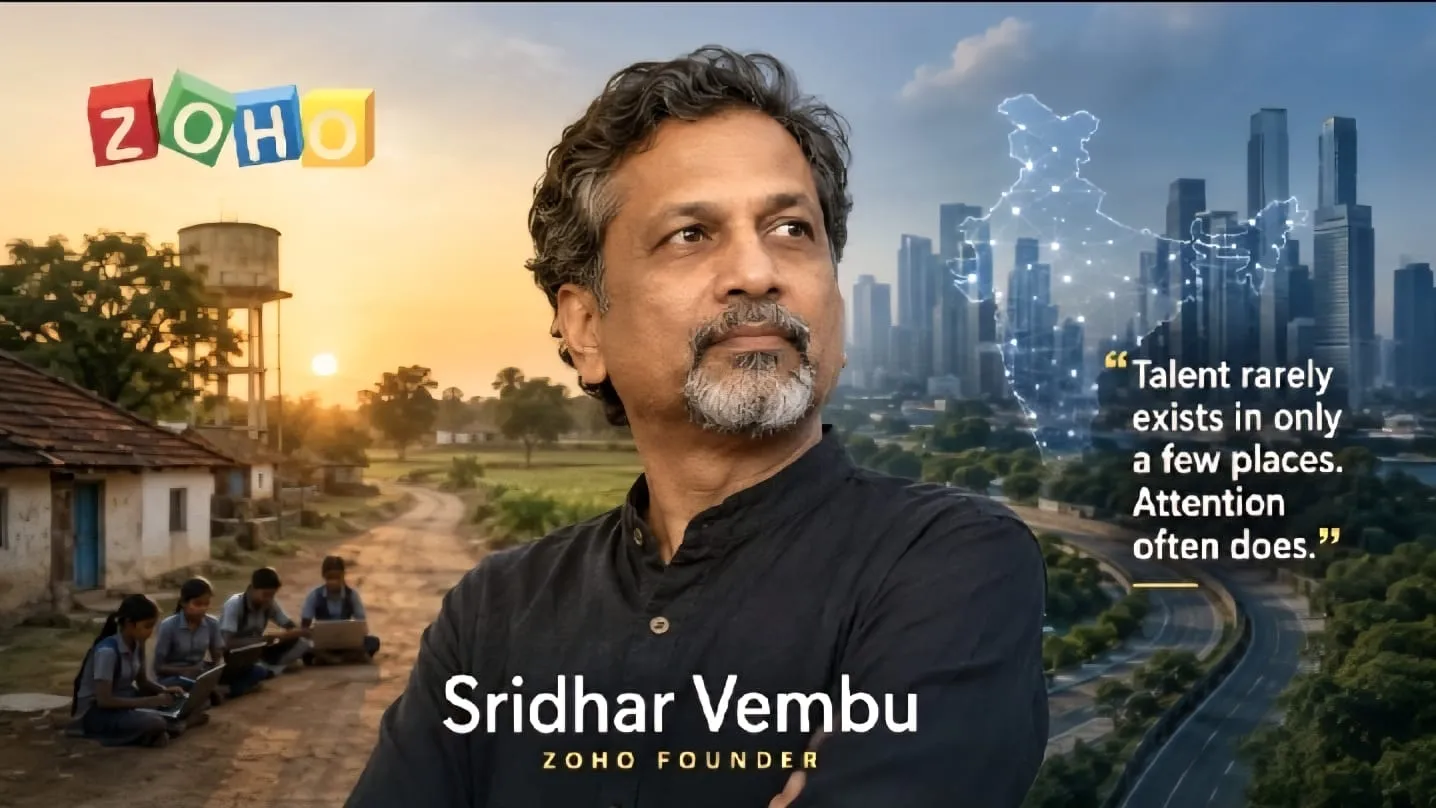
Yet beneath today’s technology economy, another conversation increasingly appears emerging. While modern technology ecosystems obviously differ dramatically from colonial structures, Zoho founder Sridhar Vembu recently raised concerns around a broader pattern involving dependency itself. His argument was not that global companies are inherently harmful or that international businesses should disappear from India. Rather, he appeared to question whether India risks becoming primarily a consumer market while much of the value, ownership and technological control continues remaining elsewhere. The larger concern increasingly centers around whether countries eventually weaken when they consume innovation continuously but create comparatively less of it themselves.
Viewed independently, this may initially appear like another technology leader advocating for domestic startups. Viewed through a broader impact lens, however, it increasingly raises a much larger question: what happens when a country becomes deeply dependent on technologies, platforms and systems built almost entirely outside its own ecosystem?
Historically, economic power frequently followed production rather than consumption. Countries that built infrastructure, manufactured products and controlled intellectual property often created stronger long-term influence because ownership itself frequently shaped outcomes. During industrial eras, factories created leverage. During software eras, platforms increasingly created leverage. Today, technology ecosystems increasingly shape communication, productivity, commerce and everyday behavior because digital infrastructure itself increasingly functions like national infrastructure.
This distinction increasingly matters because technological dependence frequently appears invisible at first. Software platforms gradually become default systems. Cloud services increasingly become operational foundations. Productivity tools increasingly become embedded into businesses, schools and institutions. Over time, dependence frequently grows quietly because convenience itself often arrives before questions surrounding ownership and control emerge.
Part of what makes Vembu’s broader argument particularly interesting increasingly involves the fact that it is rooted less in protectionism and more in capability. His message frequently appears centered around possibility itself. India possesses engineers, entrepreneurs, talent pools and scale unlike almost any other country. The country already builds globally respected products, technology systems and startups. The question therefore increasingly may not involve whether India can build world-class businesses.
The question increasingly involves whether India fully believes it should.
Because historically, many developing economies frequently adopted technologies built elsewhere simply because building independently often appeared more difficult. Yet today, India increasingly possesses talent ecosystems, startup infrastructure and technical capabilities capable of supporting significantly larger ambitions than earlier generations experienced.
This conversation increasingly matters because technology itself no longer represents only software products. Platforms influence communication. Cloud systems influence businesses. Search systems influence information. Artificial intelligence increasingly may influence economies themselves. Once technologies become deeply embedded, ownership frequently becomes more meaningful than people initially realize.
Perhaps that explains why Vembu’s comments increasingly feel larger than one founder discussing technology companies or digital dependence. Because beneath conversations involving Microsoft, software platforms and international corporations ultimately exists another reality involving national confidence itself. Countries frequently become consumers by default. Builders frequently emerge by choice.
The larger impact story therefore may not simply involve one warning about foreign technology dominance. Increasingly, it may involve recognizing that India’s future may depend not only on participating in global technology systems but on building systems capable of standing beside them.
Because increasingly, the strongest form of independence may no longer involve political control alone.Increasingly, it may involve technological self-belief.