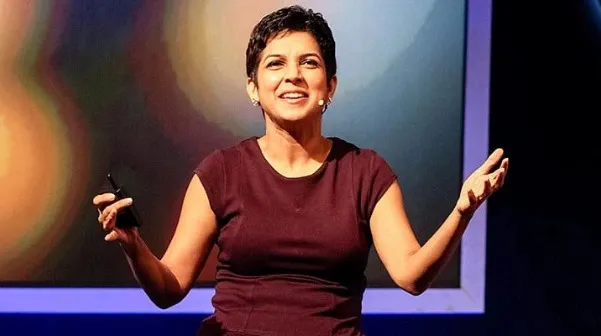
She Arrived at Facebook's India Office When There Was No Facebook India Office. She Built What Came After.
There is a specific kind of professional courage involved in being the first person in a room that does not yet exist. Not the first to join an established team. Not the first in a country where the company has already built a presence. The first. The person who arrives in India on behalf of Facebook in 2010, when the company has no Indian operations, no Indian team, no Indian office, and no Indian infrastructure — and is handed the brief: build it.
Kirthiga Reddy was that person.
She joined Facebook in 2010 as its first employee in India and served as Managing Director, Facebook India and South Asia, for more than six years. In that time, she built one of the most consequential country businesses in the history of the global technology industry — not in terms of the raw revenue it generated, though that grew to several hundred million dollars annually, but in terms of what it meant for a platform to genuinely take root in a country of 1.4 billion people and become part of the daily lives of hundreds of millions of them.
Today, Kirthiga Reddy is the Co-Founder and CEO of OptimizeGEO, a generative engine optimisation company helping businesses navigate AI-driven discovery. She is the Founder and CEO of Virtualness, a generative AI and blockchain platform for sports, creator, and brand monetisation. She founded AIKiran, a global movement to empower a million women, youth, and differently-abled individuals through AI mentorship and learning pathways, in partnership with INK Global Foundation and the Office of the Principal Scientific Adviser to the Government of India. She has been named to ADWEEK's AI Power 50, Fast Company's Most Creative People in Business, and Fortune India's Most Powerful Women.
She is also, by any reasonable accounting, one of the most consequential builders in Indian technology history — a fact that the number of firsts attached to her name only partially captures.
The Foundation — Nanded to Syracuse to Stanford to Silicon Valley
Kirthiga Reddy grew up in Nanded, Maharashtra, in a middle-class family. Her father was a government employee with a transferable job — a fact that shaped her in ways she has spoken about publicly. Moving across states, adapting to new environments, developing the agility that comes from being perpetually the new person in an unfamiliar place: these are not incidental biographical details. They are the foundation of the professional skill set that allowed her to walk into an empty room in Mumbai and build a global technology business from it.
She is a Telugu woman who grew up in Maharashtra, speaking multiple languages and navigating multiple cultural contexts before she had finished school. Adaptability and agility are not buzzwords in her professional vocabulary — they are the capabilities she built by necessity before she knew they had names.
Her undergraduate degree, in Computer Science and Engineering, came from MGM's College of Engineering in Nanded, under Marathwada University. She came second in her class. She went to the United States for a Master's in Computer Engineering at Syracuse University, where she would later be named a convocation speaker and eventually a Board of Trustees member. And she went to Stanford for her MBA, graduating with highest honours as an Arjay Miller Scholar — the designation reserved for the top five per cent of each Stanford GSB class.
At Stanford, she also served as Chair of the Stanford Business School Management Board — the first South Asian to hold that position.
Building Meta India — What Six Years Actually Meant
When Kirthiga joined Facebook India in 2010, the social media landscape in India was nascent. Mobile internet was limited and expensive. The smartphone penetration that would eventually make India Facebook's largest single-country user base was years in the future. The business case for a full country operation was not yet obvious from the outside.
From the inside, the opportunity was clear to her. She has described the experience of building the Facebook India business as one of the most profound of her career — not because of the scale it eventually reached, but because of what she watched it become for people who had previously been invisible to or excluded from the digital world.
She has told a story publicly that captures this better than any revenue figure could. A founder of the Mask Kalandar fast food chain approached her at an event and said that many of her cooks could not read or write — but they knew how to use a phone and they knew how to use Facebook. The founder showed Kirthiga the workers' profile pages: pictures of children, interactions about festivals, connections with media and entertainment. Technology transcending literacy barriers in real time.
This is what the Meta India operation represented at its best — not a revenue centre for a global technology company, but an infrastructure for human connection and economic participation at a scale that no previous technology had reached in India.
The commercial results were substantial. She built the Asia Pacific small and medium business programme. She grew India revenue to several hundred million dollars annually. She secured buy-in to double the sales and marketing team toward the vision of more than one billion dollars in annual revenue. She set up one of Meta's global operations centres. She expanded her remit beyond India to high-growth markets including Mexico, Brazil, Indonesia, South Africa, and the Middle East.
When she left Meta after more than six years, she left a business that was not only commercially significant but structurally embedded in the daily lives of hundreds of millions of Indian users across every tier of the country.
SoftBank — First Female Investment Partner
After Meta, Kirthiga Reddy joined SoftBank Investment Advisers as the first female Investment Partner at the SoftBank Vision Fund — at the time one of the largest technology investment vehicles in the world, managing $130 billion in committed capital.
At SoftBank, she focused on frontier, enterprise, and health-tech investments while managing a portfolio of over $5 billion. She served on the Board of Directors for WeWork — joining the board at the start of the company's business turnaround after its failed IPO, and seeing it through to the quarter in which the company turned profitable.
SoftBank was a different kind of building than Meta India — not building an operating business from scratch, but building judgment about which operating businesses at scale warranted the capital that would allow them to define their categories. The investor's discipline of seeing clearly, evaluating honestly, and committing with conviction is a different skill from the operator's discipline of executing under pressure with incomplete information. Kirthiga has now done both.
The Current Chapter — OptimizeGEO, Virtualness, and AIKiran
The decade since she left Meta has been the most entrepreneurial of a career that has been built on building things. Three distinct initiatives, each addressing a different dimension of the technology landscape.
OptimizeGEO, her most recent founding, is a Generative Engine Optimisation company — built on the recognition that the way people and businesses discover information is shifting from search engines to AI-driven interfaces, and that businesses need a new discipline of optimisation to remain discoverable in the era of ChatGPT, Claude, Perplexity, and the AI-native search experiences that are replacing traditional SEO. The company is backed by a network of advisers from Fortune 1000 companies and startups including figures from the advertising and technology industries she built relationships with at Meta and SoftBank.
Virtualness, the generative AI and blockchain monetisation platform, addresses the creator and sports economy — building authenticated digital assets for awards, brands, creators, events, and sports organisations in a way that combines blockchain's authentication capability with generative AI's content production capacity.
AIKiran is the initiative that most directly addresses the structural problem she named at a FICCI Ladies Organisation event in Hyderabad in November 2025: with 75 per cent of the global workforce needing new digital skills by end of decade, and women holding only 18 per cent of leadership roles in technology, the challenge is not capability but opportunity and awareness. AIKiran, in partnership with NASSCOM, Aspire For Her, Youth Ki Awaaz, Karya, SheTO, and others, aims to reach one million women through mentoring, learning programmes, and leadership opportunities. Leaders adapt to change, she said at the event. Visionaries arrive before it begins.
She has described her current work through the lens of a book she is writing — about building high-growth sustainable businesses, centred on her Facebook India experience and her investor vantage point at SoftBank. It traces a decade of technology-driven transformation and what it looked like to watch a country go mobile and feel the impact on people, communities, and businesses in real time.
What Her Career Actually Represents
Kirthiga Reddy's career is a study in what it means to be a builder across multiple formats — operator, investor, founder, social impact architect — without any of those identities fully capturing what she is. She is, as she described herself on a podcast, most fundamentally a builder. The form that building takes in any given decade has changed. The orientation toward creating something where nothing existed before has not.
Her mantra, which she has stated explicitly and which shows up across everything she has worked on, is this: when businesses succeed, livelihoods flourish. Not businesses succeed therefore shareholders profit. Businesses succeed therefore livelihoods flourish — an orientation that explains why she built the Facebook India SMB programme before the revenue justified it, why she joined the WeWork board at the moment of maximum difficulty rather than maximum prestige, and why AIKiran aims at one million women rather than at a cohort of already-advantaged professionals.
She grew up in Nanded. She came second in her engineering class. She moved across states because her father's job required it. She learned adaptability before she had a word for it. And she built, across three decades, a career that demonstrates what is possible when the adaptability that circumstance teaches is paired with the ambition that conviction produces.
The Facebook India first employee went on to be the SoftBank first female investing partner who went on to be the OptimizeGEO and Virtualness founder who is reaching for a million women through AIKiran. Each first was not the destination. Each first was the beginning of the next one.


