
She Lost a Cousin to a Disease That Could Have Been Prevented. So This Physicist-Turned-Genomics Pioneer Built India's First Personal DNA Company—and Is Mapping the Future of Preventive Healthcare.
HYDERABAD — May 25, 2026 — In 2003, Anu Acharya was a successful technology entrepreneur in Hyderabad, running a software company she had founded after a stint as a research physicist at the University of Illinois. She was not a biologist. She was not a doctor. She had never worked in healthcare. And then her cousin died of a genetic disorder—a disease that, had it been detected early enough, could have been managed, treated, perhaps even prevented. The loss was devastating. The question it planted in her mind was even more so: how many Indians were carrying genetic risks they had no way of knowing about?
The answer, she discovered, was almost everyone. India has one of the highest burdens of genetic disease in the world, driven by a population of 1.4 billion, high rates of consanguineous marriage in certain communities, and a healthcare system that was almost entirely focused on treating illness rather than predicting it. The field of personal genomics—mapping an individual's DNA to identify disease risks, drug responses, and inherited conditions—was exploding in the West. In India, it did not exist. The technology was available. The science was mature. The market was vast and entirely unserved.
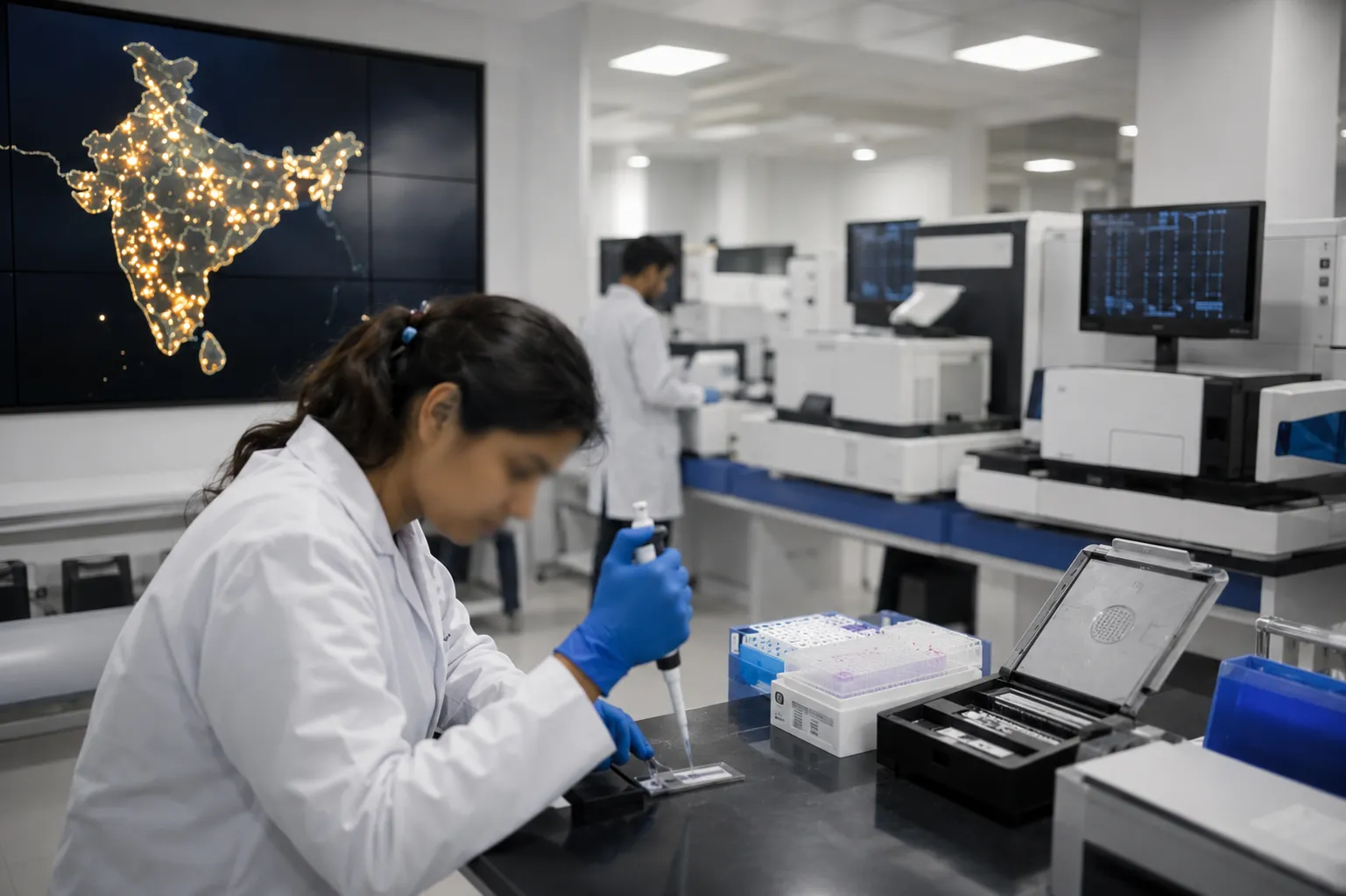
Acharya decided to build it. In 2013, she founded Mapmygenome, India's first personal genomics company. The proposition was simple: a customer spits into a tube, sends it to the Mapmygenome lab, and receives a detailed report mapping their genetic predisposition to dozens of diseases, their likely response to common medications, their carrier status for inherited conditions, and insights into their ancestry and wellness traits. The test was not a diagnosis. It was a crystal ball—a way for healthy people to peer into their own biology and make informed decisions before they got sick.
Thirteen years later, Mapmygenome has mapped the DNA of more than 100,000 Indians, built one of the largest South Asian genomic databases in the world, and become a cornerstone of India's emerging preventive healthcare ecosystem. The company has raised funding from Rajan Anandan, the Patni Family Office, and a roster of angel investors who understood, earlier than most, that personal genomics was not a niche curiosity but the foundation of 21st-century medicine. Acharya herself has become one of the most recognised voices in Indian genomics, a NASSCOM Innovation Award winner, an Aspen Fellow, and a member of the Confederation of Indian Industry's National Committee on Biotechnology. The physicist who had never studied biology has built the company that is teaching India how to read its own genetic code.
The Physicist Who Crashed a Biology Party
Anu Acharya was not supposed to be a biologist. She was a physicist—a graduate of IIT Kharagpur, one of the few women in her engineering batch, who then earned a Master's in physics from the University of Illinois. She worked at the university's supercomputing centre alongside Nobel laureates, developing computational models for complex physical systems. She then co-founded Ocimum Biosolutions, a life-sciences software company that built laboratory information management systems for researchers around the world. She was a technologist, not a scientist. But the line between technology and biology was blurring, and she could see what was coming.
The Human Genome Project, completed in 2003, had cracked open the door to a new era of medicine—an era in which disease could be predicted, prevented, and treated based on an individual's unique genetic makeup. The cost of sequencing a human genome was collapsing, following a curve even steeper than Moore's Law. The tools for interpreting genomic data were advancing rapidly, driven by the same machine-learning revolution that was transforming every other industry. And the global market for personal genomics—led by American companies like 23andMe and AncestryDNA—was exploding.
India was absent from this revolution. The country had some of the finest molecular biologists and geneticists in the world, but their work was confined to research laboratories. The idea of a consumer-facing personal genomics company—a business that would allow ordinary Indians to access their own genetic information—was considered either impractical or premature. The infrastructure was not ready. The regulatory framework was not ready. The consumer was not ready. The venture capitalists, when Acharya approached them, were not interested. Genomics, they told her, was a Western market. Indians would not pay to know their genetic risks. The business would not scale.
Acharya disagreed. She had seen the grief that a preventable genetic disease could cause, and she had seen the hunger for health information that existed among Indian consumers who were increasingly educated, increasingly affluent, and increasingly aware that the healthcare system they depended on was designed to treat them after they got sick, not to keep them well. The cousin's death was the emotional trigger. The absence of any Indian genomic database—the fact that the world's most genetically diverse population was invisible to the genomics revolution—was the intellectual one. She was not a biologist, but she understood data, and she understood that the country that mapped its own genome first would own the future of its own healthcare.
The 100,000 Genomes
The single most important strategic asset Mapmygenome has built over the past decade is not a technology platform or a brand. It is a database. The company has mapped the DNA of more than 100,000 Indians, building one of the largest repositories of South Asian genomic data in the world. The database is the moat. The database is the engine. The database is the reason the company has survived and thrived while competitors have come and gone.
Genomics is a data game. The value of a genetic test is not in the raw sequence—a string of three billion letters that means nothing to the person who reads it. The value is in the interpretation: what does this particular genetic variant mean for this particular person, given their age, their gender, their lifestyle, and their family history? The interpretation depends on comparing an individual's genome to a reference database—a collection of thousands or millions of other genomes that have been analysed and correlated with health outcomes. The larger the database, the more accurate the interpretation. The more diverse the database, the more useful it is for populations that are not well-represented in the existing reference datasets.
The existing reference datasets were almost entirely European. The landmark genomics studies that had identified the genetic variants associated with everything from heart disease to cancer had been conducted overwhelmingly on populations of European ancestry. The "reference genome" that was used as the baseline for most genetic testing was, in effect, a white, Western genome. For Indians—who represent nearly a fifth of the world's population and who carry genetic variations found nowhere else on Earth—the Western reference datasets were worse than useless. They were misleading. A genetic variant that was flagged as high-risk in a European population might be harmless in an Indian one, and a variant that was truly dangerous for Indians might not appear in the European databases at all.
Mapmygenome set out to build the reference database that India needed. The company's GenomePatri initiative—a play on "genome" and "janampatri," the Hindi word for a traditional birth chart—was designed to collect and analyse genetic data from Indians across every region, community, and demographic group. The initiative was not just a marketing campaign. It was a scientific infrastructure project, and it has produced insights that no Western genomics company could have generated. The company has identified genetic variants that are uniquely common in Indian populations—variants that affect the metabolism of common drugs, the risk of diabetes and heart disease, and the likelihood of carrying inherited conditions like thalassemia and cystic fibrosis. The database is the foundation on which every other product and service the company offers is built.
The company's offerings have expanded significantly over the years. The flagship GenomePatri test provides comprehensive insights into disease risk, drug response, inherited conditions, and wellness traits. A specialized pharmacogenomics test, MedicaMap, helps doctors and patients understand how an individual's genes affect their response to common medications—a field that is particularly important for Indians, who metabolise certain drugs differently from European populations. A newborn screening test, BabyMap, identifies genetic conditions that can be treated or managed if detected early. A cancer-specific test, OncoMap, identifies genetic mutations that increase the risk of various cancers and that can inform treatment decisions for patients who have already been diagnosed. The product range reflects the evolution of the company from a curiosity-driven personal genomics service to a clinically relevant diagnostic platform.
The Preventive Healthcare Frontier
The most significant strategic insight behind Mapmygenome's growth is not a technology or a product. It is a philosophy: that the future of Indian healthcare is not treatment. It is prevention.
The Indian healthcare system is among the most overburdened in the world. The country has roughly 0.8 doctors and 1.3 nurses per 1,000 people—among the lowest ratios of any major economy. The public-health infrastructure is underfunded, undermaintained, and concentrated in urban areas that the majority of the population cannot easily access. The private healthcare system is expensive, fragmented, and incentivised to treat illness rather than prevent it. The result is a population in which chronic diseases—diabetes, heart disease, hypertension, cancer—are diagnosed late, treated poorly, and managed at enormous cost to individuals, families, and the state.
The economics of prevention are overwhelming. A genetic test that costs a few thousand rupees can identify a person's risk of developing diabetes decades before the disease manifests, giving them time to change their diet, exercise, and lifestyle. A pharmacogenomic test can identify which blood thinner will work best for a cardiac patient, avoiding months of trial-and-error dosing and reducing the risk of a fatal clot or bleed. A carrier-screening test can identify two prospective parents who both carry the gene for thalassemia, allowing them to make informed reproductive decisions and avoid the tragedy of a child born with a devastating, lifelong disease. Each of these interventions costs a fraction of what the disease they prevent would cost to treat.
Acharya has been deliberate about positioning Mapmygenome at the centre of this preventive healthcare shift. The company's brand identity is built not around fear—"find out what diseases you might get"—but around empowerment: "know yourself, so you can take care of yourself." The marketing is aspirational rather than medical. The language is accessible rather than technical. The customer who buys a GenomePatri test is not a patient. They are a person who wants to take control of their own health, and the company treats them accordingly.
The platform has expanded beyond direct-to-consumer testing into the B2B space as well, partnering with corporations that want to offer genetic testing as part of their employee wellness programmes, with hospitals and clinics that want to integrate genomics into their diagnostic workflows, and with pharmaceutical companies and research institutions that need access to South Asian genomic data for drug development. The B2B partnerships provide a recurring revenue base that insulates the company from the volatility of the consumer market, and they position Mapmygenome as an essential infrastructure provider for the Indian healthcare ecosystem.
The company has also built a robust data privacy framework, recognising that genetic data is among the most sensitive information a person can share. The customer's DNA belongs to them—not to the company, not to a research partner, and not to a third-party data broker. The data is anonymised before it is used for research, and customers have the right to opt out of research participation entirely. The privacy framework is not just an ethical commitment. It is a competitive advantage—a source of trust in a world where the misuse of personal data has become a daily headline.
The Woman Who Read Her Own Code
The most powerful dimension of Acharya's story is not the technology or the business model. It is the personal conviction that drives it—a conviction that was forged in loss and has been sustained, for more than two decades, by a quiet, persistent belief that Indians deserve access to the same genetic knowledge that Western consumers take for granted.
Acharya is not a celebrity CEO. She does not give provocative interviews or post viral LinkedIn threads. She works. She builds. She speaks at scientific conferences and industry forums, not at startup festivals or celebrity panels. Her authority comes not from her fundraising announcements or her valuation, but from her expertise. She is one of the few Indian entrepreneurs who genuinely bridges the worlds of technology, science, and business—a physicist who taught herself genomics, a software entrepreneur who built a hardware-enabled health-tech company, a founder who has survived the funding cycles and the market scepticism that have claimed most of her peers.
The broader context is an Indian biotechnology sector that is in the early stages of a structural transformation. The same forces that reshaped IT in the 1990s—a deep pool of scientific talent, a government that is slowly liberalising the regulatory environment, and a growing recognition that the sector is strategically important—are now arriving in biotech. The pandemic accelerated the shift, demonstrating both the vulnerability of India's dependence on foreign healthcare technology and the capacity of Indian companies to develop world-class diagnostics, therapeutics, and vaccines. Mapmygenome is part of that shift—a company that was built during the years when biotech was considered uninvestable in India, and that has survived to see the market catch up to its vision.
The cousin who died of a preventable genetic disease is still dead. The grief that drove Acharya to leave a successful software career and enter an industry she had never studied is still there, transmuted over the years into something less sharp but no less powerful. The 100,000 Indians whose genomes have been mapped are the living answer to that grief. The millions who will be mapped in the years ahead—as the technology gets cheaper, as the reference database gets larger, as the culture of preventive healthcare takes root—are the reason the company exists. The physicist who taught herself genomics has built the platform that is teaching India to read its own genetic code. The code has always been there, written in the cells of every person in the country. What was missing was someone to translate it. Acharya built the translator. The work continues.


