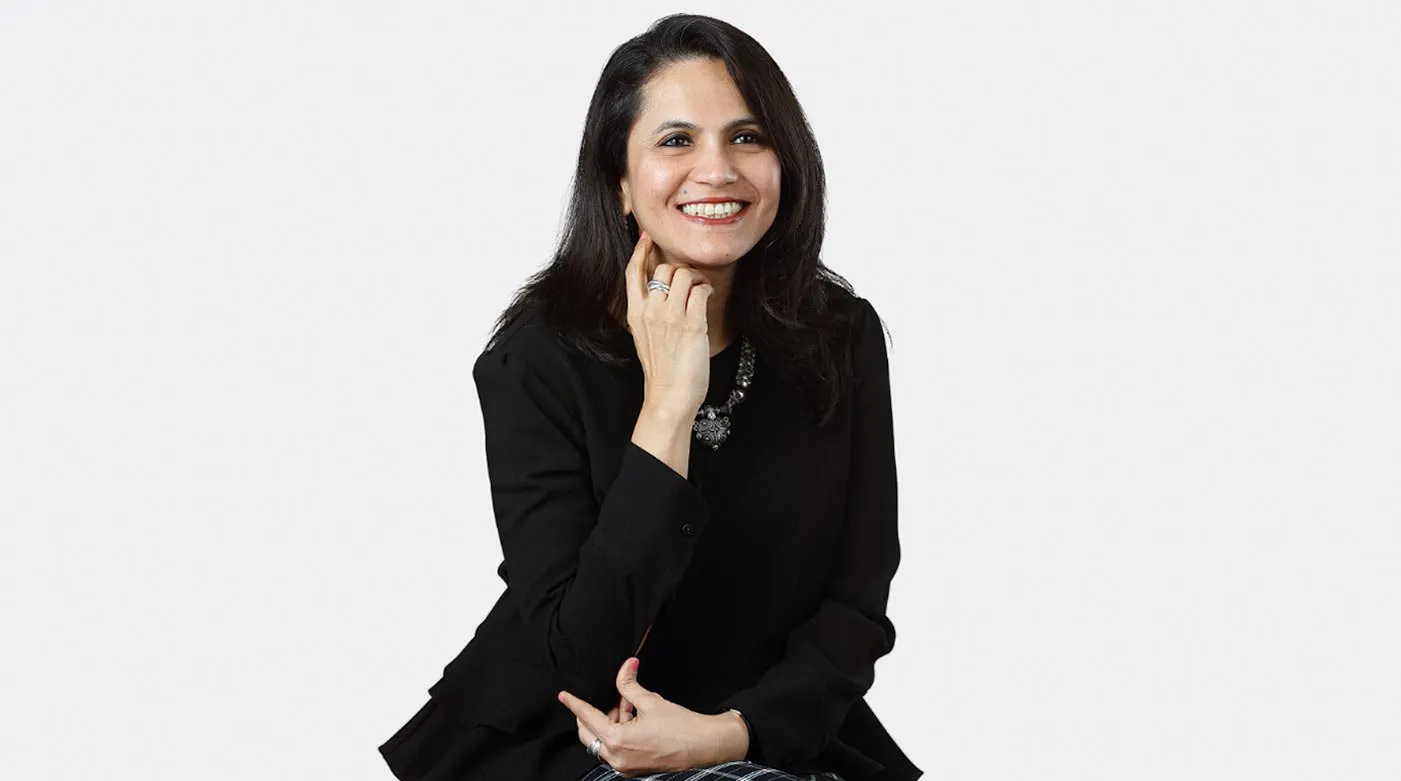
She Had No Clients, No Team, and Carte Blanche. She Built One of India's Top Design Agencies in 17 Years.
In 2008, Landor — one of the world's most respected brand and design consultancies — had no studio in India. It had strong institutional interest in the Indian market, several Indian clients already being served from its global offices, and a clear conviction that the country's corporate transformation wave was creating demand for the kind of serious, strategic brand work that Landor specialised in.
What it lacked was the person to build the India presence from the ground up.
Lulu Raghavan had spent seven years at Landor's San Francisco, New York, and London offices, working her way through the firm's global practice after starting at the company following an MBA. A pivotal period was serving as Executive Assistant to Craig Branigan, then Landor's global CEO in San Francisco — a role that gave her a strategic overview of how the entire business operated that most practitioners never get. She contributed to high-profile work including the rebranding of Jet Airways and the corporate identity development for Anil Ambani's Reliance ADAG.
When she returned to India, Branigan and the next CEO Charlie Wrench gave her a phrase that has since become central to her professional story: carte blanche. Build the India studio. Your call.
She built it.
The Numbers That Campaign Asia Put on the Record
Campaign Asia's 50 Over Fifty list for 2026 — a curated recognition of fifty brand, marketing, and media leaders aged over 50 who are shaping the future of the industry — included Lulu Raghavan on the strength of a specific and impressive set of metrics from her India leadership tenure.
Zero business in 2008 became a $6 million turnover in 2025. The team grew to more than 250 employees across Mumbai and Delhi. Margins improved by 22 per cent. Staff retention reached 89 per cent — an extraordinary figure in an industry where talent mobility is high and retaining experienced professionals requires deliberate and sustained investment in culture, compensation, and career development.
Those four numbers together tell a more complete story than any single headline could. The $6 million turnover demonstrates the commercial scale of what was built. The 250-plus employees demonstrate the operational depth. The 22 per cent margin improvement demonstrates financial discipline alongside growth. And the 89 per cent retention rate — this is the number that most leadership profiles underweight — demonstrates that the culture Raghavan built was one that people chose to stay in.
In a creative services firm, retention is the metric that most directly predicts everything else. The institutional knowledge of a brand strategist, the client relationships of a creative director, the deep understanding of a particular industry or category that takes years to develop — all of these are carried by people. A business that retains 89 per cent of its team retains 89 per cent of the knowledge, the relationships, and the capabilities that its clients pay for. A business that loses people loses all of those simultaneously.
The 89 per cent figure is Raghavan's most important business result.
The Brands She Built For India's Corporate Icons
The 17 years that Raghavan spent building Landor India produced a client portfolio that reads like a register of the most consequential brand transformations in Indian corporate history.
Tata. Mahindra. Godrej. Aditya Birla.
These are not merely India's largest companies. They are India's most complex brand architecture challenges — conglomerates with dozens of subsidiaries, brands, and products serving multiple markets, audiences, and price tiers, whose coherence and differentiation have to be managed across the full range of touchpoints simultaneously.
The Taj Hotels work that Raghavan has described publicly is illustrative of the kind of strategic brand problem that Landor's work addresses. Taj had lost its ability to command a luxury premium because the brand had fragmented across a diverse portfolio and the experience varied significantly from one property to another. The work was not to redesign a logo. It was to rethink the entire portfolio architecture — protecting the Taj brand at the very top and creating distinct, differentiated brands for every other segment — so that each brand could command its own premium in its own tier without undermining the others.
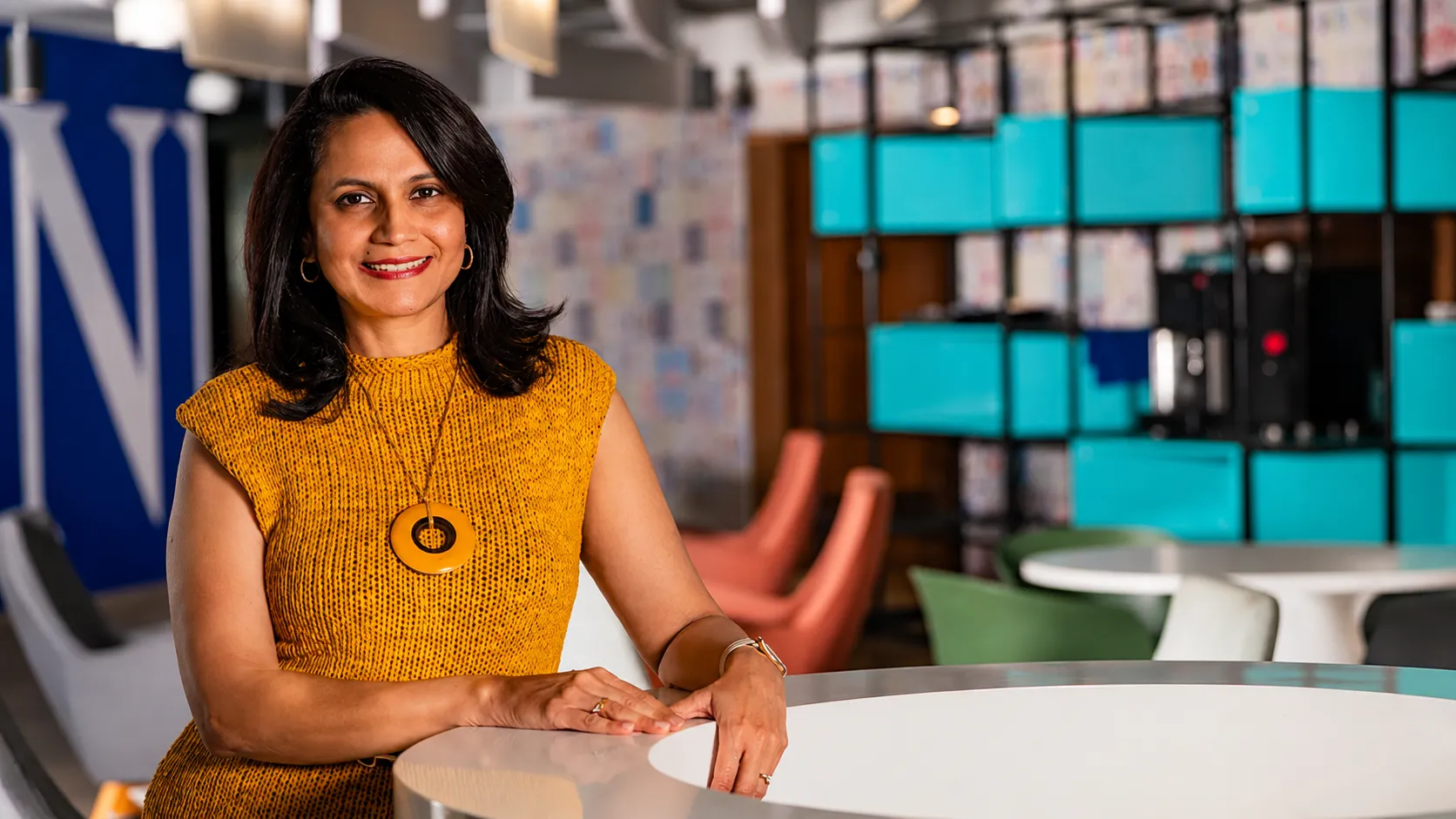
The Mahindra transformation is another case study Raghavan references when talking about brand-led organisational change: how a company's brand evolves as its aspirations evolve, and how brand strategy connects to the business strategy that the leadership is trying to execute.
These projects reflect the kind of work that defines the category of brand consultancy Landor occupies — not graphic design or advertising, but strategic brand transformation that starts with the business question and works backward to every expression of the brand.
The Landor and Fitch Merger — and What She Navigated
In 2020, Landor merged with Fitch, another WPP-owned design consultancy, to create Landor and Fitch — a larger, more diversified entity that combined Landor's brand strategy and identity expertise with Fitch's retail experience and product design capabilities. Campaign Asia's 50 Over Fifty profile specifically cites that Raghavan steered the Landor and Fitch merger transition in India.
Mergers in creative services businesses are among the most complex operational challenges that exist in professional services. The value of a creative consultancy is its people, its culture, and the quality of thinking it produces — all things that can be damaged or destroyed by a poorly managed integration. Clients who hired Landor for Landor's culture do not necessarily want a merged entity. Employees who joined Fitch for Fitch's culture may not want to work at Landor. The integration requires managing talent, client relationships, service positioning, and brand identity simultaneously.
That she navigated this while maintaining 89 per cent staff retention and growing margins by 22 per cent is the kind of operational leadership result that demonstrates something beyond strong creative vision.
In November 2023, the entity was rebranded back to Landor — dropping the Fitch name as part of a five-year strategy to expand its consultancy, design, and experience offerings. The new Landor incorporated sonic branding leaders Amp, workspace design experts BDG, and motion design specialists ManvsMachine alongside its core brand consultancy practice.
President APAC — and What the Promotion Says
In August 2024, Landor elevated Raghavan from Vice President APAC to President APAC — a promotion that gave her oversight of Landor's full Asia Pacific operations while she remained based in Mumbai.
Christian Schroeder, Global President of Landor, was specific about why: "Raghavan and I have known each other for over 20 years, and she has done an amazing job at Landor. We now have about 150 people in India across Mumbai and Delhi and have tried to build global expertise with local understanding in the country."
In her own statement on the promotion, Raghavan focused forward rather than backward: "We have a wonderfully talented and diverse team across our region and long client relationships that I'm excited to build further, together."
The APAC region is Landor's most diverse geographic portfolio — spanning India, China, Southeast Asia, Australia, and Japan — with the performance of the region driven primarily by China and India. Her Mumbai base, combined with her 25-year institutional knowledge of Landor's global practice and her proven ability to build operations from zero, makes her the right person at the right time for the role.
The Book. The Mission. The 50 Over Fifty.
Alongside the corporate career, Lulu Raghavan has built a public platform around the specific things she has learned from 25 years of building at Landor. Her book, Go Further, Faster — which she describes as a practical guide to advancing one's career — is based on her learnings from the Landor experience and contains advice for career progression and thriving in senior positions. The title captures her philosophy: not just going further, but going further at speed.
She is a founding member of WPP Stella India, a WPP initiative dedicated to mentoring the next generation of women leaders. She has served on the Cannes Lions Design Jury. She has been recognised on Campaign Asia's Women to Watch, Campaign India's Mentor of the Year, Forbes India's Impact Top 50 Women in Media, Marketing and Advertising, and Involve Heroes Global Top Executives 2025.
Campaign Asia's 50 Over Fifty 2026 recognition is specifically designed to address the underrepresentation of experience in the marketing and media industry's public discourse — to name and celebrate leaders who have accumulated the kind of institutional knowledge, strategic depth, and sustained track record that takes decades to build and that the industry often undervalues in favour of newer voices.
The woman who took carte blanche in 2008, built a $6 million studio, retained 89 per cent of her team, improved margins by 22 per cent, steered a merger, and got promoted to President APAC is exactly the person that recognition was designed for.


