She Built the World's Largest Women's Internet Before Anyone Believed Women Deserved One: How Sairee Chahal Created a 25-Million-Strong Digital Ecosystem—and Kept Building When the Market Called It Niche
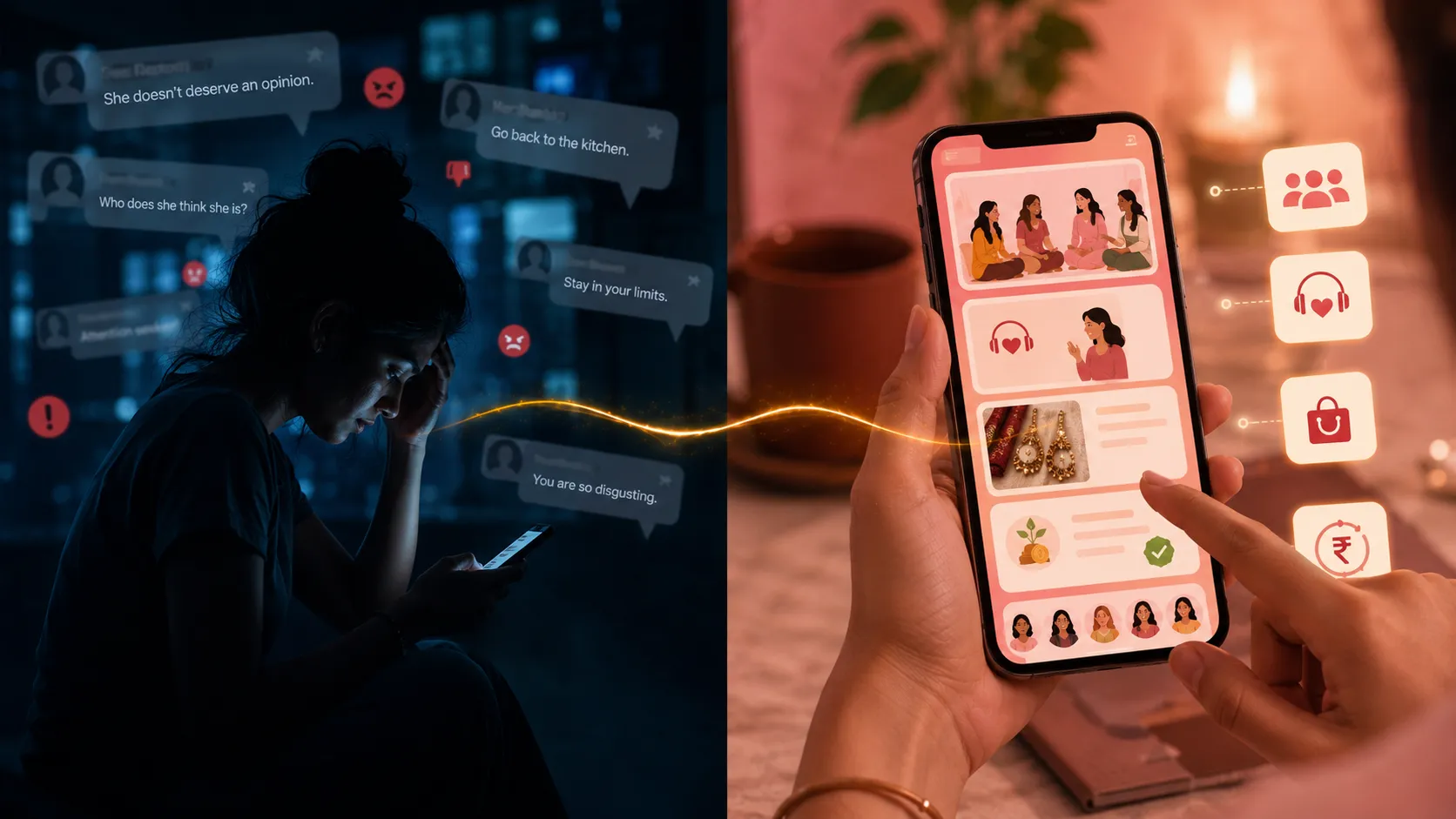
DELHI — May 25, 2026 — Sometime in 2013, Sairee Chahal looked at the internet and saw something that had been hiding in plain sight. The web had transformed commerce, media, education, and communication. It had created new industries, new fortunes, new ways of being. And yet, for the majority of Indian women—the millions who were coming online for the first time through cheap smartphones and affordable data—the internet was not designed for them. The platforms were built by men. The content was targeted at men. The communities that formed were hostile to women, who were harassed, trolled, and silenced the moment they spoke. The internet had democratised access to information, but it had not democratised access to safety, to opportunity, or to the kind of supportive community that women needed to build careers, businesses, and lives on their own terms.
Chahal was 38 years old, a serial entrepreneur who had already built two companies—the world's first daily digital newspaper for mariners, and Fleximoms, a platform that connected working mothers to flexible employment opportunities. She was not wealthy. She was not famous. She was not the kind of founder who attracted breathless venture-capital attention. But she had a conviction that was either visionary or naive, depending on whom you asked: that the internet could be rebuilt for women. Not just a website or an app, but an entire ecosystem—a parallel digital universe where women could connect, learn, earn, and grow without the predation and condescension that defined their experience on every other platform.
Thirteen years later, SHEROES is the world's largest women-only digital ecosystem, with more than 25 million members. The platform offers community forums, a free counselling helpline, mentorship, peer-to-peer support, a marketplace, and a reproductive health tracker. From SHEROES, Chahal spun out Mahila Money, a neobank and digital lending platform that provides micro-loans of up to ₹25 lakh to women entrepreneurs who have been systematically denied credit by the formal banking system. And from Mahila Money, she built Appreciate Capital, a venture fund that invests in gender-smart, world-positive companies at the earliest stages. She serves on the board of Paytm Payments Bank, one of the most significant fintech institutions in India. She is a Cartier Women's Initiative alumna, an Aspen Institute Leadership Fellow, and the recipient of the Devi Award and the Femina Achievers Award. And she has built all of this while the venture-capital ecosystem that funds technology platforms has consistently, systematically, and unapologetically dismissed the market she represents as "niche."
Twenty-five million women. Niche. The word lost its meaning somewhere in the first few million. The numbers never did.
The JNU Linguist Who Found the Internet
Sairee Chahal was not supposed to be a technology entrepreneur. She was supposed to be an academic. She studied Russian linguistics at Jawaharlal Nehru University, one of India's most politically conscious and intellectually rigorous campuses, earning a Master's degree and pursuing an MPhil in international relations. She was a child of books, raised in a family that valued education above all else, and she had imagined a life of scholarship—teaching, researching, writing. The internet changed everything.
She stumbled onto the web in the late 1990s, at a time when India had barely a few hundred thousand internet users and the idea of building a digital business was still a fringe pursuit. She was captivated—not by the technology itself, but by what it enabled. The ability to connect with people anywhere, to access information instantly, to build something that could reach millions without the gatekeepers who had controlled every previous medium—this was, to her, a kind of magic. She launched her first company, Newslink, in 1999: the world's first daily digital newspaper for mariners, with operations in India, the Philippines, and Cyprus. She was still in her twenties, still figuring out what it meant to run a business, and already she was building for a global audience.
The second company was born from personal experience. After she became a mother, Chahal discovered what millions of Indian women before her had discovered: the professional world was not designed for people who had caregiving responsibilities. The employers who had valued her skills before she had a child were suddenly less interested. The flexible work arrangements that would have allowed her to continue contributing were nonexistent. The choice presented to her—career or child—was a false binary, but the infrastructure to escape it did not exist. So she built it. Fleximoms, launched in the early 2000s, was a platform that connected working mothers to employers who offered flexible, remote, and part-time work. It was a simple idea, and it filled a gap that the formal economy had ignored for generations. The women who used Fleximoms were not asking for charity. They were asking for work that fit their lives—and Chahal built the platform that gave it to them.
The experience of building Fleximoms crystallised something that had been forming in Chahal's mind for years. The problem was not that women lacked ambition, skills, or the desire to work. The problem was that the infrastructure—the platforms, the networks, the financial systems—was not designed for them. The internet could change that. But only if someone built it. In 2014, she launched SHEROES. The name was deliberate, and the vision was vast: not just a jobs platform, not just a social network, but an ecosystem—a place where women could connect, learn, earn, and support each other, free from the harassment and hostility that defined their experience on every other platform. The internet had failed women. Chahal decided to build a better one.
The Platform That Nobody Wanted to Fund
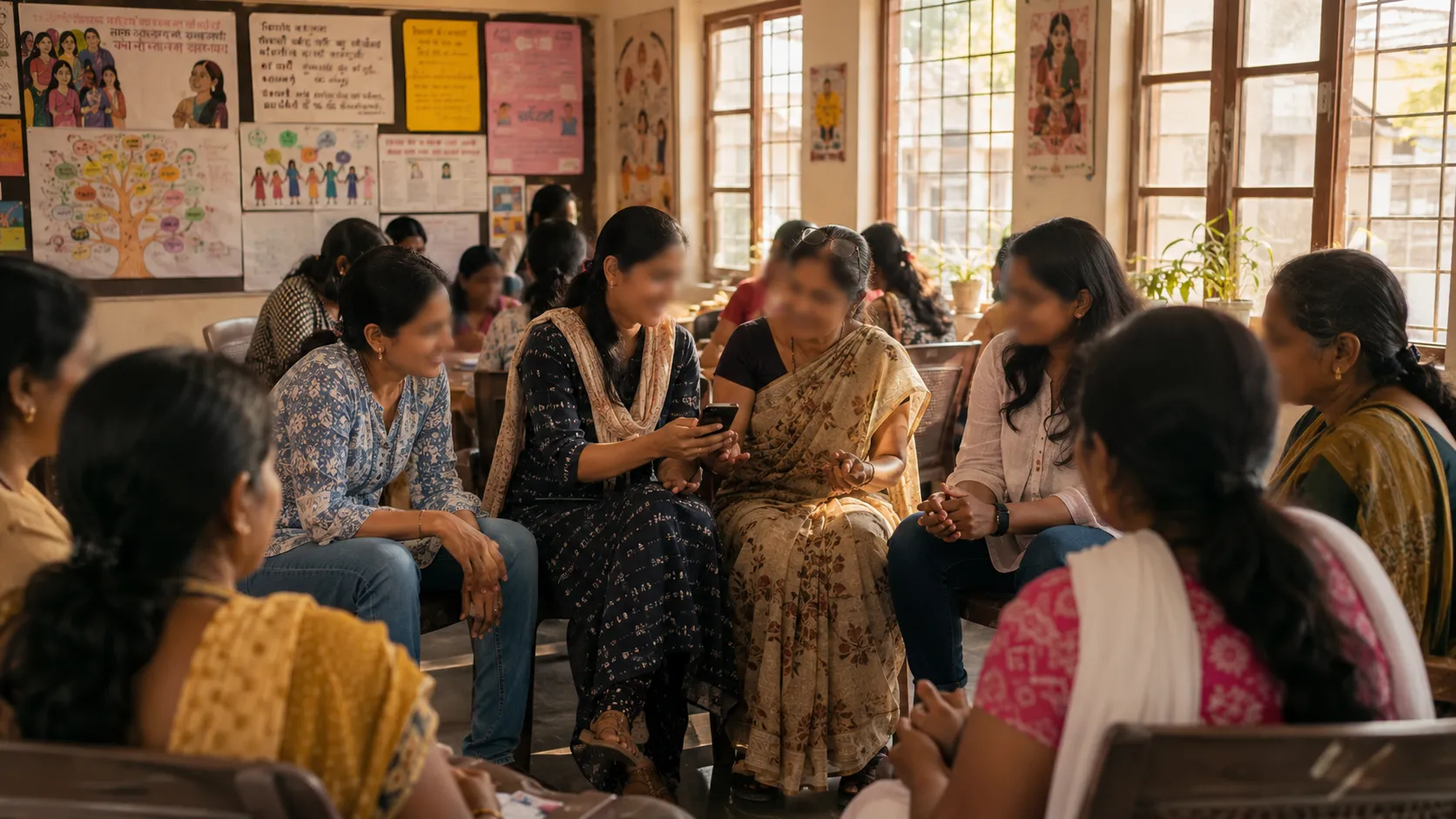
The early years of SHEROES were defined by a paradox that Chahal has never fully been able to explain. The platform was growing. Women were joining—millions of them—from cities and small towns, from wealthy households and poor ones, from every region and every community in India. They were using the platform to find jobs, to start businesses, to get counselling, to ask questions they could not ask anywhere else. The engagement metrics were extraordinary. The community was vibrant. The need was obvious and enormous.
And yet, the venture capitalists who funded the Indian startup ecosystem were almost universally uninterested. The feedback, when it came, was consistent: the market was too small, the users would not monetise, and the category—women's internet, women's community, women's anything—was a niche within a niche, unworthy of serious investment. The assumption, rarely stated but always present, was that women's platforms were lifestyle businesses, not venture-scale opportunities. The same investors who poured billions into food delivery, quick commerce, and crypto—markets that were unproven or nonexistent when the capital arrived—could not see the market that was growing right in front of them.
Chahal did not wait for them to see it. She raised what she could—a $780,000 seed round in 2015 from Quintillion Media and 500 Startups, a $1.8 million Series A in 2016 from Lumis Partners and the HR Fund, and smaller rounds from Leo Capital and angel investors. The total funding raised by SHEROES over its entire history is approximately $5 million—a figure that is roughly equivalent to what some Indian startups raise in a single seed round, and a fraction of what the largest consumer platforms have burned in a single quarter. The discipline was not a choice. It was a necessity, and it shaped the company that Chahal built.
SHEROES could not afford to subsidise growth with investor capital. It could not spend crores on advertising, offer deep discounts, or pay users to join. It had to build a product that women genuinely wanted to use, that they would tell their friends about, and that would generate revenue from day one. The platform's business model—partnerships with companies seeking to diversify their workforces, sponsored content, and a marketplace for women entrepreneurs—was built on the conviction that the community itself was the asset. The women who used SHEROES were not just users. They were participants in an economy that the formal market had failed to recognise. The company that connected them to opportunities could earn a share of the value it created. The model was not venture-scale in the traditional sense—it did not grow at triple-digit rates, did not burn capital to acquire customers, and did not produce the kind of hockey-stick revenue curves that venture capitalists expect. But it was real. It was sustainable. And it built something that the venture-funded platforms could not: trust.
The SHEROES app, which is free to download and use, now offers a counselling helpline, mentorship, peer-to-peer conversations, a marketplace, a reproductive health tracker, and resources for women at every stage of their professional and personal lives. The platform has been recognised globally for its impact—Chahal was a finalist for the Cartier Women's Initiative Award, an Aspen Institute Leadership Fellow, and the recipient of the Devi Award and Femina Achievers Award—but it has never received the kind of venture-capital validation that the Indian startup ecosystem uses to measure success. The validation it has received is different, and in Chahal's view, more meaningful: 25 million women have chosen to join. They have built communities, supported each other, and transformed their lives through a platform that was dismissed as too niche to matter. The venture capitalists who passed on SHEROES can, if they wish, explain to those 25 million women why their market is not worth investing in. Chahal is too busy building to make the argument herself.
The Neobank That Grew From the Community
The most significant strategic insight Chahal has had in the past decade was not a product feature. It was a financial observation. The women on SHEROES were not just looking for community and emotional support. They were looking for capital. Specifically, they were looking for small amounts of capital—₹20,000, ₹50,000, ₹2 lakh—to start or grow micro-businesses, and they were being systematically denied by the formal banking system.
The Indian microfinance industry, for all its scale and impact, is primarily built around group-lending models that work well for certain categories of borrowers but leave out millions of women who need individual, small-ticket, collateral-free loans. The fintech revolution that had transformed payments, investments, and consumer credit in India had largely bypassed the women entrepreneurs who formed the backbone of the informal economy. Chahal saw the gap and decided to fill it. In 2021, she launched Mahila Money—a neobank and digital lending platform that provides micro-loans of up to ₹25 lakh to women entrepreneurs, along with financial education, peer support, and a community of fellow borrowers.
The insight behind Mahila Money is that lending to women is not primarily a credit-risk problem. It is a trust and design problem. The women who need capital to grow their businesses are, by and large, creditworthy. They run small enterprises—tailoring shops, food businesses, beauty parlours, handicraft operations—that generate steady, if modest, income. They repay their loans, when they can get them, at rates that exceed the industry average. The reason they cannot get loans is not that they are bad credit risks. It is that they are invisible to the formal credit system. They have no credit scores, no documented income, and no collateral. The bank that processes a home loan or a car loan is not designed to process a ₹30,000 loan for a woman who sells homemade pickles from her kitchen. The infrastructure of credit is built for the formal economy. Mahila Money is built for the informal one.
The platform uses a combination of community trust signals, digital transaction data, and peer-network references to underwrite loans that traditional banks would reject. The loans are small, the tenures are short, and the repayment rates are high. The platform also provides financial education—helping women understand interest rates, credit scores, and business planning—so that the loan is not just a transaction but a stepping stone to financial independence. The neobank model, which combines lending with savings, insurance, and investment products, is still in its early stages, but the trajectory is clear: the millions of women who have been excluded from the formal financial system represent one of the largest untapped markets in the world, and the company that builds the most trusted, most accessible platform for that market will have a business that is measured not in millions, but in billions.
The natural extension of Mahila Money was Appreciate Capital, the venture fund Chahal co-founded in 2023. The fund invests in pre-seed and seed-stage companies that are gender-smart and world-positive—companies that are building products for women, that are led by women, or that are addressing the structural inequalities that have kept women out of the formal economy. The fund is small, as first-time funds usually are, but it represents the logical endpoint of Chahal's career: from building companies, to building platforms, to building the financial infrastructure that enables other women to build companies. The arc is not accidental. It is the product of a founder who has spent her career solving each problem as it appears, and then moving to the next one. The platform for community led to the platform for capital. The platform for capital led to the platform for investment. The work is not complete. It is simply entering its next phase.
The Woman Who Built the Women's Internet
The most striking dimension of Chahal's career is not the scale of what she has built. It is the quiet persistence with which she has built it.
The Indian startup ecosystem is defined by noise. The founders who attract the most attention are the ones who raise the largest rounds, achieve the highest valuations, and dominate the headlines. Chahal has done none of these things. She has raised modest amounts of capital, built a platform that has never been valued at unicorn status, and operated largely outside the spotlight that follows the consumer-internet economy. And yet, the company she has built reaches more than 25 million women—a user base that rivals some of the most heavily funded consumer platforms in the country. The engagement on SHEROES is not driven by advertising or discounts. It is driven by genuine need—the need for community, for support, for the kind of connection that the internet has promised since its inception and has, for the most part, failed to deliver.
The venture capitalists who dismissed the women's internet as a niche have been proven wrong—not by Chahal's arguments, but by her results. The market they could not see is visible now, and the platform she built to serve it is the largest of its kind in the world. The irony is that the same investors who once told Chahal that her market was too small are now, in the post-pandemic era, pouring money into femtech, women's health, and women's financial inclusion—the very categories she pioneered. They are entering a market she built, and the brand she established over a decade of trust-building gives her an advantage that no amount of capital can replicate. The women who joined SHEROES when it was a fledgling community platform are still there, still engaged, and still telling their friends to join. The venture capitalists who arrived late to the party are welcome to compete. But they cannot replicate thirteen years of trust.
Chahal's work has been recognised globally—the Cartier Women's Initiative, the Aspen Institute Fellowship, the Devi Award, the Femina Achievers Award, her board seat at Paytm Payments Bank—but the recognition that matters most to her is the kind that does not make headlines. It is the message from a woman in a small town who used the SHEROES helpline during a crisis and found someone to talk to. It is the woman who got a micro-loan through Mahila Money and built her tailoring business from two machines to ten. It is the woman who found a flexible job through Fleximoms and was able to keep working after she became a mother. The impact is granular, distributed, and difficult to measure, but it is real—and it is the reason Chahal has kept building through years of scepticism, underfunding, and the quiet, persistent assumption that the market she serves is not worth taking seriously. The market, it turns out, was worth taking seriously all along. The venture capitalists are only now catching up. Chahal is already on to the next problem.


