Some weeks in Indian business news resist being folded into a single, tidy theme, and this is one of them. Within the span of a few days, India's two biggest industrialists placed enormous new bets on artificial intelligence infrastructure, a Mumbai-born executive completed a nearly four-decade climb to the top of one of the world's largest consumer goods companies, a philanthropist was honored in Florida for humanitarian work, a Columbia University professor packed up his lab to help build a medical school in Kanpur, three familiar Indian-origin names continued to anchor lists of America's most powerful executives, and — in a far less celebratory register — a multi-part investigative report resurfaced uncomfortable questions about how a fugitive wanted on gambling-related charges managed to build a new life in Dubai despite an active Look-Out Circular against him.
Read individually, these are six unrelated stories spanning technology infrastructure, consumer goods, philanthropy, higher education, corporate leadership, and law enforcement accountability. Read together, they describe something more interesting: a version of Indian economic and diaspora power that has grown too large, too fast, and too varied to be captured by any single narrative — triumphant or otherwise. This week's business page requires holding all of it at once.
The Data Center Arms Race
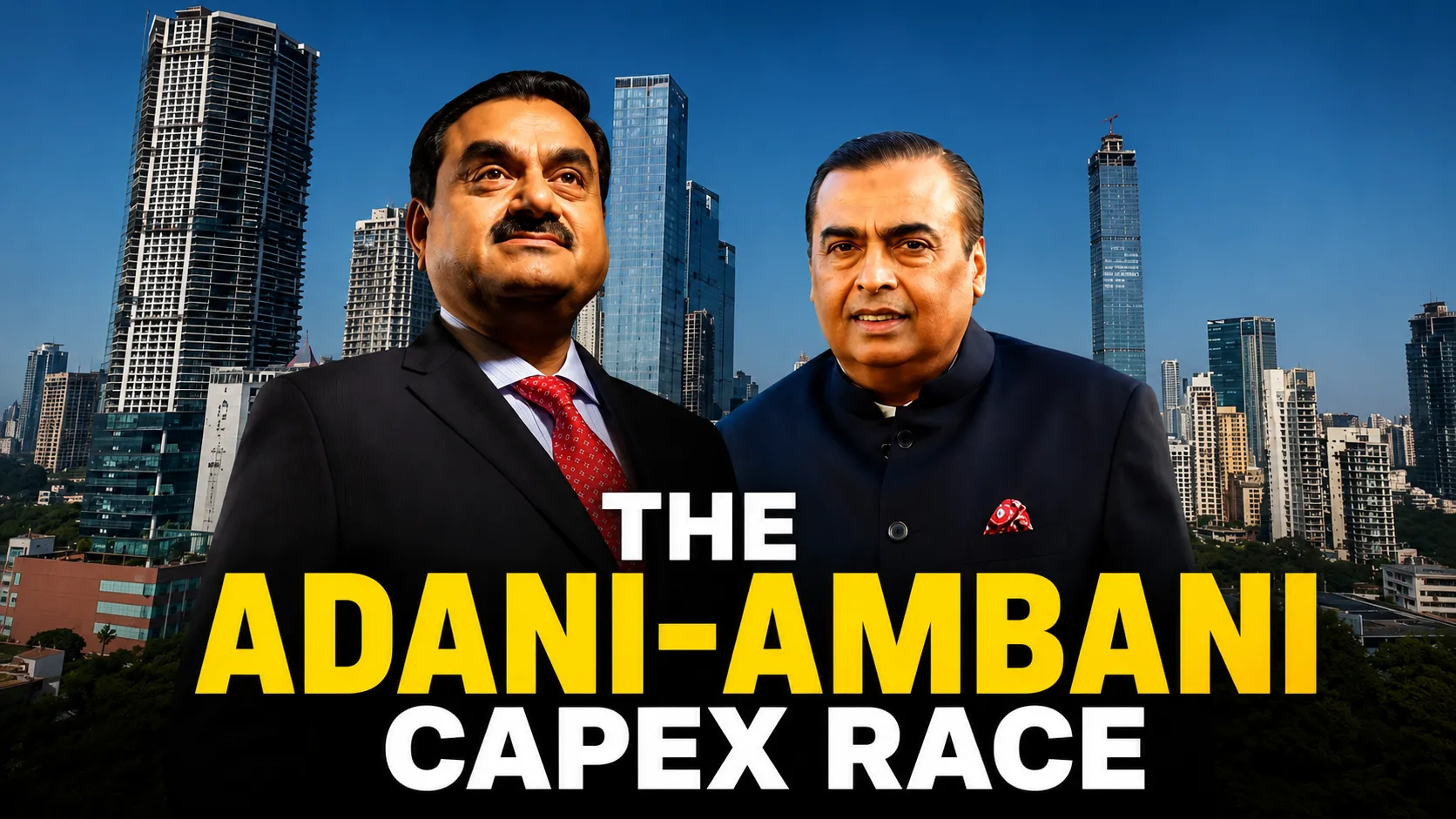
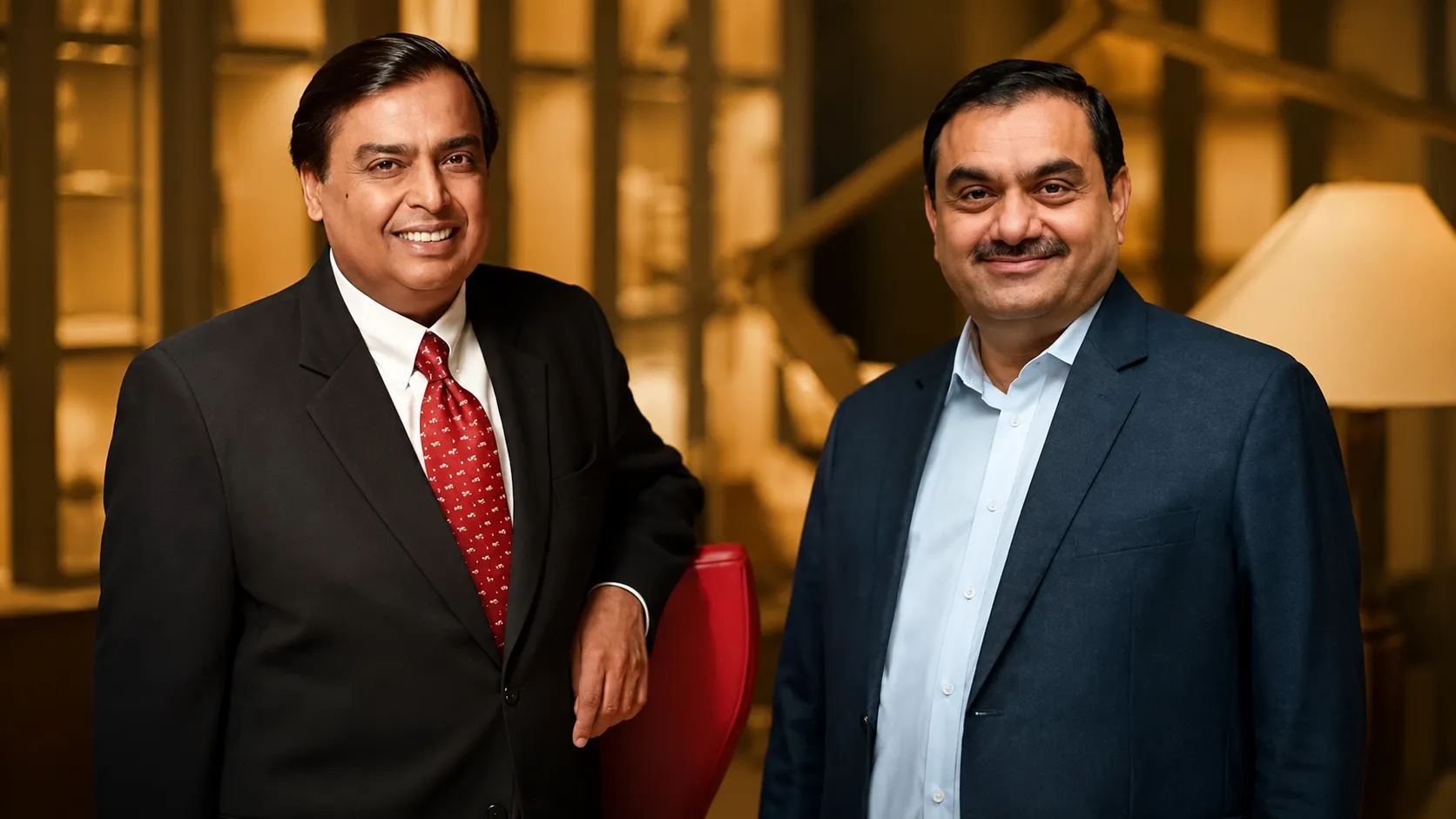
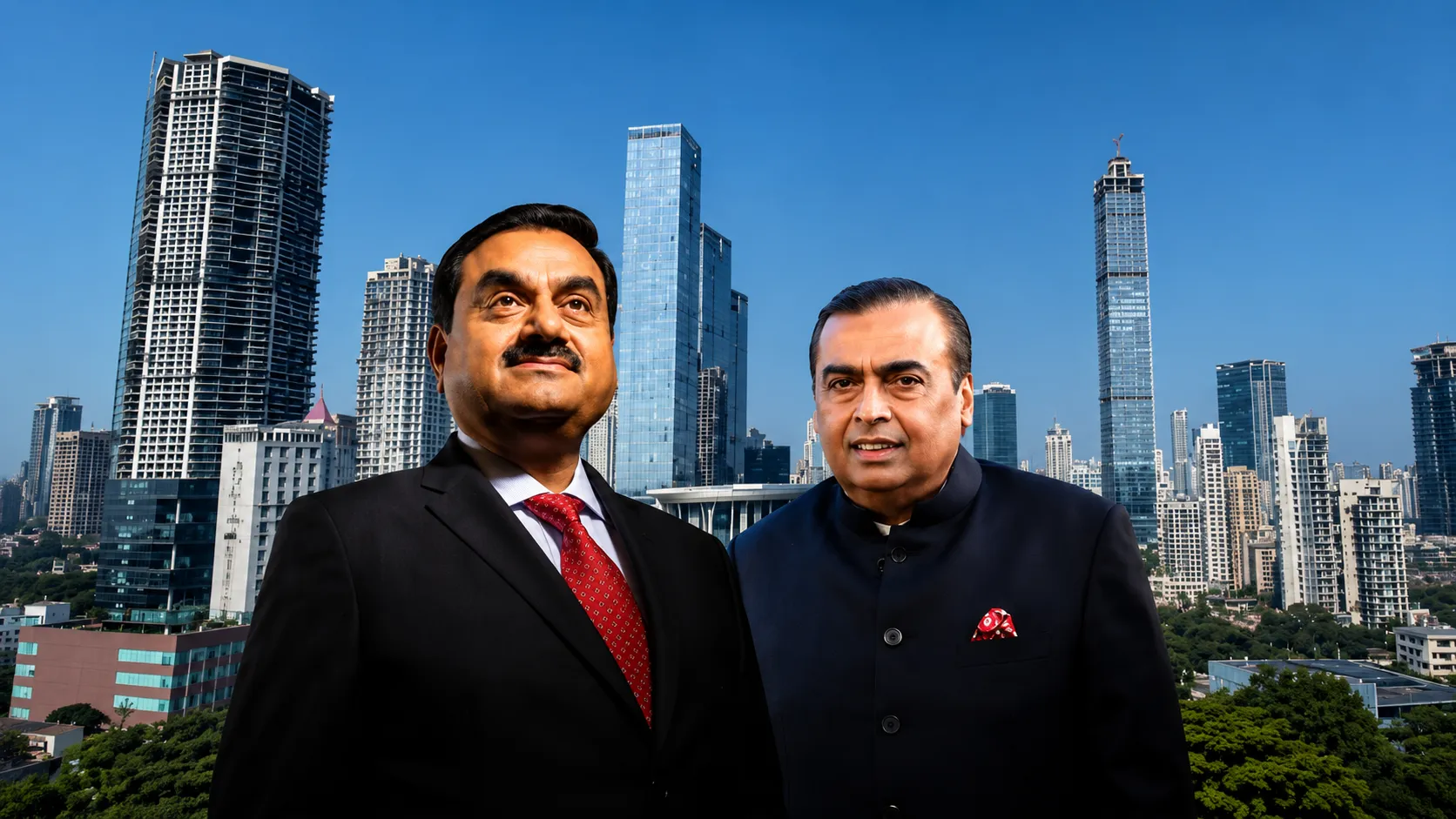
Mukesh Ambani and Gautam Adani have spent the better part of a decade being cast as rivals — competing for the title of Asia's richest man, competing for dominance in Indian ports and energy, competing, at times, for the same government contracts and the same headlines. This month, that rivalry has found a new arena: artificial intelligence infrastructure, specifically the data centers that will determine whether India can host and train the AI systems its own technology sector increasingly depends on, rather than renting that capacity from American or Chinese cloud providers.
Both conglomerates have been stepping up investment in Indian data center capacity, tapping directly into the same AI boom that has driven extraordinary valuations for chipmakers, cloud providers, and infrastructure operators worldwide. Adani's push runs through AdaniConnex, a joint venture between the Adani Group and a US-based data center operator, combining Adani's existing strength in large-scale infrastructure development and land acquisition with a partner that brings deep technical expertise in data center design and operation. Ambani's Reliance, meanwhile, is drawing on its own established telecommunications and cloud infrastructure built out over the Jio era, extending that backbone toward the far more computationally intensive demands of AI training and inference rather than simply mobile data and streaming.
The scale of capital required for this kind of infrastructure buildout is difficult to overstate. Modern AI data centers require enormous, sustained investment not just in server hardware but in power generation and grid connections capable of supplying the extraordinary energy loads that large-scale AI training demands, cooling infrastructure to manage the heat that dense server farms generate, and land parcels large enough to accommodate facilities that can sprawl across hundreds of acres. Both Ambani's and Adani's existing infrastructure businesses — telecommunications and energy in Reliance's case, ports and power generation in Adani's — position each conglomerate with exactly the kind of adjacent capabilities that make this pivot into AI infrastructure a logical extension rather than an entirely new business line built from scratch.
Why Data Centers, Why Now
The strategic logic behind this pivot is straightforward, even if the capital requirements are anything but. India has spent the past decade building one of the world's largest and most cost-competitive pools of AI and software engineering talent, producing graduates and researchers who increasingly work on frontier AI systems — but largely on infrastructure owned and operated by American technology companies, with the underlying compute capacity sitting in data centers thousands of miles away. That arrangement leaves India's AI ambitions structurally dependent on infrastructure decisions made in Silicon Valley boardrooms, a vulnerability that has become increasingly uncomfortable as AI computing capacity has emerged as one of the most strategically contested resources in the global economy.
Building domestic data center capacity at the scale Ambani and Adani are now pursuing addresses that vulnerability directly, positioning India to train and deploy AI systems on its own infrastructure, for its own companies and government agencies, without depending entirely on foreign cloud capacity that could, in principle, become subject to export controls, pricing pressure, or geopolitical friction beyond India's control. It is worth noting that this is the second major partnership of its kind between India's two richest industrialists' respective business empires; both have previously found themselves working adjacent, and at times directly together, on other pieces of India's energy transition, another sector where enormous capital requirements have occasionally pushed fierce competitors toward selective cooperation rather than pure rivalry.
Shailesh Jejurikar's Long Climb to P&G's Top Job
While Ambani and Adani were placing multi-billion-dollar bets on server farms, a considerably quieter leadership transition was unfolding at one of America's largest consumer goods companies. Shailesh Jejurikar, born in Mumbai, became chief executive of Procter & Gamble in January 2026, capping nearly four decades with the company — a tenure long enough that Jejurikar joined P&G, by some accounts, before many of his current direct reports were born.
Jejurikar's ascent stands apart from the more familiar Indian-origin technology executive narrative in one important respect: he built his entire career within a single company, rising steadily through P&G's global operations rather than arriving as an outside hire brought in to fix a specific crisis. That kind of internal, multi-decade rise has become increasingly rare among large American corporations, where boards more frequently look outside for transformational leadership. Jejurikar's promotion suggests P&G's board judged continuity, institutional knowledge, and operational discipline built over decades to be more valuable than an outsider's fresh perspective — a vote of confidence in exactly the kind of patient, methodical career trajectory that rarely generates headlines along the way, but that eventually produces leaders who understand every corner of an enormously complex global operation.
As CEO, Jejurikar is expected to focus on brand growth, supply chain resilience, and innovation across P&G's global portfolio of household and personal care products — priorities that reflect both the company's long-standing strengths and the particular pressures facing consumer goods giants navigating volatile input costs, shifting retail dynamics, and increasingly fragmented consumer preferences across different global markets. His appointment adds another name to an already lengthening list of Indian-origin executives now running some of America's most recognizable consumer-facing companies, a list that increasingly extends well beyond the technology sector into industries with far longer institutional histories and far more entrenched corporate cultures than Silicon Valley's comparatively young technology giants.
Nita Ambani's Humanitarian Recognition
On July 4, 2026, in Florida, Nita Ambani received the AAPI Humanitarian Award, recognition for philanthropic work that has, over the years, run parallel to and often out of the shadow of her husband Mukesh Ambani's far more heavily covered business empire. The award, granted by the American Association of Physicians of Indian Origin, specifically honors contributions to humanitarian causes, and its timing — arriving on America's Independence Day, in the same broad stretch of 2026 that has produced multiple anniversary-linked honors for Indian-origin achievers — situates the recognition within this year's larger pattern of formal diaspora acknowledgment.
Nita Ambani's philanthropic profile has, over decades, built substantial standing independent of her husband's business reputation, spanning education, healthcare, sports development, and cultural preservation initiatives across India. That independent standing matters for understanding what an award like the AAPI Humanitarian recognition actually signals: not simply an honor extended because of proximity to enormous private wealth, but a recognition of sustained, personally directed philanthropic engagement carried out over a long enough period, and with enough consistency, to be recognized on its own terms by a professional association built around a very different sphere of expertise — medicine — than the one most commonly associated with the Ambani name.

The Fugitive Who Got Away
Not every story in this week's roundup carries a celebratory tone. A multi-part investigative report has resurfaced uncomfortable questions about how a fugitive wanted in connection with the Mahadev betting-app case — one of the largest illegal online betting operations Indian authorities have pursued in recent years — managed to build a new life in Dubai despite an active Look-Out Circular ordering his arrest at every Indian border crossing. According to the reporting, the individual in question secured a Dubai passport and a ten-year golden visa, with the Indian consulate's own stamps appearing on travel documents that, on paper, should have triggered his detention the moment authorities became aware of his movements.
The details of the case matter less here than what they reveal about the gap between an official enforcement order and its actual, practical execution across international borders. A Look-Out Circular represents a formal Indian government instruction to detain a specific individual at ports of entry and exit; it is, at least in theory, one of the more powerful tools available to Indian law enforcement for preventing a wanted individual's international movement. The apparent failure of that mechanism in this case — allowing a fugitive tied to a scheme that reportedly caused significant harm to ordinary bettors to instead secure long-term residency status in another country — raises pointed questions about coordination between Indian enforcement agencies, consular officials abroad, and the immigration systems of countries willing to extend golden visa programs to individuals with an unresolved legal status back home.
A Professor Packs Up for Kanpur
In a considerably more hopeful register, Columbia University professor Anil K. Lalwani announced plans to return to India in July 2026 — a country he left as a child, not now as a visitor, but as an active builder of its future. Lalwani, a leading authority on hearing disorders and surgical innovation who has held senior positions at New York University, the University of California, San Francisco, and Columbia's own medical school, is relocating to help build IIT Kanpur's new medical school, a first-of-its-kind institution already drawing significant diaspora backing, including a nine-figure gift from IndiGo co-founder Rakesh Gangwal.
Lalwani's move adds a distinctive dimension to that broader institution-building story: not simply capital flowing from a successful diaspora member back to an Indian institution, but an accomplished physician-scientist relocating his own career, his own laboratory, and his own daily working life to be physically present for the project's early, formative years. That kind of personal relocation represents a considerably deeper form of diaspora reinvestment than a check alone can provide, bringing not just funding but hands-on clinical and research leadership to an institution still being built from the ground up.
The Usual Suspects, Still at the Top
Rounding out this week's coverage, familiar names continued to anchor lists of America's most powerful executives, timed to ongoing coverage of the United States' 250th anniversary of independence. Satya Nadella at Microsoft, Sundar Pichai at Alphabet and Google, and Arvind Krishna at IBM remain fixtures on essentially every roundup of Indian-origin corporate leadership published this year, their continued presence a reminder that the now well-established story of Indian-origin executives running America's largest technology companies has, by 2026, become less a series of individual breakthroughs and more a durable, structural feature of corporate America that shows no signs of receding.
Six Stories, One Uncomfortable Truth
What connects Ambani and Adani's data center race, Jejurikar's slow climb at P&G, Nita Ambani's humanitarian honor, Lalwani's relocation to Kanpur, and the now-familiar names atop Microsoft, Google, and IBM is a version of Indian business and diaspora power operating at the very top of global capability — infrastructure, consumer goods, philanthropy, medicine, and technology leadership, all moving in the same broadly upward direction. The Mahadev fugitive story sits uncomfortably alongside all of it, a reminder that the same systems capable of producing extraordinary global success can simultaneously fail, in ordinary and serious ways, to hold accountable those who exploit gaps in enforcement and oversight.
There is a temptation, in any roundup of this kind, to sort stories neatly into a column of triumphs and a column of failures, treating the former as representative of where India and its diaspora are headed and the latter as an unfortunate but marginal exception. That sorting exercise flatters the triumphant stories more than they deserve and lets the uncomfortable ones off too lightly. Ambani and Adani's data center investments will only succeed if India's regulatory and enforcement institutions — the same broad category of institution that reportedly failed to execute a Look-Out Circular in the Mahadev case — prove capable of the kind of consistent, reliable execution that large infrastructure investments require. Jejurikar's rise at P&G and Lalwani's relocation to Kanpur both depend, in their own ways, on institutions functioning as designed: corporate governance structures that reward decades of internal merit, and Indian higher education institutions capable of absorbing and productively deploying diaspora expertise and capital. None of this year's celebratory stories exist in a vacuum separate from the institutional competence — or lack of it — that the Mahadev story calls into question.
A country capable of building the data centers that power the next generation of artificial intelligence is also, evidently, a country that can lose track of a fugitive it once had firmly in its grip. Both facts are true simultaneously, and a complete account of Indian business power in 2026 has to make room for both, resisting the pull toward either uncritical celebration or reflexive cynicism. The AI infrastructure race, the corporate leadership milestones, the philanthropic honors, and the diaspora-funded institution-building are all real, all consequential, and all worth taking seriously on their own terms. So is the question of why a Look-Out Circular, one of the more powerful tools available to Indian law enforcement, apparently failed to stop a wanted man from building a new life abroad — a question that deserves the same rigorous, sustained attention that business coverage typically reserves for a record compensation package or a milestone market capitalization figure.