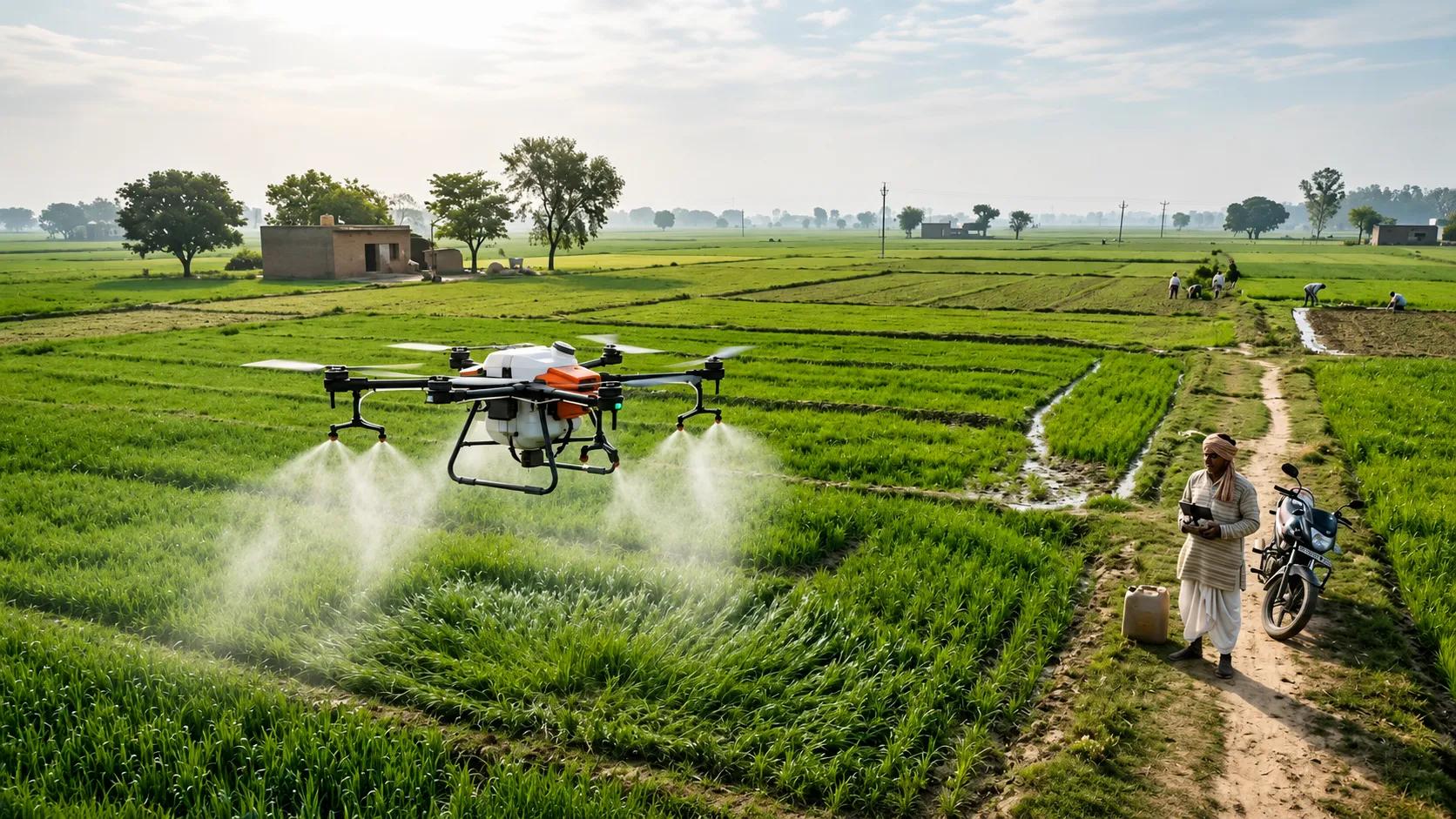
Introduction: Farming Without Soil, Anywhere
Walk into a warehouse on the outskirts of Bengaluru, a converted terrace in Chennai, or a climate-controlled shed in Ladakh, and you might find rows of lettuce, basil, strawberries, or capsicum growing with no soil in sight — roots dangling in nutrient-rich water, or nestled in coir and rockwool, fed by precisely dosed liquid nutrients on a timer. This is hydroponics: a method of cultivation that strips away the one input Indian agriculture has historically depended on most — land — and replaces it with water, light, and data.
For decades, hydroponics in India was a curiosity — something seen in research papers or boutique restaurant gardens. That has changed dramatically over the last five to seven years. What began as a niche experiment by a handful of hobbyists has become one of the fastest-growing segments of Indian agri-tech, drawing in software engineers, MBA graduates, IIT alumni, lecturers, and corporate professionals who had never farmed a day in their lives — alongside a wave of government policy support that is now actively trying to scale the model nationwide.
This report looks at four things in depth: how big the opportunity actually is, who is building it (and why so many of them come from outside farming), what the government is doing to support it, and where the industry is headed next.
The Numbers: How Big Is the Opportunity, Really?
Market estimates for India's hydroponics sector vary depending on methodology and scope, but they consistently point in one direction: rapid, sustained, double-digit growth from a still-small base.
Source / Estimate | Current Value | Projection & Growth |
IMARC Group | ~$592 million (2025) | ~$2.66 billion by 2034 (16.2% CAGR) |
DataM Intelligence | ~$200 million (2025) | ~$1.37 billion by 2033 (25.5% CAGR) |
Market Research Future | Growing steadily | Driven by 30% rise in India's fruit & vegetable demand by 2030 (FAO) |
Invest India / Govt. estimates | ~$1.4 billion (2022 baseline) | ~$5.3 billion by 2031 (17.6% CAGR) |
The wide range between estimates reflects how early-stage this market still is — but every projection agrees on the direction and the order of magnitude: a market measured in the low hundreds of millions of dollars today is expected to be measured in billions within a decade. Commercial hydroponics already accounts for the majority of this market (commonly cited around 60% share), growing at roughly 20–22% annually, while liquid hydroponic systems dominate the technology mix due to their precision and adaptability across crops.
Why hydroponics makes sense for India specifically
Water scarcity. Hydroponic systems use roughly 70–90% less water than conventional soil farming through recirculating nutrient loops — a critical advantage in a country where groundwater depletion and erratic monsoons increasingly threaten irrigation-dependent agriculture.
Shrinking arable land near cities. Rapid urbanisation has eaten into peri-urban farmland even as demand for fresh produce in cities grows. Hydroponics enables vertical, space-efficient cultivation — rooftops, warehouses, even shipping containers — close to the consumers who'll eat the produce.
Rising demand for pesticide-free, “clean” food. India's growing urban middle class is increasingly willing to pay a premium for produce grown without soil-borne pests, herbicides, or heavy pesticide use — a natural fit for the controlled environment hydroponics offers.
Year-round, weather-proof production. Controlled environment agriculture removes seasonality for many high-value crops — lettuce, herbs, strawberries, exotic vegetables — allowing consistent supply and pricing regardless of monsoon failures or heatwaves.
The Unlikely Farmers: Who's Actually Building This Industry
Perhaps the single most striking feature of India's hydroponics boom is who is leading it. Unlike most of Indian agriculture, where farming knowledge is typically inherited across generations, a large share of hydroponics ventures have been founded by people who deliberately walked away from conventional careers — software engineering, IT consulting, academia, corporate management — to build farms from scratch. Their outsider status has, in many cases, become their biggest advantage: they approach farming as a systems-and-data problem, and they're comfortable applying business thinking, technology, and formal training to a sector that has often lacked all three.
From corporate boardroom to commercial farm: Pritpal Singh, Farmcult (Chandigarh)
In 2016, Pritpal Singh left a corporate career to return to farming — but with a deliberate break from the monocropping culture common in Punjab and Haryana, where decades of wheat-and-paddy cycles have degraded soil fertility and increased disease pressure. Singh built a commercial hydroponic operation and went on to found Farmcult, a venture that now helps train and support other aspiring hydroponic farmers. His central message is unusually direct for the sector: hydroponics is not a shortcut, and Indian growers need to localise systems to Indian climate and crop conditions rather than copying Western models wholesale.
The software engineer who became Goa's hydroponics pioneer: Ajay Naik, Letcetra Agritech
Ajay Naik, a software engineer by training, founded Letcetra Agritech in Mapusa, Goa — one of India's earliest dedicated indoor hydroponic farms. Starting from a 150 sq metre setup growing lettuce, salad greens, cherry tomatoes, bell peppers, and basil, the operation expanded to multiple farms producing several tonnes of leafy greens every month, supplying pesticide-free produce to a region with a strong hospitality and restaurant market.
From IT leadership to a $1 million farm-kit business: Sriram Gopal, Future Farms
Sriram Gopal previously headed an IT firm before founding Future Farms, a Chennai-based company building affordable hydroponic farming kits. The company has scaled to cultivating around 16 crop varieties — spanning English, Asian, and Indian exotic vegetables — across roughly 15 acres distributed over ten Indian states, from Delhi to Maharashtra, Tamil Nadu, and Gujarat, reportedly crossing $1 million in turnover.
The botany lecturer turned home-hydroponics entrepreneur: S. Subba Lakshmi, Shudh Green
In Kurnool, Andhra Pradesh, S. Subba Lakshmi left a position as a botany lecturer to launch Shudh Green, a venture providing customised hydroponic farm kits for growing vegetables and leafy greens at home. With support including a research grant from Acharya N.G. Ranga Agricultural University, she designs kits tailored to each customer's available space — turning her academic background in plant science directly into a consumer-facing agri-business.
Two MBA classmates who built a soil-less training empire: Rise Hydroponics (Ahmedabad)
Tusshar Aggarwal and his co-founder Meet met while pursuing their MBAs at the Entrepreneurship Development Institute of India in Ahmedabad in 2016. They went on to build Rise Hydroponics, which has since completed dozens of large commercial projects across more than two dozen cities, developed over 25 lakh square feet of hydroponic and soil-less farming infrastructure, and trained more than 35,000 people — farmers, entrepreneurs, students, homemakers, and working professionals — in soil-less cultivation techniques. The venture also helps clients navigate and access government subsidies, effectively acting as a bridge between policy support and on-the-ground implementation.
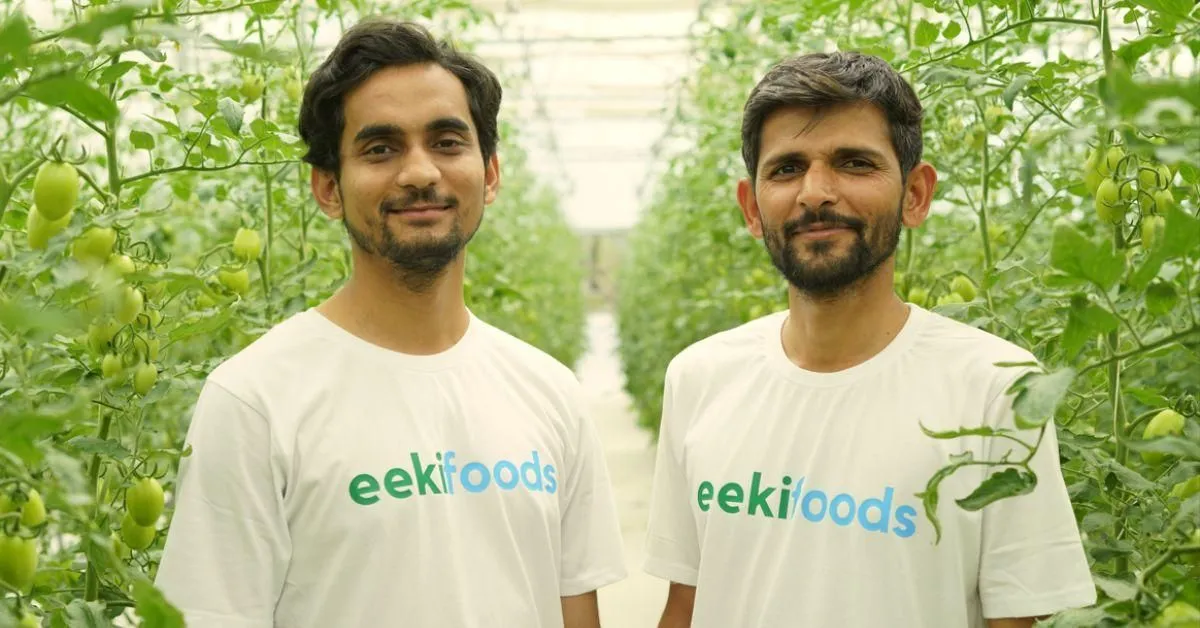
IIT-Bombay graduates and “medium-less” farming: Eeki Foods
Amit Kumar and Abhay Singh, both graduates of IIT Bombay, founded Eeki Foods around a “medium-less” farming approach — an evolution of hydroponic principles. Abhay's interest was shaped partly by exposure to advanced farming techniques during a work stint in South Korea, illustrating how international exposure to agri-tech is feeding back into Indian innovation through technically trained founders rather than traditional agricultural backgrounds.
From UX design to feeding a city: Santhosh Kumar, FreshLeaves (Kerala)
Santhosh Kumar, a former user-experience designer in the IT industry, transitioned to founding FreshLeaves in Thiruvananthapuram, applying a technology-driven approach to hydroponics despite the operational challenges posed by Kerala's humid climate. His venture has been highlighted as an example of precision farming aligned with national digital and self-reliance goals.
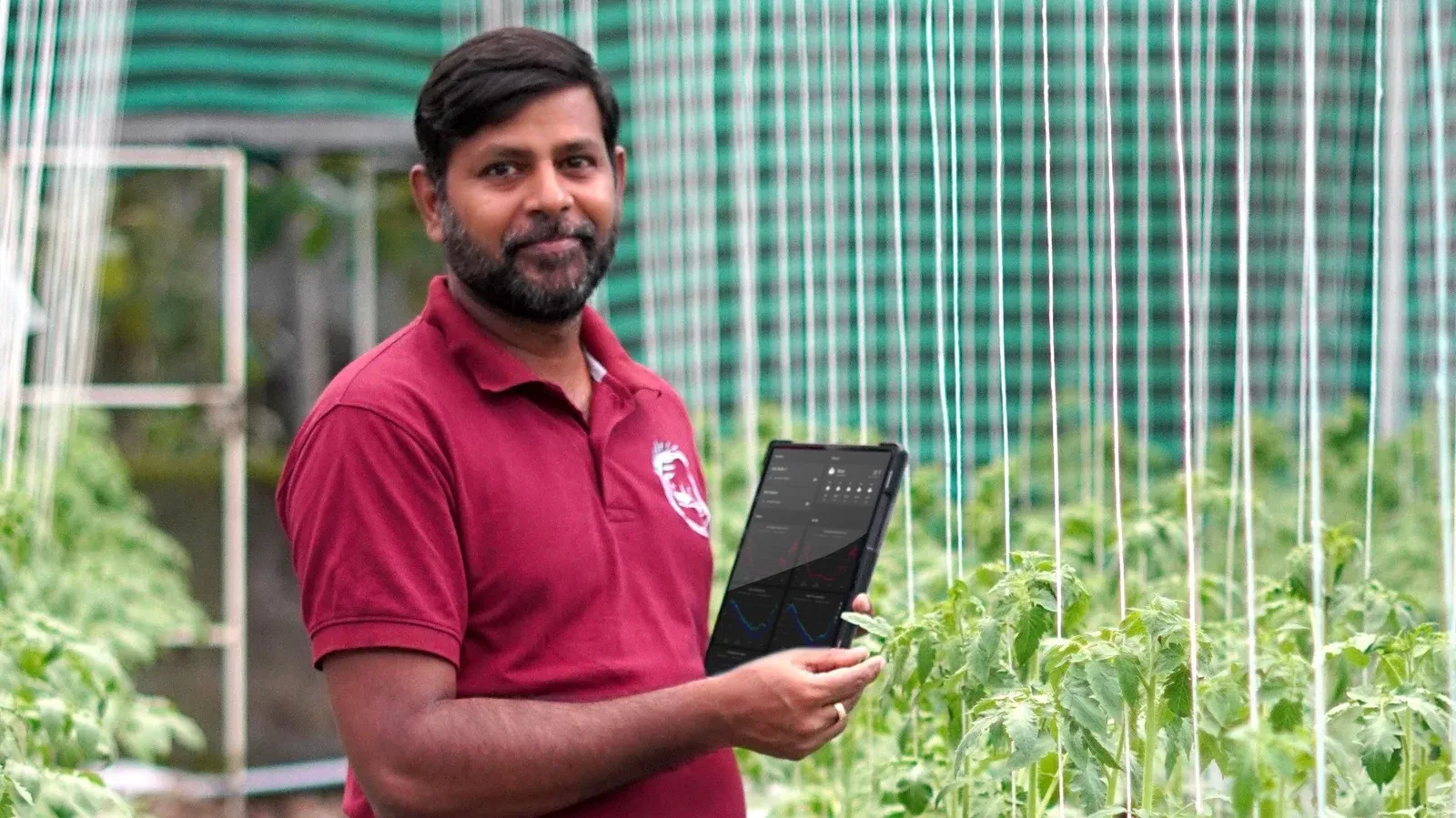
AI meets agriculture: Calvin Aranha and Farish Anfal, Krop AI (Udupi, Karnataka)
Two engineering graduates from the Mangalore Institute of Technology and Engineering founded Krop AI to integrate artificial intelligence directly into hydroponic systems — automating monitoring and control to the point of reporting roughly a 95% reduction in water usage and a 50% cut in operating costs in their pilot deployments, while aiming to make climate-resilient farming more accessible and affordable.

And the terrace-farming graduate: Sandeep, Tirupati
Not every success story involves a formal company. During the COVID-19 lockdown, a recent graduate named Sandeep — who had been expected to pursue an urban career or government job like his peers — began experimenting with hydroponic leafy greens and lettuce on his terrace using PVC pipes and nutrient solution. Despite early difficulty raising capital and convincing family members the idea was viable, he gradually built relationships with local supermarkets and residential customers in Tirupati, and now earns around ₹54,000 a month from what started as a lockdown experiment.
Taken together, these stories reveal a consistent pattern: India's hydroponics wave is being driven less by traditional agricultural extension and more by technically educated professionals applying engineering discipline, business training, and design thinking to a sector that rewards exactly those skills — precise control of inputs, data-driven iteration, and direct-to-consumer market building.
Beyond Startups: Corporates, Homemakers, and Solo Growers Building Parallel Empires
If the founder stories above show how outsiders are professionalising hydroponics, the next layer of the story shows just how wide the spectrum has become — from large corporates building hydroponics into core infrastructure projects, to homemakers running six-figure operations out of a spare room.
The corporate scale-up
Nutrifresh is widely cited as India's largest hydroponic farm project — a fully mechanised, world-class facility where production is cut, sorted, and packaged on-site with minimal human handling, and pesticide-free, RO-purified-nutrient-grown produce is shipped to major metro markets including Mumbai and Pune, reaching consumers within roughly 24 hours of harvest.
Future Farms, the Chennai-headquartered company founded by Sriram Gopal, has positioned itself as India's largest hydroponic and controlled-environment-agriculture (CEA) technology company, operating since 2014 as the go-to climate-control and turnkey hydroponics partner for corporates across India — handling everything from greenhouse installation and farm automation to instrumentation and grower management, with project experience extending to Thailand, the UAE, and Germany.
Perhaps the most unusual corporate entrant is NLC India Limited, a public-sector mining and power company. In March 2026, NLC India partnered with the Indian Institute of Science, Bengaluru, to introduce hydroponic cultivation in polyhouses built on reclaimed mine land — a striking example of heavy industry repurposing degraded land for high-tech agriculture, and a sign that hydroponics is increasingly being viewed as land-restoration infrastructure, not just a horticulture niche.
Other notable commercial-scale players include Urban Kisaan, known for hyper-local hydroponic farms supplying pesticide-free, non-GMO produce to urban consumers, and a cluster of turnkey project developers — including Barton Breeze, Kryzen Biotech, Envirevo Agritech, and Brio Hydroponics — that design and build commercial farms for investors and agri-entrepreneurs across India and, in some cases, the Gulf region.
Homemakers and solo growers: six and seven figures from a spare room
Some of the most compelling numbers in the entire sector come not from companies, but from individuals running hydroponic operations out of homes.
Sujata Agarwal, a homemaker in Odisha, built indoor hydroponic and aeroponic systems at home, starting with leafy greens before successfully growing saffron — a crop traditionally associated with Kashmir's climate, not coastal Odisha. Her venture now generates an annual income of around ₹20 lakh, and she's been held up as an example of how women and urban households can access high-value agriculture without owning farmland.
Ramveer Singh, a former full-time journalist from Bareilly, Uttar Pradesh, converted his own three-storey house into a hydroponics operation after researching the link between chemical-laden vegetables and a friend's relative's cancer diagnosis. Using Nutrient Film Technique (NFT) and Deep Flow Technique (DFT) systems built largely from PVC pipes across roughly 750 square metres and hosting over 10,000 plants, his venture — Vimpa Organic and Hydroponics — now earns around ₹70 lakh a year growing strawberries, okra, capsicum, cauliflower, and other seasonal vegetables. He has since helped other farmers, including using hydroponics setups to help a Bihar farmer salvage produce during floods.
Harishchandra Reddy in Hyderabad quit a steady job after graduating to pursue a long-held ambition of running his own hydroponic greens business, inspired by a hydroponic farm visit during an agricultural school trip. After roughly six months of self-study while raising capital, he built a polyhouse-based operation that has been cited as capable of generating revenue in the multi-crore range annually — one of the more ambitious examples of an individual scaling from a standing start to a large soil-less operation.
Mohit Nijhawan, founder of Greenu Microgreens, quit a high-paying corporate job and started a hydroponic microgreens venture with just ₹30,000 in a rented 100-square-foot space. He now sells around 6,500 trays a month at roughly ₹200 per tray — close to ₹12 lakh in monthly revenue — with healthy margins, from a footprint smaller than a typical urban bedroom.
In Andheri East, Mumbai, a hydroponic farm tucked inside an industrial building occupies just 1,000 square feet and grows 2,500 plants entirely under tube lighting and air-conditioning — with no natural sunlight and no soil — illustrating how India's most expensive real estate markets are being repurposed for food production in spaces that would otherwise be considered unusable for agriculture.
The common thread across these individual stories is striking: none of them required farmland. A spare room, a terrace, a converted house, or a slice of an industrial unit was enough — reinforcing the idea that hydroponics is, structurally, as much a real-estate and operations story as it is an agricultural one.
The Government's Push: Policy, Subsidies, and Mission-Mode Support
India's policy apparatus has moved from largely ignoring hydroponics to actively embedding it within mainstream horticulture policy — a shift that's central to understanding why the sector's growth curve is steepening.
Hydroponics enters the national agricultural strategy
In October 2024, the Union Government formally announced the incorporation of hydroponics — alongside aquaponics, precision agriculture, and vertical farming — into its broader agricultural strategy under the Mission for Integrated Development of Horticulture (MIDH), a Centrally Sponsored Scheme covering fruits, vegetables, root and tuber crops, mushrooms, spices, flowers, aromatic plants, coconut, cashew, cocoa, and bamboo. This was a significant signal: soil-less cultivation technologies are no longer treated as fringe experiments but as recognised components of India's horticulture development roadmap.
How the subsidy structure actually works
The National Horticulture Board (NHB), operating under MIDH, administers the primary subsidy programme relevant to hydroponics — “Development of Commercial Horticulture through Production and Post-Harvest Management.” Under current guidelines:
A credit-linked, back-ended subsidy of 20% of total project cost, capped at ₹25 lakh per project generally (₹30 lakh in North-East, hilly, and scheduled areas).
For capital-intensive, high-value protected cultivation (including hydroponics) and certain open-air crops like date palm, olive, and saffron, the subsidy rises to 25% of project cost, capped at ₹50 lakh (33%, capped at ₹60 lakh, in scheduled and hilly areas).
Separately, the broader protected cultivation subsidy framework under NHM/MIDH offers up to 50% subsidy for protected cultivation (polyhouses, net houses, greenhouses) versus 40% for open-field cultivation — with combined NHB/NHM/NABARD routes reportedly enabling subsidy support up to a cap as high as ₹56 lakh to ₹1 crore for larger commercial projects, depending on scheme and state.
Eligibility for hydroponic protected-cultivation subsidies generally requires a minimum project size of 1,000 square metres, with the subsidy released in instalments after joint inspection confirms progress.
“Back-ended” means the entrepreneur or farmer typically arranges bank financing first — often covering 75% of project cost through agricultural loans — with the government subsidy credited against the loan account once construction and inspection are complete, rather than paid upfront.
Additional tax incentives exist outside the subsidy framework: under the Income Tax Act, greenhouse structures purchased in the first year can qualify for accelerated (80%) depreciation, improving project economics further.
Beyond subsidies: training, R&D, and regional innovation
State agricultural universities have also stepped in directly — for instance, Acharya N.G. Ranga Agricultural University's grant supporting Shudh Green's home-hydroponics kit business shows how research institutions are funding grassroots commercial ventures, not just lab research.
Perhaps most strikingly, in December 2025 the Ladakh Regional Centre of the G.B. Pant National Institute of Himalayan Environment secured a national patent for a hydroponic cultivation system that uses treated wastewater from faecal sludge treatment plants — explicitly designed for water-scarce, climate-stressed high-altitude regions. This represents a meaningful frontier: hydroponics not just as a commercial-agriculture tool for affluent urban markets, but as an applied solution for food security in some of India's most resource-constrained geographies.
The Business Case: Where the Money Actually Comes From
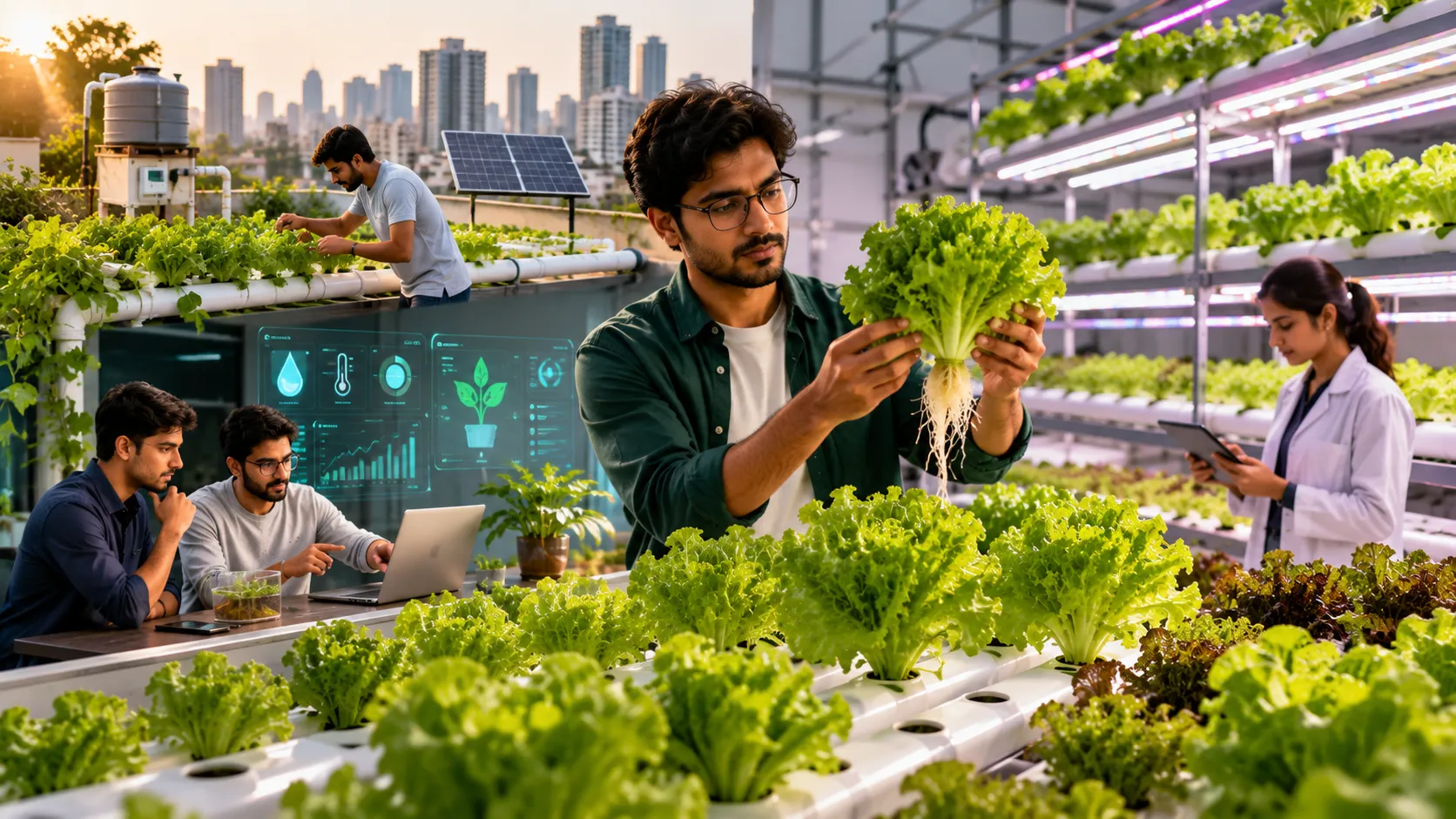
Hydroponics ventures in India have converged on a handful of overlapping revenue models, often combined within a single company:
Direct produce sales — high-value leafy greens (lettuce, basil, microgreens), exotic vegetables (bell peppers, cherry tomatoes, colored capsicum), strawberries, and herbs sold to premium retail, hotels, restaurants, and direct-to-consumer subscription channels at significant price premiums over conventionally grown equivalents.
Farm-kit and equipment sales — companies like Future Farms and Shudh Green sell ready-to-use hydroponic systems ranging from small home kits to large planter installations, opening a hardware/consumer-goods revenue stream alongside produce.
Turnkey commercial farm setup — firms such as Rise Hydroponics design and build commercial-scale hydroponic infrastructure for clients, including joint-venture models (such as a 15-acre soil-less farm project in Jewar, Uttar Pradesh, aimed at export markets).
Training and consulting — with tens of thousands of people already trained in soil-less cultivation by companies like Rise Hydroponics alone, education has become a meaningful business line in its own right, monetising the knowledge gap that exists as the industry scales faster than formal agricultural education can keep pace.
Subsidy navigation services — because the NHB/MIDH subsidy process involves credit linkage, technical vetting, and inspection-based disbursement, several hydroponics companies now explicitly offer to help clients secure government subsidies as part of their service package — turning policy complexity itself into a value-added offering.
The capsicum example from Gujarat illustrates the underlying unit economics that make this attractive: a farmer growing wheat and cotton on two acres earning roughly ₹1.5 lakh annually shifted to a 4,000 sq metre polyhouse for colored capsicum under MIDH, received a roughly ₹14 lakh subsidy against a ₹28 lakh bank loan, and produced 32 tonnes in the first crop cycle, sold at ₹45–60 per kg through local mandis and export aggregators — a revenue jump that simply isn't available through traditional row-crop farming on the same land.
The Honest Picture: Challenges the Industry Still Faces
High upfront capital costs. Even with subsidies covering 20–50% of project cost, the remaining capital — often financed through loans — represents a significant barrier for smallholder farmers without collateral or credit history.
Technical complexity and the learning curve. Nutrient balance, pH and EC (electrical conductivity) monitoring, and fertigation timing are unforgiving — incorrect management can quickly damage an entire crop cycle. Multiple industry voices stress that early-stage failures are usually management failures, not flaws in the concept itself.
Energy dependency. Climate-controlled systems, pumps, and (increasingly) AI-driven monitoring all require reliable electricity — a real constraint in regions with inconsistent power supply, though this is also driving interest in solar-powered hydroponic setups.
Market access and price premiums. Hydroponic produce often costs more to grow per unit than open-field equivalents in absolute terms, even with water and yield efficiencies; profitability depends on accessing premium retail, hospitality, or export channels willing to pay for consistency and pesticide-free positioning, which isn't uniformly available across India.
Subsidy process friction. The credit-linked, back-ended, inspection-based nature of NHB/MIDH subsidies means applicants must first secure financing and complete construction before receiving government support — a cash-flow timing challenge that has spawned an entire sub-industry of consultants to help navigate it.
The Road Ahead: Where the Industry Is Headed
Industry analysis for 2026 and beyond points to several converging trends that are likely to define the next phase of growth:
From premium add-on to core infrastructure
Automated fertigation, pH correction, and EC-based monitoring — currently treated as premium features — are expected to become standard, baseline components of commercial hydroponic systems by 2026, lowering the skill barrier for new entrants and reducing the early-failure rate that has historically deterred would-be growers.
Deeper policy integration
The 2026 policy outlook points toward more targeted support: protected cultivation subsidies, horticulture modernisation funding, cluster-based training programmes, and — critically — stronger integration with cold-chain logistics and institutional procurement (hospitals, hotels, large retail chains, government food programmes). This last point matters enormously: production capacity has been growing faster than the distribution and procurement infrastructure needed to absorb it at scale, and closing that gap is likely to be the single biggest unlock for the industry's next leg of growth.
AI and data-driven farming go mainstream
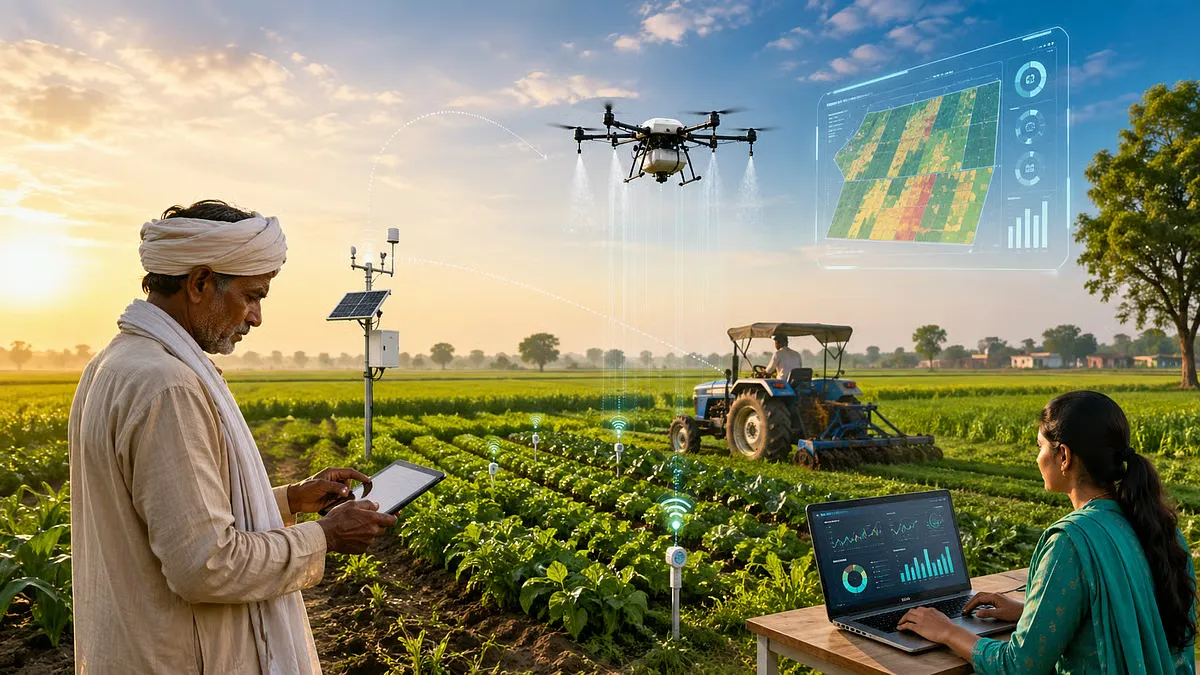
Artificial intelligence has moved from buzzword to working infrastructure across India's hydroponics sector over the last two years, and 2026 industry analysis frames “smart farming” as having shifted from a luxury add-on to an operational necessity for serious commercial growers. Several concrete shifts stand out:
From reactive to predictive management. Where early hydroponic setups relied on growers manually testing pH, EC, temperature, and humidity, current systems use networks of IoT sensors feeding data to AI models that make predictive micro-adjustments to dosing pumps and HVAC systems in real time — catching problems before they visibly affect the crop, rather than after.
Image-recognition crop health monitoring. AI-powered cameras now analyse leaf colour, texture, and shape to flag early signs of disease, pest infestation, or nutrient deficiency — turning visual inspection, traditionally a skilled human task performed a few times a day, into continuous automated surveillance.
Crop recommendation engines. Research-backed AIoT (AI + IoT) systems — including models trained on datasets from Indian agricultural bodies — can now recommend which crops to grow based on real-time nutrient, pH, and environmental readings, and suggest nutrient-solution adjustments to optimise growth, validated in lettuce trials using NFT and tower-garden methods.
Deep learning for growth prediction. Academic and applied research has demonstrated deep neural network models — running on accessible edge hardware like Arduino and Raspberry Pi — achieving around 88% accuracy in controlling tomato plant growth conditions, suggesting AI-driven control doesn't require expensive proprietary hardware to deliver meaningful results.
Homegrown AIoT products. Delhi-based Agro2o was an early mover here, building a proprietary “smart garden” — an IoT system using microcontrollers, sensors, and actuators with intelligent growing algorithms that automatically determine how much water, light, and nutrients a given plant needs and adjust accordingly, born out of a founder's effort to automate his mother's home kitchen garden.
Smarter, cheaper lighting. Energy has historically been indoor hydroponics' biggest cost bottleneck. 2026-generation LED grow lights — spectrum-adjustable and tuned to sunlight-like wavelengths for maximum photosynthetic efficiency — are reported to cut electricity costs for lighting by 40–60%, a meaningful shift for the economics of fully indoor, soil-less farms.
Remote, smartphone-based farm management. IoT platforms now let growers monitor and adjust irrigation, nutrient dosing, and climate conditions from a smartphone anywhere, with automated alerts for any deviation from optimal ranges — turning what used to require physical presence into something manageable part-time, which is part of why solo operators and homemakers have been able to scale farms alongside other commitments.
The scale of this shift is reflected in market sizing too: the global hydroponics market is projected to reach roughly $19.47 billion in 2026 alone, with smart automation, IoT monitoring, and energy-efficient lighting cited as the primary technologies separating early adopters from the rest of the field. For India, where the broader agri-and-water-tech deeptech ecosystem is gaining momentum — including dedicated industry events bringing together startups, investors, and government stakeholders around AI-enabled water intelligence and precision agriculture — the direction is clear: the next wave of competitive advantage in hydroponics will be won less on growing technique alone, and increasingly on who has the better data and automation stack.
As these systems mature and costs fall through local manufacturing and economies of scale (a trend specifically called out for South India), AI-managed hydroponics could meaningfully de-risk new entrants — turning what was once a skill-intensive craft into something closer to a managed, monitorable operation.
Expansion into resource-constrained and frontier regions
The Ladakh wastewater-based hydroponics patent signals a broader trend: hydroponics moving beyond affluent urban markets into genuinely resource-constrained regions — high-altitude areas, water-stressed zones, and locations where conventional agriculture is becoming untenable due to climate change. If technologies like treated-wastewater hydroponics can be replicated and scaled, the social impact case for hydroponics — not just the commercial one — becomes significantly stronger.
Export potential
With the FAO projecting roughly 30% growth in India's fruit and vegetable demand by 2030, and individual ventures already structuring projects explicitly around export markets (such as the Jewar, Uttar Pradesh joint venture aiming at a 15-acre export-oriented soil-less farm), hydroponics is increasingly being positioned not just to serve domestic premium demand but to make India a more competitive exporter of high-value horticultural produce — a segment where consistency, traceability, and pesticide-free certification (areas where hydroponics has structural advantages) matter most to international buyers.
Consolidation and professionalisation
As the market scales from hundreds of millions to billions of dollars over the next decade, expect to see the current landscape — dominated by founder-led ventures and training-and-consulting firms — gradually professionalise, with larger players potentially emerging through consolidation, institutional investment, and partnerships between agri-tech firms, technology companies, and traditional agribusiness, echoing patterns already visible in collaborations between tech firms and agribusiness companies highlighted across recent market research.
Conclusion: A Genuinely Different Kind of Agricultural Revolution
What makes hydroponic farming in India distinctive isn't just the technology — soil-less cultivation has existed globally for decades. It's the combination of factors converging at this particular moment: a structural water crisis that makes 70–90% water savings genuinely consequential rather than nice-to-have; an urban consumer base willing to pay premiums for clean, consistent produce; a government that has moved from indifference to active mission-mode policy support with real subsidy money attached; and — perhaps most unusually — a founder population drawn disproportionately from engineering, IT, design, and academic backgrounds who treat farming as a systems problem rather than an inherited tradition.
That last point may end up being the most important. Traditional Indian agriculture has struggled for decades with fragmented landholding, limited access to formal training, and weak market linkages. Hydroponics, almost by accident, has attracted a generation of builders who are comfortable with exactly the things the sector has lacked: precision, documentation, scalable systems thinking, and direct market access through digital channels. If the policy support holds, the cold-chain and procurement gaps close, and the cost curve continues to bend downward through local manufacturing and AI-driven automation, India's hydroponics sector looks less like a niche urban trend and more like an early chapter in a genuinely structural shift in how the country grows its food — one root system, suspended in water, at a time.