He Made a Billion Indians Cheap Data. Now He Wants to Make Intelligence Free.
In September 2016, Mukesh Ambani stood on a stage and told India that data would cost ₹0. Not nearly free. Not subsidised. Zero. The audience laughed — politely, because he was the richest man in Asia and it seemed impolite to laugh at someone who was either making the most audacious promise in Indian telecom history or suffering from a spectacular miscalculation of what running a network actually costs.
Within two years, India had the cheapest mobile data in the world. The incumbents — Airtel, Vodafone, Idea — lost hundreds of millions of customers. Jio had crossed 300 million subscribers. The pattern that would define the next decade of Indian digital life had been set: not technology adoption trickling down from the wealthy, but mass-scale infrastructure deployed at cost so low that it reached everyone simultaneously.
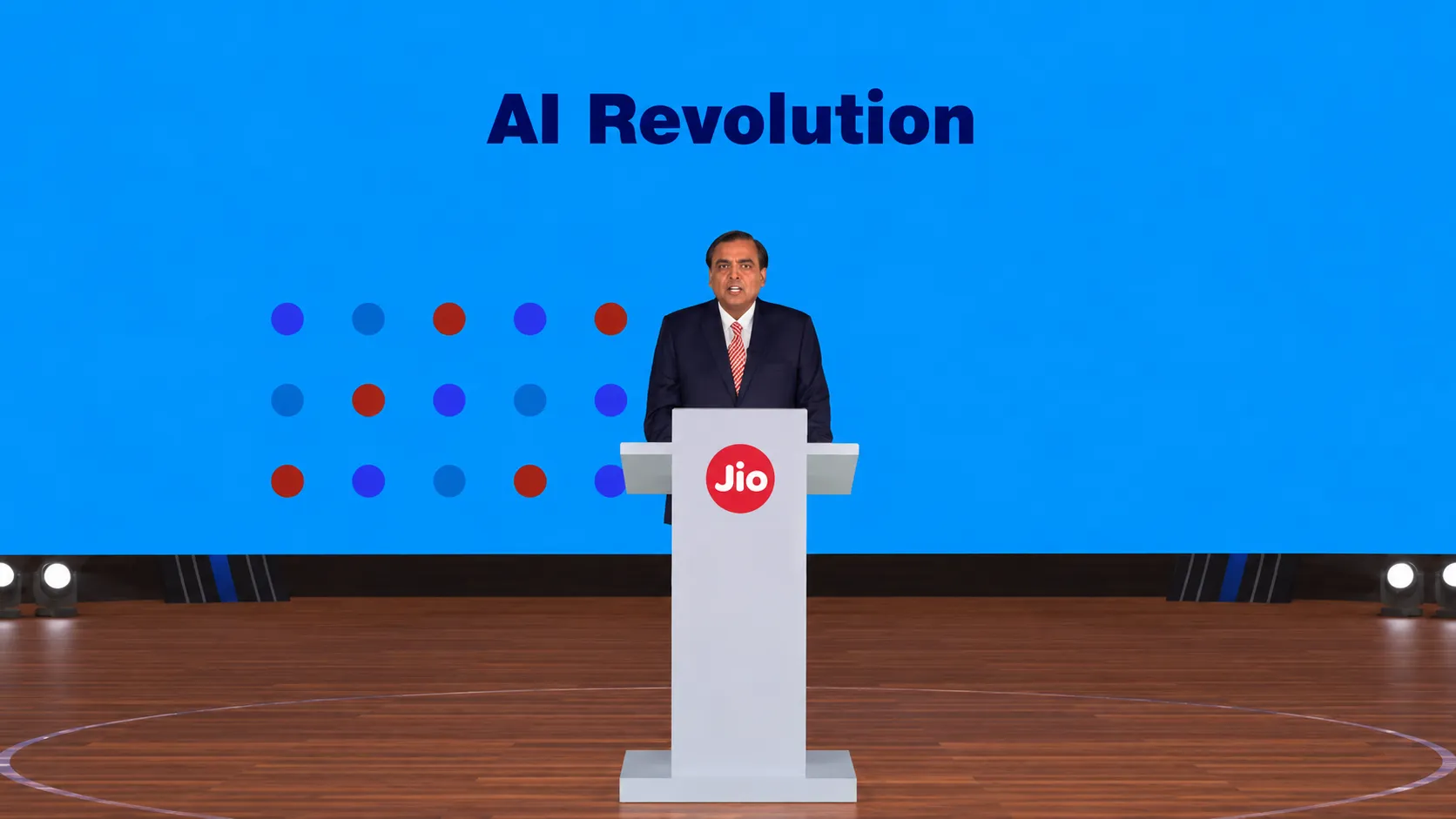
On February 19, 2026, at the India AI Impact Summit in New Delhi, Mukesh Ambani stood on a stage again. This time he said something different — but with the same strategic logic underneath it.
Then he announced the number.
Reliance Industries and Jio would invest ₹10 lakh crore — approximately $110 billion — over the next seven years in artificial intelligence infrastructure. Not apps. Not services. Infrastructure. The gigawatt-scale data centres, the nationwide edge compute network, the sovereign compute platform, the multilingual AI layer, the clean energy backbone — the physical and digital architecture on which every AI application, every Indian startup, every government service, and every small business would eventually run.
He was not building another AI company. He was building the ground everything else runs on.
The Three Pillars — and Why Each One Is Structurally Significant
Ambani's plan has three parts, and each one addresses a different failure mode in India's current AI capability.
The first is compute. Gigawatt-scale, AI-ready data centres are already under construction at Jamnagar in Gujarat. More than 120 megawatts of capacity is expected to come online in the second half of 2026 — the first phase of what Reliance has described as a build-out that will eventually make it one of the world's largest AI infrastructure operators. The Jamnagar facility is being designed to scale to multiple gigawatts — figures that would, at full build-out, place it among the largest AI compute concentrations on earth.
The choice of Jamnagar is deliberate and important. Reliance has built solar energy capacity across Kutch and Andhra Pradesh that generates up to 10 gigawatts of surplus green power. Data centres, at the scale required for serious AI training and inference workloads, are power-hungry to a degree that makes electricity supply the primary constraint on where they can be built and how fast they can expand. Jamnagar gives Reliance the clean energy surplus that makes a gigawatt-scale data centre commercially viable and, crucially, defensible from an ESG and regulatory standpoint as global sustainability requirements for AI infrastructure tighten.
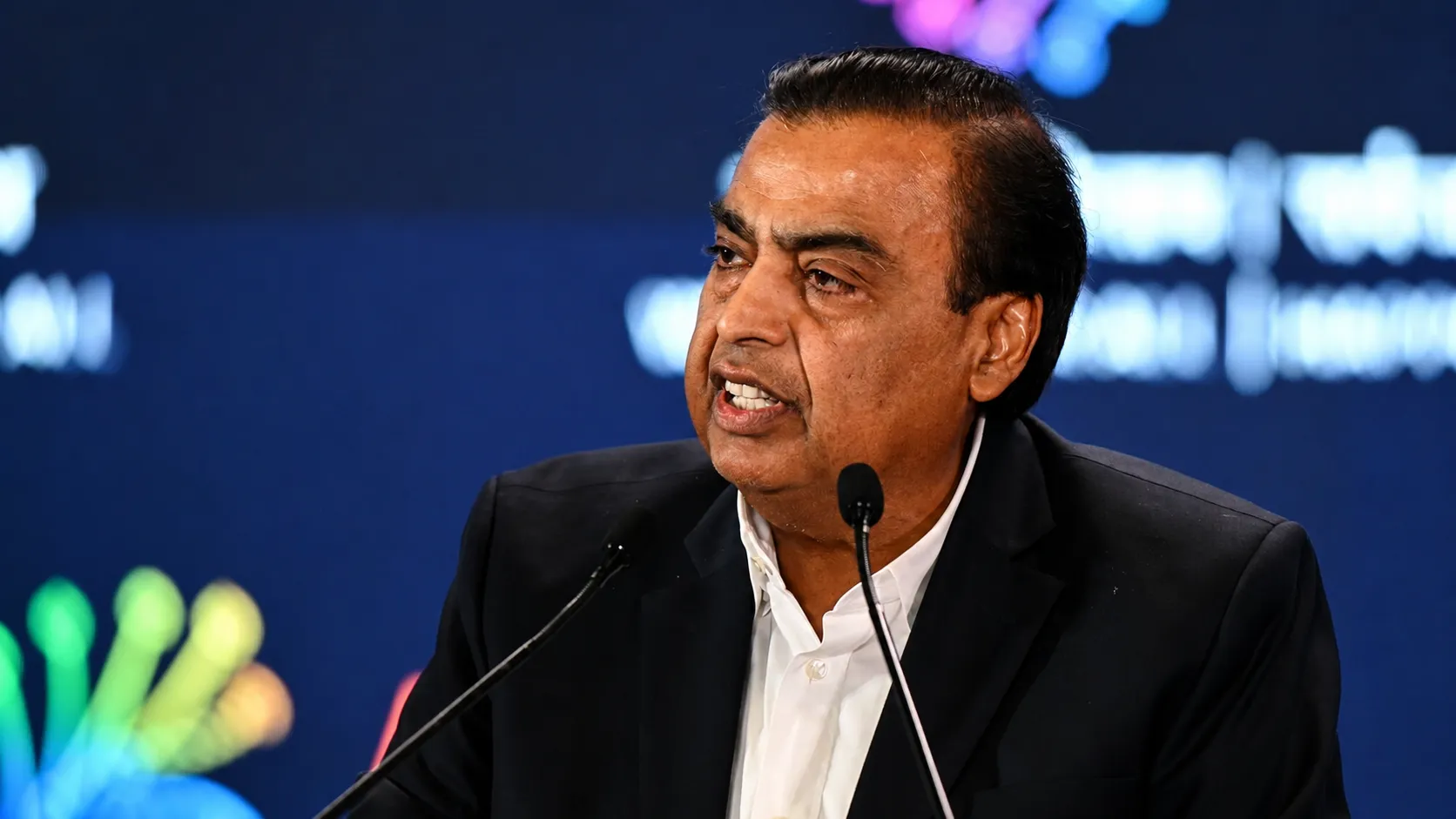
The second pillar is distribution. A nationwide edge-computing network, integrated directly into Jio's existing telecom infrastructure, is designed to deliver low-latency AI services to users wherever they are in India — not just in the data centres of Bengaluru and Mumbai where enterprise compute is currently concentrated, but in Tier 2 and Tier 3 cities, in peri-urban zones, and in the agricultural communities where Jio's 500 million subscribers are most different from the demographic that has historically defined "Indian tech."
This edge layer is what distinguishes Reliance's AI infrastructure bet from anything any Indian startup or even most technology companies globally are building. No AI company in India has 500 million people already connected to a network it owns. That distribution moat — Jio's penetration, built over a decade and still deepening — is what gives the edge compute layer its scale from day one.
The third pillar is language. Akash Ambani, who now chairs Jio, announced that the company is building AI services that work directly in 22 Indian languages. Not translated from English. Not with English as the underlying cognitive structure and Hindi or Tamil as a thin wrapper on top. Systems that understand and respond naturally in local languages — in the cadence and idiom and contextual register of the language as it is actually spoken, not as it translates from an English original.
What Reliance Intelligence Actually Is
The vehicle for all of this is a wholly-owned subsidiary called Reliance Intelligence — announced at the 2025 AGM and elaborated at the 2026 AGM and AI Impact Summit. It is the dedicated legal and operational entity that houses Jio's AI infrastructure ambitions, distinct from Jio's existing telecom and consumer internet business.
Reliance Intelligence is building four AI products that deserve specific attention because they tell you who the actual target user is — and it is not the enterprise CIO or the tech-forward startup.
JioShikshak is an adaptive learning platform for education, operating in 22 languages. The name means "teacher" in Hindi. The design target is the student who cannot afford private tuition, who studies in a regional medium school, and who has historically been excluded from the personalised learning tools that English-language EdTech has built for more affluent users.
JioArogyAI is a rapid medical guidance platform. The name means "health" in Sanskrit. At scale, it is aimed at the hundreds of millions of Indians who have a Jio SIM but do not have easy access to a qualified doctor — providing basic medical triage and guidance at zero marginal cost through the same network they already use for everything else.
JioKrishi is aimed specifically at India's 140 million farmers. Kisan means farmer. The product is designed to help agricultural workers increase yields through AI-guided advice on soil conditions, weather patterns, pest management, and market pricing — in languages and at a price point that the farming community can actually access.
These are not the products of a company building AI for the enterprise market. They are the products of a company that watched Jio achieve 500 million subscribers by building for India's median user rather than its top decile — and has drawn the exact same lesson for AI.
The Five Principles — and the Competitive Picture They Map
Ambani announced five guiding principles for Jio Intelligence at the AI Impact Summit, and reading them together reveals a coherent strategic positioning that separates Reliance from both global AI labs and Indian startup competitors.
First: AI for deep-tech, manufacturing, and the informal sector. This is a deliberate signal that Reliance is not chasing the consumer app market — it is targeting the sectors where AI creates value at the level of national economic productivity, not personal entertainment.
Second: World-leading multilingual AI. The 22-language commitment is not a feature. It is a moat. Building genuinely capable AI systems in Bhojpuri, Maithili, Odia, and 18 other Indian languages requires training data, engineering investment, and linguistic expertise that most global AI labs have not prioritised. If Reliance executes on this, it creates a capability that is structurally hard for OpenAI or Google to replicate quickly, because the value is not in the model architecture but in the data and the cultural knowledge embedded in it.
Third: Responsibility, security, and data residency. This is the sovereignty argument made explicit. Indian AI data processed on Indian infrastructure under Indian regulatory frameworks is increasingly relevant as the geopolitical context around data sovereignty tightens globally. Reliance's infrastructure-first approach positions it as the natural provider of compliant AI compute for Indian enterprises, government services, and regulated industries.
Fourth: Creating high-skill employment. The data centre build-out, the research partnerships with Indian institutions, the supplier ecosystem that gigawatt-scale infrastructure requires — these are not incidental employment effects. They are a stated policy goal, and one that aligns Reliance's commercial ambitions with the Indian government's economic development agenda in ways that make government partnership and regulatory alignment easier to sustain.
Fifth: Building a robust AI ecosystem with enterprises, startups, and research institutions. This is the platform play — the recognition that Reliance's most durable value is not as an AI product company but as the infrastructure layer on which other AI products are built. If you are an Indian startup trying to train a model or run inference at scale, and Reliance offers you sovereign Indian compute at prices competitive with AWS and Azure, you have a commercially and politically obvious reason to use Reliance Intelligence instead.

The Context: India's Wider AI Infrastructure Race
Ambani's announcement does not stand alone. It arrives inside a year when India's AI infrastructure ambitions have become, for the first time, plausibly concrete.
Adani Group announced plans to invest approximately $100 billion in AI data centres in the same week as the Reliance announcement at the AI Impact Summit. OpenAI has partnered with Tata Group to develop approximately 100 megawatts of AI capacity, with plans to scale to one gigawatt. The Indian government expects more than $200 billion in AI infrastructure spending in India over the next two years. Google has already struck a deal with Jio to offer free Gemini AI Pro access to millions of subscribers.
India's position in this race is unusual and underappreciated. Unlike most major economies, India already has four things simultaneously: the world's largest pool of English-speaking technical talent, a digital public infrastructure (Aadhaar, UPI, Jan Dhan) that is among the most sophisticated on earth, a consumer population of 1.4 billion that is already mobile-first, and a governance structure that is actively incentivising domestic AI capability over import dependency.
What India has historically lacked is the physical compute infrastructure — the GPU clusters, the data centres, the fibre density — that converts those advantages into actual AI capability. Reliance's ₹10 lakh crore bet is, in essence, a wager that India's position at the top of the value chain in AI is primarily constrained by compute availability, and that Reliance is uniquely positioned to remove that constraint.
Ambani's description of the investment is the clearest articulation of the strategic logic:
Patient, disciplined, nation-building. Three words that describe Jio's original telecom build-out exactly. And the Jio analogy is instructive not just as rhetoric but as history. Jio was widely dismissed as financially reckless when it launched free data in 2016. The investment thesis looked insane by the short-term standards of quarterly returns. It turned out to be one of the most value-generating infrastructure builds in Indian corporate history.
The Question Nobody Is Asking
Reliance's AI ambition is the most discussed corporate story in Indian technology right now. But the question worth asking is not whether Ambani can build the data centres — he demonstrably can, and is. It is whether the product layer, the application ecosystem, and the talent retention mechanisms will be sufficient to convert raw compute into the kind of compounding AI capability that the sovereign AI vision requires.
Building infrastructure is Reliance's core competency. Building AI products that achieve product-market fit, attract the best researchers, and compete with OpenAI, Google DeepMind, and the Chinese frontier labs on model quality — that is a different capability, and one that Reliance is still building.
The multilingual AI bet is the right place to build a moat. JioShikshak, JioArogyAI, and JioKrishi are the right products to build for India's actual demographics. The green energy-powered compute in Jamnagar is the right infrastructure for a world that will increasingly hold AI compute to environmental account.
And the pricing philosophy — reduce the cost of intelligence as dramatically as we reduced the cost of data — is the right strategic posture for a company that wants to be the default AI layer for the next billion people who are not yet meaningfully participating in the AI transition.
Mukesh Ambani is not building another AI company. He is building what every AI company in India will eventually need to use. Whether that becomes India's sovereign AI backbone — or a very expensive infrastructure bet that the market routes around — will depend on what happens in the product layer on top of the compute.
But the compute, for the first time, is coming. India's AI ambition just got a foundation.