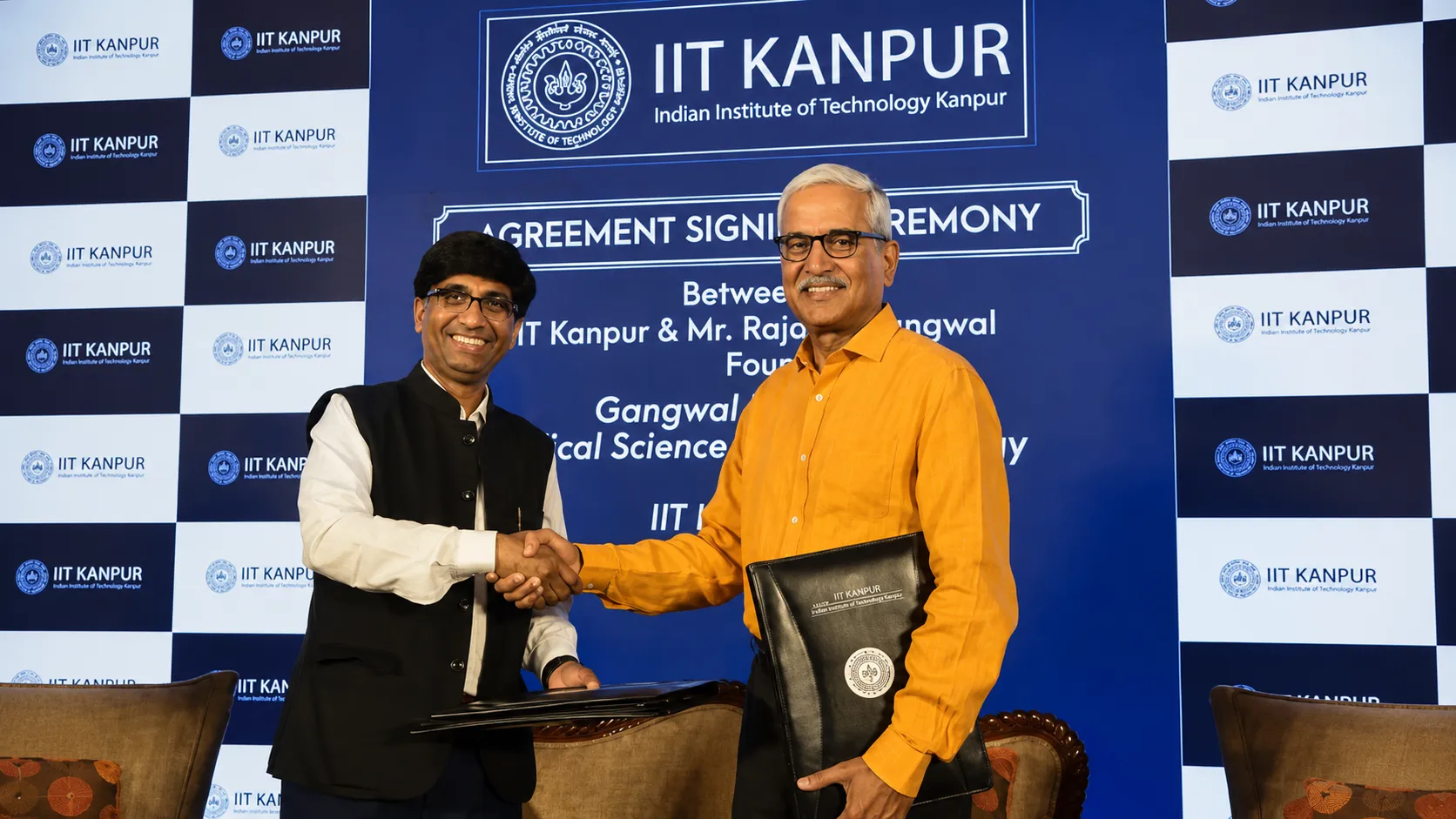
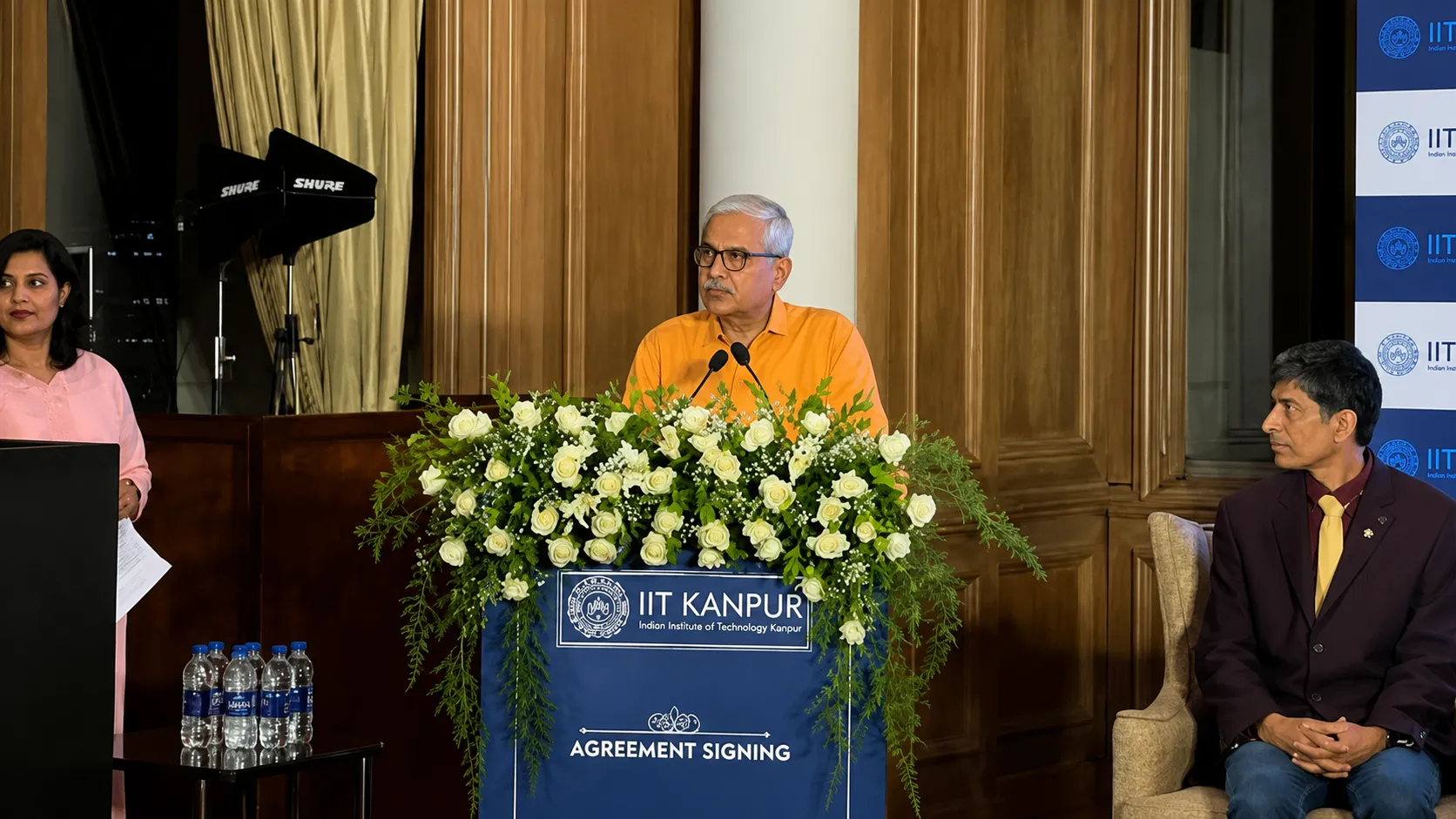
There is a particular kind of homecoming that does not involve a plane ticket. Rakesh Gangwal, the Indian American businessman who co-founded IndiGo and later chaired US Airways Group, has not needed to relocate back to India to shape its future. Instead, he has committed more than ₹100 crore — over ten million dollars — to help build something that did not exist at his alma mater until now: a medical school at IIT Kanpur, conceived as a first-of-its-kind institution fusing engineering and technology education with the training of physicians.
The gift places Gangwal among the most significant private backers of an Indian public education initiative in recent memory, and it arrives as part of a broader, quietly accelerating pattern: members of the Indian diaspora, having built substantial wealth and influence abroad, increasingly choosing to direct both back into the institutions that first trained them, rather than treating philanthropy toward India as a peripheral gesture layered on top of lives built entirely elsewhere.
From Kanpur to the Cockpit of Indian Aviation
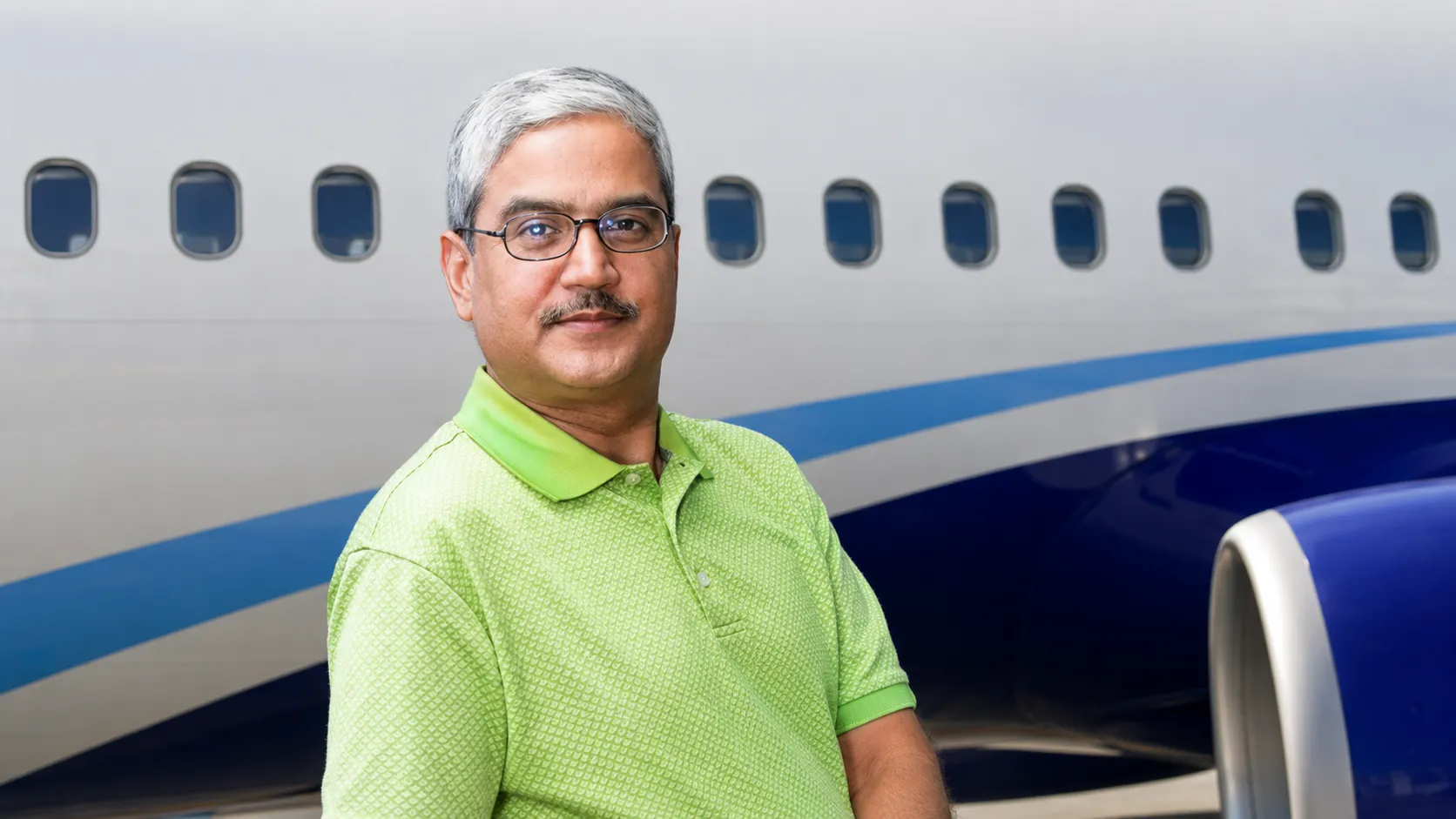
Gangwal's own trajectory helps explain why this particular gift carries the weight it does. An IIT Kanpur graduate, he went on to build a career in the United States that took him through some of the aviation industry's most consequential leadership roles, eventually co-founding IndiGo — the airline that would go on to fundamentally reshape Indian domestic air travel, turning flying from an occasional luxury into a routine mode of transport for a rapidly growing middle class. He also served as chairman of US Airways Group, giving him a rare vantage point spanning both Indian and American aviation at the highest level.
That dual perspective — building one of India's most transformative consumer businesses while simultaneously holding senior leadership in American aviation — placed Gangwal in an unusually well-positioned category of diaspora figure: someone whose credibility in India rests not on nostalgia for a country he left behind, but on having built something in India that tens of millions of people now use every year. IndiGo's rise is not an abstract success story for Gangwal; it is a tangible transformation of everyday Indian life that he helped engineer, and that track record carries weight when he now turns his attention to a very different kind of institution-building.
A First-of-Its-Kind Institution
IIT Kanpur's new medical school is not simply another addition to India's already crowded landscape of medical colleges. It is being conceived as a genuinely first-of-its-kind initiative, one that integrates technology and healthcare education from the ground up, rather than bolting a conventional medical curriculum onto an engineering institution as an afterthought. The premise is that the next generation of Indian physicians trained at an institution built primarily around engineering, computer science, and applied technology will bring a fundamentally different set of instincts to medicine than physicians trained in traditional medical colleges — instincts shaped by data, systems thinking, and technological fluency from their very first year of training.
That premise has proven attractive enough to draw support well beyond Gangwal alone. He is joined in the project's Founder's Circle by fellow IIT Kanpur alumni, including Muktesh “Micky” Pant, Dr. Dev Joneja, and Anil Bansal — each bringing not just capital but decades of professional experience built in some of the world's most demanding industries. The Founder's Circle model itself reflects a deliberate choice about how this kind of diaspora giving should work: rather than a single benefactor writing a check and stepping back, the project has assembled a coordinated group of alumni willing to lend their reputations, professional networks, and ongoing engagement, not simply their money.
From Remittances to Institution-Building
The scale and structure of this gift reflect a broader shift that has been building across the Indian diaspora for years, one that a recent report — India and its Diaspora: Partners in Progress — has attempted to quantify. The report estimates that more than 35 million people of Indian heritage now live across more than 200 countries, with a combined annual income estimated at roughly $730 billion, a figure large enough to function as an independent economic force, entirely apart from India's own domestic GDP. For decades, the most visible economic connection between that diaspora and India ran through remittances — money sent home to support individual families, month after month, a vital but fundamentally private and transactional form of connection.
What the IIT Kanpur medical school gift represents is a different kind of connection entirely. A remittance is a transfer, flowing from one individual to another with no structural ambition beyond that immediate support. A ₹100-crore commitment to build a new category of medical school, backed by a coordinated group of named alumni willing to attach their professional reputations to the project, is closer to an investment — one measured not in immediate returns but in the kind of long-horizon institution-building that took countries like the United States the better part of a century to accomplish through their own university endowment systems.
The report's underlying numbers help explain why gifts of this scale, once rare, are becoming more common rather than less. A diaspora collectively earning an estimated $730 billion annually represents a pool of capital roughly comparable to the GDP of a mid-sized nation, concentrated disproportionately among professionals in fields — technology, medicine, finance, aviation — where individual wealth accumulation over a multi-decade career abroad can reach the kind of scale that makes eight- and nine-figure philanthropic commitments genuinely feasible for a meaningful number of individuals, not just a handful of outlier billionaires.
Why Alumni Networks Matter as Much as Money
It would be a mistake to read the significance of this gift purely in financial terms. Ten million dollars, while substantial, is a modest sum relative to the billions that flow through India's higher education system in any given year through both public funding and private capital. What makes the IIT Kanpur medical school project distinctive is not primarily the size of the check, but the structure of the giving: a coordinated Founder's Circle of alumni who each spent decades building careers and networks across some of the world's most demanding industries, now choosing to lend those networks directly to a single institution-building project back home.
That distinction matters because institution-building requires more than capital. It requires access to expertise in fields the institution is trying to enter, credibility with the kind of international academic and medical partners a first-of-its-kind program will need to recruit, and a level of sustained attention that a one-time donation, however large, cannot provide on its own. A coordinated group of successful alumni, each willing to remain engaged over the years it will take to actually build a functioning medical school, brings something that money alone cannot buy: a durable, ongoing relationship between the institution and a global network of people invested in its success.
It is also worth noting what this kind of gift signals to the next generation of Indian students who will eventually walk through IIT Kanpur's gates, long before any of them consider studying medicine. Seeing a celebrated alumnus reach back across decades and continents to fund an ambitious new institution at his own alma mater sends a quieter but no less important message than the headline figure of the gift itself: that success achieved abroad need not remain permanently detached from the institution that made it possible in the first place, and that the most meaningful form of gratitude an alumnus can offer is not a plaque or a speech, but capital and expertise directed at making the next generation's opportunities larger than one's own.
A Moment Captured at the Indiaspora Forum
The broader energy behind this shift was on full display at the 2026 Indiaspora Forum, a gathering explicitly designed to deepen diaspora engagement with India across sectors ranging from business and innovation to culture and philanthropy. Discussions at the Forum consistently returned to a similar theme: that the Indian diaspora's relationship with its country of origin has evolved well past the remittance economy that defined earlier generations of migration, into something more ambitious — a pool of capital, expertise, and institutional credibility that is now actively being redirected toward building the India of the next fifty years, rather than simply supporting individual families in the present.
What This Means for India's Higher Education Landscape
If the IIT Kanpur medical school succeeds in delivering on its founding premise — training physicians whose instincts are shaped as much by engineering and data systems as by traditional clinical training — it could offer a template that other Indian technical institutions look to replicate. India's existing medical education system, while vast, has struggled for years with capacity constraints, uneven quality across institutions, and a persistent gap between the number of qualified applicants and available seats. A model that leverages the country's already well-regarded IIT system to expand into medical training, backed by diaspora capital and expertise rather than solely by government funding, offers a potential blueprint for expanding capacity in a way that draws on strengths India already has in abundance: a globally respected engineering education system and an increasingly wealthy, increasingly engaged diaspora willing to invest in it.
A Model Other Institutions May Watch Closely
India's higher education landscape has, for decades, drawn a fairly sharp line between its most prestigious technical institutions and its medical education system, each operating under different regulatory bodies, different admission processes, and largely separate institutional cultures. The IIT Kanpur medical school project deliberately blurs that line, betting that the country's medical education system stands to benefit from importing the rigor, selectivity, and technological orientation that has made the IIT brand globally recognizable in engineering circles. Other IITs and even non-IIT technical universities are likely to watch this experiment closely, both for its academic outcomes and for whether the diaspora-backed funding model proves replicable elsewhere.
That replicability question matters enormously for India's broader higher education strategy. Government funding for new medical infrastructure, while substantial, competes against enormous demands across health, defense, infrastructure, and welfare spending. A funding model that can mobilize diaspora wealth and diaspora professional networks at this kind of scale — without displacing government investment, but supplementing it — offers Indian policymakers a genuinely new lever to pull as the country tries to expand medical training capacity fast enough to meet a growing population's healthcare needs.
For Gangwal himself, the gift represents something that goes beyond a philanthropic gesture. It is a continuation of the same instinct that led him to help build IndiGo into an airline that transformed how ordinary Indians move through their own country — an instinct toward building infrastructure that produces compounding value for millions of people who will never know his name, rather than infrastructure that exists primarily to bear it. Whether the IIT Kanpur medical school eventually becomes as consequential to Indian healthcare as IndiGo became to Indian aviation remains to be seen. But the structure of the gift — a coordinated group of successful alumni, deep professional networks attached to real capital, and a first-of-its-kind institutional vision — suggests a diaspora that is no longer content simply to send money home, but is instead learning to build things that will outlast any single donation.
The first cohort of students to walk through the medical school's doors, whenever that day arrives, will likely have little direct memory of the aviation transformation Gangwal helped engineer decades earlier. But they will be among the first beneficiaries of a very different kind of transformation he chose to fund instead — one measured not in flight routes and ticket prices, but in physicians trained to think like engineers, and an alma mater reshaped by alumni who, despite building careers thousands of miles away, never stopped considering it home, and chose to prove that loyalty not with sentiment or nostalgia alone but with real capital, hard-won professional expertise, and a coordinated circle of fellow alumni willing to stand publicly, visibly, and repeatedly behind them, year after year, long after the initial announcement fades from the news cycle.