Radhika Ghai Aggarwal — India’s First Woman to Enter the Unicorn Club
The Unlikely Origin of India’s First Woman Unicorn Founder
In 2011, when Radhika Ghai Aggarwal and her husband Sanjay Sethi started ShopClues from their basement in Sunnyvale, California, the Indian e‑commerce story was still being written. Flipkart was four years old and focused on books. Amazon had not yet entered India. Snapdeal was a daily deals site. The very term “unicorn” had only been coined two years earlier, and no Indian startup had crossed the billion‑dollar valuation mark.
Radhika was not a typical tech founder. She had an MBA from Washington University in St. Louis, had worked in merchandising and strategy at Nordstrom (the US department store chain), and later at Goldman Sachs. She understood retail economics, inventory turns, and customer lifetime value better than most engineers building marketplaces.
But when she and Sanjay decided to launch an online marketplace for Indian merchants and shoppers, they did something radical: they ignored the top 10 cities.
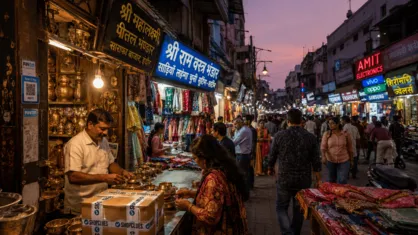
While every other e‑commerce company was fighting for the wallets of metro millennials, ShopClues focused on Tier‑2 and Tier‑3 cities — places like Lucknow, Nagpur, Coimbatore, and Indore. The thesis was simple: customers in smaller cities were price‑sensitive, brand‑agnostic, and underserved by organised retail. And merchants in those cities had no easy way to sell online.
The basement‑born startup raised a $1 million seed round from Helion Ventures in 2012. By 2014, ShopClues had over 20 million products listed, 50,000 merchants, and was processing 2 million monthly orders. It was still losing money (as all marketplaces do), but unit economics were improving.
The Unicorn Milestone — and a Historic First
On January 11, 2016, ShopClues announced a $100 million Series D funding round led by Tiger Global and Steadview Capital. The round valued the company at $1.1 billion, making it India’s fourth unicorn overall (after Flipkart, Snapdeal, and Ola). But more importantly, Radhika Ghai Aggarwal became the first Indian woman to be part of a unicorn founding team.
The news was celebrated widely, though Radhika herself played down the gender angle. “I didn’t build ShopClues to become a statistic,” she told The Hindu BusinessLine at the time. “I built it because I believed that small‑town India deserved the same shopping experience as big cities. The unicorn tag just means we are on the right track.”
ShopClues’ business model was distinct from Flipkart and Amazon. It operated a managed marketplace — meaning it did not hold inventory (unlike Flipkart’s private label strategy) but provided logistics, payment reconciliation, and seller training. Its sellers were predominantly small manufacturers, wholesalers, and even individual artisans — many of whom had never shipped a package before.
The platform’s biggest differentiator was price. A typical ShopClues order value was ₹350–₹500, compared to ₹1,000+ on Flipkart. Products ranged from ₹49 phone cases to ₹2,999 generic branded sneakers. This resonated deeply with value‑conscious shoppers in smaller cities, who were also newly exposed to digital payments through the post‑demonetisation UPI boom.
The Operational Grit of Tier‑2/Tier‑3 E‑commerce
Running a marketplace for smaller cities was not glamorous. Radhika, as Chief Business Officer, personally visited merchant clusters in Surat (textiles), Moradabad (brassware), and Jaipur (handicrafts). She discovered that many merchants did not have professional product photography, could not write compelling descriptions, and did not understand returns or refunds.
So ShopClues built tools to solve each problem:
Seller Hub: A mobile‑first dashboard that allowed merchants to list products, manage orders, and track payments entirely in Hindi, Marathi, or Bengali.
Photo Studio on Wheels: A van with basic lighting and a white background that travelled to merchant clusters, offering free professional photography.
Returns Management: A simplified policy that accepted returns without asking too many questions, absorbing the cost to keep customer trust.
These investments paid off. By 2017, ShopClues had over 500,000 registered sellers, 30 million products, and shipped to over 20,000 pin codes. Its gross merchandise value (GMV) crossed $1.5 billion on an annualised basis.
Radhika also pioneered the concept of “flash sales” for unbranded products — taking excess inventory from factories and selling it in 24‑hour windows at steep discounts. This gave small manufacturers a channel to liquidate stock without destroying brand value. It was, in many ways, a precursor to the “D2C excess inventory” models that would emerge years later.
Leadership During the Consolidation Phase
By 2018, the Indian e‑commerce market had become a brutal two‑horse race: Amazon and Flipkart (which Walmart acquired for $16 billion that year). Snapdeal was struggling. ShopClues, despite being profitable at a contribution level, faced mounting losses due to customer acquisition costs and logistics inflation.
Radhika led the company through a challenging period, renegotiating vendor contracts, shutting down unprofitable categories, and pivoting towards a “social commerce” model where users could buy through WhatsApp and Facebook groups. But the competitive pressure was relentless.
In July 2019, ShopClues was acquired by Singapore‑based Qoo10 for an estimated $70 million — a fraction of its peak valuation. The acquisition was widely seen as a “fire sale,” and many commentators wrote off Radhika and Sanjay as unicorn founders who had failed to adapt.
But Radhika saw it differently. “We built a company from a basement, took it to a billion dollars, served 50 million customers, and gave thousands of small sellers their first digital sale,” she said in a post‑acquisition interview. “If that’s failure, I’ll take it every time.”
Life After ShopClues: Mentorship and New Ventures
Post‑acquisition, Radhika did not retire or disappear. She became an active angel investor, mentor, and board member for several early‑stage D2C and e‑commerce startups. She also co‑founded Basis, a B2B platform for cross‑border trade between India and Southeast Asia, though that venture remains in stealth.
Her most significant impact, however, has been as a role model and mentor for women entrepreneurs. Through initiatives like SheCapital, CII’s Women in Business, and NASSCOM’s Women in Tech, she has personally mentored over 150 women founders. Her advice is famously practical: “Don’t look for a ‘women’s fund’ or a ‘women’s incubator’. Build a great business, and capital will find you. But if you need help, call me — I’ll tell you what I learned the hard way.”
In 2024, she was awarded the “Lifetime Achievement Award for Women in E‑commerce” by the India Retail Forum — a recognition of her pioneering role in taking online shopping beyond the top 10 cities.
Challenges and Critiques
Radhika’s journey was not without controversy. During ShopClues’ heyday, the platform faced allegations of counterfeit products and poor seller due diligence. Some merchants complained about delayed payments and opaque dispute resolution. Radhika acknowledged these issues in a 2017 blog post, committing to improved seller grievance mechanisms — though execution remained uneven.
Critics also questioned whether ShopClues was ever truly a unicorn in the “venture capital” sense, given that its peak valuation was based on a single funding round that was never marked up or tested by a secondary transaction. Radhika has dismissed such quibbles as “academic nonsense.”
Another challenge was the husband‑wife founder dynamic. While Radhika was the public face and CBO, Sanjay Sethi was the CEO. Some investors privately wondered about role clarity and decision‑making. Radhika has said that they “argued constantly but productively,” and that their complementary skills (Sanjay as product/tech, Radhika as business/ops) were a strength.
Lessons for Women Entrepreneurs
Ignore the noise: When Radhika started, everyone told her not to target Tier‑2 India. She did it anyway.
Profitability is not the enemy of scale: ShopClues never burned cash as aggressively as its rivals, which is why it survived as long as it did.
Acquisition is not failure: Building a company that gets acquired — even at a lower valuation — can still be a massive success for founders, employees, and customers.
Mentorship matters: Radhika’s post‑ShopClues work may end up being more impactful than her unicorn status.
The Road Ahead
As of 2026, Radhika Ghai Aggarwal is 48 years old. She divides her time between Delhi and Singapore, advising portfolio companies and spending time with her two children. Her net worth is estimated at $40–50 million — modest by unicorn founder standards, but substantial enough for financial independence.
She remains vocal about the need for more women in startup leadership, but she rejects special quotas or reserved funding. “The best way to support women founders is to fund their business, not their gender,” she says.
Her legacy is secure: she was the first Indian woman to build a billion‑dollar startup, paving the way for Falguni Nayar, Ghazal Alagh, and everyone who followed. And in a country where only 14% of startups have a woman founder, that first step was the hardest.