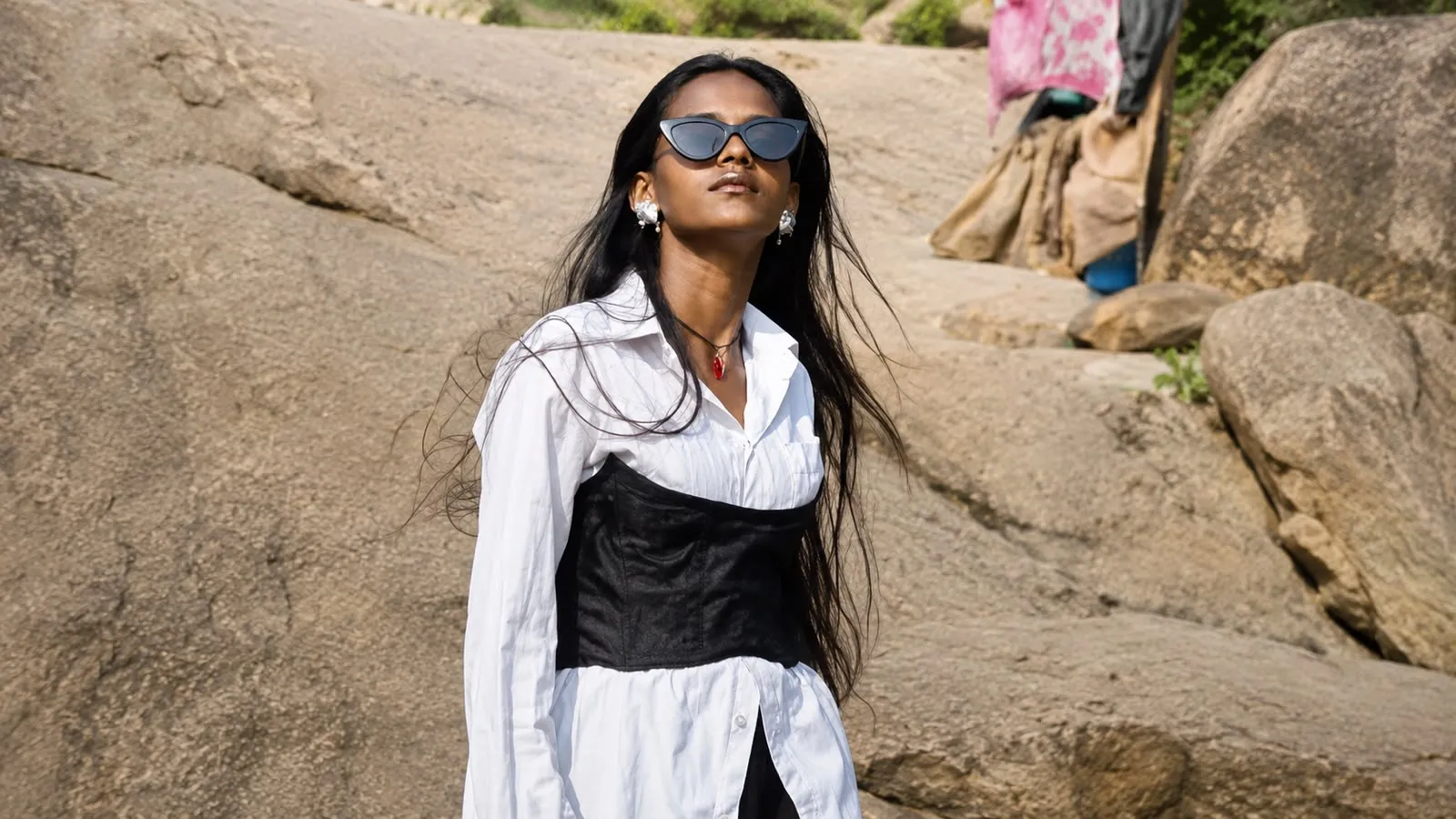
She Had No Runway. She Made One Anyway.
Every definition of success in the fashion industry begins in the same place: access. Access to the right school, the right city, the right mentor, the right camera, the right introduction. Without access, the conventional story says you wait. You find a way in. You pay dues in proximity to the world you want to enter until that world notices you and lets you through.
Preeti Prajapati did not wait.
Born in Bhopal as the daughter of a mason, she grew up in a family where financial stability required daily effort and luxury was not a concept that applied to clothing, let alone fashion. There were no luxury fashion schools within her reach. No designer studios. No modelling agencies scouting small-town girls in the lanes of Bhopal. No industry gatekeepers who could be charmed or impressed into granting an audition.What she had was a sister who could sew.And a street.
And the belief, stubborn and apparently unshakeable, that those two things were enough to begin.
Her sister began stitching outfits for her from fabric scraps and leftover materials — the kinds of things most households discard without thinking about. Remnants of old cloth. Pieces that did not fit any conventional pattern. The raw material that the fashion industry does not consider worth keeping. In Preeti's household, these became the foundation of something. Every handmade outfit carried the specific weight of something made with love under constraint. It was not couture. It was something that required more from both sisters: imagination, patience, and the willingness to build something beautiful from what other people had decided had no further use.And then Preeti took those outfits to the street.
The Street That Became a Stage
The decision to use Bhopal's ordinary streets as a runway is either the simplest thing in the world or the most radical, depending on how you look at it.
From the simplest angle: she had nowhere else to practise. No studio, no access to a proper runway, no industry event to attend as a model rather than a spectator. The street was what was available. She used what was available.
From the more radical angle: she took a space that most people walk through without thinking about it, that exists for transportation and commerce and daily life, and she treated it as a legitimate stage. She did not apologise for the location. She did not preface the videos with explanations of why she could not afford something better. She walked with the posture and the presence of someone who believes completely that the stage they are standing on is worthy of everything they are about to give it.That distinction — between walking on a street because you have no choice and walking on a street because you have decided it is enough — is the difference that shows in every reel and video that has made Preeti viral across Indian social media.
The preparation behind those few seconds of filmed footage is what the internet rarely sees. Hours of practice. The same walk, the same turn, the same expression, repeated across days and weeks until the body carries the movement without thinking. The particular discipline of practising something in the absence of external validation, with no audience to tell you whether you are improving, with no coach to correct your posture, with no industry benchmark to measure yourself against. Just the work, done again and again, because the alternative is not doing it.The fearless confidence that appears on screen is not accidental. It is the output of that invisible labour. It is what hours of practice looks like once the camera starts rolling.
What Goes Viral and Why
Preeti Prajapati's videos spread across Instagram, YouTube Shorts, and Facebook not because they are polished productions with professional lighting and expensive editing. They spread because they contain something that professional productions often do not: genuine stakes.
When a girl from a Bhopal street, in an outfit her sister stitched from scraps, walks with complete commitment and complete presence, the audience recognises something that cannot be manufactured. The knowledge that none of this is easy. The knowledge that the resources were not there and the access was not there and the permission was not given, and she showed up anyway. The knowledge that the walk is powered not by the confidence that comes from having everything you need, but by the deeper and rarer confidence that comes from knowing you will try regardless.
That second kind of confidence is what stops the scroll.
The Better India covered her story in April 2026 and the response confirmed what the video numbers had already suggested: Preeti Prajapati had touched something specific in an Indian audience that knows exactly what it means to dream from circumstances that do not make dreaming easy. She is from a country where talent is abundant and gates are narrow, where the gap between potential and platform is often insurmountable not because the talent is insufficient but because the resources and connections required to demonstrate that talent in legitimised settings are distributed with extraordinary inequality.Preeti's story does not solve that inequality. But it refuses to accept that the inequality is final.
The Sister Behind the Seams
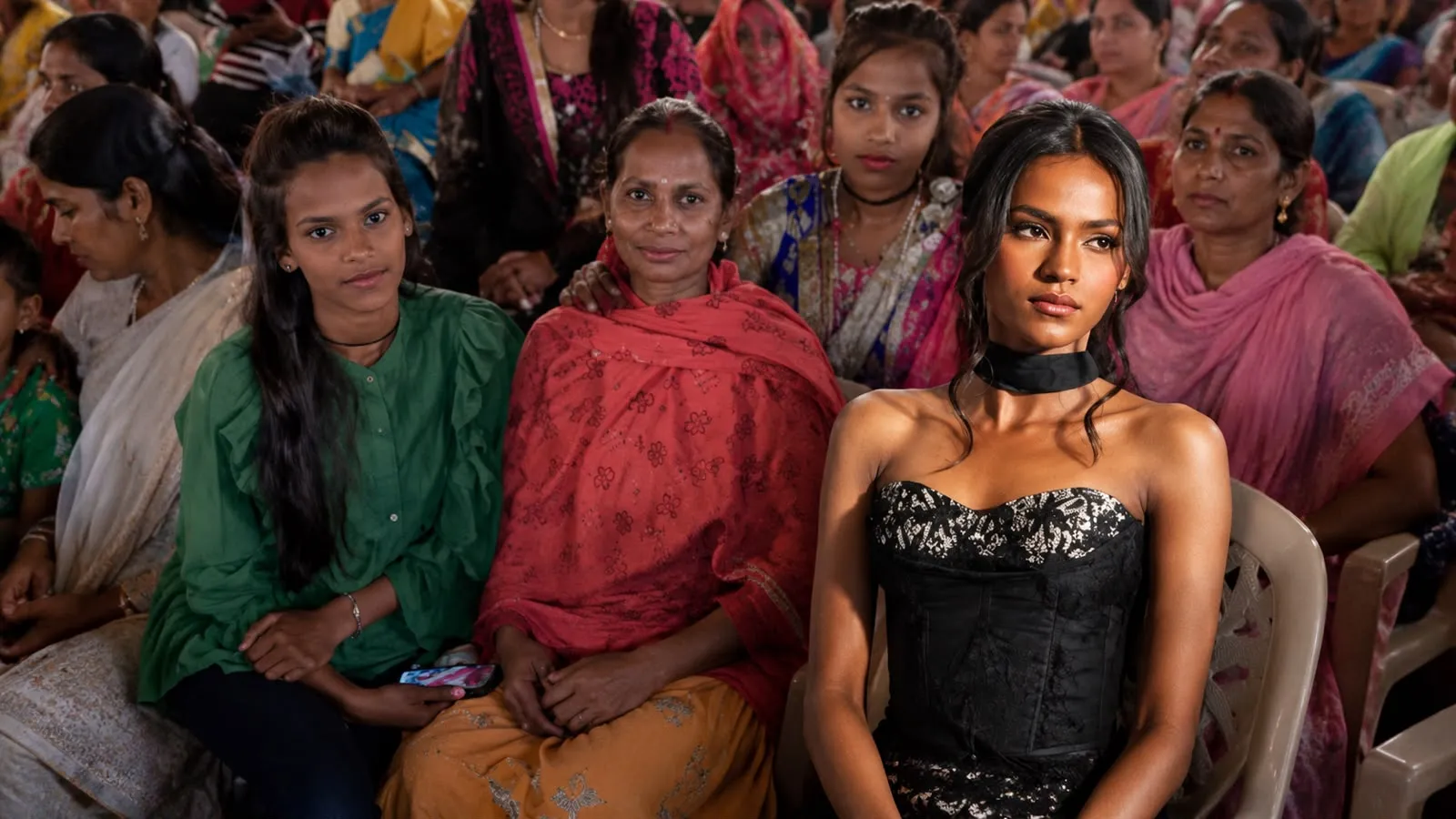
No account of Preeti Prajapati's story is complete without the sister who stands behind it.
The decision to stitch outfits from fabric scraps was not a design philosophy or a sustainability statement, at least not initially. It was a practical solution to a real constraint. But what it produced was something more valuable than any solution to a practical problem: a collaboration between two sisters who each contributed what the other needed. Preeti brought the vision, the walk, the courage to stand in the street and be seen. Her sister brought the craft, the patience, the ability to transform leftover material into something that could hold a woman's ambition and present it to the world with dignity.
Every outfit in Preeti's videos carries both of them. The garment that her sister made from what other people had discarded. The walk that Preeti practised until it became the truest expression of what she believes she can become. Two contributions that neither sister could have produced alone, combined into something that has moved millions of people who understand instinctively that this is not just fashion. It is a portrait of what it looks like when the people the system was not built for build something anyway.
The Dream and What It Demands
Preeti's stated goal is international runways. Not local fashion shows. Not regional recognition. International runways — the stages in Milan, Paris, London, and New York where the global fashion industry presents its most ambitious work and where the women who walk carry not just the designers' creations but the weight of every door they had to push open to get there.
That goal is enormous by any objective measure. The distance between a Bhopal street and an international runway is not simply geographical. It involves industry relationships, a professional portfolio, agency representation, international recognition, and the sustained investment in development that turns raw talent into the kind of polished, documented capability that global fashion houses require before they will book a face and a walk.
Preeti does not appear to be deterred by the size of the gap. The message she carries through her work and has articulated directly is the message of someone who has already closed one gap that seemed impossible: the gap between having no resources and making something beautiful from what is available. The gap between having no stage and deciding that the street will do.
If that gap can be closed with a sister's needle, a handful of fabric scraps, and hours of practice on an ordinary street, then perhaps the message she is sending is that gap-closing is a skill she has already learned. And that the next gap, enormous as it is, is not categorically different from the one she has already walked across.
What Her Story Actually Teaches
The fashion industry is one of the most access-dependent creative industries in the world. Careers are built on connections, on geography, on the compounding advantage of being near the right people at the right time. The stories of people who broke through without those advantages are told precisely because they are exceptional. Because the system, most of the time, keeps the people without access out.
Preeti Prajapati's story does not pretend the system is fair. It does not suggest that all anyone needs is belief and hard work, as if belief and hard work were distributed equally regardless of circumstance. What it suggests is something more specific and more honest: that starting is possible before everything is in place. That the street is a legitimate stage if you walk it like one. That the outfit stitched from scraps carries the same ambition as the outfit that cost a thousand times more, if the person wearing it believes completely in what she is doing.
And that the dream of international runways, held by a mason's daughter in Bhopal who practises alone on ordinary streets in outfits her sister made from leftover cloth, is not a smaller dream than the one held by someone who grew up with every advantage. It is the same dream. It simply had to travel further to find its way to a stage.
She said it best herself, in the message she carries through every step she takes and every video she makes: start where you are, own your story, and dream far beyond the limits you were handed. You belong on stage too.


