India Has 100 Million ChatGPT Users. It Finally Has a Country Leader to Match That Scale.
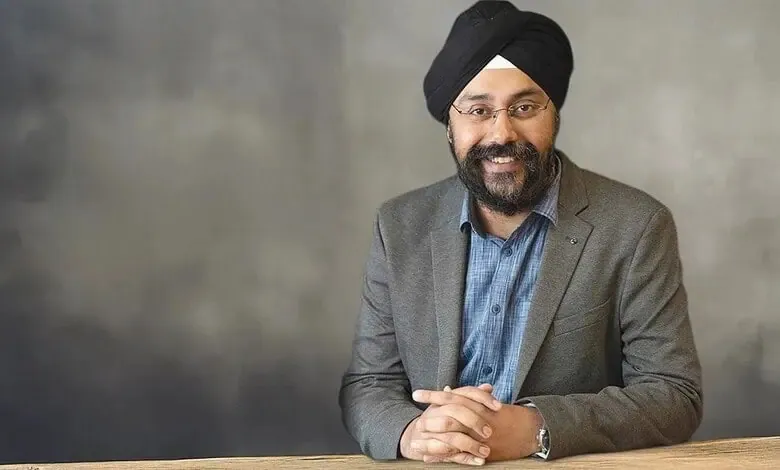
On June 28, 2026, OpenAI announced the appointment of Prabhjeet Singh as Managing Director for India — the company's most senior leader in the country. He will join in September and report to Kiran Mani, Managing Director for the Asia Pacific region.
The appointment is breaking news that has been covered across Bloomberg, Business Standard, and Outlook Business within hours of the company's confirmation. It is worth spending a moment on what the appointment actually signals — because the signal is larger than any single hiring announcement.
India is OpenAI's second-largest market globally. More than 100 million people use ChatGPT every week in India. That number has grown faster than any comparable market outside the United States. India has, by most measures available to OpenAI, been their most enthusiastic early-adopter market in Asia — and the most commercially significant in the region after the United States itself.
Until yesterday, that market had no country-level managing director. OpenAI operated in India without the senior market leadership structure that any company of this strategic importance would normally establish before it becomes a top-two global market, not after.
The appointment of Prabhjeet Singh is the correction of that gap — and the scale and profile of the person they chose to make it signals how seriously they are taking the correction.
Who Prabhjeet Singh Is — and Why His Background Is the Right Background
Prabhjeet Singh's most recent role was President of Uber India and South Asia — the person responsible for Uber's mobility business across India, Sri Lanka, and Bangladesh. That is not a regional middle-management role. It is the leadership of Uber's most operationally complex, most culturally diverse, and most regulatory-intensive major market outside the United States — a market where the intersection of urban mobility, digital payments, gig economy labour dynamics, and state-level regulatory variation creates exactly the kind of multi-stakeholder environment that OpenAI will face in India.
The skills that Uber's India leadership requires — navigating partnerships with governments and regulators, building consumer adoption in a market where trust is earned differently than in Silicon Valley, scaling enterprise and developer relationships, managing a business that is growing faster than the institutional infrastructure around it — are precisely the skills that OpenAI needs as it deepens its India footprint across consumers, enterprises, developers, and government bodies simultaneously.
Singh is an alumnus of IIT Kharagpur and IIM Ahmedabad — the two institutions that, together, represent the most compressed concentration of elite Indian technical and managerial talent in the country's educational system. The credential is not a status signal. It is a shorthand for the networks, the intellectual formation, and the specific kind of operator that India's most demanding institutions produce.
What His Mandate Actually Covers
OpenAI's announcement was specific about the scope of Singh's responsibility. He will oversee consumer growth, enterprise and developer adoption, partnerships, regulatory engagement, and operations. He will lead efforts to expand partnerships and support India's wider AI ecosystem, while helping more consumers, businesses, institutions, and government bodies benefit from AI.
That mandate is the full map of what it means to build a country-level AI business in India in 2026. Consumer growth is the 100 million ChatGPT users and the next 100 million. Enterprise adoption is the business community — the banks, the IT services companies, the manufacturing firms, the startups — that are integrating AI into their operations and evaluating which foundational models to build on. Developer adoption is the engineering community that is building AI-powered products on top of OpenAI's APIs. Partnerships are the commercial and strategic relationships with Indian companies, government bodies, and research institutions that extend OpenAI's reach beyond direct user acquisition.
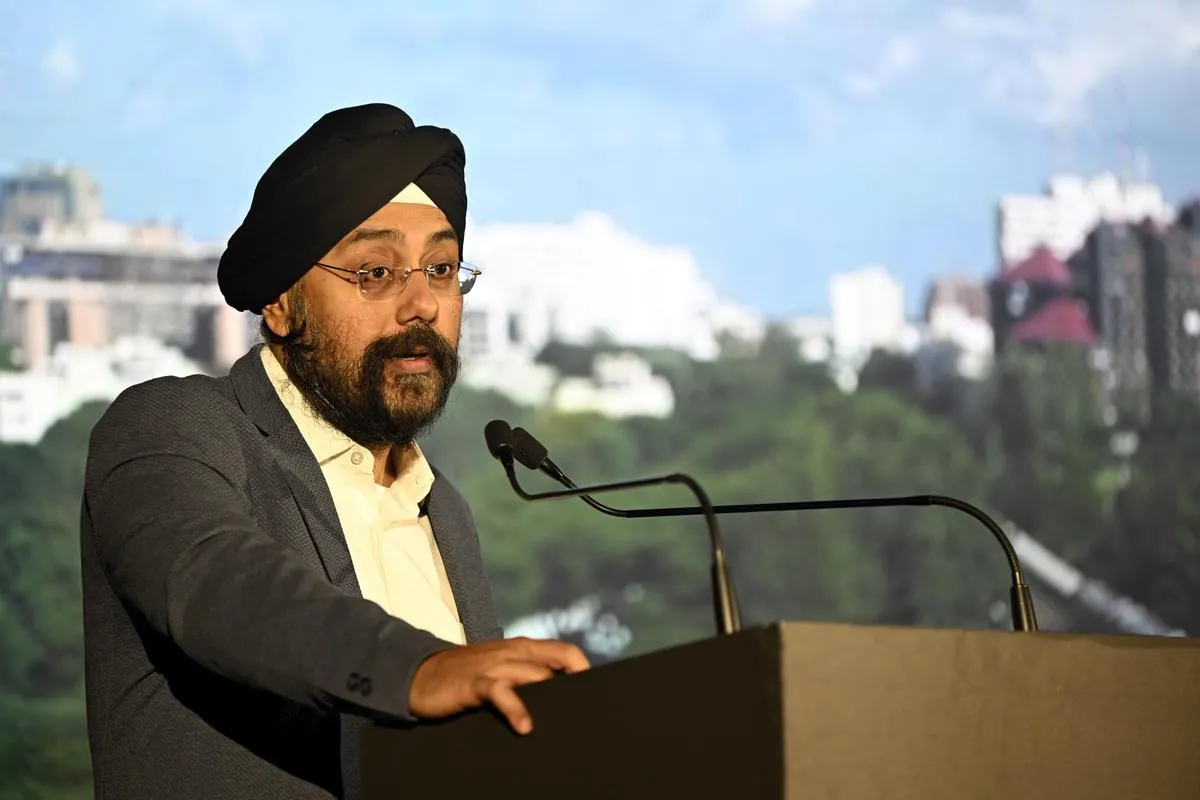
Regulatory engagement is the dimension that will require the most careful, sustained investment of time and expertise. India's AI regulatory environment is in active development — MEITY is building a framework, the IT Ministry is consulting on responsible AI guidelines, and the intersection of AI with sectors like financial services, healthcare, and critical infrastructure involves regulators with very different mandates and very different speeds. Having a country MD who comes from a background of navigating India's complex regulatory environment, as Singh did at Uber, is not incidental to the role. It is one of its most important qualifications.
Why India, Why Now
Sam Altman has spoken publicly about India's AI adoption on multiple occasions, and the language he uses is consistently exceptional rather than merely positive.
"The country's conviction to invest in everything from the infrastructure layer to the model layer to the application layer on top, and the rapid adoption of the tools by people here is really quite something," Altman said during a previous India visit. "AI adoption in India has been amazing to watch, and we are excited to invest more here."
That language maps onto a specific and verifiable commercial reality. India has crossed 100 million weekly ChatGPT users faster than any other non-US market. Indian developers are among the most active users of OpenAI's API globally. The Indian enterprise market — which includes some of the world's largest IT services companies that are themselves building AI products for global clients — represents both a commercial opportunity and a distribution channel for OpenAI's capabilities at scale.
At the same time, India is also the market where the competition for AI dominance is most intense among the global hyperscalers. Google has its Gemini partnership with Jio. Amazon has committed $48 billion to India's AI and cloud infrastructure through 2030. Reliance is building sovereign AI infrastructure with ₹10 lakh crore over seven years. Anthropic, Microsoft, and Meta are all deepening their India presence simultaneously.
In this environment, OpenAI's decision to move from operating India without a country MD to appointing one of the most operationally experienced business leaders available in the Indian technology ecosystem is a statement of competitive intent. India is the market where the battle for the next generation of AI adoption will be decided outside the United States, and OpenAI is arriving with the right leader at a moment when the competition has never been more intense.
What Changes in September
When Prabhjeet Singh joins in September, OpenAI's India operations will have something they have not had before: a single, senior, accountable leader with the credibility, the network, and the mandate to drive the company's India strategy with the same seriousness that a market of this size and growth trajectory deserves.
The 100 million weekly users will have someone whose job it is to understand them, grow them, and build the enterprise and developer ecosystem alongside them. The Indian enterprises evaluating whether to build on OpenAI's models will have a senior relationship point who understands how Indian businesses make technology decisions. The Indian government bodies that are shaping AI policy will have a counterpart who has navigated India's regulatory environment at a senior level before.
None of this is guaranteed to produce a specific outcome. The AI market in India in 2026 is genuinely competitive, genuinely complex, and genuinely consequential in a way that makes every appointment and every decision meaningful. But the appointment of the right person, at the right moment, with the right mandate, is the beginning of the right answer.
India's most important AI market just got its most important AI leader. September cannot come soon enough.