Population-Scale Impact: What the Standard Requires
Population-scale impact is not a phrase that should be used lightly. It demands a standard — not merely that the technology works (countless proofs of concept work, and they remain proofs of concept), but that it has been deployed in ways that reach significant fractions of population, that the deployment is sustainable and not dependent on extraordinary resources or circumstances, and that the impact is measurable in terms of actual human welfare rather than proximate metrics that claim to represent it.
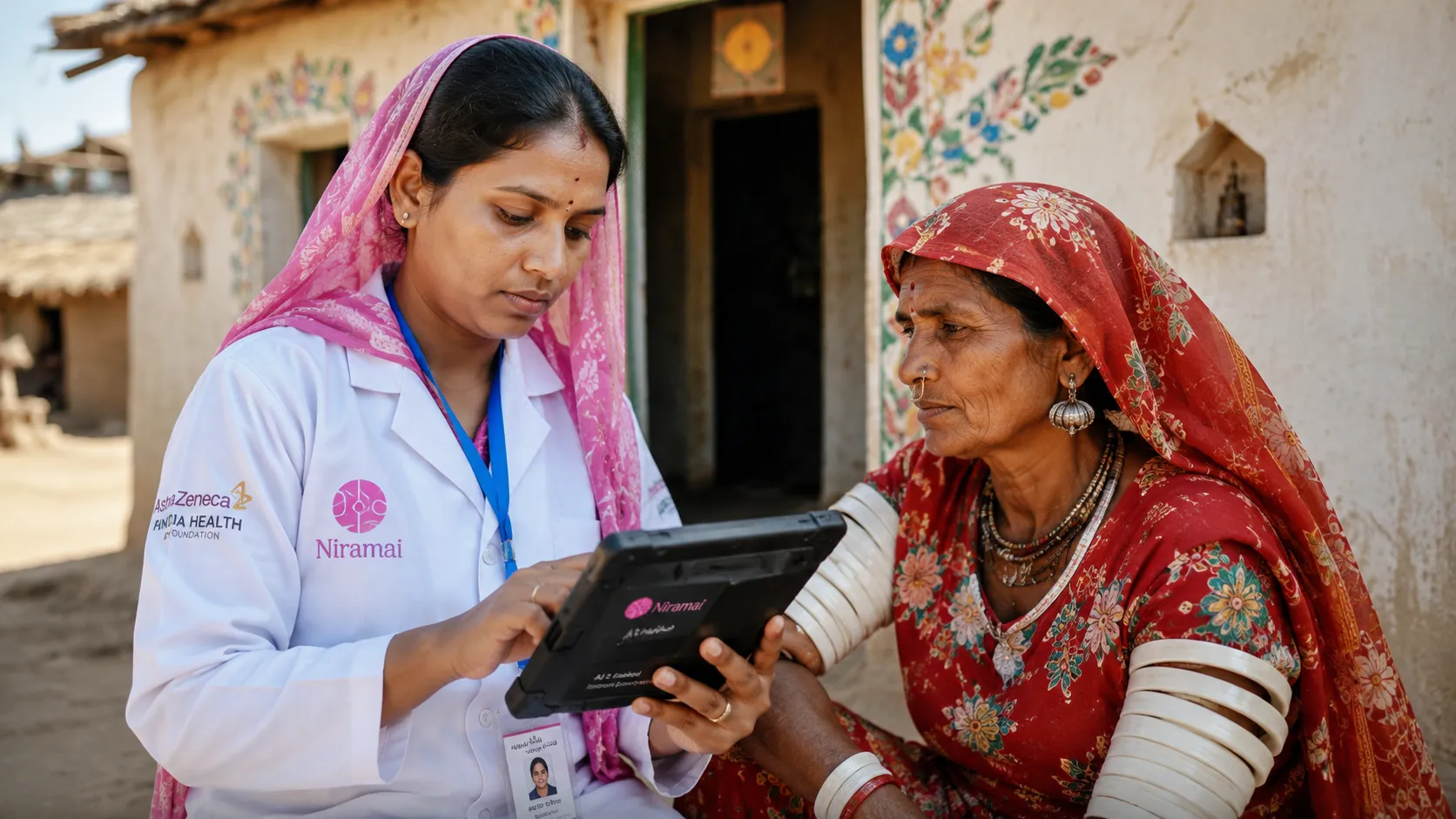
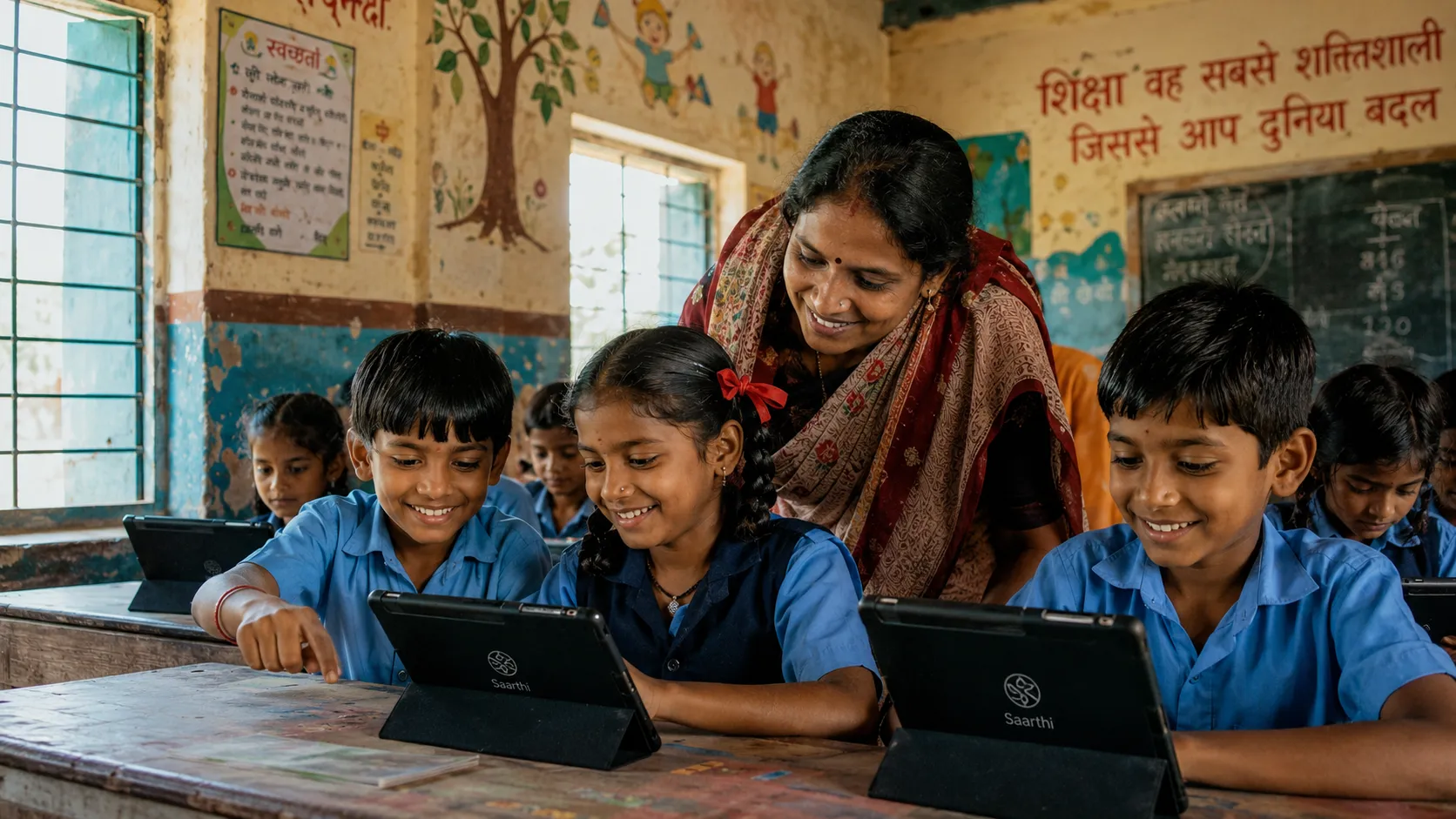
The over 100 organizations documented in the IndiaAI Impact Compendium meet this standard — or are on a credible path to meeting it — in domains spanning agriculture, healthcare, education, financial services, governance, and disaster response. They are working not with the English-speaking, urban, educated consumer who has been the primary beneficiary of the first wave of AI product development, but with the farmer in Vidarbha making planting decisions with incomplete information, the frontline health worker in Rajasthan making diagnostic assessments without specialist support, the primary school teacher in rural Odisha managing a classroom of sixty children spanning wildly different ability levels, and the government functionary in a Tier 3 city processing applications and grievances for a constituency she has neither the staff nor the systems to serve adequately.
The stakes of serving — or failing to serve — these populations are entirely different from the stakes of consumer AI products competing for urban attention. When AI fails to recommend the right film on Netflix, the consequence is a slightly less satisfying evening. When AI fails to correctly diagnose the early symptoms of a preventable disease in a rural health clinic, the consequence can be disability or death. The organizations in the IndiaAI compendium are working in domains where the stakes are of the second kind — and where the scale of benefit available is commensurate with the scale of risk.
Agricultural AI: The Smallholder Revolution
India's agricultural sector is one of the world's most complex — and most underserved by technology. Over 100 million smallholder farmers, each typically farming less than two hectares, make decisions about planting, irrigation, fertilization, pest management, and market timing based on a combination of generational tradition, local knowledge, and intuition. These decisions, made without access to the agronomic expertise, soil testing, weather modeling, or market intelligence that larger farms in more developed agricultural economies can access, result in significant yield losses and income volatility that keep farm families trapped in poverty.
The agricultural AI startups in the IndiaAI compendium are attempting to close this gap by delivering agronomist-quality advisory services through the medium that smallholder farmers can access: their smartphones. Using satellite imagery for crop monitoring, machine learning models trained on local agricultural data for disease and pest detection, weather forecasting integrated with planting advisory, and market price analytics that help farmers decide when and where to sell, these startups are building systems that put expert-level agricultural intelligence in every farmer's pocket.
The technical challenges are significant: models must work in environments with limited connectivity, must perform reliably across the huge diversity of crops, soils, climates, and farming practices present in India, and must deliver recommendations in local languages with the kind of contextual sensitivity that allows a farmer to actually act on them rather than simply acknowledge them. The impact potential is correspondingly large: if even a fraction of India's smallholder farmers can improve their yields, reduce their input costs, or improve their market prices through AI-enabled advisory, the aggregate economic impact runs to tens of thousands of crores of rupees annually.
Healthcare AI: The Specialist That Every Village Could Have
India faces a specialist physician shortage that is, by any measure, one of the most significant public health challenges of the 21st century. The country has approximately one doctor per 1,000 people — a ratio that already falls short of WHO recommendations — but the distribution is catastrophically skewed: the overwhelming majority of doctors are concentrated in India's metropolitan and large urban areas, while the districts where the majority of the population lives have specialist access ratios that approach zero.
The healthcare AI startups documented in the compendium are addressing this distribution problem with a set of tools that extend the reach of specialist judgment to points of care where no specialist is present. AI-powered dermatology screening tools, trained on thousands of clinical images, can identify the visual signatures of conditions ranging from skin cancer to leprosy to psoriasis with accuracy approaching that of experienced dermatologists — enabling community health workers to flag cases that need referral while providing reassurance to the majority of patients whose concerns are benign. AI-powered ophthalmology tools can screen for diabetic retinopathy — the leading cause of preventable blindness — at a fraction of the cost and with a fraction of the equipment that traditional screening requires. AI-powered radiology tools can read chest X-rays for tuberculosis, pneumonia, and other pulmonary conditions in settings where radiologists are unavailable.
The effect of these tools, when properly deployed, is to create a functional specialist presence in geographies where none exists — not by replacing the specialist's judgment but by extending it through the cascade of AI-enabled screening that identifies which cases need specialist attention and which can be safely managed at the primary care level. This kind of intelligent triage, scaled across India's 150,000+ primary health centers, represents one of the highest-leverage applications of AI anywhere in the world.
The Documentation Imperative and What Comes Next
The IndiaAI compendium's significance extends beyond the specific organizations it documents. Its existence as a systematic, publicly accessible record of AI deployments for population-scale impact is itself a policy and ecosystem intervention of considerable value.
For investors evaluating where to deploy capital with both financial and social return objectives, the compendium provides a curated set of organizations that have passed at least an initial quality filter — that are doing real work in high-impact domains and are willing to have that work examined and documented. This reduces the search and due diligence costs associated with impact investment in AI, making it more likely that capital flows toward organizations that merit it.
For researchers studying the efficacy of AI interventions in development contexts — a field that is growing rapidly but is still constrained by the difficulty of accessing reliable data about real-world deployments — the compendium provides a starting point for research partnerships, data sharing arrangements, and comparative studies that can generate the evidence base needed to guide future investment and policy decisions.
For the organizations themselves, inclusion in the compendium provides visibility and credibility that can attract the partnership, investment, and talent they need to scale their impact. The network effects of being part of a recognized, documented community of impact-focused AI organizations are real: when funders and potential employees and partner organizations are looking for AI companies working on population-scale challenges, the compendium is now a resource they will find.
For The Impactful Global Indian, the compendium represents a vision of AI that we have always believed in: artificial intelligence not as a luxury product for the already-privileged but as a tool of genuine human uplift, deployed with intention and wisdom to address the inequalities that have defined India's development story for generations. The 100+ organizations documented there are not all perfect, not all at scale, and not all certain to succeed. But they are all trying to do something worth trying. And the fact that someone — the government, no less — thought it worth documenting is itself a sign of how much the conversation has shifted.