India Just Signed a Trade Deal That Changes Everything With the Pacific
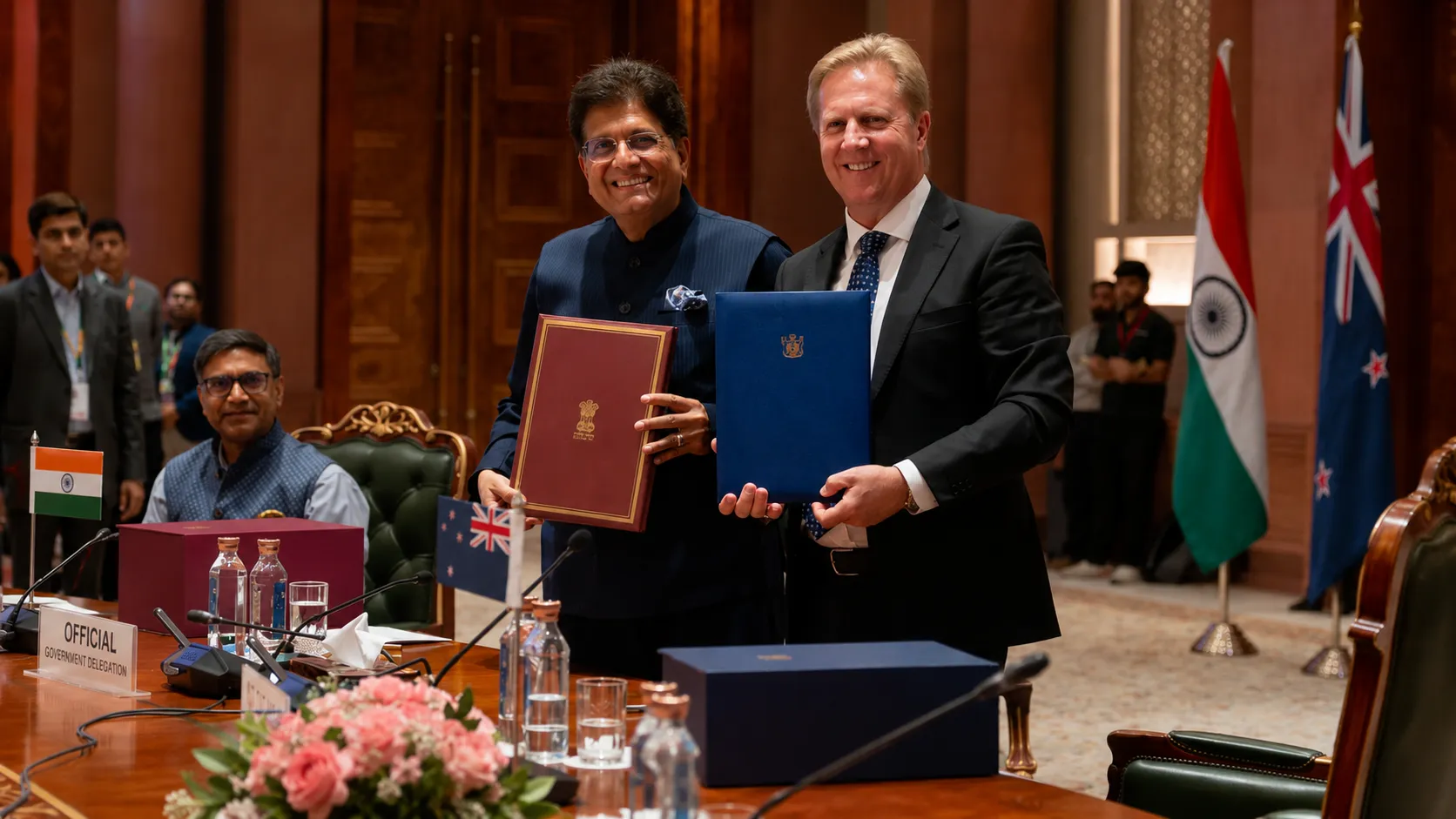
There are trade agreements that make headlines for a day and then disappear into the fine print of policy documents. And then there are agreements that genuinely reshape the economic relationship between two nations for decades. What India and New Zealand signed on April 27, 2026, at Bharat Mandapam in New Delhi belongs firmly in the second category.
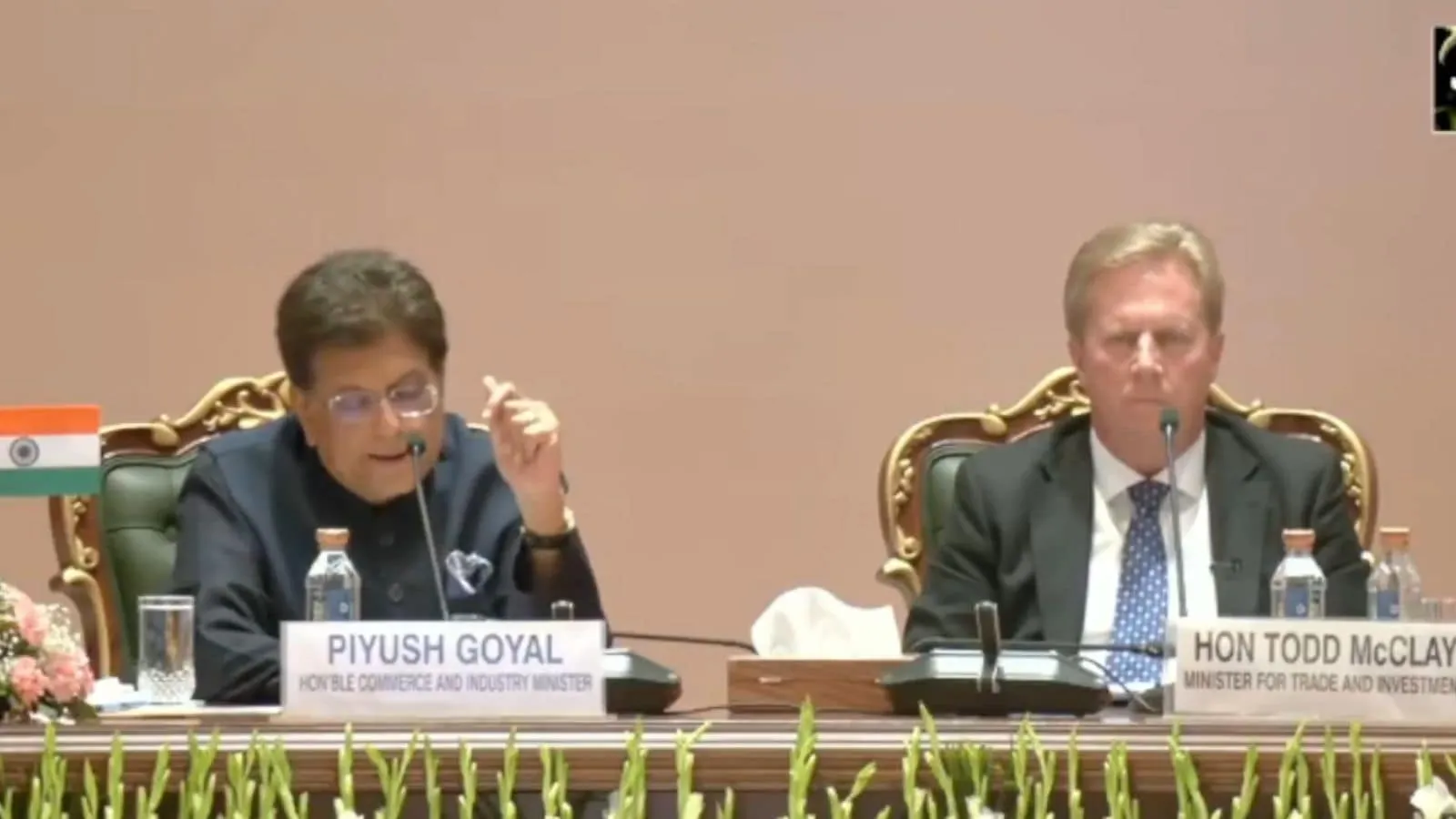
Commerce and Industry Minister Piyush Goyal and New Zealand's Trade and Investment Minister Todd McClay put their signatures on a comprehensive Free Trade Agreement — a deal that took just nine months to negotiate, which is remarkably fast for an agreement of this scope and ambition. New Zealand described it plainly as a "once-in-a-generation" agreement. Looking at what's inside, that's not an overstatement.
100% Duty-Free — From Day One
The headline number is this: from the day this agreement comes into force, every single Indian export to New Zealand will enter the country completely duty-free. One hundred percent. Zero tariffs. No phased reductions, no carve-outs for key Indian sectors — full market access, immediately.
For Indian exporters, this is transformative. The deal is expected to deliver an immediate competitive advantage to India's leather and footwear sector — particularly manufacturers in Agra, which accounts for nearly 75% of the country's leather footwear production. With tariffs on leather and footwear dropping from 5% to zero, Indian products become instantly more price-competitive in a market where they were previously at a disadvantage.
Pharmaceutical companies and medical device manufacturers also win big. New Zealand will fast-track market access for Indian products by recognising approvals from global regulators like the US FDA and European agencies — cutting compliance costs, eliminating duplication, and dramatically speeding up the time it takes for Indian medicines to reach New Zealand shelves.
On the other side, approximately 95% of goods imported from New Zealand into India will see tariffs substantially reduced or eliminated — with one critical exception India fought hard to protect. All dairy products — milk, cheese, yogurt — along with onions, chana, sugar, honey, and gems and jewellery remain fully excluded from the agreement. India's farmers and sensitive agricultural sectors are shielded. That's not a small thing.
$20 Billion — And Where It's Going
Investment is the other cornerstone of this deal. New Zealand has committed to facilitating $20 billion in investments into India over the next 15 years — aligned directly with the Make in India initiative and India's broader push to attract foreign capital into manufacturing, infrastructure, and technology.
The sectors earmarked for this capital flow are exactly where India needs it most: renewable energy, digital services, infrastructure development, semiconductors, and innovation-led industries. This isn't passive investment — the agreement includes specific mechanisms to ensure effective delivery and accountability, with a joint committee structure to address barriers and disputes as they arise.
For Indian MSMEs, artisans, and women entrepreneurs, specific provisions have been designed to ensure the benefits of this deal don't flow only to large corporations. The FTA is structured to deliver broad-based gains across manufacturers, farmers, small businesses, and innovators — a deliberate attempt to make this a genuinely inclusive economic partnership rather than a corporate-first arrangement.
The Talent Mobility Chapter — A First for New Zealand
Perhaps the most personally impactful part of this deal for millions of Indians is what it means for talent mobility. And here, the agreement breaks genuinely new ground.
For the first time, New Zealand has established a dedicated quota of 5,000 visas annually for skilled Indian professionals — covering sectors including IT, engineering, healthcare, education, and even traditional Indian professions like yoga instructors and AYUSH practitioners. These visas allow professionals to work in New Zealand for up to three years, creating a structured, predictable pathway that has never existed before.
Students benefit too. In another first for New Zealand trade policy, the agreement includes a dedicated annex on student mobility. Indian students studying in New Zealand can now work 20 hours per week while enrolled — and post-study work visas have been extended significantly. STEM graduates get up to three years. Doctoral scholars get four. For the next generation of Indian talent looking at international careers, this changes the calculation.
And for younger Indians with a sense of adventure, 1,000 working holiday visas will be available annually — giving young people a 12-month multiple-entry visa to work, travel, and experience New Zealand. It's a people-to-people provision that will quietly build cultural bridges for decades.
Services, IP and the Big Picture
Beyond goods and talent, the services chapter of this agreement is significant in its own right. New Zealand has opened access to 118 service sectors — including computer-related services, telecommunications, construction, tourism, financial services, and education — while offering Most-Favoured Nation treatment across roughly 139 sub-sectors. For India, whose services exports are one of its greatest economic strengths, this level of access is a major win.
The deal also breaks new ground on intellectual property. New Zealand has committed to amending its Geographical Indications law within 18 months to allow registration of Indian GI-tagged products — protecting iconic Indian brands from imitation and opening premium market positioning for everything from Darjeeling tea to Basmati rice in the New Zealand market.
Why This Deal Matters Beyond New Zealand
New Zealand is not India's largest trading partner. In isolation, the bilateral trade numbers are modest. But this deal is about far more than the direct trade flows it will generate.
New Zealand sits at the heart of Oceania — a region with deep connections to the Pacific Island markets, Australia's economic orbit, and the broader Indo-Pacific trade architecture. The FTA is designed explicitly as a gateway to the wider Oceania and Pacific Island markets for Indian exporters, opening doors that no direct bilateral deal with those smaller economies could achieve alone.
It also sends a signal. In a world where geopolitical tensions are reshaping global trade alliances, India's ability to negotiate a comprehensive, high-quality FTA in nine months — covering goods, services, investment, IP, and talent — demonstrates a new level of trade negotiation maturity. This is not the India that spent decades in inconclusive WTO negotiations. This is a country that knows what it wants, moves fast, and delivers.
Once in a generation? Perhaps. But at the rate India is moving — it might not be the last one.