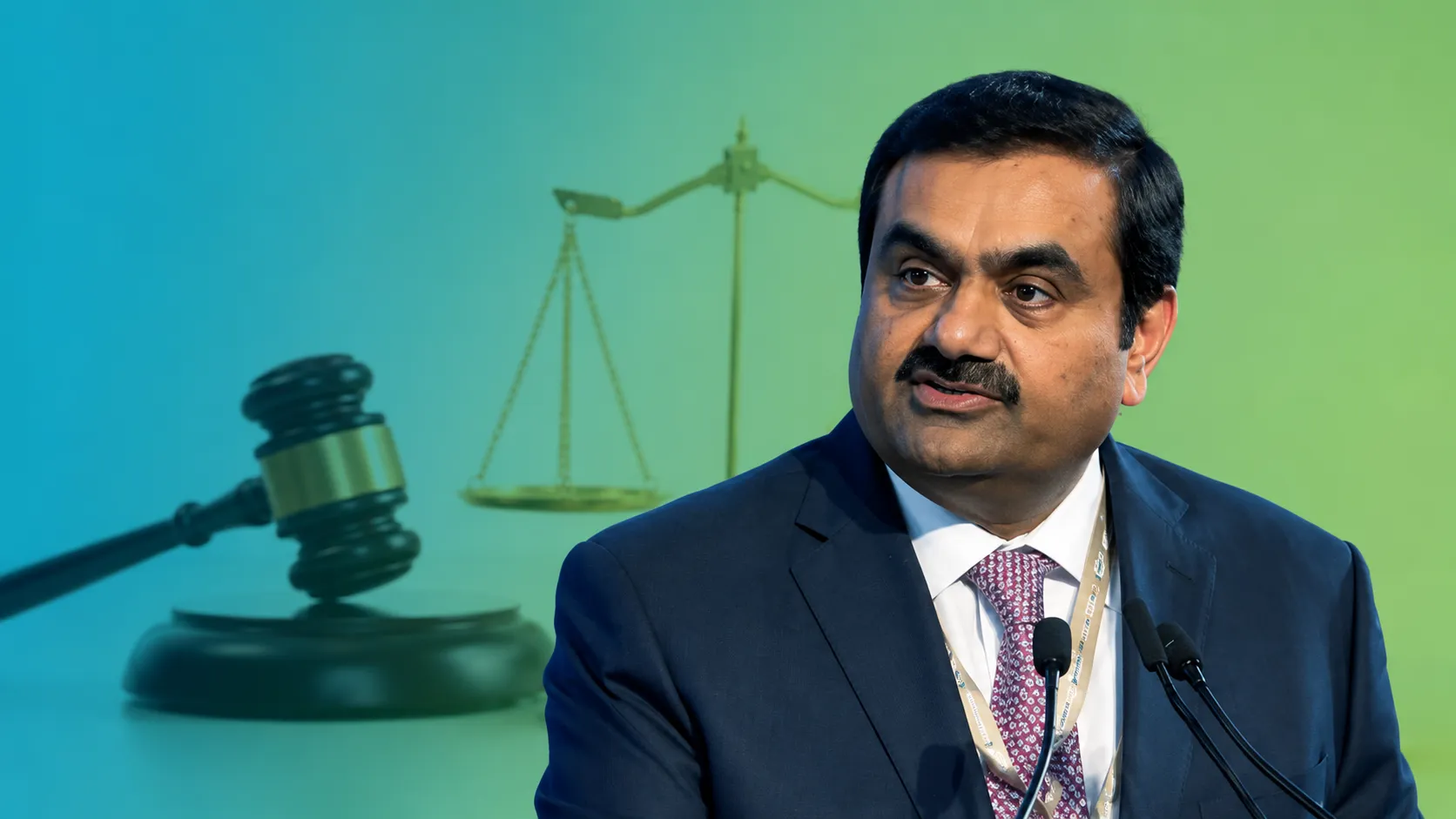
For weeks, headlines around the world proclaimed that the United States Department of Justice had dropped its criminal case against Gautam Adani, and markets responded accordingly — Adani Group shares surged and the conglomerate's chairman reclaimed his position as Asia's richest person. But as of this week, the reality on the ground in a Brooklyn federal courtroom is considerably more contested. US District Judge Nicholas Garaufis has repeatedly declined to simply rubber-stamp the government's motion to dismiss, instead pressing both the Justice Department and Adani himself for detailed explanations — with critical deadlines falling on July 13 and July 15, 2026, meaning the case's ultimate fate remains genuinely undecided as this story is being reported.
To understand the stakes of this ongoing judicial scrutiny, it is necessary to revisit the original allegations that gave rise to the case. In late 2024, under the administration of then-President Joe Biden, federal prosecutors in the Eastern District of New York indicted Gautam Adani, his nephew Sagar Adani, and several other Adani Group executives and associates on charges including securities fraud, wire fraud, conspiracy to violate the Foreign Corrupt Practices Act, and conspiracy to obstruct justice. Then-US Attorney Breon Peace alleged that the defendants had orchestrated an elaborate scheme to bribe Indian government officials, to the tune of more than $250 million, in order to secure solar energy supply contracts projected to generate roughly $2 billion in profits over twenty years. Prosecutors further alleged that Adani and his co-defendants misled American and international investors by concealing the alleged bribery scheme while raising more than $3 billion in capital, including at least $175 million specifically raised by Adani Green Energy from US-based investors. Notably, despite the gravity of the charges, Adani was never arrested in connection with the indictment, nor was he brought to the United States to face trial — a detail that itself illustrates the practical and jurisdictional complexities inherent in prosecuting a case where the defendant is a foreign national, resident abroad, whose alleged conduct occurred substantially outside US territory. That jurisdictional and practical complexity would later become central to the Justice Department's own stated rationale for seeking the case's dismissal. The dismissal effort began to take shape earlier this year, after Adani assembled a formidable American legal team led by Robert J. Giuffra Jr., co-chairman of the prominent law firm Sullivan & Cromwell and, notably, one of President Trump's personal lawyers. According to reporting in the New York Times, Giuffra presented an approximately 100-slide case to Justice Department officials during meetings at the department's Washington headquarters in April 2026, arguing that prosecutors lacked both the basic evidentiary foundation and, more fundamentally, the jurisdictional authority to pursue the case at all. Within that presentation, according to the same reporting, Giuffra made what has since become the case's most politically controversial element: an offer that if prosecutors dropped the charges, Adani would be willing to invest $10 billion in the American economy and create approximately 15,000 jobs.
The Justice Department formally moved to dismiss the indictment on May 18, 2026, stating that after reviewing the matter, it had determined not to commit further prosecutorial resources to pursuing the case against the individual defendants. Coming just days after that motion, the department separately announced a $275 million settlement with Adani entities over alleged violations of US sanctions on Iran, related to allegations that Adani Enterprises had purchased liquefied petroleum gas from a Dubai-based trading intermediary that was, in fact, sourcing the product from Iran despite representing it as originating from Oman or Iraq. The US Securities and Exchange Commission separately reached a civil settlement with Gautam Adani and Sagar Adani over the bribery allegations, under which — pending court approval — the two men would pay civil monetary penalties of $6 million and $12 million respectively. It was against this backdrop of parallel settlements and a formal dismissal motion that Judge Garaufis intervened to slow the process down considerably. Under Rule 48(a) of the Federal Rules of Criminal Procedure, prosecutors seeking to dismiss an indictment must provide the court with an adequate basis for its request — a requirement that exists precisely to guard against the possibility of dismissals driven by improper considerations rather than legitimate prosecutorial judgment. In a ruling issued in late June, Garaufis found the government's initial explanation for seeking dismissal to be, in his words, terse, bland, and conclusory, stating that it afforded the court neither a sufficient basis to reach any conclusion nor the opportunity to conduct meaningful analysis of the government's request. He directed prosecutors to submit a fuller explanation by July 13, 2026. The Justice Department's more detailed filing, submitted in response to Garaufis's order, offered a considerably more elaborate defence of the dismissal decision. Principal Associate Deputy Attorney General R. Trent McCotter argued that the prosecution was legally unsustainable from the outset and should never have been brought, pointing to several specific factors: that the alleged conduct occurred almost entirely within India; that Indian authorities had themselves investigated the underlying allegations and found no actionable misconduct; that investors, in the department's assessment, suffered no demonstrable losses; that key evidence and witnesses were located outside US jurisdiction; and that the defendants were, in practical terms, unlikely to ever appear before an American court to face trial. McCotter wrote pointedly that the Foreign Corrupt Practices Act charges should have been dismissed a year earlier, or never brought in the first place.
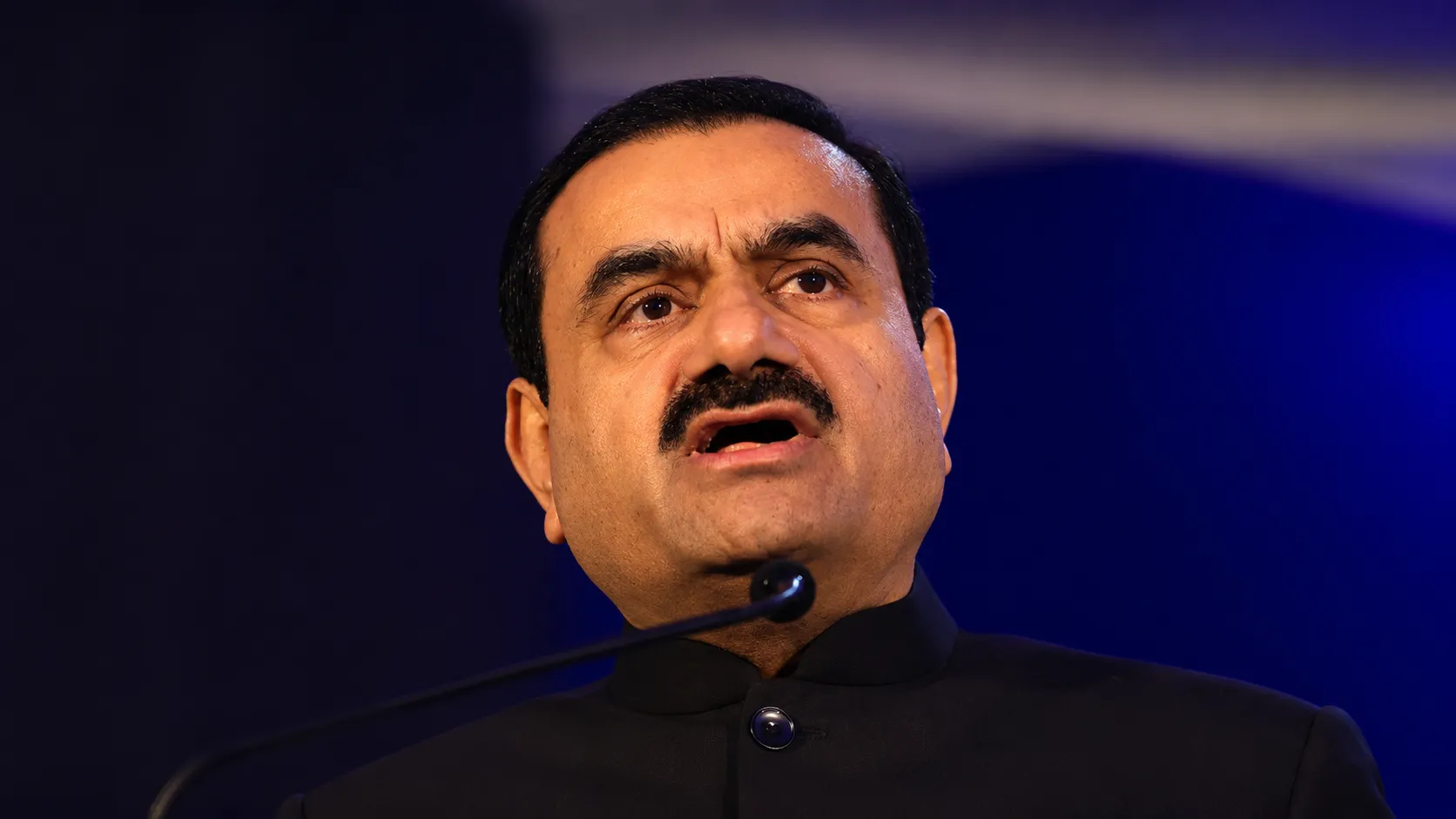
Crucially, McCotter's filing directly and explicitly rejected any suggestion that the dismissal decision was connected to Adani's reported $10 billion US investment pledge. He wrote that he would have sought dismissal of the securities charges regardless of any mentions of investment, and regardless of whether any related civil matters had been settled, stating flatly that the mention of potential investments could not have played any role in his prosecutorial judgment. This denial arrived directly in response to a letter from a group of US senators, who had raised what they described as serious questions about corruption under the Trump administration and about the role that Adani's politically salient investment offer may have played in the department's decision-making process. The controversy deepened further in late June, when Bloomberg News reported that Adani had met with Donald Trump Jr., the president's son, in November 2025 — a period during which the Justice Department's investigation into the bribery allegations was still actively underway. While the precise substance and significance of that meeting remain unclear from public reporting, its disclosure has added another thread to the broader narrative of political entanglement surrounding the case's resolution, one that congressional Democrats and some legal observers have suggested warrants further scrutiny even as the Justice Department insists that legitimate prosecutorial considerations, rather than political or financial inducements, drove its dismissal request. Judge Garaufis's scrutiny has not been limited to the government's own explanation. In a separate order issued in early July, he directed Gautam Adani personally to answer two specific questions in writing, under oath, by July 15, 2026 — a remarkable procedural step that underscores the unusual degree of judicial engagement this case has attracted, and one that stands in sharp contrast to the relatively routine, largely uncontested nature of most prosecutorial dismissal motions in federal criminal practice.
The precise content of the questions posed to Adani has not been fully disclosed in public reporting, though the broader context strongly suggests they relate to the circumstances surrounding the reported investment pledge and its relationship, if any, to the timing and substance of the dismissal request. Adani's legal team, for its part, has continued to press for the case's prompt and final dismissal. Giuffra has argued, in filings before Garaufis, that the case falls beyond the reach of US law altogether and that prosecutors would, in any event, be unable to prove the alleged bribery occurred, given that the underlying conduct took place in India and involved Indian officials whose cooperation with any US prosecution would be effectively impossible to secure. The Justice Department's own filing echoed elements of this argument, urging the court to grant the dismissal motion promptly and warning that continued judicial scrutiny risked improperly intruding on the executive branch's constitutionally recognised authority over prosecutorial decisions, leaving the defendants, in the department's words, in limbo on charges that should have been dropped a year ago or never brought in the first place. For global markets and for Adani Group investors specifically, the ongoing judicial uncertainty introduces a layer of continued risk that had, in the weeks immediately following the initial May dismissal motion, appeared to have been largely priced out of Adani Group securities. The rally that lifted Gautam Adani back to the top of Asia's wealth rankings was built substantially on the assumption that the dismissal motion represented an effectively final resolution of the bribery case — an assumption that Judge Garaufis's continued scrutiny now calls into meaningful question, even as most legal observers continue to view eventual dismissal as the most probable outcome given the array of practical and jurisdictional obstacles the Justice Department has cited. As July 13 and July 15 approach, all parties in the case — prosecutors, Adani's legal team, and Judge Garaufis himself — face a consequential set of decisions that will determine not only the fate of one of the highest-profile corporate bribery prosecutions of the decade, but potentially set important precedent regarding the degree of judicial scrutiny federal courts can exercise over executive branch prosecutorial discretion, particularly in politically sensitive cases involving foreign nationals, substantial investment pledges, and allegations that reach into the highest levels of political influence. For Gautam Adani and the sprawling conglomerate that bears his name, the coming days will determine whether the wealth recovery of recent months rests on genuinely solid legal ground, or whether renewed uncertainty could yet complicate what has, until now, been billed as one of the most remarkable corporate comeback stories in recent Asian business history.
Legal scholars tracking the case have noted that Judge Garaufis's insistence on a fuller explanation, while procedurally unusual in the context of routine prosecutorial dismissals, is not without precedent in cases carrying significant public interest or political sensitivity. Rule 48(a)'s requirement for judicial leave before an indictment can be dismissed exists precisely to provide a check against dismissals driven by improper motive, and federal courts have, in a handful of prior high-profile cases, exercised similarly close scrutiny when the circumstances surrounding a dismissal motion raised questions about whether legitimate prosecutorial judgment, rather than political consideration, was truly driving the decision. Whether Garaufis ultimately concludes that the Justice Department's explanation satisfies this threshold remains, as of this writing, genuinely uncertain. The case has also become entangled in broader debates about the relationship between the Trump administration and prominent business figures with substantial investment capacity, both domestic and international. Critics of the administration have pointed to the Adani case as a potential example of a broader pattern in which large-scale investment pledges appear to correlate with favourable regulatory or prosecutorial outcomes — a pattern the administration has consistently and firmly denied, with McCotter's filing explicitly and repeatedly rejecting any causal connection between Adani's investment pledge and the department's legal reasoning. Resolving this dispute conclusively may prove difficult given the inherently discretionary nature of prosecutorial decision-making, but the intensity of continued congressional and judicial scrutiny suggests the underlying questions are unlikely to be fully put to rest even if Garaufis ultimately grants the dismissal motion. For Indian observers specifically, the case carries an additional layer of significance given Adani's well-documented proximity to Prime Minister Narendra Modi and the broader question of how Indian corporate conduct is perceived and adjudicated within foreign legal systems.

The Indian government has, at various points throughout the case's history, emphasised that Indian authorities themselves investigated the underlying bribery allegations and found no actionable misconduct — a position the Justice Department's own dismissal filing explicitly cited as one factor supporting its decision to abandon the prosecution. Whether that alignment between Indian and American assessments of the underlying allegations proves sufficient to satisfy Judge Garaufis's demand for a more rigorous explanation will become clear only once the July deadlines have passed and the court issues its eventual ruling on the government's motion to dismiss. The parallel civil and regulatory settlements that have accompanied the criminal case's uncertain trajectory add further complexity to the overall picture. The SEC's proposed civil settlement, under which Gautam Adani and Sagar Adani would pay penalties of $6 million and $12 million respectively, remains itself subject to court approval and has not yet been finalised as of this writing. Similarly, the $275 million Treasury Department settlement over alleged Iran sanctions violations, while formally separate from the core bribery allegations, has been read by some legal observers as part of a broader pattern of the Adani Group methodically resolving its various outstanding US regulatory exposures across multiple federal agencies simultaneously — a coordinated legal strategy that, if successful across all fronts, would leave the conglomerate free of major outstanding US legal entanglements for the first time since the original indictment was unsealed in late 2024. Financial markets have, for the most part, continued to treat eventual dismissal as the most probable outcome, reflected in the continued strength of Adani Group share prices even amid the ongoing judicial scrutiny. However, market analysts covering the situation have cautioned that any indication from Judge Garaufis that he views the government's explanation as insufficient — or, in a more extreme scenario, any signal that he might decline to grant the dismissal motion altogether — would likely trigger renewed volatility across Adani Group securities, given how heavily the conglomerate's recent wealth recovery has been predicated on the assumption of a clean legal resolution. Until the court issues its final ruling, the case remains, by any reasonable assessment, an open and closely watched legal proceeding rather than a settled matter.
This nuance matters for anyone tracking the Adani story with precision: the widely circulated narrative that US prosecutors have simply dropped the case obscures the more complicated and still-unfolding reality of a federal judge actively withholding final approval, demanding sworn testimony from the billionaire himself, and setting hard deadlines that fall squarely within the current news cycle. Whatever the eventual outcome, the process itself has already established that even a Justice Department determined to abandon a prosecution cannot simply walk away from a high-profile international bribery case without satisfying a federal judge that its reasoning is sound — a reminder that in the American legal system, even politically consequential and diplomatically sensitive prosecutorial decisions remain subject to meaningful judicial checks.