SEO Title: Nandita Sinha Appointed Swiggy Instamart CEO: From Myntra Turnaround To Quick Commerce
Meta Description: Swiggy has appointed former Myntra CEO Nandita Sinha as Instamart's new CEO from August 3, 2026, as the quick-commerce business battles Blinkit and Zepto.
---
Leadership transitions at India's quick-commerce companies rarely happen quietly, given how fiercely contested and closely watched the sector has become — but Swiggy's decision to hand the reins of Instamart to Nandita Sinha carries a particular kind of significance, bringing one of Indian e-commerce's most closely watched turnaround executives into what may be the single most competitive battlefield in the entire consumer internet landscape.
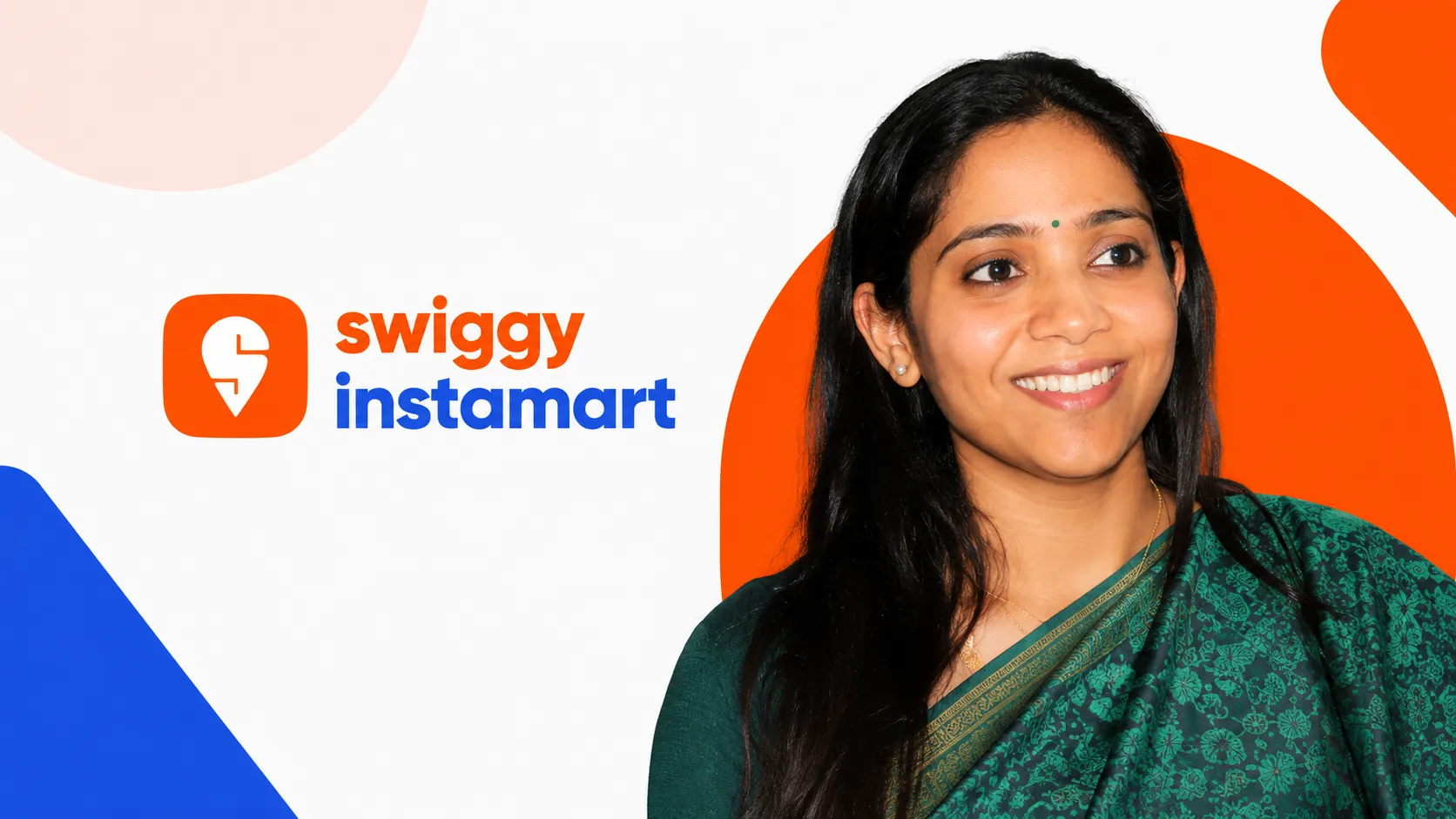
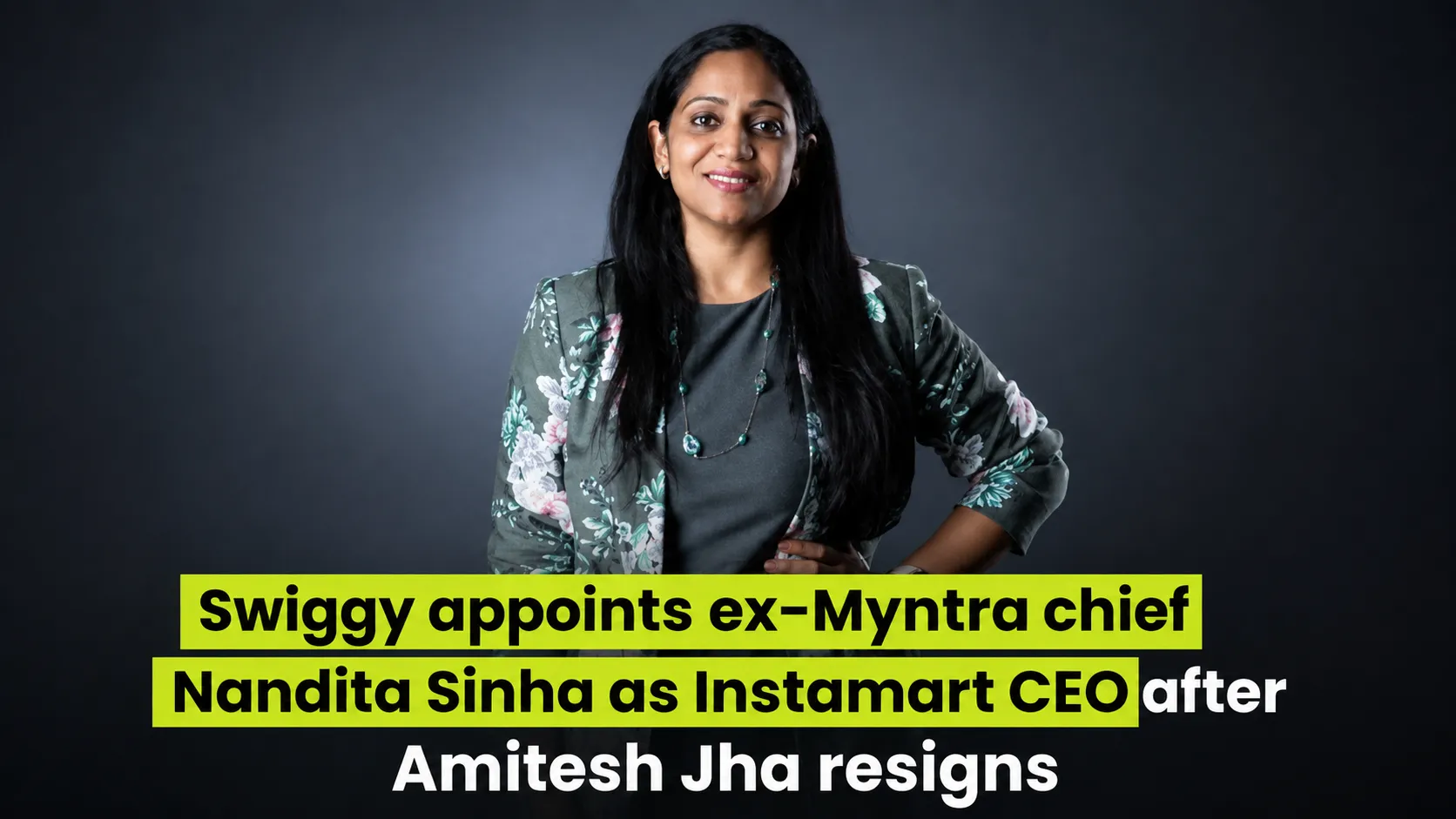
Swiggy has appointed Nandita Sinha as Chief Executive Officer of Instamart, its quick-commerce business, with her new role taking effect from August 3, 2026. She succeeds Amitesh Kumar Jha, who resigned from the company, with his departure taking effect immediately on July 28. The appointment places a leader with a demonstrated track record steering a difficult, competitively pressured Indian consumer internet business toward profitability directly into what is widely regarded as the most operationally demanding and capital-intensive segment of that same broader consumer internet landscape, a transition that will be watched closely across the industry.
The Myntra Chapter: A Profitability Story Worth Understanding
To understand why Swiggy specifically sought out Sinha for this role, it helps to understand what she actually accomplished at Myntra, the Flipkart Group-owned fashion e-commerce platform she led before this appointment. Sinha is credited with steering Myntra to profitability in 2024, a genuinely significant achievement given the intensely competitive, margin-thin nature of Indian fashion e-commerce, where customer acquisition costs, return rates, and logistics complexity have historically made sustainable profitability difficult for even well-capitalised platforms to achieve.
During her tenure, Myntra expanded its brand portfolio to include global names like Mango, H&M and Next alongside established Indian labels, struck strategic partnerships with retailers including Macy's, and worked with top-tier fashion designers including Rohit Bal — a brand-building and partnership strategy that, combined with operational discipline, contributed to the platform's improved financial performance. In her own description of Myntra's competitive position, Sinha has characterised the platform as having built "a very robust platform on the back of technology to solve the complex problems of fashion," reaching nearly 70 million monthly visitors — scale that speaks to Myntra's position as one of India's dominant fashion e-commerce destinations under her leadership.
Sinha departed Myntra in April 2026, when the Flipkart Group announced Sharon Pais as the fashion platform's new CEO — a transition that, notably, occurred several months before her appointment to Instamart, meaning Swiggy was evaluating and ultimately selecting an executive who had already demonstrated her turnaround capabilities in a completed, verifiable chapter of her career, rather than making a more speculative bet on an executive mid-tenure at a previous role.
A Career Built Across FMCG, Fashion And Now Quick Commerce
Sinha's professional trajectory before Myntra spans a genuinely diverse set of Indian consumer-facing businesses. She began her career at Hindustan Unilever Limited before moving to Britannia Industries as a product manager, before founding MyBabyCart.com in 2012, an e-commerce startup focused on baby and maternity products — an entrepreneurial chapter that gave her direct, founder-level experience with the operational challenges of building a consumer e-commerce business from the ground up, rather than only the executive-level strategic experience she would later bring to larger, more established platforms.
She holds a degree in Ceramic Engineering from the Indian Institute of Technology (BHU), Varanasi, and an MBA in Marketing and Strategy from the Faculty of Management Studies at Delhi University — an engineering-plus-management academic background that has become an increasingly common profile among India's senior consumer internet executives, combining technical grounding with the commercial and marketing expertise required to run large, complex platform businesses. That specific combination of a hard-science engineering degree paired with a marketing-focused MBA has proven a recurring pattern among a number of India's most prominent women consumer-tech executives, suggesting the pathway itself may be worth studying by aspiring leaders seeking a comparable trajectory into senior platform leadership roles.
Why Quick Commerce Is A Genuinely Different Challenge
It is worth being explicit about how different the operational and competitive dynamics of quick commerce are from the fashion e-commerce environment Sinha successfully navigated at Myntra. Fashion e-commerce, whatever its own considerable challenges around returns, sizing, and seasonal inventory management, operates on a fundamentally different cadence than quick commerce — customers browsing and purchasing clothing typically tolerate multi-day delivery windows, giving platforms meaningfully more operational flexibility in inventory positioning and logistics routing than quick commerce allows.
Quick commerce, by contrast, competes explicitly on delivery speed measured in minutes, requiring extensive networks of hyperlocal dark stores, real-time inventory management across thousands of SKUs, and delivery fleet coordination that must function with near-perfect reliability at a scale and speed that fashion e-commerce logistics never needed to achieve. The competitive intensity is also structurally different: Instamart faces direct, aggressive competition from Blinkit and Zepto, both of which have raised substantial capital specifically to fund the dark-store expansion and delivery-speed arms race that has come to define the category, while Amazon and Flipkart have also entered the space, adding further competitive pressure from India's largest e-commerce platforms leveraging their existing logistics infrastructure and customer bases.
Swiggy Group CEO's Framing
Swiggy Group CEO Sriharsha Majety described Sinha as "one of India's most accomplished consumer internet leaders," adding that he is "enthusiastic about the vision, customer obsession and operational rigor she brings to the team we've built at Instamart." That specific phrase — "operational rigor" — is likely a deliberate signal about what Swiggy's leadership believes Instamart specifically needs at this stage of its competitive battle: not simply continued aggressive growth investment, which the business has arguably already pursued extensively under previous leadership, but a more disciplined operational execution layer capable of converting that scale into sustainable, competitively defensible unit economics.
For her part, Sinha framed her move in terms of both admiration for what Instamart's existing team has built and genuine excitement about the challenge ahead. "I have long admired what the team at Instamart has built. It's a business with a strong customer-first culture, great talent and significant opportunities ahead," she said. "Instamart sits at the heart of how India shops for its everyday needs, and I look forward to working with our colleagues, partners and consumers to shape its next chapter of growth." That framing, emphasising existing team strength rather than positioning herself as arriving to fix a broken business, suggests a leadership approach oriented toward building on established foundations rather than a wholesale strategic reset — a posture that may prove reassuring to an Instamart workforce navigating its second CEO transition in a relatively short period.