The 40-Day Countdown
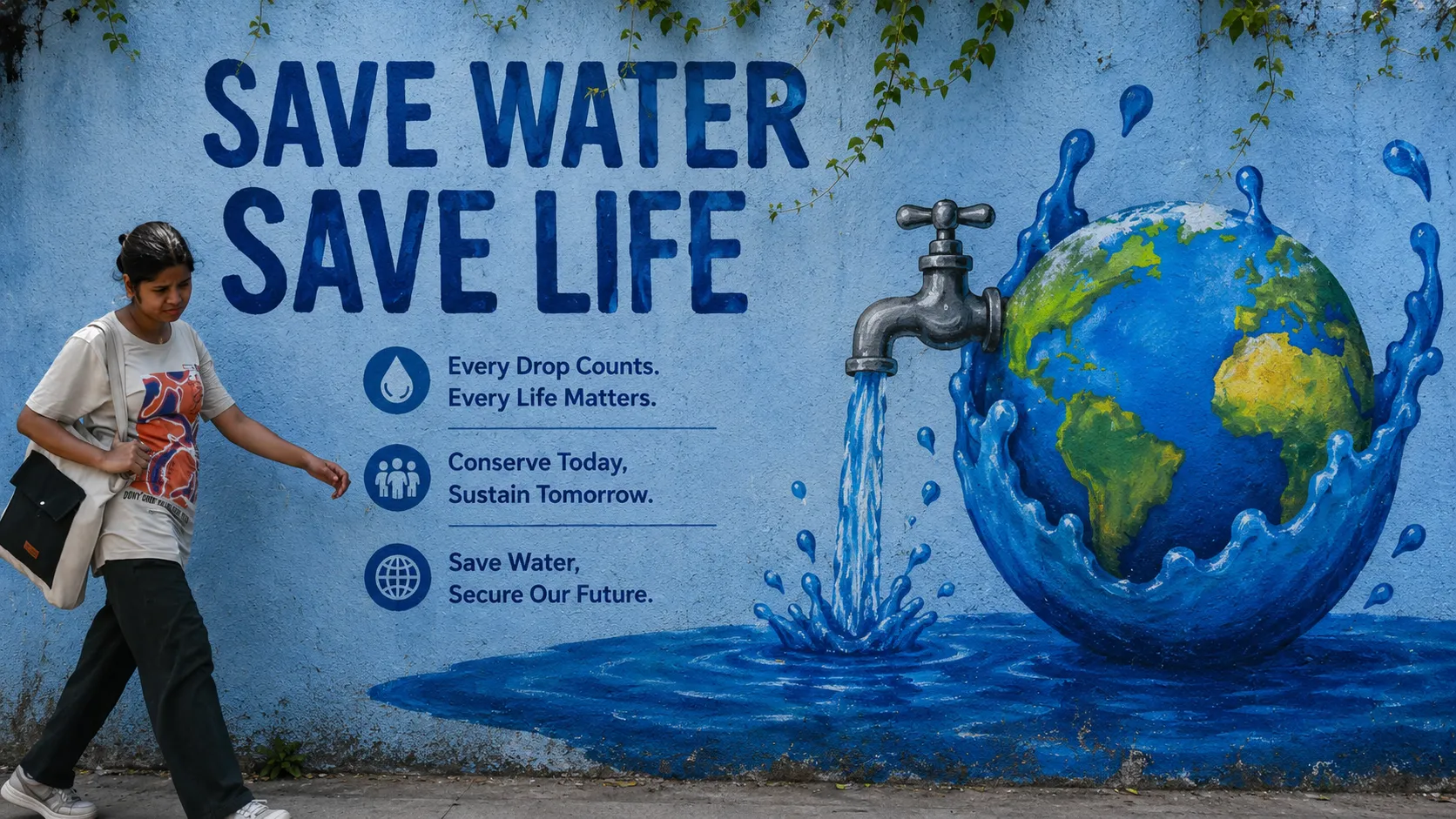
Mumbai is running out of time. On June 16, the city's reservoir levels dropped to a critical 10.35 per cent of total capacity, leaving India's financial capital with approximately 40 days of water if the monsoon does not arrive soon . The situation is the result of a delayed monsoon tied to the El Nino effect—Maharashtra has received 75 per cent lower rainfall than average in the first 16 days of June, and monsoon rains are now expected at the end of the month rather than the first week .
The Brihanmumbai Municipal Corporation has responded with emergency measures. A 10 per cent water cut has been in effect since May 15 . From June 17, a 20 per cent cut has been imposed on industrial, commercial, and sports establishments . Water supply to construction sites has been temporarily disconnected, no new construction connections will be sanctioned, swimming pools have been disconnected, and the use of potable water for car washing, gardening, or cleaning roads is banned .
Mumbai requires approximately 4,664 million litres per day but receives only 4,100 MLD—a shortfall of about 565 MLD . Private water tankers fill this gap, supplying around 550 MLD daily to construction sites, malls, hotels, and housing societies .
The Groundwater Economy Drilling into Trouble
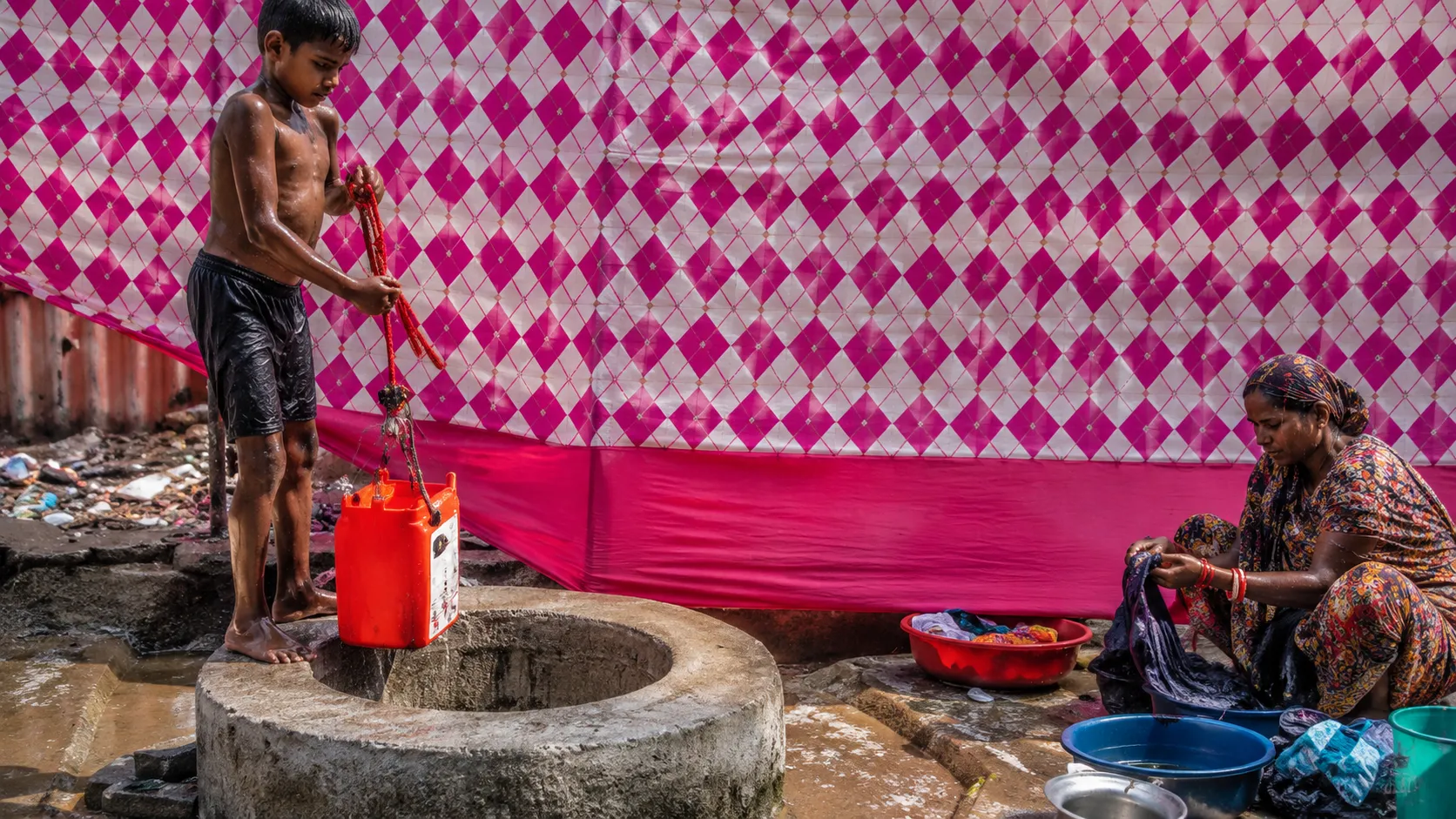
But the surface water crisis is only half the story. Beneath Mumbai, a parallel water economy is operating with almost no oversight. Private water tankers primarily source their water from groundwater extracted through borewells . According to an RTI application filed by groundwater activist Suresh Kumar Dhoka, Mumbai has more than 17,364 wells used for commercial water sale . Yet as of May 2025, only 619 wells had obtained No Objection Certificates from the Central Ground Water Authority (CGWA), which the National Green Tribunal made mandatory in 2015 for all commercial groundwater users .
This means thousands of wells are operating without authorisation—and without monitoring. The Central Ground Water Board's groundwater quality report for Maharashtra records no monitoring borewells in Mumbai, and only 6 and 19 monitoring dug wells in Mumbai city and suburban areas, respectively . Sitaram Shelar, convener of the Pani Haq Samiti, describes this as a "planned data gap" .
The violations are not minor. Extracting groundwater for commercial use without a CGWA NOC violates groundwater rules and is punishable with a fine or imprisonment under the Environment Protection Act, 1986 . Yet illegal extraction continues openly. Earlier in 2026, a complaint filed by Dhoka triggered an investigation that found 27 wells and borewells extracting groundwater without CGWA NOCs in R/C Central division alone .
The business model is straightforward. Tanker operators often purchase small parcels of land in areas with high water tables and install borewells. Shelar alleges a nexus among borewell contractors, housing societies, and municipal officials: "There is a nexus of borewell diggers, pest control officers (PCO) from the BMC and housing societies. The PCO permits the digging of a borewell, while the engineer's job is to inspect the site. Still, often, many boreholes are rigged without applying the required permissions" .
The groundwater economy is also being reshaped by Mumbai's construction boom. Environmental activist Zoru Bhathena notes that basements are now at least four floors deep, requiring dewatering of the construction area and its periphery, which depletes groundwater enormously. Relentless concretisation has further reduced natural recharge by sealing permeable surfaces .
The Tanker Strike That Exposed the Crisis
On June 7, the Mumbai Water Tanker Association went on strike, protesting notices ordering ring-well and borewell operators to stop supplying water to tankers until they obtained fresh CGWA licenses . The strike was called off two days later following an intervention by Maharashtra Chief Minister Devendra Fadnavis .
The protest drew attention to the deeper governance failure. Shiv Sena (UBT) leader Aaditya Thackeray wrote to Union Jal Shakti Minister C.R. Patil on June 9, urging the government to amend CGWA norms for Mumbai and other densely populated cities, describing them as "impractical and highly restrictive" . But experts argue that weaker regulation is not the solution. Without strict enforcement, better mapping, and accountability, even the best mapping exercises will not protect groundwater resources .
In response to the crisis, the BMC has launched a pilot aquifer mapping project along the Mithi river basin, aiming to identify appropriate zones for new public recharge systems . The study involves geophysical and geochemical surveys to determine soil composition, rock type, water quality, and confined and unconfined zones. Pegged to cost over Rs 25 lakh, equipment such as water quality testing kits, GPS devices, and water level loggers will be procured. Spanning 17.8 km, the Mithi river originates at Vihar Lake and flows through multiple zones before discharging into Mahim creek . If successful, the project will be replicated across the rest of the city . But experts caution that the project has been in planning stages since 1994, when an expert committee recommended establishing a dedicated geo-hydrological unit within the municipal administration. It has never been established .
The Parallel Response
Meanwhile, in Navi Mumbai, the civic body has launched an emergency drive to revive 100 traditional open wells for non-potable use, as the Morbe Dam, its primary water source, has dropped to a critical 12.73 per cent . Municipal Commissioner Dr Kailas Shinde has directed the Water Supply Department to survey, de-silt, and restore traditional open wells, in collaboration with housing societies and local public representatives . Environmentalists have described the crisis as a wake-up call and urged the NMMC to strictly enforce mandatory rainwater harvesting and groundwater recharge systems in all upcoming redevelopment projects .
The Long-Term Risk
Mumbai's groundwater crisis reflects a deeper governance failure. The city lacks the institutional capacity to understand and manage its groundwater resources . The BMC's long-term goal is to integrate groundwater into Mumbai's water resilience and climate adaptation planning, but that goal remains distant.
The immediate priority for the city is to survive until the monsoon arrives. The 40-day window means that every drop matters. For thousands of illegal borewells, the lack of oversight means they can drill as deep as they need. But groundwater is a finite resource, and Mumbai is emptying it as fast as it can drill. Nobody knows how much remains beneath the city's surface .