
Meesho's Acquisition Of Kirana Club Is More Than A Consolidation Deal. It Signals A Growing Race To Control The Millions Of Small Retailers That Power India's Consumption Engine.
For years, India's startup ecosystem focused heavily on consumers.
Companies competed to attract shoppers, deliver products faster and create seamless digital experiences for end users. E-commerce platforms battled for market share, quick-commerce startups raced to reduce delivery times and consumer brands spent aggressively to build loyalty. The assumption was that whoever controlled consumer demand would ultimately control the market. While that strategy created several large businesses, it also overlooked a critical part of India's economy: the millions of small retailers that continue to serve as the backbone of everyday commerce.
Those retailers remain extraordinarily important.
Despite the rapid growth of online shopping, neighborhood kirana stores continue handling a significant share of India's retail transactions. They maintain deep customer relationships, understand local demand and provide convenience that even large digital platforms often struggle to replicate. Over time, startups began realizing that helping these businesses operate more efficiently could become an enormous opportunity in its own right. Instead of competing against kiranas, technology companies increasingly sought ways to integrate them into the broader digital economy.
This shift helps explain Meesho's acquisition of Kirana Club for approximately ₹202 crore.
Kirana Club built a platform focused on helping small retailers source inventory and access better business opportunities. By acquiring the company, Meesho is not simply adding another startup to its portfolio. It is strengthening its position within a segment of the market that many investors believe will play a crucial role in the future of Indian commerce. The deal reflects a growing recognition that small businesses are not obstacles to digital transformation. They are becoming one of its most important beneficiaries.
The acquisition also highlights how competitive the commerce landscape has become.
Companies are increasingly looking beyond consumers and focusing on the infrastructure supporting retail itself. The next phase of growth may depend less on acquiring shoppers and more on becoming indispensable to the merchants serving them.
Kirana Stores Are Becoming Strategic Assets
India's kirana ecosystem has long been one of the country's greatest economic strengths.
Millions of small stores operate across urban and rural markets, creating a retail network that reaches virtually every corner of the country. These businesses often succeed because they combine convenience, trust and local knowledge in ways that large organizations find difficult to replicate. Customers rely on them not only for products but also for credit, recommendations and community relationships developed over many years.
Technology is now transforming how these stores operate.
Digital payments, inventory-management systems and online sourcing platforms are helping retailers improve efficiency while maintaining the advantages that made them successful in the first place. Startups increasingly view kiranas as valuable partners rather than competitors because they provide access to consumers at scale. Helping these businesses become more productive creates opportunities for both merchants and technology providers.
This has attracted substantial investment.
Platforms supporting small retailers have emerged across categories including procurement, logistics, financing and software. The objective is often the same: become an essential part of a retailer's daily operations. Companies that achieve this position gain access to valuable transaction data, recurring engagement and strong network effects.
Kirana Club emerged within precisely this environment.
Its acquisition suggests that these capabilities are becoming increasingly strategic.
Meesho Is Expanding Beyond Consumer Commerce
The deal also reflects how Meesho's ambitions are evolving.
The company initially built its reputation by enabling social commerce and creating opportunities for value-conscious consumers across India. Over time, however, the platform expanded significantly, attracting millions of users and establishing itself as one of the country's largest e-commerce businesses. As scale increased, so did the need to strengthen underlying supply chains and merchant ecosystems.
Acquiring Kirana Club supports that objective.
The platform provides access to relationships, capabilities and operational insights within the small-business segment. Rather than focusing exclusively on consumer acquisition, Meesho is investing in the infrastructure that helps products move through the retail economy. This approach can create stronger competitive advantages because it deepens the company's role within the broader commerce ecosystem.
The strategy mirrors trends visible across global technology platforms.
Many successful commerce businesses eventually expand beyond transactions into logistics, payments, merchant services and supply-chain support. These additional layers often create stronger customer retention and more diversified revenue opportunities. The closer a company moves toward becoming critical infrastructure, the harder it becomes to replace.
Meesho appears to be moving in that direction.
The acquisition is as much about ecosystem building as it is about growth.
The Future Of Commerce May Be Hybrid
One reason this acquisition matters is because it reflects the reality of how commerce works in India.
Predictions that traditional retail would disappear in the face of e-commerce have largely proven incorrect. Instead, a hybrid model is emerging where digital platforms and physical retailers increasingly coexist. Consumers move seamlessly between online and offline channels depending on convenience, price and urgency.
This creates opportunities for companies capable of connecting both worlds.
Retailers benefit from better sourcing, inventory access and technology tools. Platforms benefit from deeper distribution and stronger local presence. The relationship becomes collaborative rather than competitive. As digital adoption continues growing, these connections are likely to become even more valuable.
Small businesses sit at the center of this transformation.
They remain trusted touchpoints within communities while increasingly adopting technology that improves efficiency and expands capabilities. The companies helping them navigate this transition are positioning themselves within one of the most important segments of India's economy.
That makes acquisitions like this strategically significant.
The future of commerce will likely be built through partnerships rather than replacement.
Investors Are Increasingly Backing Commerce Infrastructure
The acquisition also reflects a broader shift in investor thinking.
For years, much of the excitement in commerce focused on consumer-facing applications. While those opportunities remain attractive, investors increasingly recognize the value of businesses operating behind the scenes. Infrastructure providers often generate more predictable engagement because they become integrated into operational workflows rather than relying solely on customer acquisition.
Merchant-focused platforms exemplify this trend.
When retailers depend on a service for sourcing, inventory management or procurement, the relationship becomes recurring and deeply embedded. These dynamics often create stronger long-term economics than purely transactional models. As a result, infrastructure-oriented businesses are attracting growing attention across the startup ecosystem.
Kirana Club's acquisition highlights this reality.
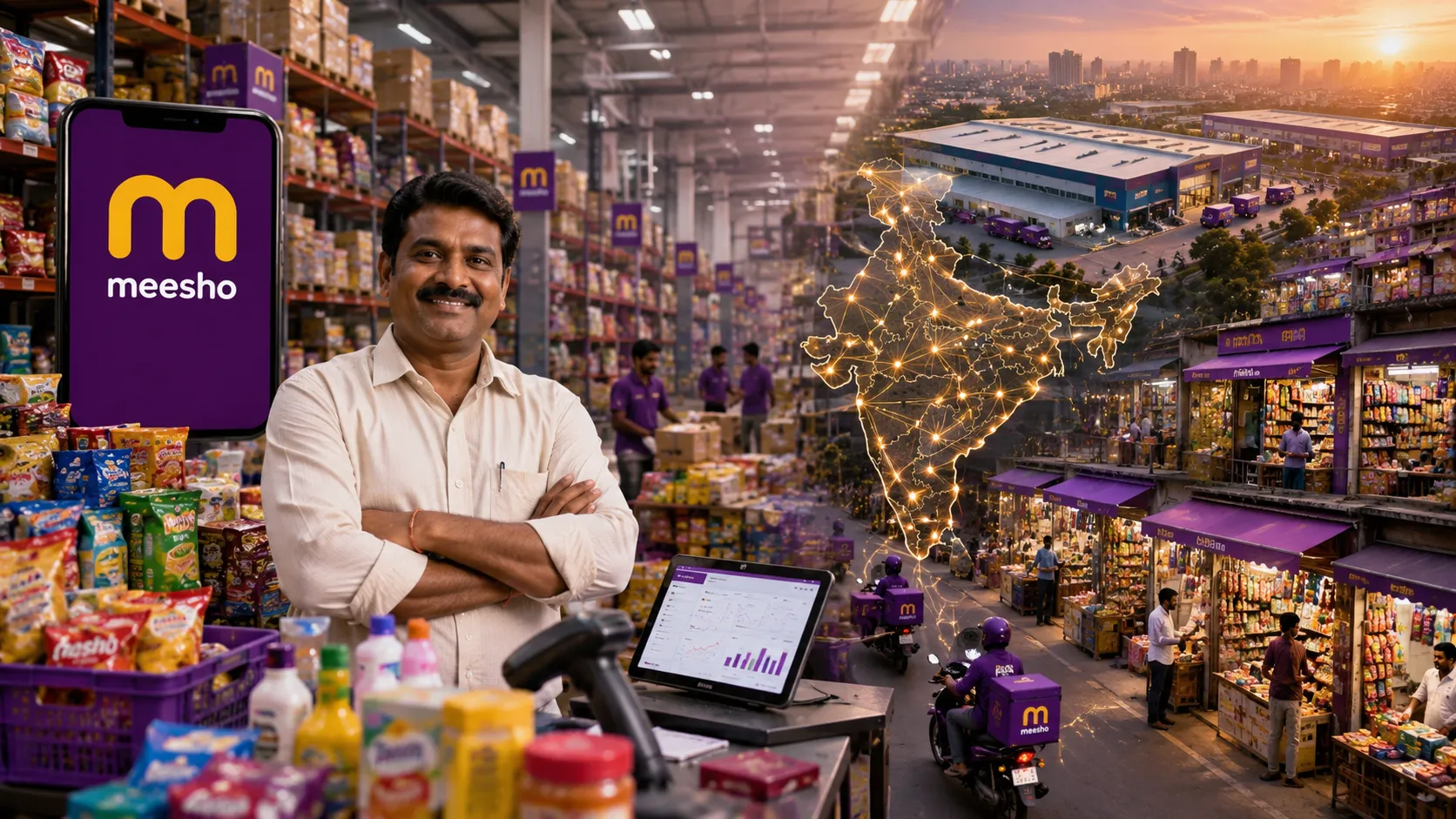
The platform's value was not simply its customer base but its position within the daily operations of thousands of small businesses. Those relationships represent strategic assets in an increasingly competitive commerce landscape.
Investors understand that controlling infrastructure often proves more valuable than controlling attention alone.
And commerce infrastructure is becoming one of the most important battlegrounds.
The Bigger Story
Viewed narrowly, Meesho's ₹202 crore acquisition of Kirana Club is another startup acquisition.
Viewed more broadly, it reflects the growing importance of India's small-business economy within the digital transformation story. The next phase of commerce growth may not come solely from attracting more consumers online. It may come from empowering the millions of retailers that continue serving those consumers every day. Technology companies increasingly recognize that helping small businesses succeed can create significant value for the entire ecosystem.
The acquisition also demonstrates how commerce itself is evolving.
Success is no longer determined only by who sells products. It is increasingly determined by who controls the networks, relationships and infrastructure supporting transactions. Companies that become indispensable to merchants gain influence far beyond individual purchases.
That is why this deal matters.
Because the future of Indian commerce may belong not just to the platforms serving consumers.
But to the platforms empowering the businesses that serve them.