The State’s New AI Push Is Not Just About Technology. It Is About Using Artificial Intelligence As A Long-Term Economic Development Strategy
For years, artificial intelligence was largely discussed through the lens of technology companies, startups and global research laboratories.
Conversations around AI typically focused on Silicon Valley, venture-backed startups or large technology firms building advanced models because innovation itself appeared concentrated within the private sector. Governments often positioned themselves as regulators, facilitators or infrastructure providers rather than active participants in the AI economy. The assumption was that businesses would drive adoption while policymakers responded to its consequences.
That relationship is beginning to change.
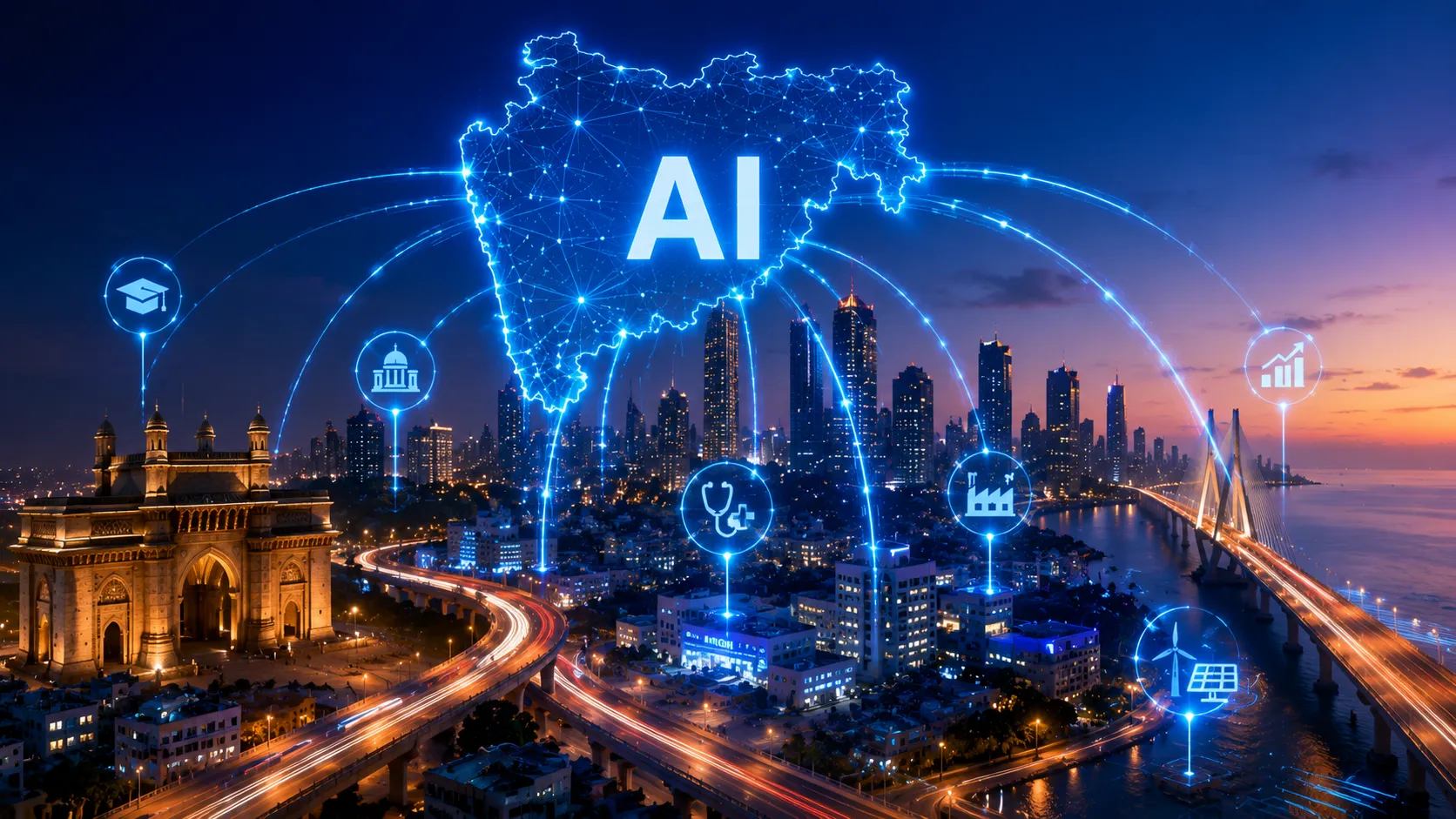
Maharashtra has unveiled an ambitious vision to position itself at the center of India’s artificial intelligence economy, announcing plans that include attracting ₹10,000 crore in AI investments, developing dedicated AI innovation cities, expanding startup incubation ecosystems and creating more than 1.5 lakh jobs. The scale of the announcement signals something much larger than a technology initiative. It reflects a growing belief among governments that artificial intelligence is becoming a foundational economic sector capable of influencing investment, employment, infrastructure and long-term competitiveness.The timing is significant because AI is rapidly evolving from a technology trend into an economic priority.
Across the world, governments are increasingly treating artificial intelligence as strategic infrastructure because AI now influences industries ranging from finance and healthcare to manufacturing, defense and logistics. Countries are competing to attract talent, research institutions, startups and technology investment because leadership in AI is increasingly linked to future economic growth. Maharashtra’s announcement places the state directly within that global race.What makes the strategy particularly notable is its focus on ecosystem building rather than isolated projects.
Instead of concentrating solely on technology parks or startup incentives, the plan envisions interconnected infrastructure involving innovation districts, incubation networks, investment attraction and workforce development. This approach reflects lessons learned from previous technology booms because successful ecosystems rarely emerge from individual policies alone. They typically require talent, capital, research, entrepreneurship and industry participation operating together within the same environment.The proposed AI innovation cities are especially important.
Technology clusters historically create disproportionate economic impact because they bring startups, researchers, investors, universities and corporations into close proximity. Silicon Valley became influential not simply because of technology companies but because an entire ecosystem developed around them. Similar dynamics helped shape global technology hubs in places like Shenzhen, Singapore and Bengaluru. Maharashtra appears to be pursuing a comparable strategy by attempting to create dedicated environments where AI-focused businesses can scale more rapidly.Startup incubation forms another major pillar of the vision.
India already possesses one of the world’s largest startup ecosystems, yet artificial intelligence startups often face unique challenges because they require specialized talent, computing infrastructure and longer development cycles. Government-supported incubation programs can help address some of these barriers by providing resources, mentorship and access to institutional networks. By expanding incubation support, Maharashtra is attempting to position itself as a preferred destination for emerging AI entrepreneurs.The employment targets reveal another important aspect of the strategy.
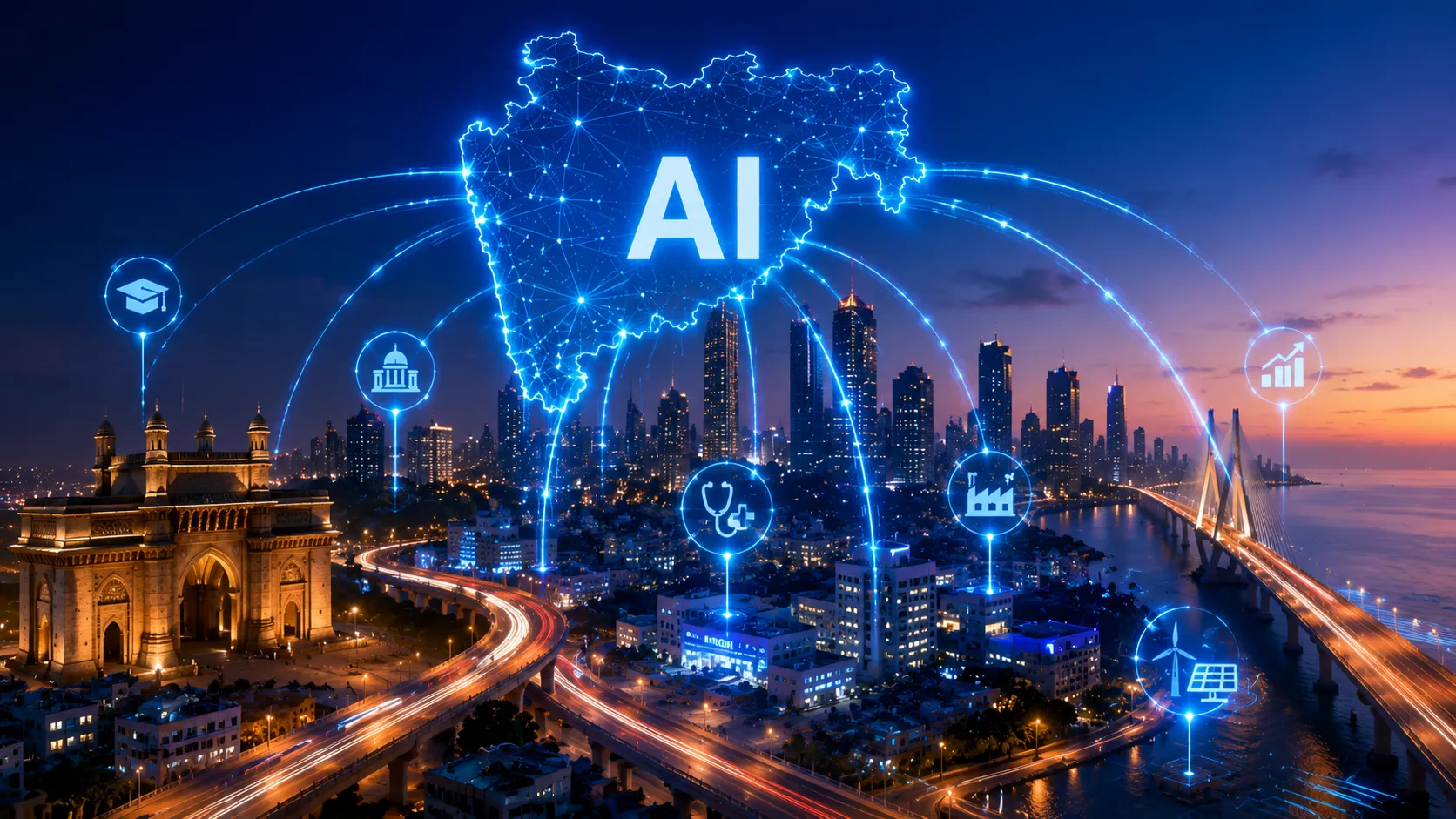
More than 1.5 lakh jobs represent a substantial economic objective because AI is often discussed primarily through fears of automation and workforce displacement. Maharashtra’s plan instead emphasizes job creation, reflecting a growing view that artificial intelligence will generate new categories of employment even as it transforms existing industries. Demand for AI engineers, data scientists, product specialists, infrastructure managers, researchers and domain experts is expected to rise significantly as adoption accelerates.The initiative also highlights how competition among Indian states is evolving.
For decades, states competed for manufacturing investments, industrial parks and infrastructure projects because these sectors drove employment and economic development. Today, technology ecosystems increasingly occupy the same strategic role. States now compete for data centers, startup ecosystems, semiconductor facilities and innovation infrastructure because future growth is becoming more knowledge-intensive. Maharashtra’s AI ambitions suggest that artificial intelligence may become one of the next major arenas for inter-state economic competition.Mumbai’s growing enterprise AI ecosystem strengthens the state’s position further.
Many of India’s largest financial institutions, healthcare organizations and corporate headquarters are already located within Maharashtra because the state remains one of the country’s most important economic centers. This creates natural opportunities for real-world AI deployment across banking, insurance, healthcare, logistics and industrial operations. Unlike purely research-focused ecosystems, Maharashtra can potentially combine innovation with large-scale commercial adoption.Of course, achieving these ambitions will require substantial execution.
Building AI ecosystems involves more than announcing investment targets because success depends on talent availability, educational partnerships, infrastructure readiness, regulatory clarity and sustained private-sector participation. Global competition for AI leadership is intense, and technology ecosystems often take years to mature. The challenge will be translating policy vision into measurable outcomes that attract both investors and innovators.
Yet the broader significance of the announcement remains clear.Artificial intelligence is no longer being treated simply as an emerging technology. It is increasingly being viewed as economic infrastructure capable of influencing competitiveness, employment and long-term development. Governments are no longer standing on the sidelines waiting for AI industries to emerge naturally.They are actively trying to build them.
And Maharashtra’s latest announcement suggests that the race to become India’s AI capital may increasingly be driven not only by startups and corporations, but by state governments themselves.