Kiran Mazumdar‑Shaw — The Garage Startup That Became India’s Biotech Behemoth
The Brewmaster Who Became a Biotech Pioneer
In 1978, Kiran Mazumdar was a 25‑year‑old woman with a degree in zoology from Bangalore University and a diploma in malting and brewing from Australia’s Ballarat College. She had just returned to India, hoping to find a job as a master brewer — a field dominated by men. Every brewery she approached rejected her. “You’re a woman,” one interviewer told her bluntly. “We don’t hire women for brewing.”
Frustrated but undeterred, she met Leslie Auchincloss, an Irish entrepreneur who was looking for a local partner to set up a biotechnology venture in India. He was impressed by her technical background and offered her a startup capital of ₹10,000. Kiran accepted, rented a garage in Bengaluru’s Koramangala neighbourhood, and founded Biocon India in a 300‑square‑foot space with one employee — herself.
At that time, biotechnology in India was a non‑existent industry. Enzymes — proteins used in industrial processes — were mostly imported. Kiran saw an opportunity to manufacture enzymes locally for breweries, textile mills, and detergent manufacturers. She worked 18‑hour days, drove her own scooter to deliver samples, and personally handled production, quality control, and sales.
The garage startup slowly gained traction. Within three years, Biocon had moved to a larger facility and was exporting enzymes to Europe and the United States. But Kiran’s ambition was far bigger than industrial enzymes. She wanted to enter biopharmaceuticals — using biotechnology to make life‑saving medicines affordable for Indians.
The Strategic Pivot to Biopharma
In the 1990s, India’s pharmaceutical market was dominated by expensive imported drugs. Insulin for diabetes, statins for cholesterol, and cancer therapies were out of reach for most citizens. Kiran realized that Biocon’s enzyme‑manufacturing expertise — fermentation, purification, and scale‑up — could be applied to producing generic biologics (biosimilars).
The pivot was risky. Biologics are vastly more complex than chemical drugs, requiring years of R&D and stringent regulatory approvals. But Kiran invested heavily in research, hiring scientists from around the world and building India’s first state‑of‑the‑art biotech R&D centre.
The breakthrough came in 2001, when Biocon launched INSUGEN — India’s first indigenous recombinant human insulin. Until then, Indian diabetics had to rely on expensive imported insulin (₹1,500–2,000 per vial). INSUGEN was priced at ₹300 per vial, a 80% reduction, and was clinically equivalent. Within a year, Biocon captured 30% of India’s insulin market.
This was followed by a pipeline of biosimilars:
Statin APIs (Atorvastatin, Rosuvastatin) — making cholesterol drugs affordable.
Cancer biosimilars — trastuzumab (for breast cancer) and bevacizumab (for colorectal cancer) launched at one‑third of global prices.
Immunosuppressants — enabling affordable organ transplants.
By 2004, Biocon had grown into India’s largest biotech company by revenue. On March 11, 2004, it went public on the Bombay Stock Exchange in a landmark IPO that was oversubscribed 32 times, raising ₹300 crore and valuing the company at over ₹1,700 crore. Kiran Mazumdar‑Shaw became India’s first self‑made woman billionaire.
Affordable Innovation: The Biocon Model
Kiran’s core philosophy is “affordable innovation” — creating world‑class biologics that cost a fraction of Western prices without compromising quality. This is not charity; it is a deliberate business strategy built on three pillars:
Reverse engineering excellence: Biocon’s scientists developed proprietary fermentation and purification processes that increased yields and lowered production costs.
Clinical trial efficiency: By conducting trials in India (where costs are 60% lower than the US), Biocon accelerated approvals without cutting corners.
Volume over margin: Lower per‑unit margins but massive volumes (India’s diabetic population alone is 75 million) made the model profitable.
The results speak for themselves. Biocon’s biosimilars are now approved in over 120 countries, including the US, Europe, and Japan. In 2023, Biocon Biologics (the subsidiary focused on biosimilars) acquired Viatris’ biosimilars business for $3.3 billion, making it one of the top four biosimilar companies globally.
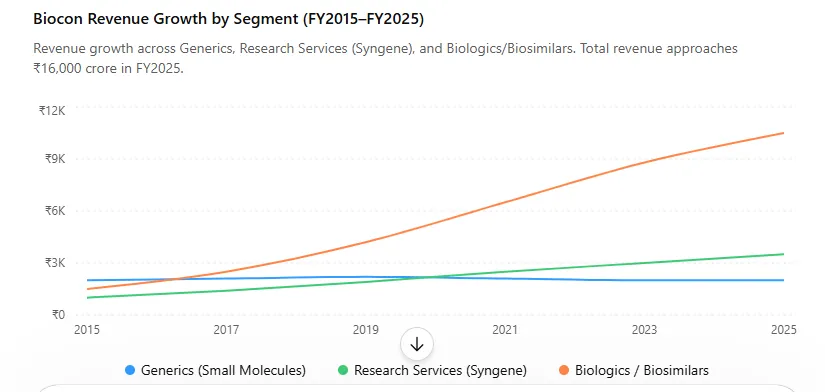
As of FY2025, Biocon’s consolidated revenue crossed ₹16,000 crore (approximately $1.9 billion), with a market capitalisation of over ₹70,000 crore. Kiran holds approximately 58% of the company, making her net worth over ₹40,000 crore.
Leadership Through a Crisis: The COVID‑19 Partnership
When the COVID‑19 pandemic struck, Kiran acted swiftly. Biocon partnered with US‑based Gilead Sciences to manufacture and distribute remdesivir (the only antiviral approved at the time) in India at a price of ₹1,500 per vial — compared to the US price of $3,000. Biocon also ramped up production of Itolizumab, an anti‑inflammatory drug that showed promise in reducing cytokine storms in severe COVID patients.
Within six weeks of the pandemic declaration, Biocon had repurposed its R&D facilities, trained staff on safety protocols, and was shipping remdesivir to hospitals across India. Kiran personally wrote to the Prime Minister’s Office, offering to share manufacturing know‑how with other Indian pharma companies. The move saved thousands of lives and cemented Biocon’s reputation as a national asset.
Philanthropy and Women in STEM
Kiran Mazumdar‑Shaw’s philanthropy is as strategic as her business. Through the Mazumdar‑Shaw Medical Foundation, she has:
Funded the Mazumdar‑Shaw Cancer Center at Narayana Health in Bengaluru, which treats over 10,000 underprivileged cancer patients annually at subsidized rates.
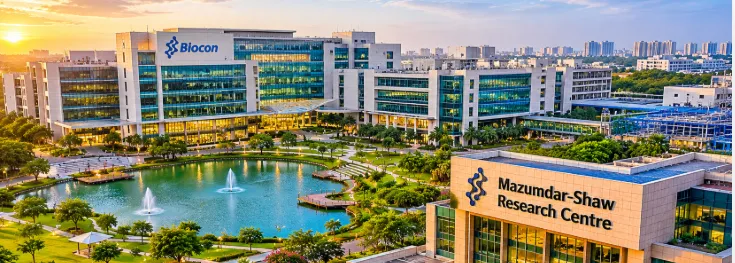
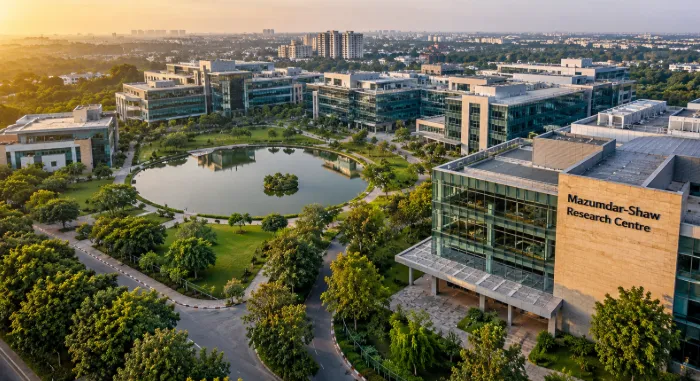
Established the Mazumdar‑Shaw Advanced Research Centre (MSARC) for infectious diseases and antimicrobial resistance.
Donated ₹225 crore to the Indian Institute of Science (IISc) for a new medical research wing.
She is also a fierce advocate for women in STEM. At Biocon, women make up over 40% of the workforce and 30% of senior leadership — unheard of in Indian pharma. She has personally mentored dozens of women scientists, including Dr. Renu Swarup (former Secretary of India’s Department of Biotechnology) and Dr. Shiladitya Sengupta (a Harvard‑trained scientist).
“I was told I couldn’t be a brewer because I was a woman,” she often says. “Now I run a biotech company. The only barrier is imagination — and persistence.”
Succession Planning and the Handover
In March 2021, Kiran announced that her daughter, Dr. Shreehas Tambe (who had taken her husband’s surname), would become the CEO of Biocon Biologics, while her son‑in‑law Sidharth Srinivasan took over as CFO. Kiran remained Executive Chairperson of the parent company.
The move was unusual for a founder‑led Indian company, where patriarchs often cling to power into their 80s. Kiran, then 67, explained: “Succession is not about age; it’s about readiness. Shreehas has been with Biocon for 15 years, built our biosimilars pipeline, and negotiated the Viatris deal. She is ready.”
The transition has been smooth. Biocon Biologics has continued to grow, launching new products in Europe and Japan. Kiran remains actively involved in R&D strategy and public policy, but the day‑to‑day operations are now in the hands of the next generation — a model that more family businesses could emulate.
Challenges and Critiques
Biocon has faced its share of controversies. In 2020, the US Food and Drug Administration (FDA) issued a warning letter to Biocon’s insulin facility in Malaysia, citing quality control lapses. The issue led to a temporary import ban and a 15% drop in Biocon’s stock. Kiran personally oversaw the remediation, bringing in external consultants and replacing the plant manager. The facility regained compliance in 2023.
Another critique is that Biocon’s “affordable innovation” model relies heavily on reverse‑engineering drugs that were originally developed by Western pharma companies — essentially, making generics of innovator products. Some argue that this does not constitute true innovation. Kiran counters that Biocon has also invested in novel biologics, including an anti‑cancer drug candidate (Itolizumab) and a novel insulin analogue.
Finally, Biocon’s environmental record has been questioned. The company’s Bengaluru facilities are located near residential areas, and local activists have complained about odour and effluent discharges. Biocon has responded by investing in zero‑liquid discharge systems and obtaining ISO 14001 certification.
Lessons for Entrepreneurs
Turn rejection into fuel: The brewery that rejected Kiran because of her gender missed out. She built something bigger.
Pivot without abandoning core competence: Enzyme manufacturing taught Biocon fermentation; fermentation enabled biosimilars.
Affordability is a competitive moat: By pricing drugs at 20% of Western levels, Biocon captured markets that competitors ignored.
Plan succession early: Kiran started grooming her daughter a decade before she stepped down.
The Road Ahead
As of 2026, Kiran Mazumdar‑Shaw is 73 years old. She remains Executive Chairperson of Biocon, spending about 60% of her time on R&D and public policy. She is a member of the Prime Minister’s Science, Technology and Innovation Advisory Council and a vocal critic of India’s patent laws that, in her view, strike the wrong balance between innovation and access.
Biocon’s next frontier is gene therapy — developing affordable treatments for genetic disorders like sickle cell anaemia and thalassemia, which affect millions of Indians. Kiran has pledged ₹1,000 crore of her personal wealth to a gene therapy research initiative.
Her legacy is undeniable: she took a garage startup and turned it into India’s biotech behemoth, democratised access to life‑saving drugs, and showed that women can lead the most complex, capital‑intensive industries. And she’s not done yet.