A Transport Infrastructure Project Is Beginning To Raise Larger Questions About How Cities Grow
For years, metro rail projects across India frequently entered public conversations through familiar themes involving congestion relief, commuting efficiency and urban mobility upgrades. Transport systems often became visible through numbers: kilometers of track laid, passenger projections, station counts and travel-time reductions. Infrastructure discussions frequently emphasized movement because mobility itself represented the most visible challenge confronting rapidly expanding cities.
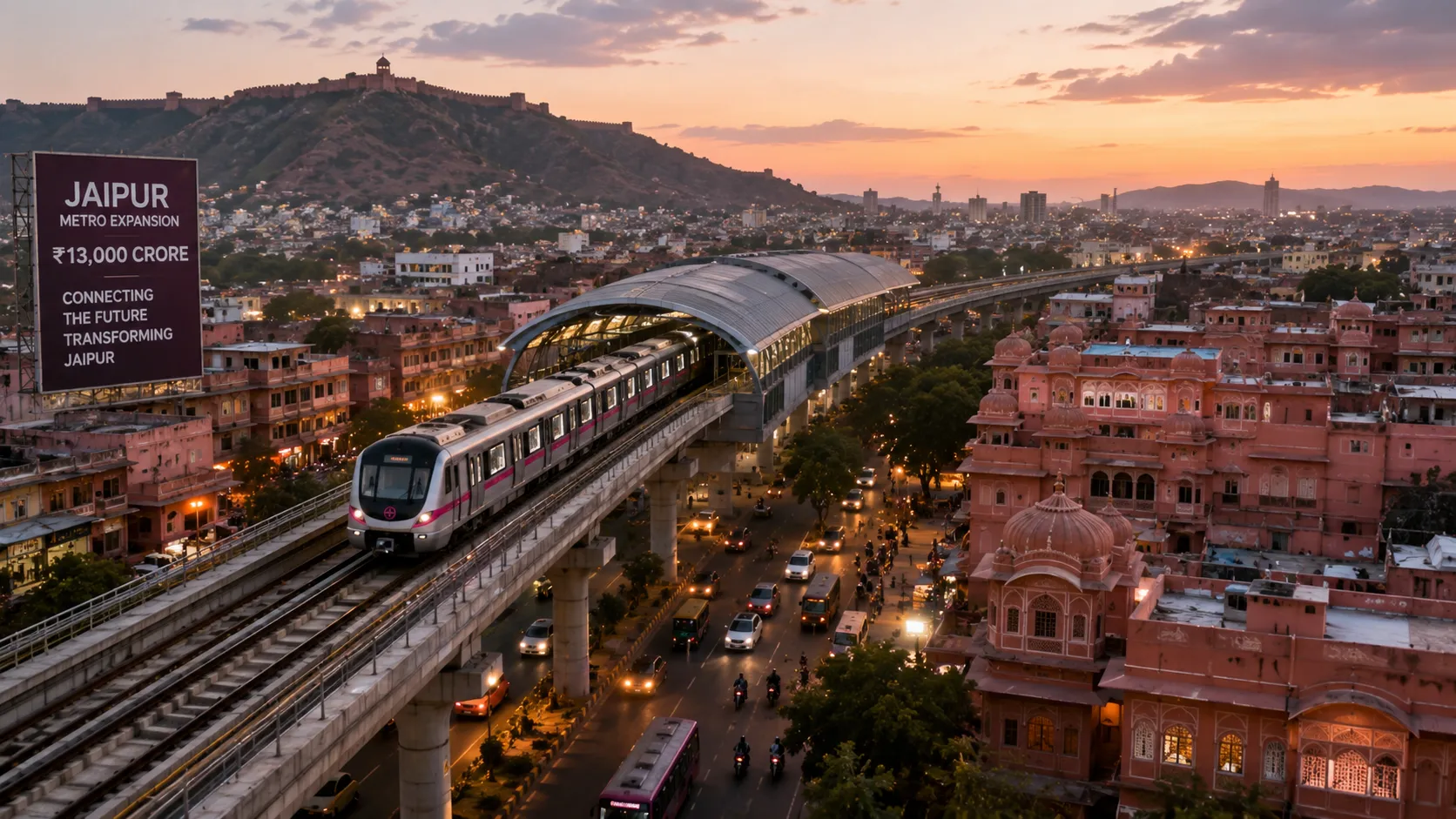
Recent developments surrounding Jaipur’s proposed metro expansion increasingly suggest another conversation may be emerging beneath the transport story itself. Reports surrounding the ₹13,000 crore Jaipur Metro expansion plans, including discussions involving broader corridor growth and city connectivity, increasingly attracted attention not simply because of transportation implications but because large transit systems frequently influence cities in ways extending far beyond movement alone. Across urban environments globally, metro systems increasingly reshape patterns involving housing, commercial development and how communities experience cities themselves.
Viewed independently, the expansion may initially appear like another urban infrastructure announcement. Viewed through a broader social and development lens, however, it increasingly raises larger questions involving how cities evolve once mobility itself begins influencing where people live, work and interact.
Transit Frequently Changes Cities Long Before New Stations Fully Open
Historically, transportation infrastructure often appeared through engineering and logistics frameworks. Metro systems frequently represented solutions designed around reducing congestion and improving connectivity. While these objectives remain central, urban researchers increasingly observed another recurring pattern involving large transit environments.
Cities frequently begin changing around infrastructure before infrastructure itself becomes fully operational.
Property markets gradually shift.
Commercial activity begins repositioning.
Residential interest increasingly expands toward emerging transit corridors.
Businesses frequently begin making decisions around assumptions involving future accessibility rather than present conditions.
This increasingly matters because transportation systems often create invisible maps shaping future urban growth. Areas previously considered peripheral occasionally become more integrated into broader city ecosystems once travel friction begins declining.
The broader significance increasingly suggests transit systems frequently influence not only movement patterns but also economic and social geography.
Metro Systems Increasingly Appear To Influence Housing And Everyday Urban Life
Part of the significance surrounding large-scale transit projects increasingly involves how closely transportation and everyday life now intersect.
Historically, conversations surrounding city development often separated mobility and housing discussions. Increasingly, however, urban environments frequently demonstrate that these systems operate together.
Commute patterns influence where people choose to live.Travel accessibility influences employment choices.Connectivity frequently influences educational and lifestyle decisions.Over time, infrastructure systems often begin affecting routines extending far beyond transportation itself.
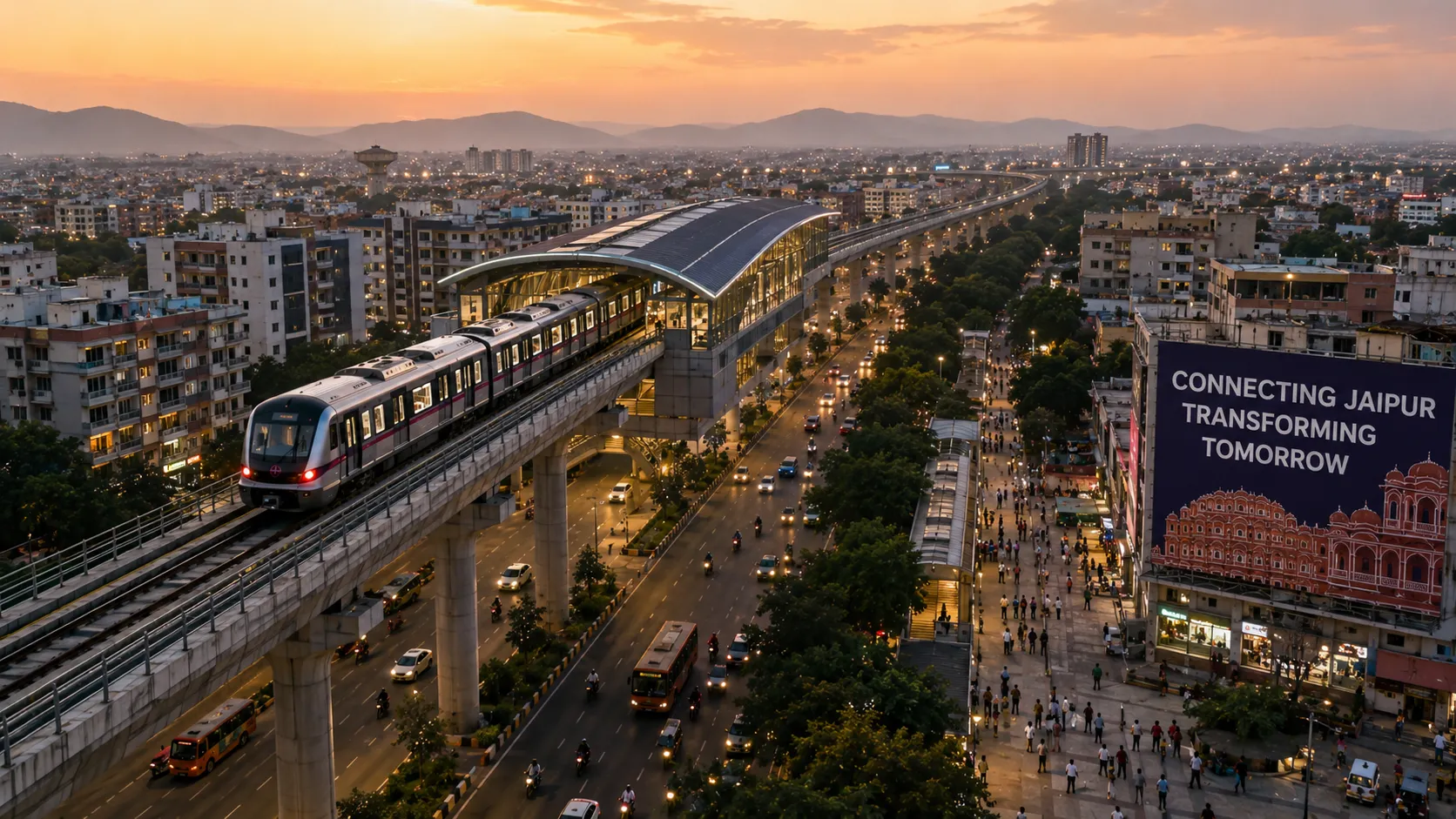
Across several cities globally and within India, transit corridors frequently became associated with changing residential patterns and commercial activity. New stations often influence retail environments, office development and local economic activity because accessibility itself frequently creates value.This distinction increasingly matters because infrastructure projects often appear larger than engineering environments alone.They increasingly become social environments capable of reshaping everyday urban experiences.
Indian Cities Increasingly Appear To Be Entering A Different Urban Development Phase
Another important dimension emerging beneath Jaipur’s expansion story increasingly involves broader changes occurring across Indian cities themselves.
Historically, urban growth frequently unfolded through outward expansion and automobile-centered movement patterns. Rapid population growth often created environments where infrastructure struggled to keep pace with changing urban realities.
Increasingly, however, larger cities appear moving toward different approaches emphasizing integrated mobility ecosystems involving metro systems, public transportation and broader connectivity networks.
Multiple cities across India increasingly expanded metro environments because transportation itself increasingly appears central to broader urban planning discussions.
Importantly, metro systems increasingly influence more than commuting efficiency.They frequently become signals regarding where cities believe future growth may emerge.The broader movement increasingly suggests infrastructure increasingly functions as urban strategy rather than transport planning alone.
The Larger Story Increasingly Extends Beyond Jaipur Alone
The broader significance surrounding Jaipur’s metro expansion may ultimately involve what it reveals regarding how future cities increasingly develop.
Historically, infrastructure discussions frequently focused heavily on construction itself because building represented the most visible challenge. Increasingly, however, conversations surrounding cities appear expanding toward broader questions involving quality of life, accessibility and urban experience.
Viewed through that broader lens, Jaipur’s metro project increasingly appears connected to larger realities involving how transport systems gradually reshape urban environments.
The larger impact story therefore may not simply involve additional tracks, stations or travel times. Increasingly, it may involve understanding that transit infrastructure frequently changes cities not only by moving people more efficiently but also by influencing where opportunity, activity and everyday life gradually begin concentrating.
Because cities often change around movement long before people consciously realize movement itself has changed.